





Uncategorized
Spare Parts for Radio Earpieces: A Practical Buying Guide
Oct
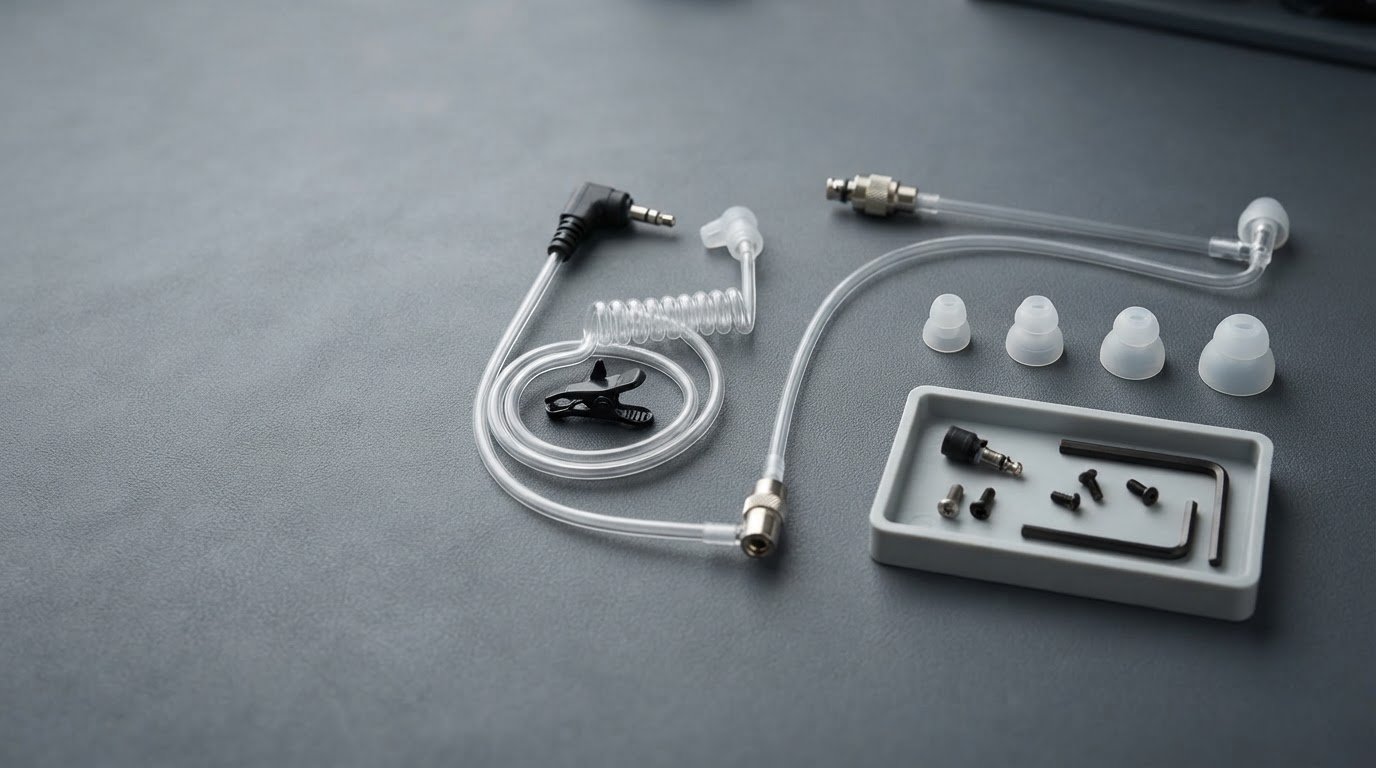
Is a muffled or uncomfortable radio earpiece ready for replacement, or does it need just one small part? A worn acoustic tube, blocked sound path or damaged ear tip can affect comfort and audio. But choosing a replacement by appearance alone may leave you with a part that doesn’t fit. The right spare parts for radio earpieces depend on the fault and the connection between the parts.
It’s not always obvious which component is causing the problem. This guide explains how to inspect an earpiece, match a replacement to your radio model and existing setup, and choose with greater confidence. You’ll learn what to check on acoustic tubes and ear tips, how to compare compatibility details before buying, and how routine care can help keep working components in good condition. Earpiece Hub stocks replacement acoustic tubes and ear tips, as well as earpieces and accessories for radio communication.
Key Takeaways
- Inspect the acoustic tube, ear tip and connection separately before replacing the whole earpiece.
- Choose spare parts for radio earpieces by matching the radio model, earpiece type and connection.
- Compare the component and its fit with your existing setup before ordering.
- Fit the replacement carefully, test the audio and don’t force connections or improvise repairs.
Spare parts for radio earpieces: identify what needs replacing
Start by identifying the affected component rather than automatically replacing the whole earpiece. In an acoustic-tube setup, the tube carries audio towards the ear tip, which sits in the ear. The earpiece is one part of a wider radio system, built around the principles of radio communication, so unclear sound alone doesn’t prove that the tube or tip has failed.
Acoustic tube or ear tip: which part shows signs of wear?
Inspect each part separately in good light. Look along the tube for cracks, kinks, loose joins or visible blockage. Check that it sits securely at its connection. Examine the ear tip for splits, flattened areas, dirt, or a loose or uncomfortable fit. Don’t push objects into the tube to clear it, as this could cause damage.
- Tube: consider replacing it if it’s visibly damaged, persistently blocked or no longer holds its connection securely.
- Ear tip: consider replacing it if it’s worn, difficult to keep clean, uncomfortable or no longer fits securely.
- Neither looks faulty: check the connection and radio settings, then test the setup before choosing a part.
Quick distinction: replace the tube when its condition or sound path is the concern; replace the ear tip when its condition or fit is the issue. Reduced clarity can also relate to the radio’s volume, settings or connection, so inspect the setup rather than diagnosing by sound alone. If the problem persists, compare it with a known-working compatible earpiece where practical. This helps narrow down which spare parts for radio earpieces may be relevant without assuming every component fits every setup.
How to choose spare parts for radio earpieces that fit
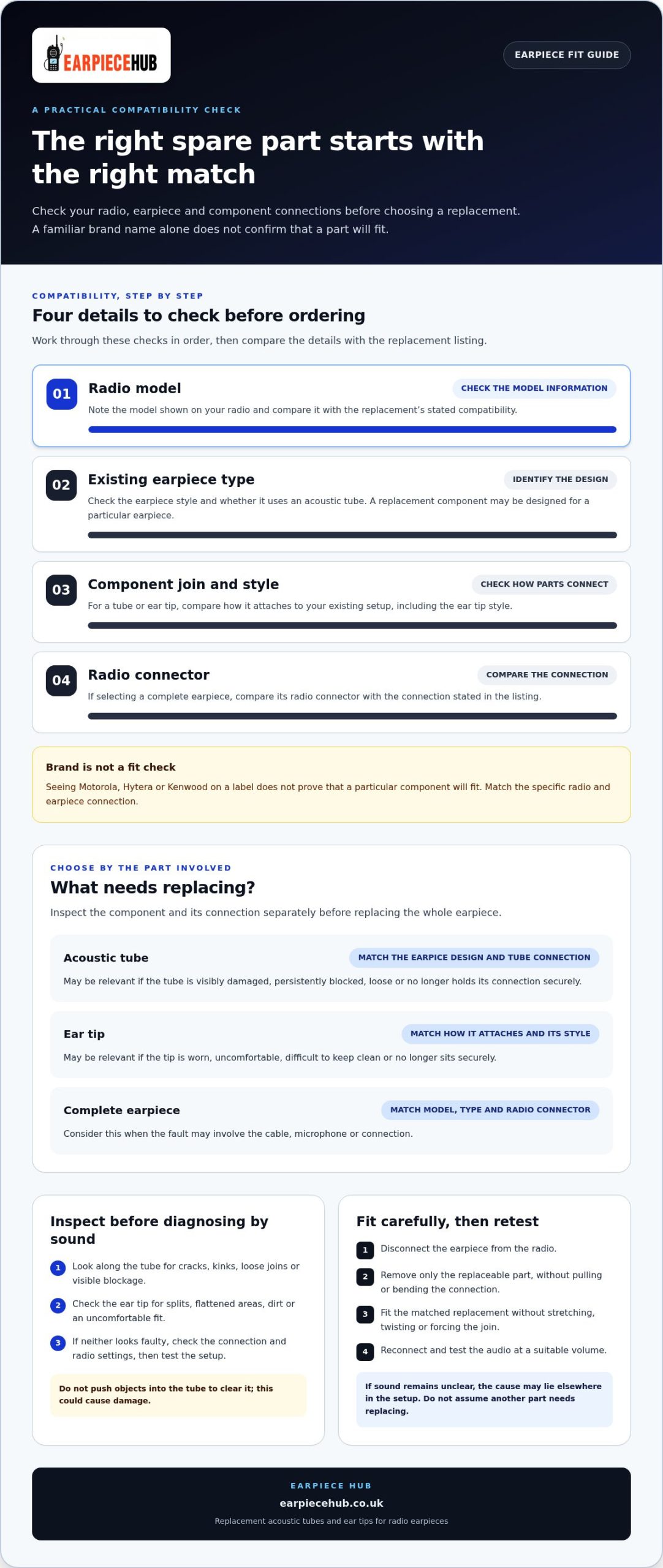
Before ordering, note the radio model, the existing earpiece type and how it connects to the radio. A brand name on its own isn’t enough: radios from the same brand can use different connections, and a tube or ear tip may be designed for a particular earpiece. Compare the replacement’s stated compatibility and connection details with your equipment. If you can, check the model information on the radio and the product details for the existing earpiece.
| Component | Details to match | When it may be relevant |
|---|---|---|
| Acoustic tube | Existing earpiece design and tube connection | The tube is damaged, loose or obstructed |
| Ear tip | How it attaches to the tube and its style | The tip is worn, uncomfortable or doesn’t sit securely |
| Complete earpiece | Radio model, earpiece type and radio connector | The fault may involve the cable, microphone or connection |
A compatibility checklist before ordering a replacement
Use this check before selecting spare parts for radio earpieces:
- Read the radio’s model information and compare it with the replacement listing.
- Identify the existing earpiece style and whether it uses an acoustic tube.
- Check how the tube and ear tip join, including the ear tip style.
- Compare the earpiece’s radio connector with the connection stated in the listing.
Compatibility depends on the specific radio and earpiece connection, not the brand name alone. Seeing Motorola, Hytera or Kenwood on a label doesn’t prove that a particular component will fit. Compare the product details with your equipment; general information about communication equipment standards can’t confirm a specific component match. Earpiece Hub’s radio earpiece components give you a starting point for comparing replacement tubes and ear tips with your existing setup.
Replace and care for radio earpiece parts with confidence
Once you’ve matched a replacement to your setup, fit it carefully. Disconnect the earpiece from the radio first, following the equipment’s instructions. Remove only the replaceable component, then fit the compatible tube or ear tip as intended. Check that it sits securely without stretching, twisting or forcing the join. Reconnect the earpiece and test the audio at a suitable volume before using it during a shift.
A straightforward inspection and replacement routine
Make visual checks part of routine care. Look for cracks, loose joins, changes in fit and visible debris. Clean components in a way that suits their material and follows their care guidance. Keep moisture and cleaning products away from openings, connectors and parts that shouldn’t get wet. If a connection won’t fit smoothly, stop and recheck compatibility instead of forcing it. Improvised repairs, such as tape or glue, can damage the component or interfere with a secure fit.
- Disconnect the earpiece from the radio.
- Remove the worn, replaceable part without pulling or bending the connection.
- Fit the matched replacement and check that it’s secure.
- Reconnect and test for clear, consistent audio.
Fit the replacement, then retest the audio before returning the earpiece to use. If sound remains unclear, the cause may lie elsewhere in the setup, so don’t assume another part needs replacing. Radio earpieces combine audio components with communication equipment. The IEEE provides broader information on audio technology and communication systems, though it isn’t a fitting guide for a particular earpiece.
Earpiece Hub stocks replacement acoustic tubes and ear tips. Compare the listing details with your earpiece before selecting the component that suits your setup.
Make your next replacement a considered one
Keep a note of your radio model and the part you’ve identified. Having these details to hand makes it easier to compare product information and record which component suits your setup for future replacements. It also turns routine earpiece care into a straightforward check rather than a last-minute guess.
Earpiece Hub is a specialist retailer of professional radio communication accessories, including replacement acoustic tubes and ear tips. Compare the product details with your equipment to choose a suitable component.
Browse spare parts for radio earpieces and find a replacement suited to your setup.
Frequently Asked Questions
Can I replace just the acoustic tube on a radio earpiece?
Yes, if your earpiece is designed to take a replaceable acoustic tube. Match the replacement to the earpiece and its connection details rather than assuming tubes are universal. A tube that looks similar may still attach differently. If audio remains unclear after fitting a suitable replacement, the cause may be elsewhere in the radio or audio setup.
How often should radio earpiece parts be replaced?
There’s no single replacement interval for every user or component. How quickly a part wears depends on how often it’s used and how it’s cared for. Inspect it regularly, especially if the earpiece is shared or used throughout a shift. Replace components that are damaged, loose, difficult to keep clean, or affecting comfort, fit or sound. Follow the maker’s guidance if it specifies an interval.
Will a new acoustic tube fix unclear radio audio?
A replacement tube may help if the existing one is damaged, blocked or poorly fitted, but it can’t address every audio fault. Check that the earpiece is connected properly and that the radio’s volume and settings are suitable, then test again. If unclear sound continues, don’t assume more spare parts for radio earpieces will solve it; the issue may have another cause in the setup.
How should spare radio earpiece parts be stored?
Keep spare parts clean, dry and protected from crushing, dust and tangling. Store small items in separate containers or compartments, and label compatible components with the radio model or earpiece setup they belong to. That makes the right replacement easier to identify later. Follow any care or storage instructions supplied with the component, as materials and designs can differ.
