





Uncategorized
Open Ear Inserts for Ambient Sound: How They Work and What to Choose
Oct
What if an “open-ear” label doesn’t tell you whether you’ll hear the person beside you? Ambient awareness depends on a device’s design and listening mode, not the label alone. The phrase open ear inserts for ambient sound can describe different arrangements, from consumer audio for personal listening to earpieces used with professional two-way radios.
It’s sensible to want audio without losing touch with nearby activity, but open-ear, ambient and transparency listening aren’t interchangeable terms. This guide explains what they can mean, what to consider for your environment and how consumer headphones differ from a listen-only radio earpiece. You’ll be better placed to choose a listening arrangement for everyday audio or find a radio earpiece suited to receiving professional communications.
Key Takeaways
- Open-ear designs let surrounding sound reach your ears, but the label alone doesn’t explain how a device handles ambient audio.
- Check whether sound passes through naturally or is picked up and relayed electronically, then match the approach to your setting and listening needs.
- Compare the design with how much awareness of nearby activity you want when choosing open ear inserts for ambient sound.
- Consumer listening and professional radio communication serve different purposes. The Ultra Covert Tubeless Listen Only Micro Earpiece 3.5mm is designed for listening to radio audio only.
Open ear inserts for ambient sound: what do they do?
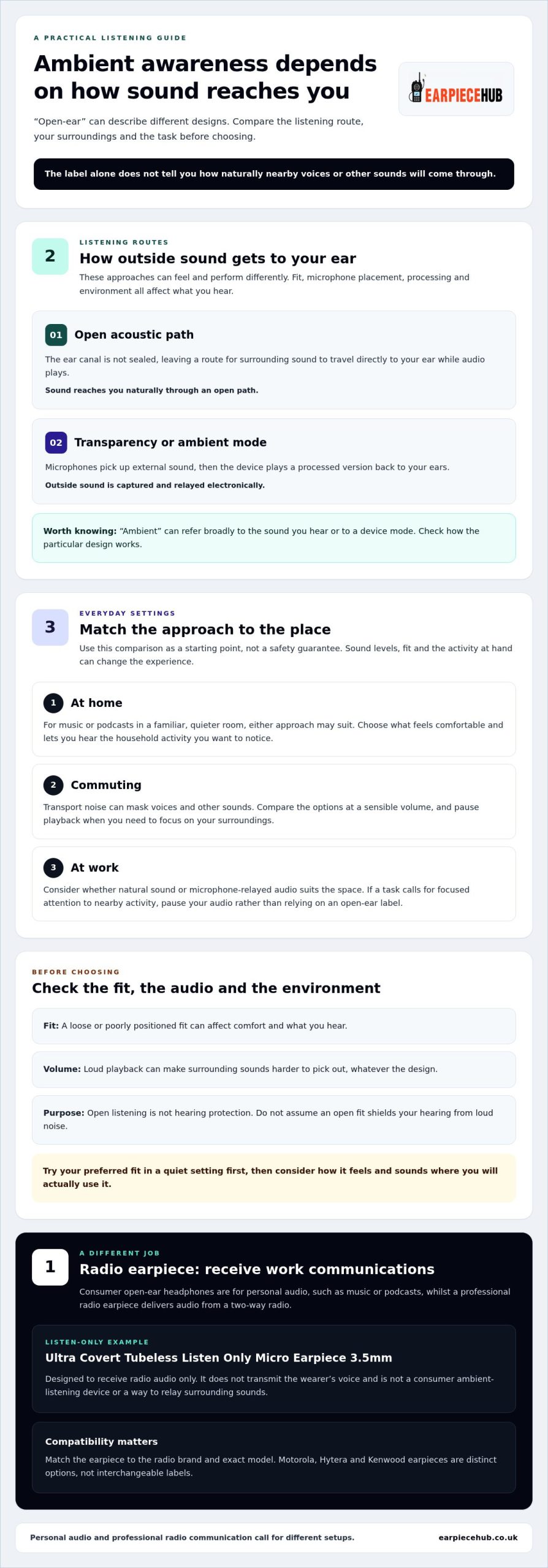
Open-ear designs allow surrounding sound to reach the ear while you listen to audio. The term open ear inserts for ambient sound can describe different approaches: some leave an acoustic route open, while others use microphones and processing to reproduce outside sounds. The label alone doesn’t tell you how naturally nearby voices or other noises will come through.
An open acoustic path lets sound travel directly to your ear; transparency listening captures sound with microphones and plays it back electronically. These methods can feel and perform differently. Microphone placement, processing and how a device sits all affect what you hear, so “open-ear” doesn’t guarantee the same level of awareness across products.
Open-ear, ambient and transparency listening: what is the difference?
In a conventional open-ear design, the ear canal isn’t sealed, allowing some surrounding sound to enter while audio plays. With a transparency or ambient mode, microphones pick up external sound and the device feeds a processed version to your ears. “Ambient” may refer broadly to either the sound being heard or a device mode, so check how the particular design works.
Most headphones use air conduction: sound travels through the air and outer ear towards the eardrum. Bone-conduction devices instead send vibrations through the bones of the skull to the inner ear, bypassing the eardrum. The listening experience varies with the design, fit and environment. On a noisy street, for example, traffic may make nearby voices harder to distinguish even with an open design.
Open listening isn’t the same as hearing protection. Don’t assume an open fit shields your hearing from loud noise. Choose a device for its intended purpose, and consider which sounds you need to hear around you.
How to choose open-ear inserts for ambient sound in everyday settings
Start by deciding how you want surrounding sound to reach you. An open acoustic design leaves a route for nearby sound to enter naturally; an ambient or transparency mode uses microphones to pick up and relay it. Consider whether you prefer a direct sound path or want a device to reproduce outside audio alongside your media.
Check the fit, the audio you want to hear and how clearly you need to notice nearby activity before choosing. A loose or poorly positioned fit can affect comfort and what you hear. Volume matters too: loud playback can make surrounding sounds harder to pick out, whatever the design. Consider the environment where you’ll use the device, not just the product description.
Which listening approach fits your environment?
Use this comparison as a starting point, not a safety guarantee. Sound levels, fit and the activity at hand can change the experience.
- At home: For music or podcasts in a familiar, quieter room, either approach may suit. Choose the one that feels comfortable and lets you hear the household activity you want to notice.
- Commuting: Transport noise can mask voices and other sounds. Compare how an open design or ambient mode performs at a sensible volume. Pause playback when you need to focus on your surroundings.
- At work: For routine tasks, consider whether natural sound or microphone-relayed audio better suits the space. If a task calls for focused attention to nearby activity, pause your audio rather than relying on an open-ear label.
Try your preferred fit in a quiet setting first, then consider how it feels and sounds in the place you’ll actually use it. The term open ear inserts for ambient sound covers varied listening approaches, so compare the design with your needs rather than assuming every option offers the same awareness.
If you need professional radio communication rather than personal audio, explore professional radio earpieces designed for radio use.
When open-ear ambient listening differs from a radio earpiece
Consumer open-ear headphones are designed for personal audio, such as music or podcasts, while allowing some surrounding sound to remain audible. A professional radio earpiece serves a different purpose: it delivers audio from a two-way radio so the wearer can receive work communications. One is for listening to media alongside environmental sound; the other is for receiving radio transmissions.
That distinction matters. “Open ear” doesn’t mean a radio earpiece provides a transparency mode or carries ambient sound to the wearer. Choose according to the audio source and task, not the terminology alone.
Choosing a radio earpiece for professional listening
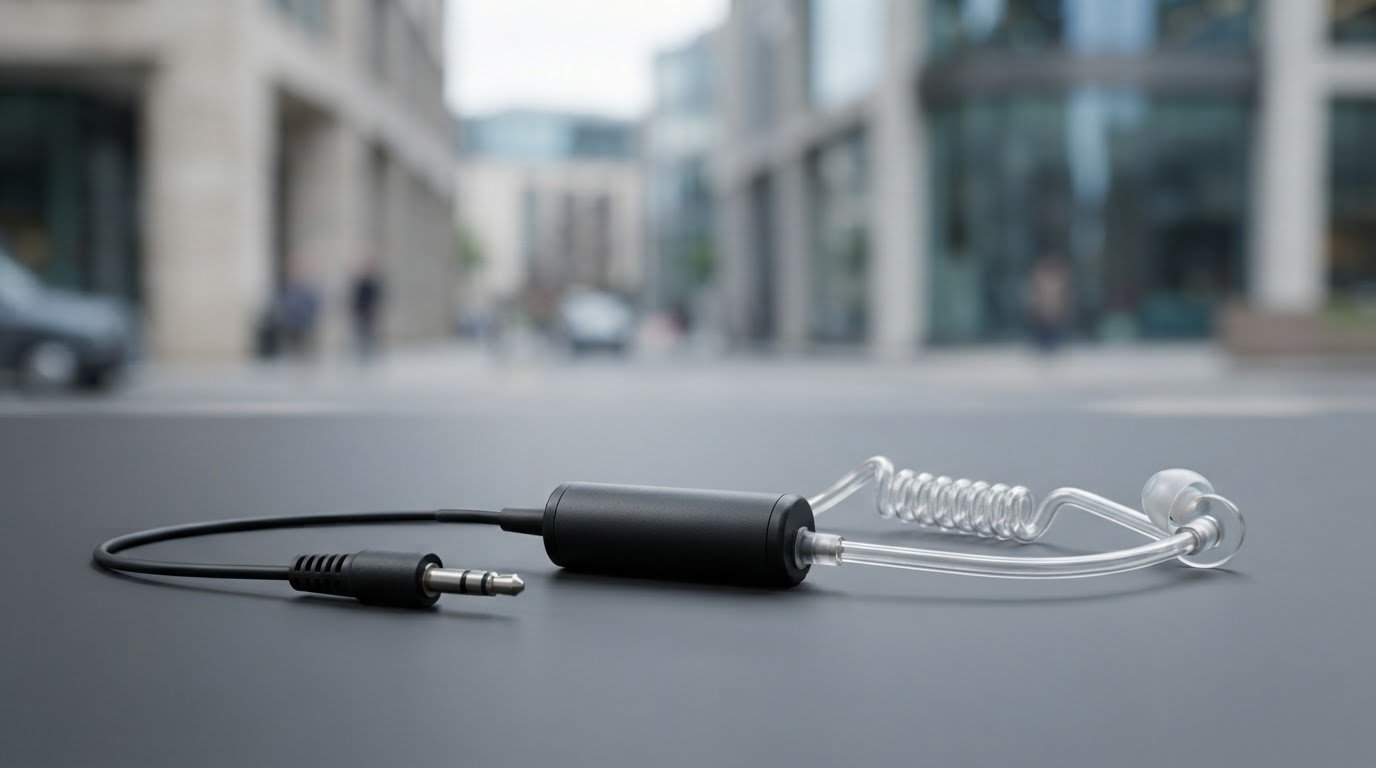
The Ultra Covert Tubeless Listen Only Micro Earpiece 3.5mm is listen-only. It is for receiving audio, not transmitting the wearer’s voice, and it shouldn’t be mistaken for a consumer ambient-listening device or a way to relay surrounding sounds.
For professional use, start with the radio itself. Match the earpiece to the radio brand and exact model, and use the compatibility details for that equipment. Don’t assume an earpiece intended for one radio connection will fit another. Earpieces for Motorola, Hytera and Kenwood radios, for example, are distinct options rather than interchangeable labels.
So, open ear inserts for ambient sound and listen-only radio earpieces answer separate needs: personal audio with some awareness of surroundings, or receiving communications through a two-way radio. If you need professional radio listening, shop radio earpieces at Earpiece Hub and select an option suited to your radio.
Choose the right setup for your next task
Before choosing equipment, decide what you need to hear and which device will deliver it. Personal audio and workplace radio communication call for different setups, so let the task guide your choice. The phrase open ear inserts for ambient sound can help you explore everyday listening, while professional radio work calls for an earpiece selected for the radio in use.
Earpiece Hub’s range includes radio earpieces, acoustic tubes and replacement ear tips. Product listings specify supported radio brands or models where applicable. Use those details to narrow your options and choose equipment that matches your radio.
Need an earpiece for professional radio use? Shop radio earpieces at Earpiece Hub.
