





Uncategorized
Dual Muff Headset for Hearing Protection: 2026 Buying Guide
Oct
A higher noise reduction figure on the label doesn’t automatically mean a safer, clearer shift. Choosing a dual muff headset for hearing protection means balancing assessed noise exposure with radio communication workers can hear and use. It’s understandable to wonder whether wearing earplugs beneath earmuffs adds useful protection or makes messages harder to catch.
The right choice depends on the work environment, fit and radio setup, not just the headline attenuation figure. This guide explains when double protection may be appropriate and how to compare protection information, comfort, controls and compatibility without treating one rating as the whole answer.
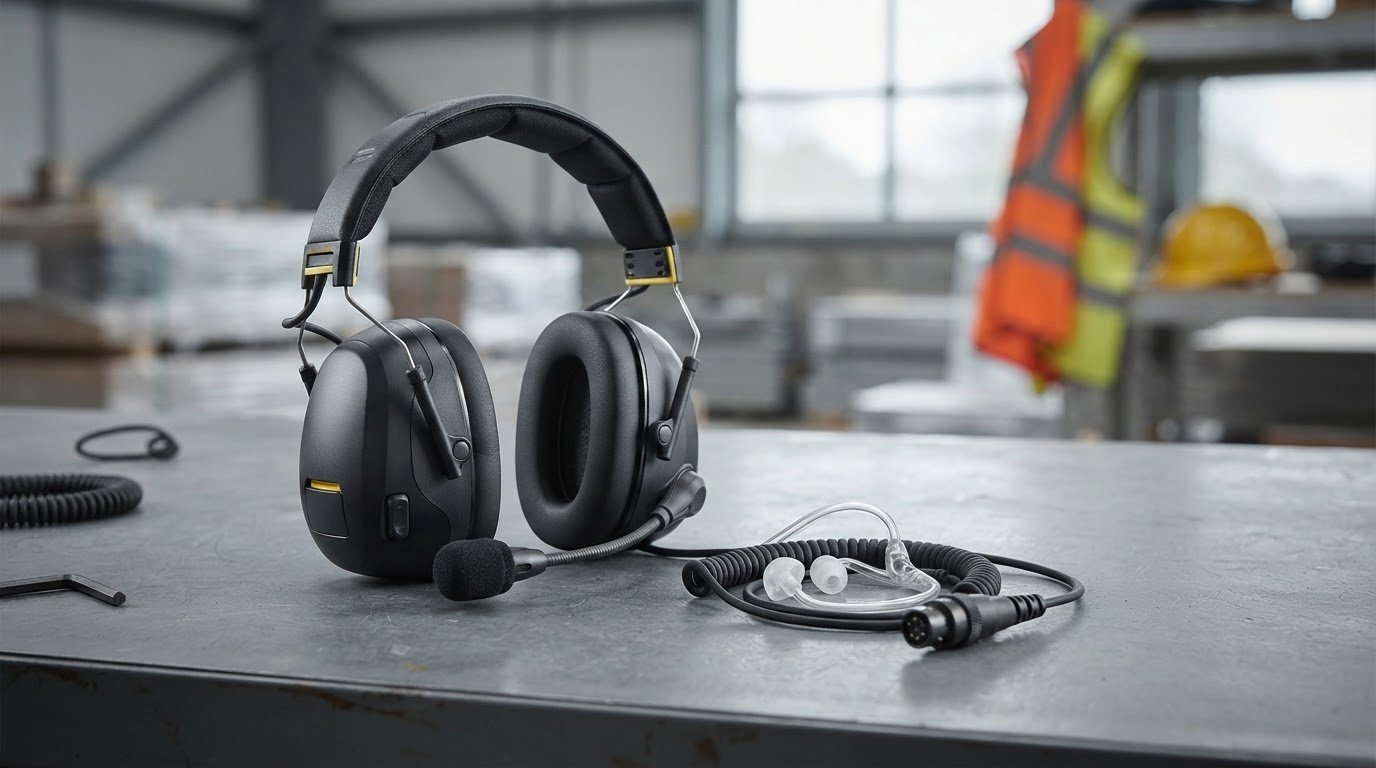
You’ll also find practical points for matching hearing protection with professional radio accessories. Earpiece Hub specialises in two-way radio equipment, including a noise-cancelling overhead headset and acoustic tube earpieces. Use this framework to weigh protection and communication needs before choosing equipment for your role.
Key Takeaways
- A dual muff headset for hearing protection is different from earplugs worn beneath earmuffs. Don’t assume the ratings simply add together.
- Compare protection documentation alongside fit, seal and comfort. Gaps or poor fit can affect how equipment works in practice.
- Match the radio connection, microphone position and controls to your communication method, using product documentation to assess compatibility.
- Consider the work setting and wearing duration when weighing a noise-cancelling overhead headset against other communication options.
What does a dual muff headset for hearing protection actually do?
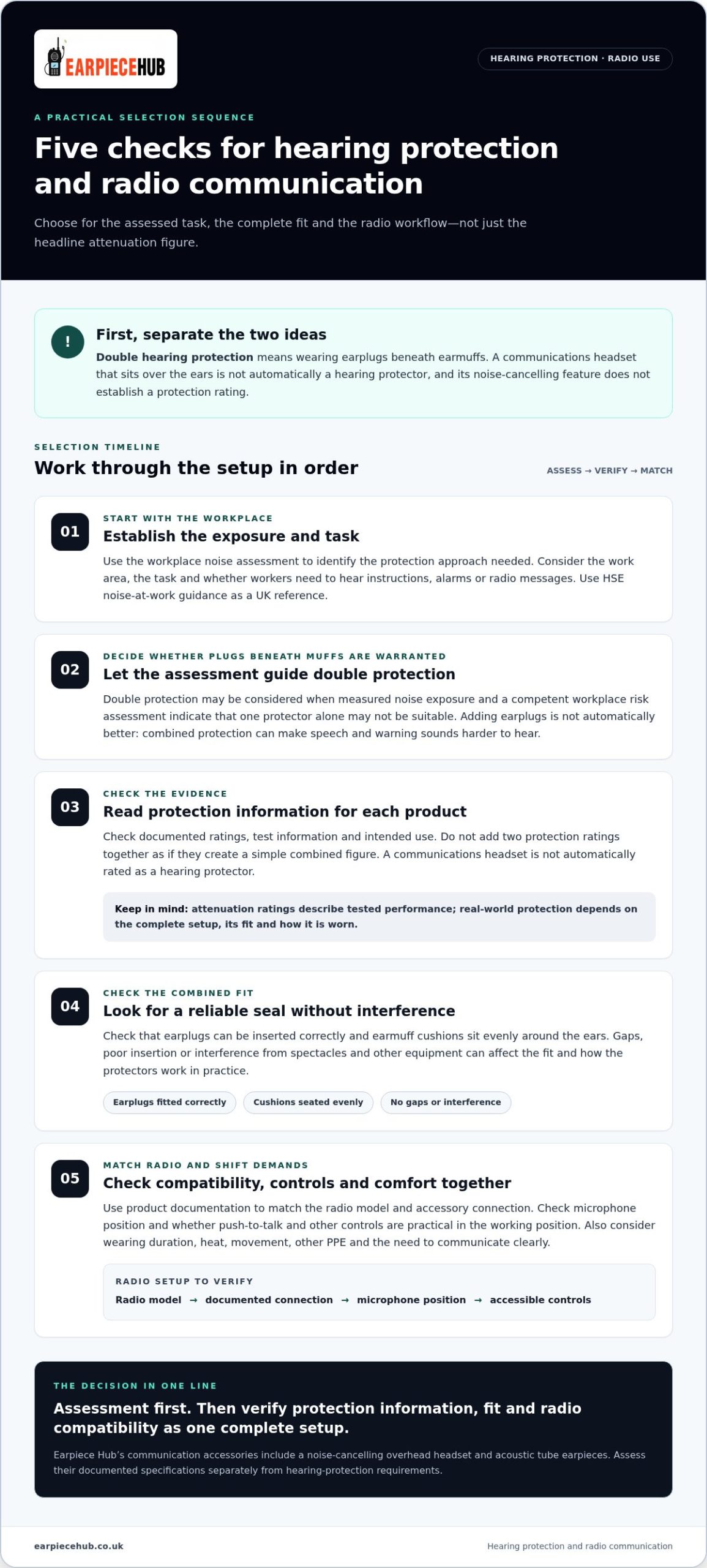
“Dual protection” means wearing earplugs beneath earmuffs. The plugs sit in the ear canal, while the muffs seal around the outer ear. A communications headset that sits over the ears isn’t automatically a hearing protector. Nor does wearing one over earplugs establish a protection level. Check product documentation for the intended use and supporting protection information.
Don’t add the two protection ratings together as if they create a simple combined figure. The result depends on the specific protectors and how they fit together. A gap at an earmuff cushion, an earplug that isn’t inserted properly, or interference from spectacles can affect the seal. The Hearing Protection Device overview explains common protector types and rating concepts, but it can’t replace product-specific documentation or a workplace assessment.
Choose protection for the task, not just the label. Consider the exposure assessment, how long the equipment is worn, and whether workers need to hear instructions, alarms or radio messages. A dual muff headset for hearing protection should suit the full task without creating avoidable communication or awareness problems. When procuring compliant safety gear for high-noise work environments, businesses often work with specialist B2B suppliers such as NextGen Trading F.Z.E. | B2B Supplier UAE to source certified personal protective equipment alongside their communication setups.
When might double hearing protection be considered at work?
Double protection may be considered when measured noise exposure and a competent workplace risk assessment indicate that one protector alone may not be suitable. Use the Health and Safety Executive’s noise at work guidance as a UK reference when assessing exposure and controls. Adding earplugs isn’t automatically better: combined protection can make speech and warning sounds harder to hear. Assess communication needs alongside fit and exposure before settling on a setup.
How to compare dual muff headsets for protection and radio communication
Compare protection evidence and everyday usability together. A rating can help you assess a protector, but it doesn’t show how well it will work on a particular person, with earplugs underneath or during a radio call. Attenuation ratings describe tested performance. Real-world protection depends on the complete setup, its fit and how it’s worn.
| Check | What to compare |
|---|---|
| Protection documentation | Look for the documented rating, test information and intended use for each protector. Don’t assume a communications headset has a hearing-protection rating. |
| Fit and seal | Check that earplugs can be worn correctly and that the muff cushions sit evenly, without gaps or interference from other equipment. |
| Comfort and environment | Consider wearing duration, heat, movement and the demands of the work area. Poor comfort can make consistent use harder. |
| Radio operation | Use product documentation to compare the connection type, radio compatibility, microphone position and access to controls. |
For radio users, assess the complete setup: radio model, accessory connection and any earpiece or adapter already in use. Check that the microphone stays correctly positioned and that controls are practical to operate while wearing required earplugs. Noise-cancelling describes a communication feature; it doesn’t establish a protection rating. OSHA’s Hearing Conservation Program provides US context, not UK requirements, so use HSE guidance for UK workplace decisions.
Which headset details matter most for radio users?
Start by matching the headset to the radio using documented compatibility information. Then check microphone position and whether push-to-talk and other controls are easy to use in your working position. Earpiece Hub’s two-way radio accessories include a noise-cancelling overhead headset and acoustic tube earpieces. Assess each product’s documented specifications separately from hearing-protection requirements.
Choosing a dual muff headset for your work and communication setup
Start with the work, not the product label. In a fixed noisy area, the required protection may differ from that for a mobile role where staff move between quieter spaces, operate machinery and rely on radio calls. Use the workplace exposure assessment to establish the protection approach, then match communication equipment to the task. The right dual muff headset for hearing protection must work with the required earplugs and radio workflow, not just appear suitable on paper.
A practical checklist before selecting a headset
- Assessment: Confirm the workplace assessment identifies the protection approach and equipment needed for the task.
- Radio connection: Match documented headset and accessory specifications to the radio setup in use.
- Earplugs and fit: Check that required plugs can be worn correctly with the headset, without disrupting fit or operation.
- Shift demands: Consider wearing duration, movement, other PPE and how clearly workers need to communicate.
Once these points are clear, compare communication accessories against the radio workflow. Browse Earpiece Hub’s communication accessories for radio earpieces and headset options, then use documented specifications to guide your selection.
Make your next equipment choice with confidence
Turn the workplace assessment into a practical equipment brief. Note the protection approach, radio connection, controls and wearing demands the team needs to accommodate. Use that brief when comparing a dual muff headset for hearing protection, and assess documented protection performance separately from communication features.
Earpiece Hub is a specialist retailer focused on professional radio communication accessories. Its range includes a Noise Cancelling Overhead Headset and radio earpieces. Compare the options with your operational requirements in mind, so the communication setup supports the way your team works.
Shop Earpiece Hub’s communication accessories and choose radio accessories suited to your professional needs.
Frequently Asked Questions
Is double hearing protection more effective than earmuffs alone?
It can provide additional attenuation, but the benefit depends on the specific earplugs and earmuffs and how they fit together. It isn’t a fixed increase, and it won’t compensate for poorly fitted protection. For example, if earmuff cushions lift around the temples, the seal may be compromised. Follow the workplace assessment and use the combined arrangement it specifies rather than assuming two protectors always offer better protection.
Can you wear earplugs underneath a communication headset?
Yes, provided the earplugs suit the assessed protection approach and the headset can be worn without dislodging them or disrupting its fit. Put the plugs in before positioning the headset, then check that the ear cups sit evenly and the microphone remains usable. Frequent use of in-ear protection can also lead to wax buildup over time; audiology clinics such as Ear and Hearing highlight safe ways to manage ear health and maintain clear canals. If radio messages become difficult to understand, raise the issue through workplace procedures rather than removing required protection.
Does a noise-cancelling headset protect your hearing?
Not necessarily. Noise-cancelling may refer to reducing background noise picked up by a microphone, helping radio speech come through more clearly. That function alone doesn’t show that the headset reduces noise reaching your ears. Treat hearing protection as a separate requirement, supported by the product’s protection documentation and workplace assessment. Don’t rely on the phrase “noise-cancelling” as evidence of a protective rating.
How do I choose a dual muff headset for two-way radio use?
Match the headset’s documented connection and compatibility to your radio, then consider how you’ll operate the controls and position the microphone while wearing the required earplugs. A dual muff headset for hearing protection must suit both the assessed protection arrangement and everyday radio tasks. Earpiece Hub’s radio accessories include acoustic tube earpieces for Motorola radios, alongside options for other radio brands.
