





Uncategorized
Behind-the-head radio headset: 2026 buying guide

Oct
What if a headset that looks secure shifts as soon as your working day gets active? A behind-the-head radio headset needs to stay in place through movement, feel comfortable over a full shift and deliver clear communication without cutting you off from your surroundings. The right choice depends on more than the headband style.
Radio compatibility matters just as much. The connector and accessory configuration determine whether a headset works with your radio, while the fit and audio design affect how it feels on the job. This guide explains what to compare, how your working environment influences the choice and when a noise-cancelling overhead headset may be a useful alternative. Earpiece Hub supplies radio accessories for Motorola, Hytera and Kenwood systems, including earpieces, headsets and adapters.
Key Takeaways
- Assess how a behind-the-head radio headset fits with your movement, uniform and headwear.
- Identify your radio’s make and exact model before comparing connections and accessory configurations.
- Consider expected wear time and the pressure points that may affect comfort across a shift.
- Match the audio design to the work environment, and consider a noise-cancelling overhead headset as an alternative.
What a behind-the-head radio headset offers during a working shift
A behind-the-head radio headset has a support band that sits around the back of the head rather than crossing over the crown. Earpiece and microphone arrangements vary by model, so the term describes the general wearing position, not one standard design.
For roles involving regular movement, such as patrols or busy operational work, this style may feel more secure than a headset resting on one ear. It may also suit uniformed work where a conventional headband competes with other headwear. The style alone, however, does not guarantee a secure fit. Comfort and audio performance depend on the specific design, how it sits on the wearer and the conditions on shift.
Is this headset style suited to your role and fit preferences?
A behind-the-head design places its support band behind the head, rather than across the top of the head as on many overhead headsets. If you wear a cap, helmet or other headwear, consider where the band and earpieces will sit in relation to it. Think about how long you expect to wear the headset, too. Pressure points that seem minor at first may become distracting over a long shift.
Ear coverage is another practical consideration. More coverage may help you focus on radio messages, while a less enclosing design may make it easier to hear nearby conversations and environmental sounds. The balance depends on the headset’s design and your surroundings. A radio headset should not automatically be treated as hearing protection. For an overview of hearing protector types and their purpose, see this Hearing Protection Device reference.
Before choosing, picture wearing the headset with your usual uniform and headwear while carrying out the movements your role involves. Consider whether you can reach and operate the controls without interrupting the task. This gives you a more useful starting point than appearance alone.
How to choose a behind-the-head radio headset: a three-point checklist
Use these checks to match a headset to your radio and working conditions, rather than choosing by wearing style alone:
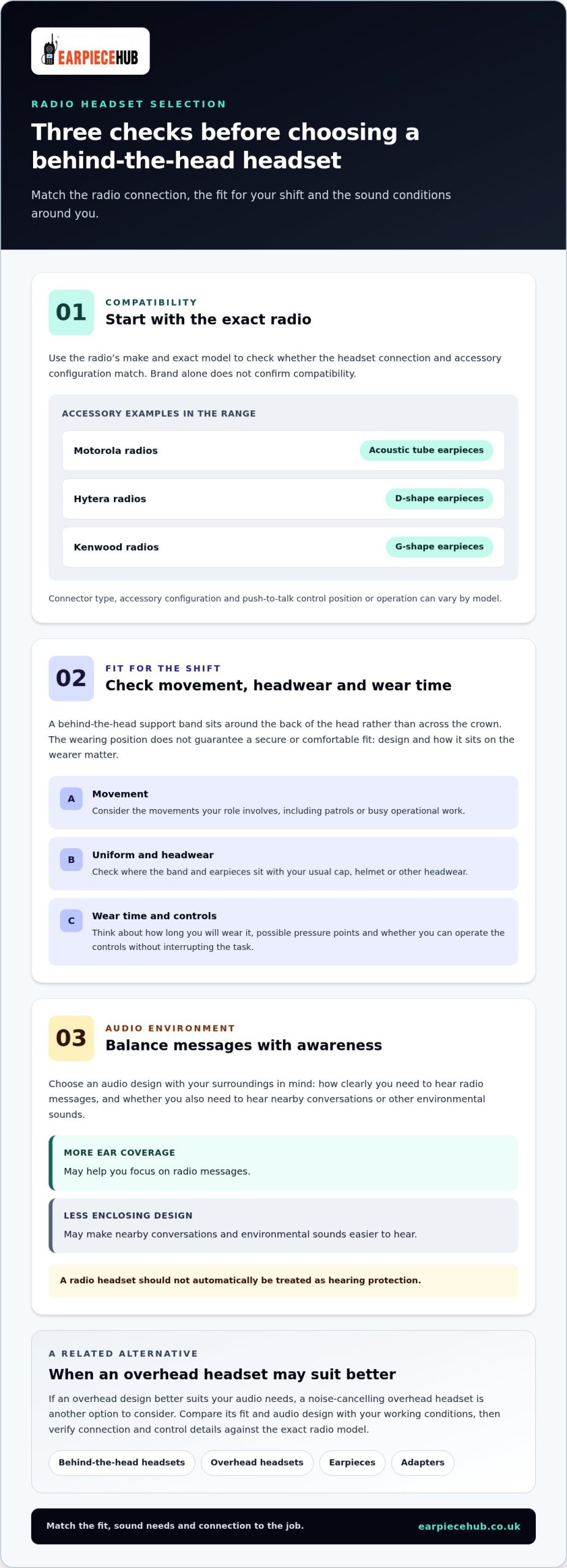
- 1. Identify the radio. Note its make and exact model. Use both details to match the headset connection and accessory configuration to your radio.
- 2. Assess fit for the shift. Consider expected wear time, headwear and the movements your role involves. A fit that works without a cap may feel different with a helmet or uniform equipment.
- 3. Consider the audio environment. Think about background noise, how clearly you need to hear radio messages and whether you also need to hear nearby conversations or other sounds.
Which compatibility details should you check before buying?
Brand is a useful starting point, but it does not confirm a match. Motorola, Hytera and Kenwood radios use accessories that can vary by model and connection. Check the connector type and accessory configuration against the exact radio model. Push-to-talk controls, including their position and operation, can also vary, so do not assume they are the same across a brand’s range.
For a behind-the-head radio headset, compatibility is only one part of the decision. Also consider whether the fit and audio design suit your role. Earpiece Hub supplies accessories for major radio brands, including acoustic tube earpieces for Motorola radios, D-shape earpieces for Hytera radios and G-shape earpieces for Kenwood radios. The range also includes adapters and universal earpieces. Explore radio accessories to compare options for your setup.
Match your radio headset choice to the job and shop with confidence
Bring together three practical factors: how much you move, what you need to hear and whether the connection works with your radio. A behind-the-head radio headset may suit active work, but the style alone does not determine comfort or audio performance. Use your radio’s make and model, its connection details and your working conditions to narrow down the options.
From headset requirements to the right radio accessory
Start with the job. If clear radio messages are the priority, consider the sound conditions around you and how much awareness of nearby activity you need. Then match the accessory connection to your radio’s make and model. This creates a more useful shortlist than choosing by appearance or brand name alone.
Earpiece Hub supplies radio earpieces, overhead headsets and adapters for professional radio use. Its noise-cancelling overhead headset is a related option if an overhead design better suits your audio needs. Compare the accessory type with your fit and compatibility requirements, and check the product details for connection and control information before choosing.
With those criteria in hand, you can browse with a clear idea of what matters for your shift. Browse Earpiece Hub’s radio headset range to explore headset and earpiece options.
Choose a radio headset that fits your working day
The right headset balances fit during movement, clear radio audio and the awareness your role requires. A behind-the-head radio headset may suit your preferences, but consider the specific design and check its connection against your radio’s make and model before choosing. Your working environment matters too, especially if background noise or nearby conversations affect what you need to hear.
Earpiece Hub is a specialist retailer of professional radio communication accessories. Browse noise-cancelling overhead headsets, radio earpieces and adapters to explore options for your setup.
Shop radio headsets and accessories at Earpiece Hub to explore accessories for your radio setup.
Frequently Asked Questions
Is a behind-the-head radio headset comfortable for a full shift?
It can be, but comfort depends on the headset’s design, fit and your working routine. Consider how long you’ll wear it, whether you use headwear and how much you move during a shift. If possible, assess how it sits and whether you can operate its controls comfortably in conditions similar to your actual work.
Can a behind-the-head headset work with any two-way radio?
No. Compatibility can depend on the radio’s make and exact model, the connector and the headset configuration. A brand name alone does not confirm a match across every radio in that range. Check these details together before choosing an accessory. Earpiece Hub supplies radio accessories such as earpieces and adapters for different setups.
How do I choose between a behind-the-head headset and an overhead headset?
Start with your preferred fit, headwear, movement and listening needs. Consider whether you need to hear nearby activity as well as radio messages. Then compare the actual design, compatibility and audio features of the products you’re considering. Labels can vary, so base your decision on the product details rather than its category name alone.
Are noise-cancelling radio headsets right for every work environment?
No. Noise-cancelling features may help in some noisy settings, but suitability depends on the type of background sound and whether you need to stay aware of nearby activity. Compare the headset’s stated features with your role and working conditions. Do not assume every model offers the same noise reduction or is designed for hearing protection.
