





Uncategorized
Personal Issue vs Shared Radio Earpieces: 2026 Fleet Buyer Guide
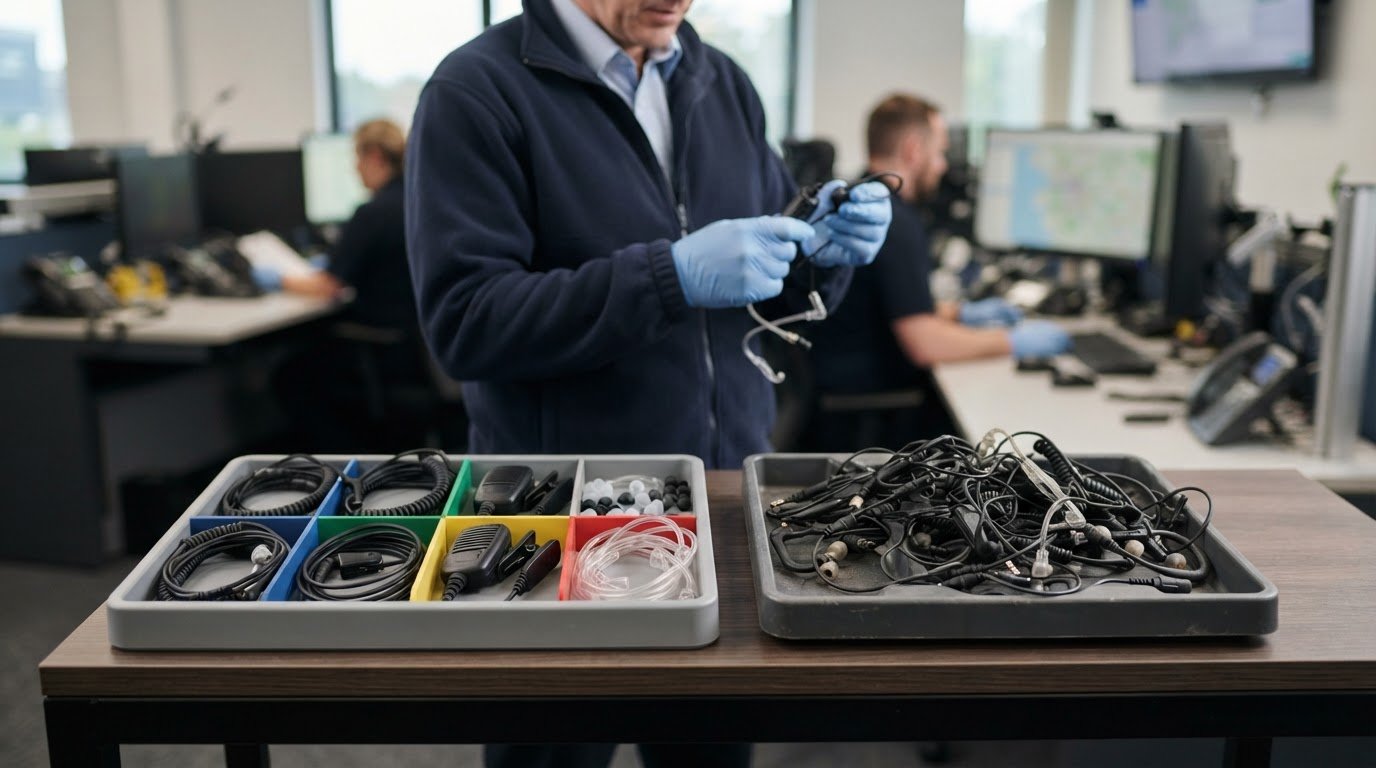
Sep
The cheapest allocation strategy often produces your most expensive operational headache. Pooling two-way radio accessories across shifts seems economical on paper, but assessing personal issue vs shared radio earpieces reveals that communal kit triggers rapid cable strain, hygiene risks, and frantic searches for working gear at shift handover. Every operations manager recognises the disruption caused by cracked wires, muffled audio tubes, and ear infection concerns amongst front-line personnel.
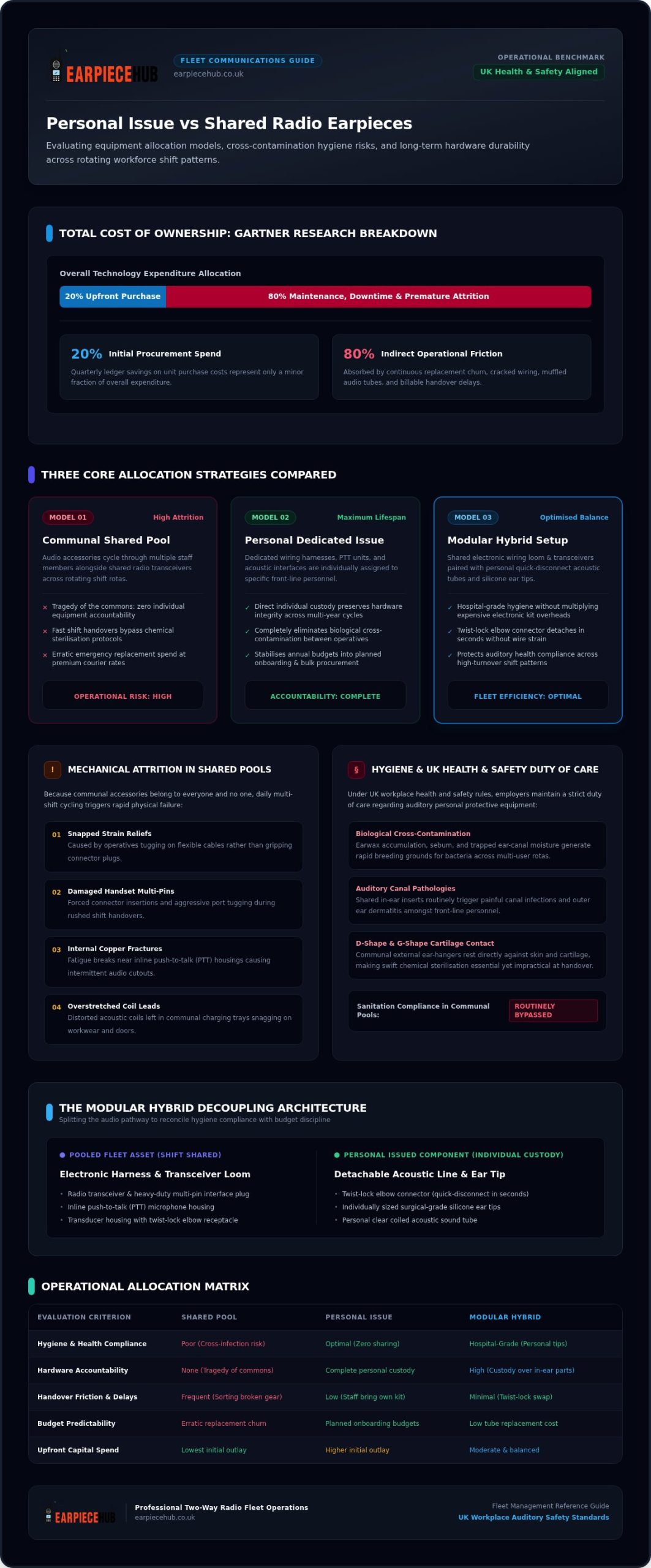
Gartner research indicates that upfront purchase costs represent only about 20% of total technology expenditure, whilst maintenance, downtime, and premature attrition absorb the remaining 80%. In this guide, you’ll evaluate hygiene standards, hardware durability, and total operational costs to choose the right earpiece allocation model for your workforce. We compare dedicated personal issuance, pooled multi-shift rotas, and modular hybrid setups to help you eliminate equipment downtime, safeguard acoustic clarity, and meet UK workplace health and safety expectations.
Key Takeaways
- Evaluating personal issue vs shared radio earpieces helps fleet managers eliminate cross-contamination risks and protect workforce health across rotating shift patterns.
- Communal accessory pools mask hidden expenses by accelerating connector damage, cable strain, and frequent component loss compared to individually assigned kit.
- A modular hybrid setup pairs shared radio looms with individual quick-disconnect acoustic tubes and tips, delivering hospital-grade hygiene without multiplying equipment overheads.
- Matching your allocation model to workforce size, operational turnover, and working conditions ensures full compliance with UK workplace health and safety expectations.
Personal Issue vs Shared Radio Earpieces: Core Operational Comparison
Deploying communications gear across rotating teams requires balancing equipment allocation against daily operational readiness. In a shared pool, audio accessories cycle through multiple workers alongside transceivers. By contrast, personal issuance assigns dedicated wiring harnesses to individual staff members. When evaluating personal issue vs shared radio earpieces, managers deploying professional two-way radio technology must balance initial administrative setup against long-term hardware survival.
Hygiene and Health Compliance in Shared Environments
Shared in-ear accessories create immediate cross-contamination hazards. Earwax accumulation, sebum, and trapped ear-canal moisture generate breeding grounds for bacteria, triggering outer ear dermatitis and painful canal infections. Under UK workplace health and safety rules, employers maintain a strict duty of care regarding auditory personal protective equipment. Fast-paced shift handovers rarely permit adequate chemical sterilisation, meaning communal earpieces routinely bypass basic hygiene protocols.
Equipment Accountability and Lifespan Differences
Pooled accessories suffer from the classic tragedy of the commons. Because communal kit belongs to everyone and no one, it experiences severe, accelerated physical abuse:
- Snapped strain reliefs caused by staff tugging on cables rather than gripping the connector plug
- Damaged accessory pins from forced multi-pin insertions during rushed handovers
- Distorted acoustic coils and split silicone tips left in communal charging trays
Choosing personal issue vs shared radio earpieces establishes direct individual accountability. Operatives coil wires properly, store accessories securely, and preserve hardware integrity across multi-year cycles.
Total Cost of Ownership: Analysing Upfront Spend vs Replacement Churn
Procuring fewer audio accessories looks prudent on a quarterly ledger. Yet, examining the economics of equipment sharing reveals that communal pools generate ongoing indirect friction. In practice, initial unit savings quickly dissolve under continuous replacement churn and lost staff productivity during shift rollouts. Evaluating personal issue vs shared radio earpieces through a total cost framework exposes these hidden operational leaks.
The True Attrition Rate of Pooled Audio Peripherals
Communal earpieces encounter heavy daily cycling, multiplying mechanical wear. Common failure points include:
- Internal copper wire fractures near the inline push-to-talk housing
- Overstretched coil leads that catch on workwear and snag on door frames
- Damaged accessory port threading on handsets caused by aggressive tugging
When an operative discovers intermittent audio five minutes into a patrol, shift delays follow. Sorting through bins of unverified hardware wastes valuable billable time.
Budget Predictability Through Individual Allocation
Personal issuance shifts accessory expenditure from erratic emergency replacements into stable onboarding budgets. Giving each worker personal custody changes daily handling habits. Team members take ownership of their kit, preventing cable knots and preserving sensitive connector multi-pins. Commercial buyers can plan annual allocations accurately and explore bulk procurement discounts across standardised fleet setups, rather than paying premium rates for rushed courier orders. Fleet managers looking to stabilise accessory expenditure can review heavy-duty communication hardware through earpiece options available at Earpiece Hub.
The Hybrid Model: Shared Radios with Personal Acoustic Tubes and Tips
Operations managers weighing personal issue vs shared radio earpieces often face an unnecessary compromise between hygiene standards and accessory budgets. The hybrid strategy solves this dilemma by splitting the audio path. Organisations retain shared electronic harnesses, transceivers, and push-to-talk microphone looms across multi-shift rotas, while issuing individual front-line workers their own detachable acoustic clear tubes and silicone tips.
How Modular Acoustic Tube Systems Function
Modular communication headsets feature a physical decoupling joint between the transducer housing and the clear acoustic coil. A twist-lock elbow connector lets users attach or remove the acoustic line in seconds without pulling delicate wiring or stressing solder joints. Whilst shared D-shape and G-shape earpieces sit directly against external ear cartilage, making rapid sanitation difficult, detachable acoustic tubes isolate the auditory canal entirely. Workers attach their personal tube onto the pooled radio harness at roll call and unclip it when clocking off.
Setting Up Personal Consumable Kits for Staff
Deploying a hybrid policy requires minimal setup friction. Equipping each operative with an onboarding pack establishes clear hygienic boundaries across the workforce. A standard personal consumable pack includes:
- A dedicated clear acoustic coil tube fitted with a quick-release elbow joint
- Multiple replacement silicone ear tips to ensure a proper canal seal
- A breathable carry pouch that vents sweat and prevents internal tube condensation
Team members wash silicone tips in warm soapy water between shifts, blowing out trapped moisture to preserve clear acoustic transmission. When equipping your frontline teams, you can order replacement acoustic tubes and ear tips from Earpiece Hub to support an efficient modular deployment.
Selecting the Right Deployment Strategy for Your Organisation
Selecting an effective deployment model depends on shift frequency, moisture exposure, and staff turnover rates. Deciding between personal issue vs shared radio earpieces requires matching hardware logistics to daily duty cycles rather than relying on a one-size-fits-all procurement policy.
Sector-Specific Allocation Frameworks
Operational demands vary significantly across commercial frontline sectors:
- Event Stewarding and Festival Security: High seasonal turnover makes full personal allocation inefficient. The hybrid model works best here, issuing individual acoustic tubes to casual stewards whilst retaining shared radio looms in secure depot storage.
- Door Supervision and Close Protection: High-risk security environments demand immediate responsiveness. Dedicated personal issue kits ensure operatives maintain clean, properly fitted gear calibrated to their personal comfort and ready for instant deployment.
- Warehousing and Logistics: High-tempo picking environments generate persistent sweat and dust. Issuing dedicated G-shape or acoustic tube earpieces eliminates hygiene complaints across active multi-shift operations.
Equipping Your Fleet with Professional Accessories
Successful roll-outs rely on connector standardisation across your radio estate. Fleets running Tier-1 platforms like Motorola, Hytera, and Kenwood require precision-matched pin terminations or durable earpiece adapters to prevent port damage during daily shift handovers. Clear equipment logs and designated storage lockers maintain accountability from day one. To standardise your audio peripherals and source modular components, explore commercial communications gear from Earpiece Hub.
Upgrade Your Fleet Allocation Strategy Today
Navigating the operational balance between personal issue vs shared radio earpieces comes down to lifecycle accountability and frontline hygiene. Pooled accessories inevitably drive up replacement churn and create cross-contamination risks during rapid shift handovers. By implementing full personal assignment for permanent staff or introducing modular quick-disconnect tubes for rotating teams, you safeguard health compliance whilst eliminating avoidable hardware downtime.
Securing reliable audio peripherals doesn’t need to complicate your procurement process. As a dedicated UK specialist supporting commercial fleets nationwide, we stock robust peripherals engineered for Motorola, Hytera, and Kenwood platforms, alongside comprehensive replacement acoustic tubes, ear tips, and multi-unit chargers. Equip your team with professional radio accessories at Earpiece Hub and ensure every shift starts with dependable, crystal-clear communications.
Frequently Asked Questions
Is it hygienic for employees to share radio earpieces across working shifts?
No, sharing in-ear equipment presents substantial biological hazards. Ear canals produce wax and sweat that rapidly harbour bacteria and fungi on silicone tips and acoustic coils. Standard sanitising wipes rarely reach interior acoustic crevices during hasty shift changes, meaning communal accessories frequently transmit outer ear infections. Deciding between personal issue vs shared radio earpieces largely hinges on avoiding these preventable sick days and maintaining hygienic frontline standards.
How often should personal acoustic tubes and ear tips be replaced?
Acoustic tubes and silicone tips should typically be replaced every six months for daily frontline operatives. Heavy sweat, atmospheric moisture, and environmental dust eventually harden clear PVC acoustic tubing, turning it discoloured and brittle whilst stifling sound volume. Replacing ear tips promptly ensures acoustic clarity and prevents seal degradation. High-demand industrial or night-time security environments often require quarterly consumable swaps to maintain peak acoustic responsiveness and comfort.
Can you connect personal issue earpieces to different two-way radio brands?
Yes, personal peripherals can connect across mixed fleets by employing specialised earpiece adapters. While Motorola, Kenwood, and Hytera utilise distinct multi-pin or two-pin audio jack sockets, dedicated adapters standardise connections without requiring operatives to replace their personal wiring looms. Alternatively, universal earpieces equipped with modular inline terminations let staff plug their individual audio setup straight into any compatible radio platform used across your operational sites.
Does the UK Health and Safety Executive mandate individual issue audio accessories?
UK regulations don’t explicitly outlaw communal headsets, but employers bear a statutory duty of care to control workplace biological hazards. Shared earpieces introduce direct cross-contamination pathways that breach standard risk assessment thresholds for personal protective gear. When comparing personal issue vs shared radio earpieces, safety officers increasingly enforce personal issue or modular consumable allocation to demonstrate compliance with health guidelines and eliminate employer liability for preventable auditory canal infections.
What is the most durable earpiece style for high-turnover commercial teams?
D-shape and G-shape earpieces provide exceptional physical longevity for demanding commercial operations. Because these models clip securely around the outside of the ear, they eliminate delicate hollow sound tubes that can clog or kink under rough handling. Solid rubberised earpieces paired with reinforced strain reliefs withstand rigorous shift demands, while remaining far easier to wipe down between users than complex in-canal acoustic assemblies.
