





Uncategorized
Quality Radio Accessories: 2026 Professional Buyer’s Guide
Sep
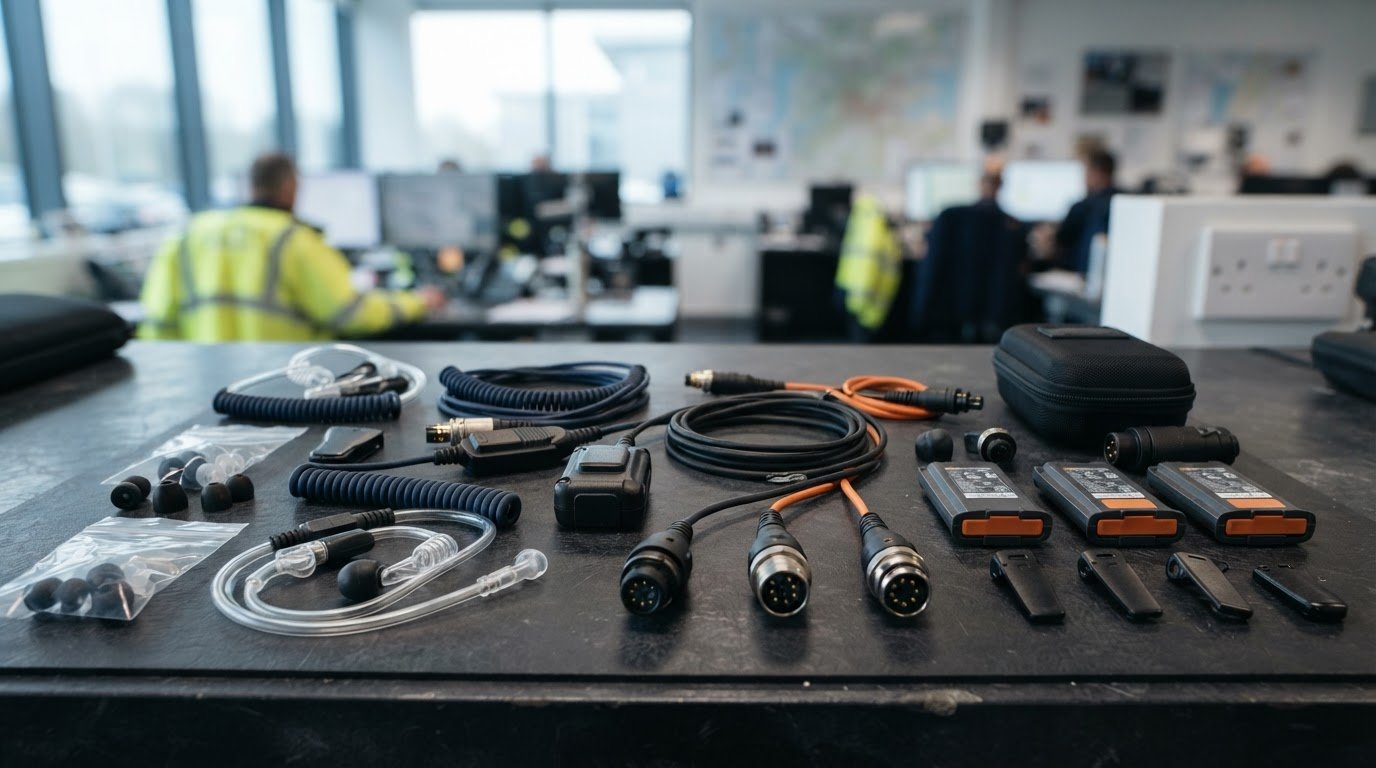
Radio handsets transmit your signal, but accessory build quality determines whether critical messages actually get through in the field. When an unbranded earpiece snaps mid-shift or audio crackles across a loud venue, even the most advanced radio fleet becomes practically useless. That is why investing in quality radio accessories is not a secondary expense; it is an essential operational safeguard for security, logistics, and facilities teams across the UK.
Replacing brittle cables, failed push-to-talk switches, and dead batteries every few weeks drains both your operating budget and your patience. We know how frustrating it is when low-grade gear compromises frontline safety. In this guide, you will discover how professional-grade peripherals eliminate costly downtime, deliver crystal-clear audio in high-noise environments, and drastically reduce long-term fleet expenditure. Here is your definitive roadmap to choosing durable, compatible accessories across Motorola, Hytera, and Kenwood platforms.
Key Takeaways
- Understand why investing in quality radio accessories protects your operating budget by eliminating repetitive failures in wiring harnesses, push-to-talk switches, and battery packs.
- Identify crucial commercial hardware specifications, such as Kevlar-reinforced cabling and robust multi-pin connectors, engineered specifically for Motorola, Hytera, and Kenwood fleets.
- Adopt a modular servicing approach by stocking replacement acoustic tubes and ear tips, preserving shift hygiene whilst preventing the needless disposal of functional earpieces.
- Learn how to audit existing radio estates and standardise peripheral profiles across staff roles to streamline inventory and cut downtime across the UK.
The True Cost of Cheap Radio Accessories: Why Build Quality Matters
Radio fleet managers often scrutinise handset specifications whilst treating peripherals as disposable consumables. This creates an immediate operational blind spot. True communication failure rarely starts within the radio chassis; it begins with copper wire fatigue at flex points, fractured strain relief mouldings, and push-to-talk (PTT) switches that stick or fail entirely. A high-end two-way radio delivers zero value if audio cuts out during a critical call.
The Hidden Operational Penalties of Budget Earpieces
When door supervisors or venue marshals miss garbled transmissions, security protocols collapse. Substandard PVC cabling quickly hardens and snaps under daily wear, lacking verified ingress protection ratings to withstand wet weather and dust. Inferior plastics also deteriorate rapidly when exposed to sweat and friction. Beyond equipment breakdown, rigid, unergonomic mouldings cause painful ear fatigue across long shifts, prompting frontline staff to remove earpieces and miss urgent dispatches.
Total Cost of Ownership: Buying Once vs Replacing Constantly
Bargain accessories seem economical on an initial invoice, but they multiply operating expenses over a twelve-month operational cycle. Budget peripherals regularly fail within six months of continuous commercial use. Replacing cheap units four times a year creates substantial administrative friction, constant reordering, and unexpected frontline downtime. That is why investing in quality radio accessories is the only cost-effective strategy for commercial fleets. Durable cabling and industrial housings lower overall expenditure, protect organisational safety records, and keep teams connected when it matters most.
Key Criteria for Evaluating Professional-Grade Radio Peripherals
Evaluating peripheral build starts from the inside out. Industrial gear incorporates Kevlar-reinforced cores and polyurethane outer jackets that withstand heavy tensile pull forces without fracturing interior copper strands. Precision-moulded connectors featuring secure locking screws protect handset chassis terminals across Motorola, Hytera, and Kenwood radios. Following standard CISA SAFECOM communications guidance for field equipment durability, investing in quality radio accessories ensures sealed microphone enclosures, heavy-duty strain relief mouldings, and tactile push-to-talk buttons that click positively through thick gloves.
Wiring Architecture: Selecting 1-Wire, 2-Wire, or 3-Wire Configurations
Matching harness layouts to operational roles prevents snagging hazards and cable fatigue:
- 1-Wire Systems: Compact designs ideal for retail or hospitality teams where the combined mic and PTT switch clips neatly to the collar.
- 2-Wire Setups: Separate audio output and mic lines, allowing event stewards to run the PTT switch down an arm or across a tactical vest.
- 3-Wire Configurations: Engineered for covert security, providing distinct lines for the acoustic earpiece, discreet lapel mic, and a palm PTT switch hidden down a jacket sleeve.
Acoustic Tube vs D-Shape vs G-Shape Earpieces
Discreet surveillance kits with clear acoustic coil tubes provide private audio reception for security staff, but shared equipment environments often demand alternative form factors. Robust D-Shape and G-Shape earpieces rest securely over the ear rather than inside the canal, allowing quick sanitisation between rotating shifts. When industrial environments or venue crowds exceed safe hearing levels, switching to a remote speaker microphone or a noise cancelling overhead headset preserves clarity. Browse professional-grade fleet hardware at Earpiece Hub to equip your teams with standard-issue reliability.

Maximising Fleet Longevity: Maintenance, Hygiene, and Modular Servicing
Fleet longevity does not rely on replacing entire kits when audio fades. In most cases, sound quality drops because moisture, skin oils, and wax clog the physical pathway. Investing in quality radio accessories means choosing modular systems where you can replace individual parts rather than discarding complete wiring harnesses. Routine visual checks on connection pins, strain reliefs, and polyurethane cable jackets catch micro-fractures early, keeping your communications operational across every shift.
Acoustic Tube Hygiene and Condensation Management
Body heat creates condensation inside clear acoustic coils during active patrol work. Trapped moisture acts as an acoustic barrier, muffling transmissions and tempting staff to increase volume to dangerous levels, contradicting hearing safety benchmarks such as the OSHA occupational noise exposure standard (29 CFR 1910.95). To keep acoustic audio crisp:
- Flush coils regularly: Detach the tube and flush warm water through the coil weekly to clear skin grease and dust.
- Air dry thoroughly: Blow forced air through clear tubes to expel internal water droplets before reattaching them to acoustic transducers.
- Issue personal ear tips: Assign staff individual silicone tips to maintain shift hygiene and prevent ear canal irritations.
Battery Fleet Health and Multi-Unit Charging Protocols
Irregular charging degrades commercial lithium-ion cells prematurely. Standardising on a six-way multi-unit charger organises busy control rooms, prevents loose wire clutter, and conditions power packs properly. Replacing exhausted batteries, like a fresh replacement battery for Motorola DP1400 handsets, restores original shift life without needing new radio units. Stock up on modular components and order replacement acoustic tubes and ear tips to extend the lifespan of your fleet peripherals today.
Equipping Your Radio Fleet: How to Source and Standardise Quality Gear
Effective fleet management begins with an honest equipment audit. Take inventory of your handsets, identifying exact model lines, multi-pin connections, and chassis terminations across your Motorola, Hytera, or Kenwood devices. Standardising hardware profiles makes investing in quality radio accessories far more cost-effective. Consolidating your fleet around proven peripheral designs eliminates mismatched spares, speeds up shift handovers, and prevents sudden communication blackouts.
Matching Peripherals to Operational Roles
Equipping teams correctly means aligning peripheral hardware with specific working environments:
- Security and Door Supervision: Deploy an acoustic tube earpiece to deliver discreet, high-intelligibility audio across noisy venues without broadcasting radio chatter to the public.
- Facilities, Plant, and Traffic Teams: Equip personnel with a heavy-duty remote speaker microphone (RSM) or a noise cancelling overhead headset to bypass extreme ambient machinery noise.
- Mixed Handset Fleets: Deploy an earpiece adapter for any radios alongside universal earpieces and headsets to maintain full interoperability across diverse radio terminals without re-buying complete kits.
Next Steps: Upgrading Your Team Communication Setup
Audit your equipment cupboards today. Pull out and retire crackling cables, stretched cords, and corroded pins that put frontline staff at risk. Partnering with a dedicated UK specialist ensures fast nationwide dispatch, verified compatibility, and industrial-grade construction. Check your maintenance logs, standardise your kit profiles, and browse the professional catalogue at Earpiece Hub to equip your team with dependable peripherals built for demanding operational environments.
Upgrade Your Fleet Reliability with Proven Audio Hardware
Reliable radio communication protects frontline safety, boosts shift productivity, and prevents costly miscommunications during critical incidents. Eliminating recurring peripheral breakdowns comes down to structural integrity: selecting robust reinforced cabling, matching ergonomic earpiece profiles to operational duties, and preserving equipment through modular servicing rather than frequent whole-unit disposal.
Established in 2015, Earpiece Hub is a dedicated UK specialist supplying precision-engineered peripherals for Motorola, Hytera, and Kenwood radio estates. When managing high-pressure environments, investing in quality radio accessories safeguards your annual budget whilst delivering uncompromised acoustic clarity. Backed by fast nationwide dispatch, our complete inventory covers industrial-grade headsets, multi-unit chargers, and modular spares including acoustic tubes and hygienic ear tips. Equip your workforce with hardware engineered for demanding daily use. Upgrade your communications with professional accessories at Earpiece Hub and build a resilient radio fleet your team can depend on.
Frequently Asked Questions
Why is my acoustic tube earpiece producing quiet or muffled audio?
Muffled sound is almost always caused by moisture condensation or earwax build-up blocking the clear plastic coil. Natural body heat creates vapour inside the sound chamber, preventing acoustic waves from travelling cleanly. Detach the coil, flush it through with warm water, and blow compressed air through the tube to restore full volume, avoiding whole-unit replacements.
What is the difference between 1-wire, 2-wire, and 3-wire radio earpieces?
The difference lies in how audio and microphone lines are routed across the body. A 1-wire kit combines the speaker and push-to-talk microphone on a single cable. A 2-wire system separates the listening and transmission paths for tactical vest mounting. A 3-wire covert kit runs three separate lines, allowing personnel to conceal a palm switch down their sleeve.
Can professional radio accessories be shared between team members safely?
Yes, provided you follow sound hygiene practices and use the right peripheral styles. Never share in-ear acoustic tips across shift rotations. Instead, issue individual silicone ear tips or deploy over-ear styles like D-shape and G-shape earpieces that sit flat against the outer ear. These non-intrusive frames can be quickly sanitised between users with standard disinfectant wipes.
How do I know if an earpiece or microphone is compatible with my two-way radio?
Check the exact plug pin configuration on your radio chassis, such as standard multi-pin or two-pin terminations for Motorola, Hytera, or Kenwood terminals. Pin spacing, locking screws, and internal wiring schemas vary widely across models. If your team operates mixed fleets, investing in quality radio accessories like dedicated earpiece adapters ensures reliable multi-brand hardware compatibility.
How often should commercial radio replacement batteries and ear tips be renewed?
Ear tips and clear acoustic tubes should be replaced every three to four months to prevent wax occlusion and bacterial growth. Standard lithium-ion battery packs, such as a replacement battery for Motorola DP1400 radios, usually require replacement every twelve to eighteen months. That is why investing in quality radio accessories and modular spares saves substantial budget over time.
