





Uncategorized
Best Lightweight Headset for Long Shifts: 2026 Guide
Sep
You’re eight hours into a gruelling twelve-hour shift when the familiar throb begins. It isn’t just the fatigue of the job; it’s the sharp pinch of a hard plastic ear tip and the weight of an overhead band that feels heavier with every passing minute. For security and event professionals, the wrong gear is more than an annoyance; it’s a physical drain that impacts focus and safety.
We understand that a truly professional lightweight headset for long shifts must be invisible during use. You need a solution that stays secure whilst you’re active, avoids snagging on your uniform, and delivers crisp audio in the loudest environments. This 2026 guide explores the technical specifications that define all-day comfort, from ear-tip materials to cable tension. We’ll show you how to identify durable, specialist equipment that survives daily professional use whilst remaining comfortable enough to forget you’re even wearing it.
Key Takeaways
- Identify the physical causes of headset fatigue to maintain focus and safety throughout extended 12-hour shifts.
- Compare different styles to find the best lightweight headset for long shifts, balancing covertness with ear canal comfort.
- Master professional fitting techniques, including proper cable routing and ear-tip sizing, to eliminate skin irritation and snagging.
- Discover how specialist technical configurations and regular maintenance of replacement parts can extend the lifespan of your professional radio accessories.
The Ergonomics of Communication: Why Headset Weight Matters for Long Shifts
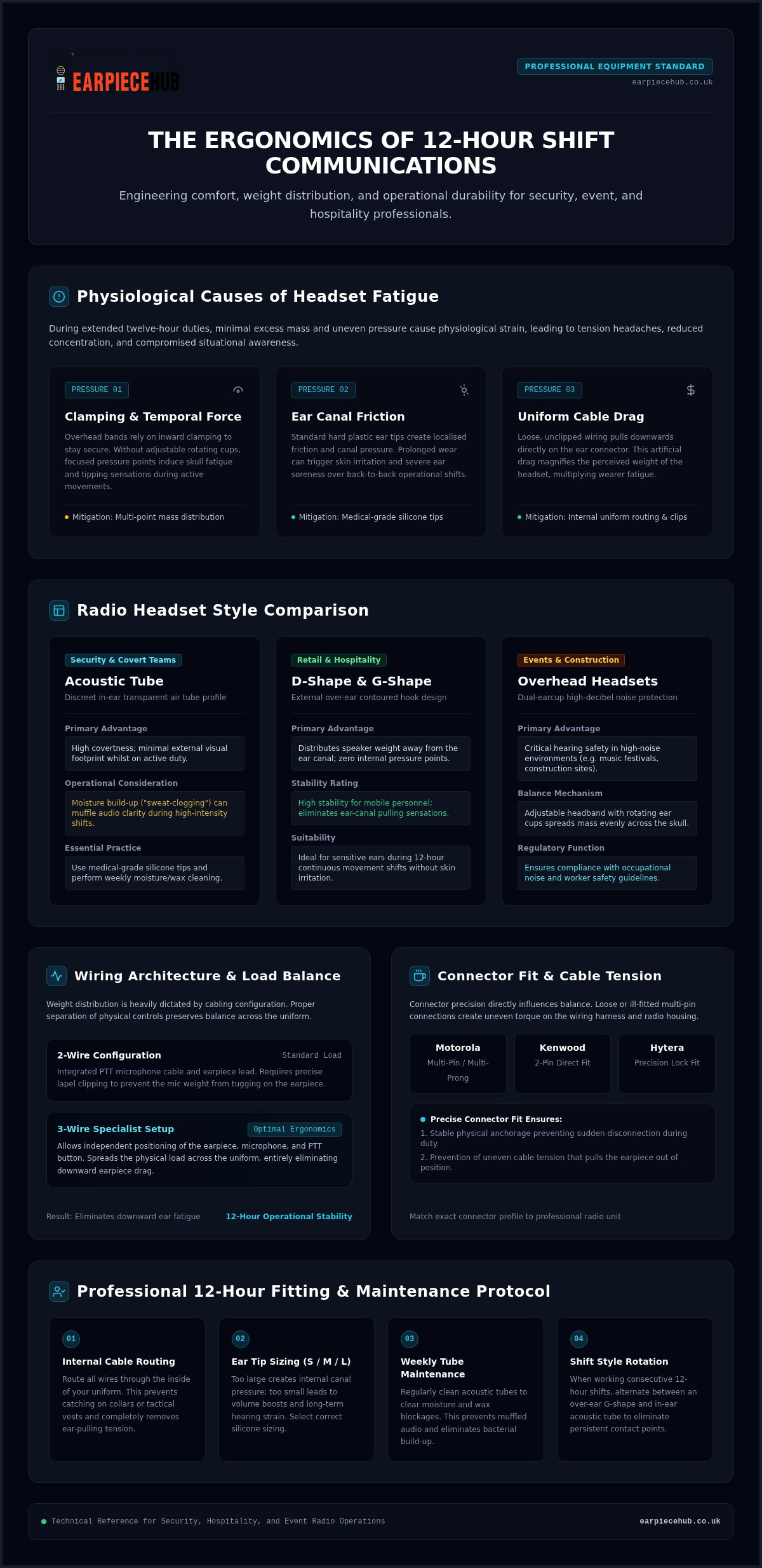
Headset fatigue isn’t just a minor discomfort; it’s a physiological response to constant pressure that can compromise situational awareness. During a twelve-hour shift, even a few extra grams lead to tension headaches and reduced concentration. Selecting a lightweight headset for long shifts is essential for maintaining safety and professional focus in high-stakes environments.
The mechanics of discomfort vary across different headset types and audio design. Overhead models rely on clamping force to stay secure, which often causes temporal pressure. Conversely, in-ear earpieces create ear canal pressure. To mitigate this, specialist gear uses medical-grade silicone and reinforced plastics. These materials offer professional durability without the bulk of standard consumer electronics.
A hidden factor in fatigue is “cable drag.” If wires aren’t routed correctly through a uniform, the weight of the cable pulls directly on the ear. This adds significant perceived weight, making it harder to find a lightweight headset for long shifts that feels weightless throughout the day. Proper cable management is as vital as the weight of the unit itself.
Weight vs. Balance: Finding the Sweet Spot
Balance often matters more than total mass. A slightly heavier headset with an adjustable headband and rotating ear cups distributes weight across the skull rather than focusing it on one point. This prevents the “tipping” sensation that forces users to constantly readjust their gear during active duty, which is a common cause of distraction.
The Impact of Long-Term Wear on Ear Health
Prolonged pressure causes skin irritation or even “cauliflower ear” in extreme cases of friction. Using soft, hypoallergenic tips is vital for hygiene and long-term comfort. Pressure point relief is the key to 12-hour comfort.
Comparing Radio Headset Styles for Maximum Comfort
Selecting a lightweight headset for long shifts requires matching the equipment style to your specific operational environment. For security teams, Acoustic Tube earpieces are the preferred choice for covert communication. They offer a discreet profile but can suffer from “sweat-clogging” during high-intensity shifts as moisture builds up inside the air tube. To maintain audio clarity, we recommend using soft medical-grade silicone ear tips and ensuring regular cleaning of the tube assembly.
Acoustic Tubes: The Covert Professional Choice
Weight distribution is a key factor when choosing between 2-wire and 3-wire systems. Whilst a 3-wire setup includes more cabling, it allows the microphone and PTT (Push-to-Talk) button to be positioned independently. This spreads the physical load across your uniform, preventing the earpiece from being pulled downwards. Using high-quality silicone tips further reduces internal ear pressure, making these systems viable for full day or night operations.
D-Shape and G-Shape: Stability for Active Shifts
Retail and hospitality staff who move frequently often find D-Shape and G-Shape earpieces more reliable. These styles use an external over-ear hook that distributes the weight of the speaker away from the sensitive ear canal. This design prevents the “pulling” sensation common with in-ear models during active movement. If you have sensitive ears, these external hooks provide a stable, pressure-free fit that lasts for 12 hours without causing skin irritation.
In high-decibel locations like music festivals or construction sites, noise-cancelling overhead headsets are essential. These provide critical hearing safety in line with occupational noise and hearing protection guidelines. Beyond the style, the connector type is vital for balance. Whether you use Motorola, Kenwood, or Hytera radios, a precise connector fit ensures the cable remains secure and doesn’t create uneven tension. You can browse our specialist radio accessories to find the exact match for your professional radio model.
Professional Fitting and Maintenance: Avoiding Fatigue on 12-Hour Shifts
Proper physical setup is the difference between a successful operation and physical agony. Even the best lightweight headset for long shifts fails if the cable is caught on your belt or collar. Routing wires through the inside of your uniform eliminates “ear-pulling” tension. Choosing the correct ear tip size (Small, Medium, or Large) is equally critical. A tip that is too large creates internal canal pressure, whilst one that is too small forces you to turn up the volume, which can lead to hearing damage over time.
Consistent maintenance is required to meet workplace noise regulations and worker safety standards. Acoustic tubes must be cleaned weekly to remove moisture and wax. These blockages muffle audio and harbour bacteria. If you work consecutive 12-hour shifts, rotating between an over-ear G-shape and an in-ear acoustic tube prevents specific pressure points from becoming chronic sores. This rotation allows the skin around the ear canal to recover.
Hygiene Standards for Shared Equipment
Maintaining a lightweight headset for long shifts involves more than just the initial purchase; it requires a commitment to component hygiene. Equipment sharing is common in security, but hygiene must remain personal. Use individual ear tips and acoustic tubes even if sharing the radio body. Sanitise silicone components using mild soapy water or alcohol-free wipes to ensure the material doesn’t become brittle or discoloured over time.
Replacing Components to Restore Comfort
Components like ear tips lose their elasticity after three to six months of daily professional use. When they become stiff, they no longer provide the necessary “fit and forget” comfort. Additionally, ensuring you have fresh batteries for Motorola DP1400 units maintains signal strength and audio clarity. This prevents the need to press the earpiece tighter against the ear to hear faint transmissions. Order replacement ear tips and acoustic tubes to restore your equipment’s original comfort and performance.
Selecting Your Specialist Gear from Earpiece Hub
Earpiece Hub serves as the central resource for UK communication professionals. We provide technical solutions for high-stakes environments where reliability is non-negotiable. Finding a lightweight headset for long shifts is straightforward when browsing our curated inventory. We stock specialist equipment for Motorola, Kenwood, and Hytera radios, ensuring every professional has access to the correct connector type for a secure, weight-balanced fit. Our focus remains on functional excellence rather than generic retail claims.
Why Professionals Choose Earpiece Hub
Our expertise lies in the technical “nitty-gritty” of radio peripherals. We specialise in 1-wire, 2-wire, and 3-wire configurations, allowing you to choose the exact cable distribution that suits your uniform and specific role. This specialist focus ensures that our lightweight acoustic tubes and D-shape earpieces meet professional standards for audio clarity and physical resilience. We offer a no-nonsense approach that prioritises your operational needs, backed by UK-based expert support to guide your selection.
Next Steps for Your Fleet
Maintaining a professional fleet requires a reliable supply of replacement parts. We provide universal earpiece adapters and essential components, such as replacement ear tips and batteries for Motorola DP1400 units, to keep your gear in top condition. For larger teams, our six-way multi-unit chargers ensure all devices are ready for the next 12-hour rotation. Investing in a high-quality lightweight headset for long shifts is a commitment to your team’s long-term health and focus. If you need to organise your equipment on short notice, our Next Day Shipping service provides the urgency your operations demand.
Browse our range of lightweight headsets for professional radios to find the perfect fit for your team today.
Elevate Your Operational Comfort
Selecting a lightweight headset for long shifts involves more than just checking the weight on the box. It requires a strategic look at cable routing, ear-tip materials, and the specific technical configurations that suit your radio fleet. By prioritising ergonomic balance and maintaining strict hygiene standards through regular component replacement, you ensure your team remains focused and safe during the most demanding 12-hour rotations. It’s about finding gear that stays out of the way so you can get the job done effectively.
As a UK Specialist Retailer, Earpiece Hub provides the expert technical support needed to choose the right equipment for Motorola, Kenwood, or Hytera systems. Our inventory is designed for professional durability and all-day wear. With Next Day Shipping available, you can upgrade your communication setup immediately. Shop our professional range of lightweight headsets today and experience the difference that specialist gear makes to your daily performance. Stay clear, stay comfortable, and stay connected.
Frequently Asked Questions
What is the lightest type of earpiece for a 12-hour shift?
Acoustic tube earpieces are the lightest option available for professional radio users. By using a clear air tube to transmit sound, they remove the weight of the speaker driver from the ear canal. This makes them the ultimate lightweight headset for long shifts where discretion and comfort are priorities. Pairing them with a soft silicone mushroom tip further reduces the physical footprint for a barely-there feel.
How do I stop my radio earpiece from hurting my ear?
Using the correct ear tip size and material is the most effective way to eliminate ear pain. Hard plastic tips cause friction and pressure sores, so we recommend switching to soft silicone alternatives. Additionally, ensure your cable is routed through your uniform to prevent “cable drag”. This stops the wire from pulling on your ear every time you move, which is a primary cause of fatigue.
Are noise-cancelling headsets too heavy for long shifts?
Professional noise-cancelling overhead headsets use advanced materials like reinforced plastics to keep weight to a minimum. Whilst they possess more mass than earpieces, their padded headbands distribute that weight across the skull rather than the sensitive ear canal. This makes them suitable for 12-hour shifts in loud environments. The key is choosing a model with rotating ear cups and adjustable tension for a personalised fit.
How often should I replace my acoustic tube ear tips?
Replace your ear tips every three to six months depending on the intensity of your work. Silicone components eventually harden and collect debris, which can lead to ear infections or muffled audio. Regularly installing fresh tips ensures your lightweight headset for long shifts remains hygienic and comfortable. It is a low-cost maintenance step that significantly extends the lifespan of your professional communication equipment and protects your ear health.
Can I use a lightweight headset with a Motorola DP1400?
The Motorola DP1400 is fully compatible with our range of lightweight acoustic tubes and G-shape earpieces. You only need to ensure the headset uses the correct 2-pin Motorola connector for a secure fit. Using these accessories reduces the physical strain on your ear whilst maintaining the high-quality audio performance expected from Motorola hardware. We also supply replacement batteries to ensure your radio remains operational for the full duration of your shift.
