





Uncategorized
The Ultimate Guide to Choosing a Discreet Communication Earpiece in 2026

Sep
Is your “covert” setup actually shouting your presence to everyone in the room? Many professionals rely on a discreet communication earpiece that looks the part but fails under pressure, whether through visible wires or muffled audio. You understand that in high-stakes security, a single technical glitch or a glaringly obvious acoustic tube can compromise an entire operation. It’s frustrating to manage equipment that’s either uncomfortable during a 12-hour shift or simply doesn’t talk to your radio fleet when you need it most.
This guide ensures you select the perfect covert earpiece for your radio and role, providing crystal-clear audio and total professional discretion. We’ll break down the technical differences between 1-wire, 2-wire, and 3-wire systems to help you choose the right configuration. You’ll discover how to achieve all-day comfort with modern ear-tip designs and ensure plug-and-play compatibility with your existing Motorola, Hytera, or Kenwood equipment. We’ll also explain how to maintain your kit to avoid common failures. By the end, you’ll have the knowledge to upgrade your comms with confidence.
Key Takeaways
- Compare 1-wire, 2-wire, and 3-wire configurations to determine the most effective PTT placement for your specific security or surveillance role.
- Guarantee seamless radio integration by selecting a discreet communication earpiece with the exact connector required for your Motorola or Hytera fleet.
- Optimise your audio clarity in loud environments by choosing specialised noise-cancelling components designed for high-stakes professional settings.
- Extend the operational life of your gear and maintain hygiene standards by following a simple maintenance routine for acoustic tubes and tips.
What Defines a Truly Discreet Communication Earpiece?
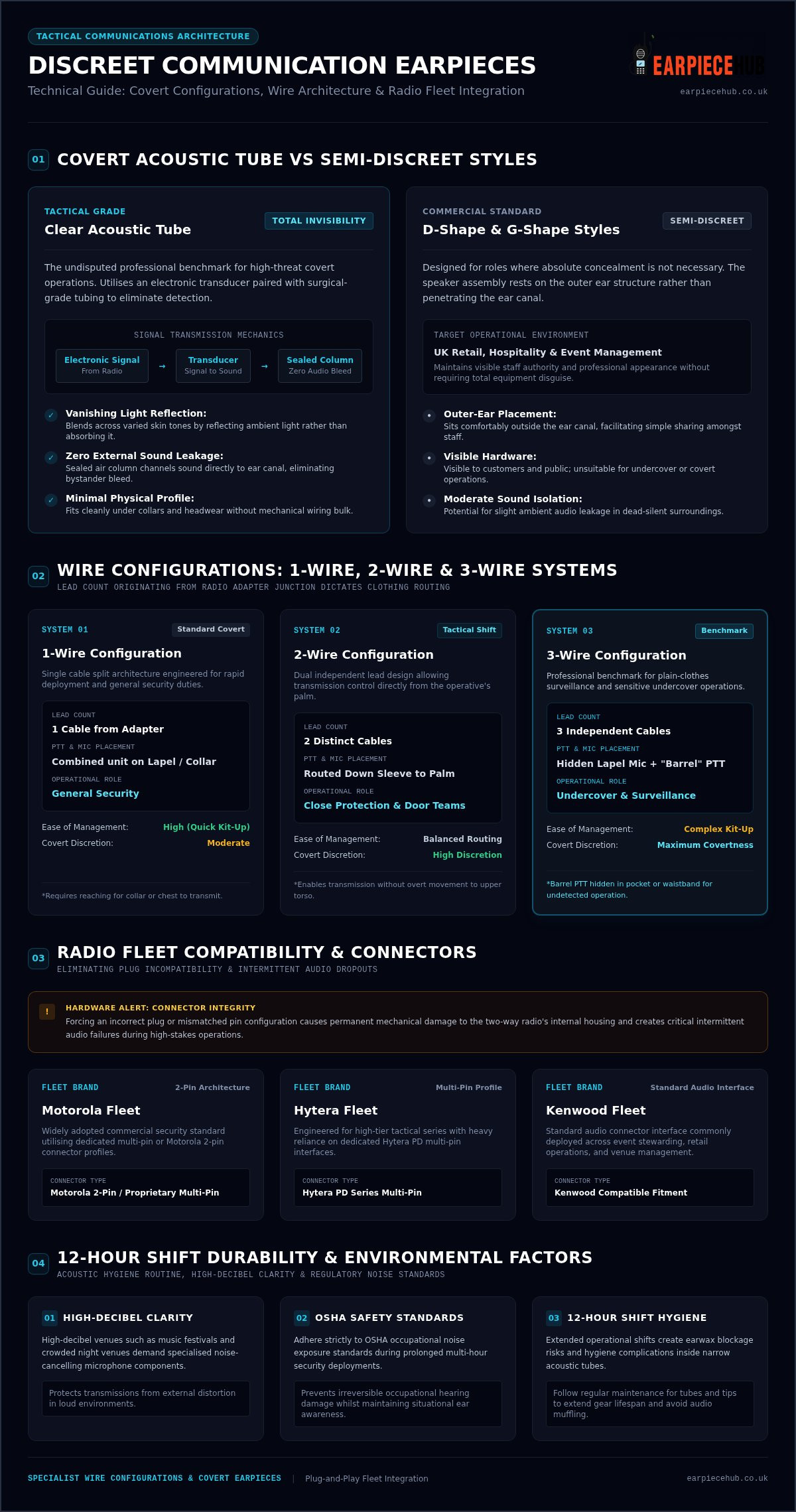
Professional security relies on the sharp distinction between overt and covert equipment. An overt headset signifies authority, whilst a discreet communication earpiece allows an operative to blend into a crowd. The clear acoustic tube is the primary tool for this; it vanishes against various skin tones by reflecting ambient light rather than absorbing it. This “vanishing” effect is critical for surveillance teams working in public spaces where detection must be avoided.
Preventing sensitive information from being overheard is equally vital. Standard earbuds often suffer from audio “bleed,” where sound escapes the ear and can be detected by bystanders in close proximity. Professional acoustic tubes use a sealed air column to deliver sound directly to the ear canal. This ensures that even in quiet, high-stakes environments, your communications remain private. Key benefits include:
- Zero external sound leakage for total privacy.
- High-fidelity voice reproduction in varied environments.
- Minimal profile that fits comfortably under collars or hats.
The Anatomy of an Acoustic Tube Earpiece
These kits function via a transducer that converts electronic signals into sound waves. These waves travel through hollow, surgical-grade tubing. This material is chosen for its durability and hygiene, ensuring every command during a push-to-talk (PTT) operation is heard with absolute precision. It’s a simple, mechanical solution that avoids the technical failures common in complex wireless alternatives whilst remaining easy to clean.
When to Choose D-Shape or G-Shape Styles
If your role doesn’t require total invisibility, D-shape or G-shape styles are effective alternatives. These are often called “semi-discreet” because the speaker sits on the outer ear rather than inside the canal. They’re popular in UK retail and hospitality where staff need to look professional but don’t need to hide their comms from customers. For high-threat covert work, however, the discreet communication earpiece with an acoustic tube remains the undisputed professional choice.
Wire Configurations: 1-Wire, 2-Wire, and 3-Wire Systems
Industry specialists use “wire” count to describe how many cables originate from the radio adapter junction. This specific terminology is vital when choosing a discreet communication earpiece, as it dictates how you route your gear through your clothing. Whilst a single wire is easier to manage, multiple leads offer the tactical flexibility required for high-stakes surveillance. The trade-off is simple: more wires mean more concealment but a slightly more complex “kit up” process before your shift starts.
1-Wire and 2-Wire: The Standard for Security
A 1-wire system is the most common choice for general security roles. It features a single lead combining the microphone and PTT button, typically clipped to a collar or lapel. In contrast, 2-wire systems provide two distinct cables. One lead goes to the ear, whilst the second routes the PTT and mic unit separately. This allows you to run the control lead down a sleeve, enabling you to transmit from the palm of your hand. Because these devices are worn for 12-hour shifts, you should be mindful of earwax blockage and hygiene risks that can occur with prolonged use.
3-Wire Systems for Maximum Covertness
For undercover or plain-clothes operations, 3-wire systems are the professional benchmark. This configuration uses three independent leads: one for the ear, one for a hidden lapel microphone, and a separate “barrel” PTT button. You can hide the PTT in a pocket or waistband, allowing you to communicate without ever reaching for your chest or neck. This ensures your movements remain natural and undetected by suspects. If you’re looking to upgrade your team’s tactical capabilities, you can browse our specialist wire configurations to find a compatible match for your radio fleet.
Matching Your Earpiece to Your Radio and Environment
Selecting a discreet communication earpiece requires more than just picking a style; you must ensure technical compatibility with your specific radio. A Motorola 2-pin connector is physically different from a Hytera PD series multi-pin. Forcing an incorrect fit can damage the radio’s housing or lead to intermittent audio failure during critical moments. Beyond the plug, consider these environmental factors:
- Noise Levels: High-decibel venues like festivals demand noise-cancelling features for clarity.
- Safety: Adhere to OSHA occupational noise exposure standards to prevent hearing damage.
- Awareness: Ensure the ear tip allows for ambient sound perception and situational awareness.
Compatibility with Major UK Radio Brands
We specialise in accessories for the UK’s most popular fleets. For Motorola users, we provide kits for everything from the legacy DP1400 to the latest MOTOTRBO R7 series. Hytera and Kenwood users must also be precise; digital and analogue models often use different pin configurations. If you manage a mixed fleet, earpiece adapters can bridge the gap, allowing a single headset style to work across multiple radio brands. You can shop our full range of radio-specific earpieces to find your exact match.
Professional Wire Management for Discretion
True covertness is maintained through meticulous wire routing. Always route cables under your shirt, following the line of your shoulder to the back of your neck. This prevents snagging on equipment during physical activity. Use clothing clips to secure the PTT unit and earpiece lead, ensuring the wires don’t “loop” or become visible at the collar. Effective management keeps the profile flat against the body, preserving your professional appearance whilst allowing for 360-degree situational awareness.
Maintenance and Hygiene: Prolonging Earpiece Life
Maintaining your discreet communication earpiece is essential for ensuring professional-grade audio clarity and preventing equipment failure. Most audio issues attributed to radio failure are actually caused by blockages within the acoustic tube. Earwax and condensation build-up act as physical barriers to sound waves, resulting in muffled or distant audio. Regular inspections help you identify these issues before they compromise a shift. Proper storage is equally important; avoid wrapping cables tightly around the radio, as this causes internal wire breaks and cable fatigue over time.
Replacement Parts and Essential Spares
Proactive kit management involves keeping a stock of consumables. Mushroom ear tips and clear acoustic tubes should be replaced every 3 to 4 months for daily users to prevent ear infections and maintain hygiene. If you use a Motorola DP1400, ensure you have a fresh replacement battery ready to avoid power loss during long shifts. Having these spares on hand ensures your comms remain operational without waiting for next-day shipping. It’s the most cost-effective way to avoid downtime.
Cleaning Your Acoustic Tube Safely
Clean your equipment weekly to remove wax and moisture. Follow these steps to ensure safe maintenance:
- Detach the clear tube from the electronic transducer.
- Blow out any visible moisture droplets using a bulb blower or canned air.
- Wash the detached tube and silicone tip in warm, soapy water.
- Ensure the tube is completely dry before reconnecting to prevent water damage to the electronics.
Never submerge the PTT unit or the transducer in liquid. If audio remains distorted after cleaning the tube, check the radio’s accessory port for debris or pins that may be bent. Consistent maintenance ensures your discreet communication earpiece provides reliable, crystal-clear performance throughout its operational life.
Upgrade Your Professional Communications Today
Selecting the right hardware is about more than just audio; it’s about operational security and long-term reliability. By matching your wire configuration to your specific role and sticking to a strict maintenance schedule, you ensure your kit never fails when it matters most. Investing in a high-quality discreet communication earpiece provides the total discretion and all-day comfort required for modern security work in the UK. Don’t settle for equipment that compromises your safety or your professional appearance.
Earpiece Hub is a UK specialist with over 10 years of industry experience. We provide 24/7 technical support for all radio peripherals and offer next-day shipping nationwide to keep your team operational. Whether you need a 3-wire system for covert surveillance or replacement acoustic tubes for your existing fleet, we have the technical expertise to guide your choice and ensure seamless compatibility.
Browse our range of professional discreet earpieces at Earpiece Hub and secure the specialist equipment you need. We look forward to supporting your communication requirements with expert knowledge and rapid delivery.
Frequently Asked Questions
Which discreet earpiece is best for loud environments like nightclubs?
For high-noise venues like nightclubs, a noise-cancelling overhead headset provides the best isolation. However, if you require a discreet communication earpiece, an acoustic tube model paired with memory foam or triple-flange ear tips is more effective than standard silicone. These specialised tips create a tighter seal, blocking ambient music whilst ensuring radio traffic remains audible. Always ensure your radio volume is set to a safe level to protect your hearing during long shifts.
Can I use a Motorola earpiece with a Hytera radio using an adapter?
You can use a Motorola earpiece with a Hytera radio provided you use a high-quality earpiece adapter. These adapters bridge the gap between different pin configurations, such as converting a Motorola 2-pin lead to a Hytera PD series multi-pin port. This is a cost-effective solution for teams managing mixed radio fleets. We stock various adapters to ensure your existing peripherals remain functional even if you upgrade your radio handsets or switch brands.
What is the difference between a 1-wire and a 2-wire earpiece?
The main difference lies in the cable configuration and PTT placement. A 1-wire system features a single lead that combines the microphone and push-to-talk button, usually clipped to the collar. A 2-wire discreet communication earpiece uses two separate cables. This allows you to route the earpiece lead to your ear whilst running the PTT and microphone lead down your sleeve. This setup is ideal for operatives who need to transmit from their palm.
How often should I replace the acoustic tube on my covert earpiece?
Professional daily users should replace their clear acoustic tube and ear tips every 3 to 4 months. Over time, the surgical-grade plastic can harden, discolour, or become brittle due to UV exposure and skin oils. Frequent replacement is essential for maintaining hygiene and preventing ear infections. If you notice the tube turning yellow or losing its flexibility, it’s time to swap it for a fresh replacement to ensure continued comfort and clarity.
Why is my acoustic tube earpiece producing muffled audio?
Muffled audio is typically caused by a physical blockage within the clear tube. Earwax often accumulates in the ear tip, whilst condensation can build up inside the tube lumen, especially during outdoor shifts. You should detach the tube and check for these obstructions. If the tube is clear, the issue may be a failing transducer or a poor connection at the radio port. Regular cleaning and using a bulb blower can prevent these common audio failures.
