





Uncategorized
Choosing the Best Radio Earpiece with In-Line Microphone: A Professional Buyer’s Guide (2026)
Sep
Did you know that over 70% of professional earpiece malfunctions are caused by stress failures at the cable strain relief or debris inside the PTT housing? When your radio earpiece with in-line microphone fails mid-shift, it’s more than a technical glitch; it’s a breakdown in operational safety. You’ve likely dealt with the frustration of snagged wires, connector confusion, or the discomfort of a poorly fitted bud during a long 12-hour duty. We understand that reliable kit is the backbone of your team’s coordination and security.
This guide ensures you master the technical nuances of these essential tools to maintain crystal-clear, discreet communication whilst on shift. We’ll demystify the transition to the latest M20 connectors, compare the utility of 1-wire versus 2-wire configurations, and highlight the durability benchmarks needed to reduce your long-term replacement costs. From acoustic tube maintenance to IP-rated weatherproofing, you’ll gain the expertise required to select the perfect hub for your fleet’s specific demands.
Key Takeaways
- Learn how to distinguish between 1-wire and 2-wire configurations to ensure your team maintains a discreet appearance whilst on duty.
- Identify the correct connector for your fleet, whether using Motorola 2-pin, Kenwood, or Hytera radios, to avoid audio failure during critical comms.
- Master the technical nuances of selecting a high-quality radio earpiece with in-line microphone that balances long-term durability with shift-long comfort.
- Discover how to increase the life cycle of your peripherals through proactive maintenance and the use of compatible replacement batteries and ear tips.
Radio Earpieces with In-Line Mics in Professional Comms
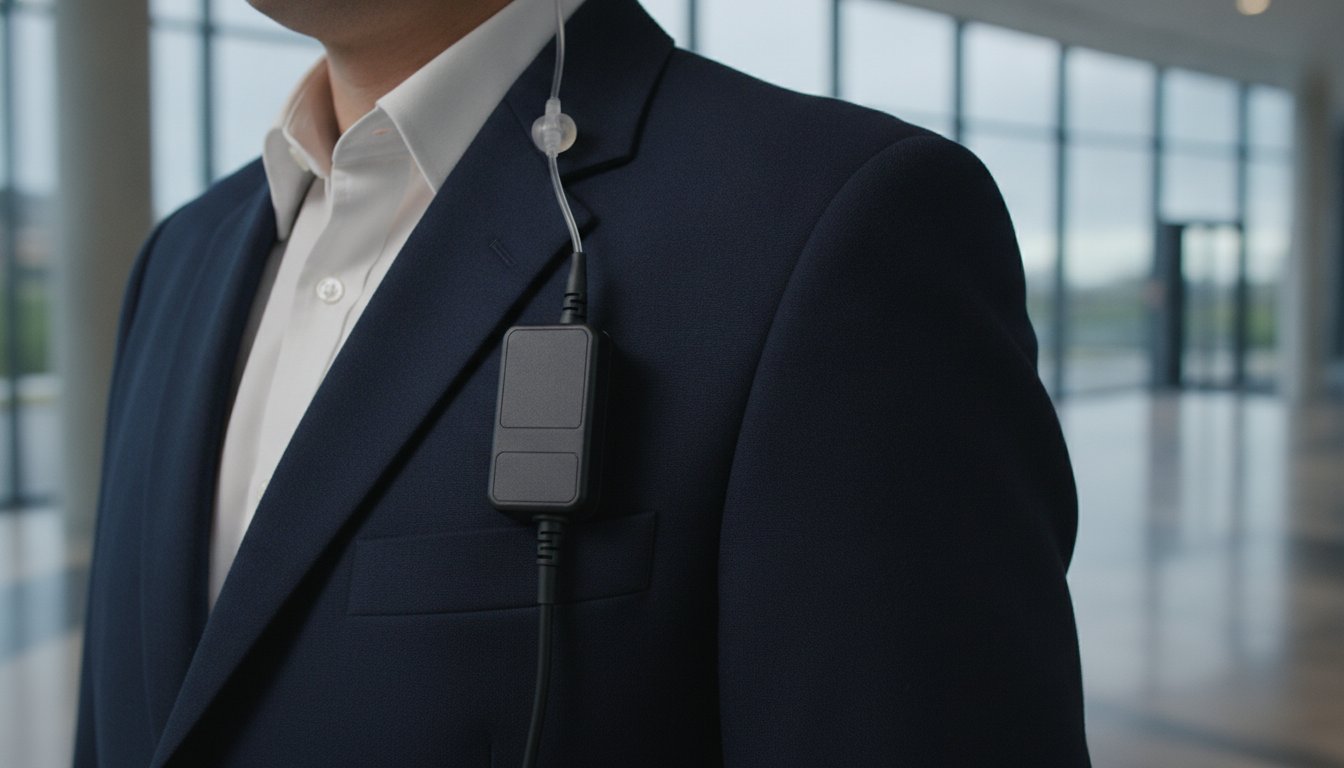
A radio earpiece with in-line microphone integrates the transducer and the push-to-talk functionality directly onto the cable. This configuration ensures that professionals don’t need to reach for their radio unit, allowing for faster response times whilst maintaining full situational awareness. Amongst UK security firms, these units are the preferred choice for covert and semi-covert operations. They offer a critical balance between high audio sensitivity for whispered transmissions and the rugged durability required in high-pressure environments.
Why In-Line Microphones Beat Remote Speaker Mics for Discretion
While a Remote Speaker Microphone (RSM) excels in open patrol work, its bulky shoulder-mounted footprint is a liability in discreet roles. Door supervisors and retail loss prevention teams require covert audio to maintain a professional appearance. An in-line cable sits flat against a suit or uniform, allowing for subtle communication that doesn’t alert the public. This ensures that security personnel can coordinate effectively without compromising their tactical position or drawing unnecessary attention.
Essential Features for Security and Retail Roles
Success in noisy environments like nightclubs or busy warehouses requires equipment that prioritises clarity and ease of use. A standard earpiece won’t suffice when ambient noise levels peak. Professional-grade units must include specific features to remain functional throughout a long shift:
- Tactile PTT Controls: Robust buttons designed for immediate actuation, even whilst the user is wearing tactical gloves.
- Crystal-Clear Reception: High-output speakers that cut through background chatter to deliver intelligible instructions.
- Strain Relief: Reinforced points where the cable meets the connector to prevent the common failure rate caused by mechanical stress.
By focusing on these technical specifications, teams can reduce replacement costs and ensure their comms remain operational. Selecting a specialist hub for your radio peripherals ensures that every radio earpiece with in-line microphone meets these rigorous industry standards.
1-Wire vs 2-Wire: Choosing the Right In-Line Microphone Wiring
Selecting the correct wiring for your radio earpiece with in-line microphone determines both your comfort and your profile. A 1-wire system features a single cable that travels from the radio to the PTT unit, with a secondary lead reaching the ear. A 2-wire setup splits at the connector, providing two independent cables. This technical distinction is the primary factor in how easily you can conceal the equipment beneath professional attire.
You might worry that more wires lead to more tangles, but specialist gear avoids this through high-tensile, polyurethane-jacketed cabling. These materials ensure that transmissions meet rigorous speech intelligibility standards, even when cables are routed through layers of clothing. Durable strain relief boots at the connector ends further prevent the mechanical failures common in cheaper, generic alternatives.
1-Wire Systems for Hospitality and Retail
Staff in supermarkets or leisure centres often prefer 1-wire systems for their sheer simplicity. These earpieces are easy to put on and take off, making them ideal for roles where radio use is frequent but not constant. Since the microphone usually clips to the lapel or collar, it remains accessible for quick updates without the need for complex wire management under a uniform.
2-Wire Systems for Covert Security Operations
In high-stakes security, 2-wire systems are the gold standard for discretion. They allow you to separate the earpiece from the PTT unit, enabling the “sleeve-mic” technique. By routing the microphone down your jacket sleeve, you can communicate into your cuff whilst maintaining a completely natural posture. If your role demands this level of stealth, explore our specialist 2-wire options to find a reliable solution for your team.

Matching Connectors and Ear Styles to Your Radio Fleet
Choosing a radio earpiece with in-line microphone requires precise matching of the connector pin configuration. A mismatch can lead to intermittent audio or hardware damage. Whether your team uses Motorola 2-pin, Kenwood 2-pin, or Hytera variations, the physical interface is non-negotiable. Earpiece Hub provides dedicated earpiece adapters to ensure cross-radio compatibility for businesses managing mixed fleets, allowing you to standardise your peripherals even if your handheld units vary.
Selecting Compatible Connectors for Motorola and Kenwood
Identifying the correct plug is essential for units like the Motorola DP1400 and other professional MOTOTRBO units. These typically utilise the M1 2-pin connector, a staple in UK security and retail environments. Similarly, the Kenwood 2-pin (K1) standard remains a popular choice amongst businesses because it is the dominant cross-brand interface. Ensuring a snug, secure fit prevents the audio dropouts that often occur with generic, low-quality connectors during active shifts.
Acoustic Tube vs G-Shape: Comfort for Long Shifts
Comfort during a 12-hour shift depends heavily on the ear interface style. Acoustic tubes offer maximum discretion and superior hygiene because the ear tips are easily replaceable. These are ideal for high-stakes environments where a covert appearance is mandatory. However, for users who prefer an over-ear fit without inserting anything into the ear canal, G-shape and D-shape earpieces are excellent alternatives. When selecting your style, always consider occupational noise exposure guidelines to ensure your team maintains safe audio levels whilst operating in loud venues or warehouses.
Equipping your staff with the right combination of connector and ear style reduces downtime and improves overall morale. Shop our full range of radio connectors and earpiece styles to find the perfect match for your fleet today.
Ensuring Audio Reliability and Earpiece Longevity
Professional comms rely on proactive maintenance. Using a high-quality radio earpiece with in-line microphone is only half the battle; you must also prevent internal wire breakage through proper handling. To organise cables correctly, avoid tight coils that stress the copper core. Instead, use loose, natural loops to ensure signal integrity throughout the shift. Earpiece Hub serves as your central resource for technical advice and ongoing support to keep your fleet operational.
Cleaning and Maintaining Your Acoustic Tube
Moisture and wax build-up are the primary causes of muffled audio in clear acoustic tubes. To clean them, disconnect the tube from the transducer and use compressed air or a specialised cleaning wire to remove blockages. Regular replacement of ear tips is essential for hygiene and maintaining the seal required for audio clarity in loud environments. If the tube begins to yellow or becomes brittle, it’s a sign that the plastic is degrading and requires immediate replacement.
When to Replace Your Replacement Battery or Ear Tips
Recognising signs of earpiece fatigue prevents communication blackouts during critical moments. If you experience crackling audio, intermittent PTT response, or visible cable wear, it’s time for a refresh. Maintaining a consistent signal also requires monitoring your power source. A fresh replacement battery for Motorola DP1400 units ensures your radio has the voltage needed to drive clear transmissions through the in-line mic without signal drop-off.
Keeping a stock of maintenance items in your radio hub minimises downtime. We recommend having these essentials on hand to support your team:
- Replacement acoustic tubes and ear tips for hygiene rotation.
- Spare batteries to support intensive 24/7 operations.
- Alternative G-shape or D-shape earpieces for staff who prefer different fits.
By treating your equipment with a specialist approach, you extend the life cycle of every peripheral and ensure your team stays connected when it matters most.
Secure Your Professional Comms Strategy
Selecting the correct radio earpiece with in-line microphone is a critical decision for any operational lead. By matching the wiring configuration to your team’s physical movements and ensuring connector compatibility across your Motorola, Kenwood, or Hytera fleet, you eliminate the risk of audio failure at pivotal moments. Proactive maintenance, including the regular rotation of ear tips and the replacement of ageing batteries, remains the most effective way to extend the life cycle of your equipment whilst maintaining crystal-clear reception.
Earpiece Hub has served as a specialist UK retailer since 2015, offering expert technical support for all major radio brands. We understand the high-stakes nature of security and retail coordination, which is why we prioritise Next Day Shipping to keep your operations running without delay. Trust in a partner that values reliability and functional expertise as much as you do.
Shop our professional range of radio earpieces with in-line microphones at Earpiece Hub today and experience the difference that specialist hardware makes. Your team deserves communication tools that never quit.
Frequently Asked Questions
What is the difference between a 1-wire and 2-wire radio earpiece?
A 1-wire system uses a single cable running from the radio to the combined PTT and microphone unit, with a secondary lead going to the ear. This is ideal for retail staff. A 2-wire system has two separate cables from the radio connector. One leads to the earpiece and the other to the mic. This allows for better concealment under suits or uniforms, making it the standard for security personnel.
Will a Motorola earpiece work with a Kenwood radio?
No, a standard Motorola earpiece won’t fit a Kenwood radio due to different pin spacings and connector types. Motorola often uses M1 or M12 pins, whilst Kenwood uses the K1 2-pin standard. However, you can achieve compatibility by using a dedicated earpiece adapter for any radios. These specialised components allow you to use your preferred earpiece across a mixed fleet without requiring entirely new sets of hardware for your team.
How do I clean my acoustic tube earpiece safely?
To clean your tube, first disconnect it from the transducer to avoid water damage to the electronics. Use a syringe to flush the tube with warm, soapy water or use compressed air to blow out moisture and wax. Always ensure the tube is completely dry before reconnecting. Replacing your ear tips every three to six months is also essential to maintain hygiene and ensure the audio remains crystal-clear during long shifts.
Can I use a radio earpiece with an in-line microphone for covert security?
Yes, a radio earpiece with in-line microphone is the industry standard for covert and semi-covert security roles. Unlike bulky shoulder mics, the in-line design sits flat against the body and can be easily hidden beneath a jacket or shirt. For maximum discretion, security professionals often choose 2-wire systems. These allow the microphone to be routed down a sleeve, enabling you to transmit messages subtly without alerting the public to your presence.
Why is my radio earpiece microphone not picking up my voice clearly?
Audio failure often stems from debris blocking the microphone port or moisture build-up inside the acoustic tube. If the audio is muffled, check for wax or condensation first. Another common cause is a low-voltage signal from a depleted power source. Ensuring you have a fresh replacement battery for Motorola DP1400 or similar units can significantly improve transmission strength. Finally, inspect the cable strain relief for internal wire breakage that causes intermittent signal.
