





Uncategorized
Mushroom Ear Tips: Radio Earpiece Fitting & Care Guide
Sep
Your radio is a sophisticated piece of technology, but its performance often relies entirely on a small piece of silicone costing less than a pound. You likely understand the frustration of a long shift where an ill-fitting earpiece causes constant skin irritation or, worse, falls off the acoustic tube mid-transmission. Ear fatigue and muffled audio from wax build-up aren’t just minor annoyances; they’re genuine risks to operational efficiency. Using the correct mushroom ear tips for radio earpiece setups is the most effective way to maintain crystal-clear audio and professional-grade comfort.
This guide ensures you choose the right components to improve passive noise isolation while protecting your hearing in loud environments. We’ll explore how to select hypoallergenic materials that prevent soreness and implement a simple maintenance routine that extends the life of your equipment. From fitting techniques to hygiene protocols, discover how to transform your daily communication experience into something seamless, reliable, and comfortable for every hour of your shift.
Key Takeaways
- Understand why the dome-shaped silicone design is essential for achieving a secure, comfortable seal during long shifts.
- Master the correct technique for fitting mushroom ear tips for radio earpiece sets to ensure they remain attached to the acoustic tube.
- Learn how to implement a regular cleaning routine that prevents wax build-up and maintains crystal-clear audio performance.
- Identify the benefits of sourcing professional-grade replacement tips from a UK specialist to guarantee hygiene and equipment longevity.
What are Mushroom Ear Tips for Radio Earpieces?
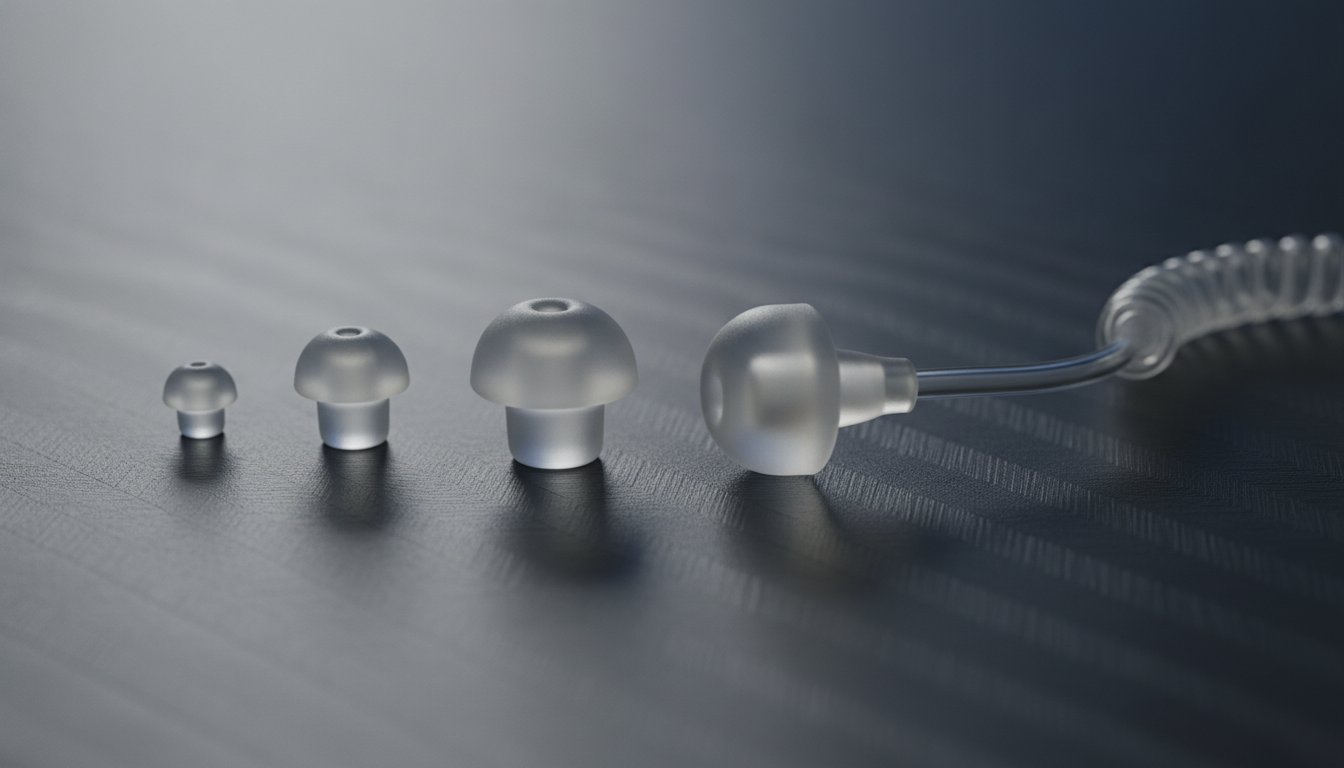
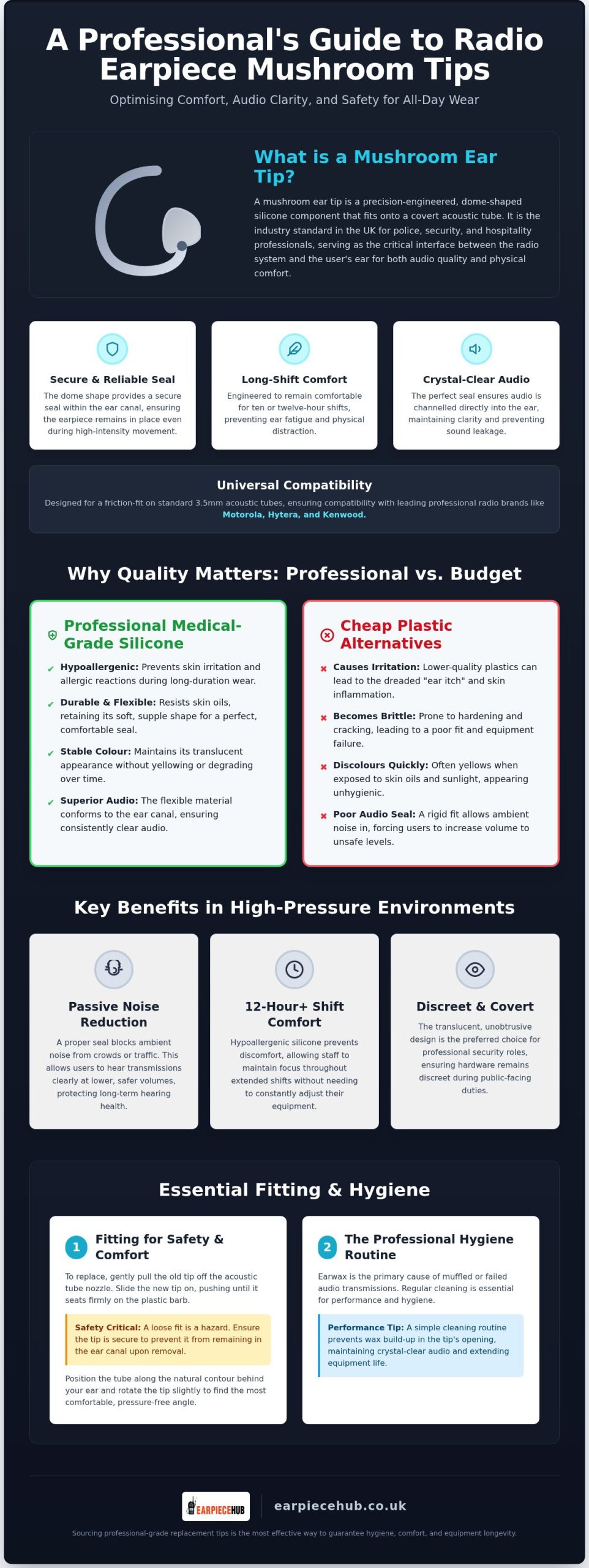
A mushroom ear tip is a precision-engineered, dome-shaped silicone component that fits onto the terminal end of a covert acoustic tube. This accessory serves as the primary interface between the radio system and the user’s ear, making it critical for both audio quality and physical comfort. In the UK, these tips are the established industry standard for police, security, and hospitality professionals who require reliable, discreet communications. Part of the broader Replacement Acoustic Tubes and Ear Tips category, the ‘mushroom’ design provides a secure seal within the ear canal whilst remaining comfortable for ten or twelve-hour shifts.
Universal Compatibility with Professional Radios
Most professional two-way radio transceiver setups utilise a standard 3.5mm acoustic tube. Consequently, professional mushroom ear tips for radio earpiece systems offer universal compatibility with leading hardware from Motorola, Hytera, and Kenwood. They rely on a tight friction-fit design to stay in place. This ensures the tip remains firmly attached to the acoustic tube even amongst high-intensity movement or physical activity. It’s a simple but effective mechanical connection that prevents the tip from becoming lodged in the ear or falling off during a pursuit.
While various alternatives exist, the mushroom shape remains the most popular due to its versatility. Unlike ‘open ear’ earmoulds that prioritise ambient sound or ‘torpedo’ tips that act as a heavy-duty plug, the mushroom design provides balanced passive noise isolation. It blocks out distracting background chatter while allowing the user to maintain essential situational awareness. Choosing high-quality silicone replacements ensures the material doesn’t degrade or become brittle, which is a common issue with budget alternatives. This makes them a dependable choice for any professional fleet looking to maintain clear, consistent communication channels.
The Advantages of Professional Mushroom Ear Tips
Professional mushroom ear tips for radio earpiece units offer significant operational benefits beyond a simple secure fit. They’re engineered for high-pressure environments where equipment reliability is paramount. Their discrete, translucent appearance makes them the preferred choice for covert operations and professional security roles, ensuring the hardware remains unobtrusive during public-facing duties.
Long-duration wear in the security sector often leads to skin irritation or the dreaded “ear itch.” By utilising hypoallergenic materials, these tips prevent the inflammatory responses common with lower-quality plastics. This allows staff to maintain focus during 12-hour shifts without the distraction of physical discomfort or the need to constantly adjust their equipment.
Medical-Grade Silicone vs. Cheap Alternatives
Specialist equipment uses medical-grade silicone because it retains its shape and colour whilst resisting the oils produced by human skin. Cheap alternatives often become brittle or yellow over time. The flexibility of high-quality mushroom ear tips for radio earpiece systems is vital for achieving a perfect seal. A soft, supple tip conforms to the ear canal, ensuring audio clarity remains high even during intense movement. If your current gear feels rigid, you should browse professional replacement ear tips to restore comfort.
Passive Noise Reduction and Audio Safety
Effective passive noise isolation protects the user’s hearing by reducing the need for high volume settings. When a mushroom tip creates a proper seal, it blocks out ambient noise amongst loud crowds or traffic. This acoustic coupling means the user hears transmissions clearly at lower decibels. It’s a critical factor in protecting long-term hearing health, as it prevents the need to “crank up” the radio to compete with environmental noise.
How to Fit and Clean Your Mushroom Ear Tips
Proper maintenance of your communication gear prevents total audio failure during critical moments. Fitting new mushroom ear tips for radio earpiece units is a straightforward process, but it must be done correctly to ensure safety. To replace a worn tip, gently pull the existing silicone dome away from the acoustic tube nozzle. Slide the new tip onto the plastic barb, pushing until it seats firmly. A loose fit is a safety hazard; if the tip isn’t secure, it may remain in your ear canal when you remove the earpiece.
Fitting Your Tip for Maximum Comfort
Once the tip is attached, position the acoustic tube so it follows the natural contour behind your ear. The tube shouldn’t pull on the outer ear or feel tight against the skin. If you experience discomfort, try rotating the mushroom tip slightly on the nozzle to find a better angle for your specific ear shape. This adjustment ensures the dome creates a seal without applying unnecessary pressure to the canal walls.
The Hygiene Routine for Professionals
Earwax is the primary cause of muffled audio. Over time, wax accumulates in the small opening of the tip, eventually blocking the sound path entirely. Professionals should follow a weekly cleaning cycle to maintain clarity:
- Remove the silicone tip from the tube.
- Wash in warm, soapy water using a mild detergent.
- Avoid alcohol-based cleaners or harsh chemicals, as these degrade medical-grade silicone.
- Ensure the tip is completely dry before reattaching it to prevent moisture from entering the acoustic tube.
Sharing earpieces or tips is a significant health risk. In high-pressure security environments, cross-contamination leads to persistent ear infections. Always maintain your own dedicated equipment. If your tip shows discolouration, feels rigid, or no longer stays firmly on the tube, it requires immediate replacement. Ensure your team is fully equipped by stocking up on Replacement Acoustic Tubes and Ear Tips to maintain peak operational hygiene.
Choosing High-Quality Replacement Ear Tips for Your Fleet
Sourcing mushroom ear tips for radio earpiece units from a specialist UK retailer like Earpiece Hub ensures consistent quality across your entire team. While generic bulk packs often consist of stiff, uncomfortable plastics, professional-grade replacements use supple silicone that maintains its integrity during intense use. Buying in bulk is a strategic move for large security teams to maintain strict hygiene standards. It ensures that every operative has access to a fresh, clean tip at the start of their rotation, reducing the risk of ear infections and equipment failure.
Fleet Maintenance and Spare Parts Management
Organising a regular replacement schedule is the most effective way to prevent audio degradation. You’ll know it’s time to refresh your fleet’s components when tips become discoloured, lose their elasticity, or fail to grip the acoustic tube firmly. Keeping a stock of spare parts in a central equipment store allows for immediate replacements if a tip is lost or damaged on duty. This proactive approach keeps your communications operational without downtime.
The Earpiece Hub Quality Guarantee
We provide professional-grade peripherals designed to withstand the rigours of daily security and hospitality work. Our equipment is compatible with major brands like Motorola, Hytera, and Kenwood, ensuring a seamless fit for your existing radio inventory. If you’re unsure which tip suits your specific radio model, our expert support team provides the technical guidance you need. We act as your reliable partner for all communication essentials, offering next-day shipping for urgent requirements. Browse our range of Replacement Acoustic Tubes and Ear Tips to secure your fleet’s performance today.
Optimise Your Communications Performance
Maintaining your communication equipment shouldn’t be an afterthought. By prioritising high-quality mushroom ear tips for radio earpiece setups, you ensure your team remains comfortable during the longest shifts whilst benefiting from superior audio clarity. Regular cleaning and a proactive replacement schedule are the best defences against wax build-up and material degradation. Investing in professional-grade silicone prevents the skin irritation and audio muffling common with budget alternatives.
As a UK specialist founded in 2015, Earpiece Hub understands the high-stakes nature of security and professional communications. We stock peripherals compatible with all major radio brands to keep your operations running smoothly. With next day shipping available, you can refresh your fleet’s essential components without delay. Don’t let a small accessory compromise your operational efficiency.
Shop Professional Replacement Ear Tips at Earpiece Hub and experience the difference that specialist equipment makes to your daily workflow.
Frequently Asked Questions
How often should I replace my mushroom ear tips?
You should replace your mushroom ear tips every three to six months depending on the intensity of your shifts. Daily use causes silicone to absorb skin oils, making the material yellow or rigid over time. If you notice the tip no longer creates a secure seal or feels physically uncomfortable, it requires immediate replacement. Maintaining a regular cycle is essential for both hygiene and consistent audio performance during long shifts.
Are mushroom ear tips universal for all radio brands like Motorola and Kenwood?
Yes, mushroom ear tips for radio earpiece sets are designed to be universal. They utilise a friction-fit design that slides onto the standard 3.5mm barb found on most covert acoustic tubes. This makes them compatible with professional hardware from Motorola, Kenwood, and Hytera. Since the connection point is standardised across the industry, you can easily swap tips regardless of the specific radio model or brand your security team currently uses.
Can I wash my mushroom ear tips or should I just throw them away?
You can wash your silicone tips rather than throwing them away. Use warm, soapy water and a mild detergent to remove surface oils and debris. Avoid using alcohol-based wipes or harsh chemical cleaners, as these cause professional-grade silicone to become brittle and crack. Ensure the tip is completely dry before reattaching it to your acoustic tube to prevent moisture from entering the audio channel and causing long-term equipment damage.
Why is my earpiece audio sounding muffled or quiet?
Muffled or quiet audio is typically caused by earwax build-up blocking the small opening of the ear tip. Even a tiny amount of debris significantly reduces volume and clarity. Alternatively, moisture or condensation inside the acoustic tube can create an airlock. You should remove the tip to check for blockages and inspect the tube for any kinks or trapped water droplets that might be obstructing the sound path.
What is the difference between mushroom tips and acoustic tube earmoulds?
Mushroom tips are dome-shaped and sit inside the ear canal to provide a secure seal and passive noise isolation. In contrast, acoustic tube earmoulds, often called “open ear” inserts, fit into the outer frame of the ear. Earmoulds allow more ambient sound to enter, which is useful for situational awareness, whereas mushroom tips are better for hearing radio transmissions clearly in loud environments or amongst crowded spaces.
