





Uncategorized
Acoustic Tube vs D-Shape Earpiece: The Professional UK Guide 2026
Sep
A single missed radio transmission during a critical incident isn’t just an inconvenience; it’s a security breach that puts your entire team at risk. You’ve likely felt the frustration of audio cutting out or the nagging ache of a poorly fitted bud halfway through a 12-hour shift. It’s a common struggle for UK security professionals who need to balance a professional appearance with absolute reliability. Choosing between an acoustic tube vs d-shape earpiece often feels like a toss-up between covert style and practical comfort, but the wrong choice can lead to hygiene issues or connector confusion that stalls your operation.
We understand that in high-stakes environments, your gear must perform without fail. This guide provides a technical breakdown of both styles to help you choose the most reliable communication setup for your specific role. You’ll discover how different wire configurations impact your movement and why certain designs are better for shared equipment environments. We’ll preview the essential maintenance tips and compatibility checks that ensure your radio remains a lifeline, not a liability.
Key Takeaways
- Understand how acoustic tubes use air pressure and external transducers to deliver crystal-clear audio whilst eliminating electronic interference in the ear canal.
- Compare the acoustic tube vs d-shape earpiece to determine if your security role requires high-level covert discretion or the hygiene and comfort of an over-ear design.
- Identify the ideal wire configuration for your operational needs, ranging from simple 1-wire setups to flexible 2-wire systems with lapel-mounted PTT buttons.
- Learn professional maintenance protocols to clear moisture and manage hygiene, ensuring your communication equipment remains reliable during demanding 12-hour shifts.
What is a Covert Acoustic Tube Earpiece and How Does it Work?
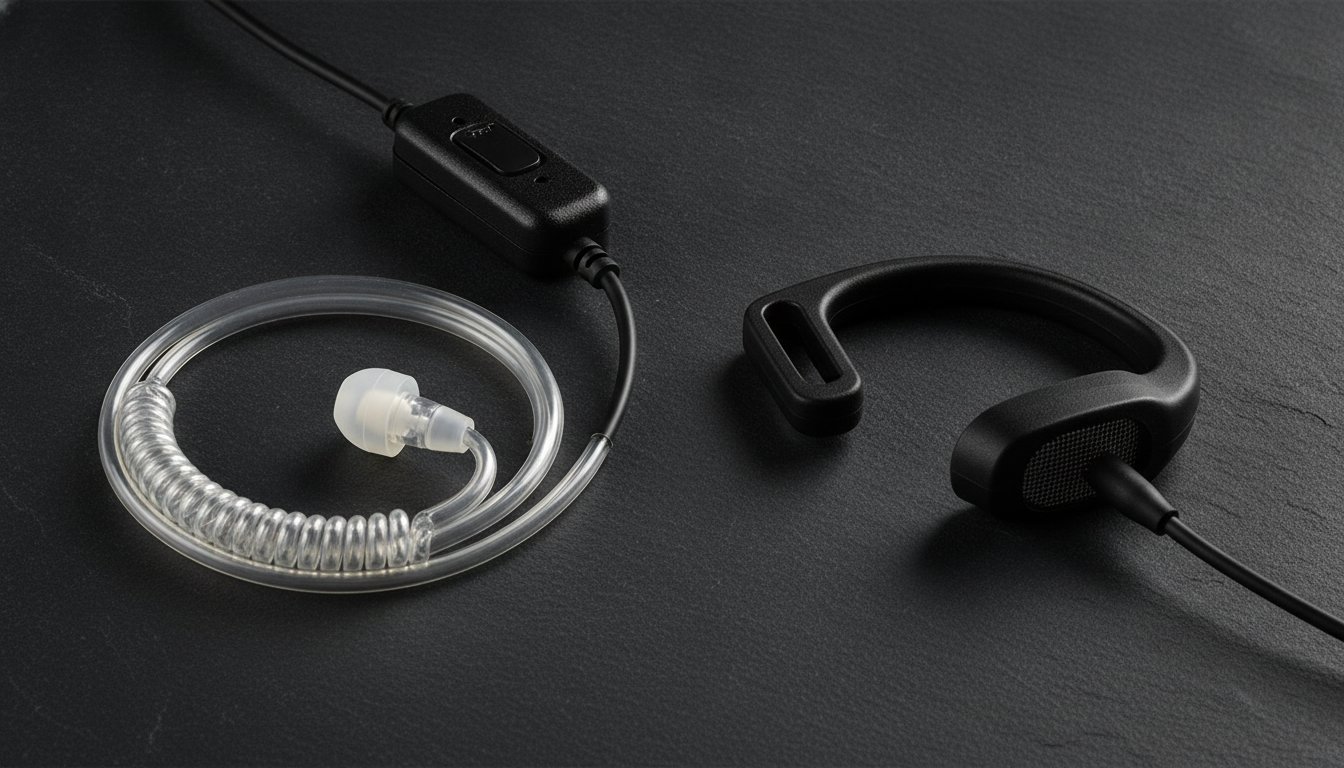
A covert acoustic tube earpiece is a specialist communication tool built for environments where discretion is non-negotiable. It delivers audio through a clear plastic tube using air pressure. No speaker sits inside your ear. The core of this system is the transducer, a component that converts electrical signals from your radio into sound waves at the base of the tube. This ensures no electronic interference reaches your ear canal. This method of sound delivery, similar to the principle behind Acoustic tube headphones, provides a clean and reliable audio feed for hours on end.
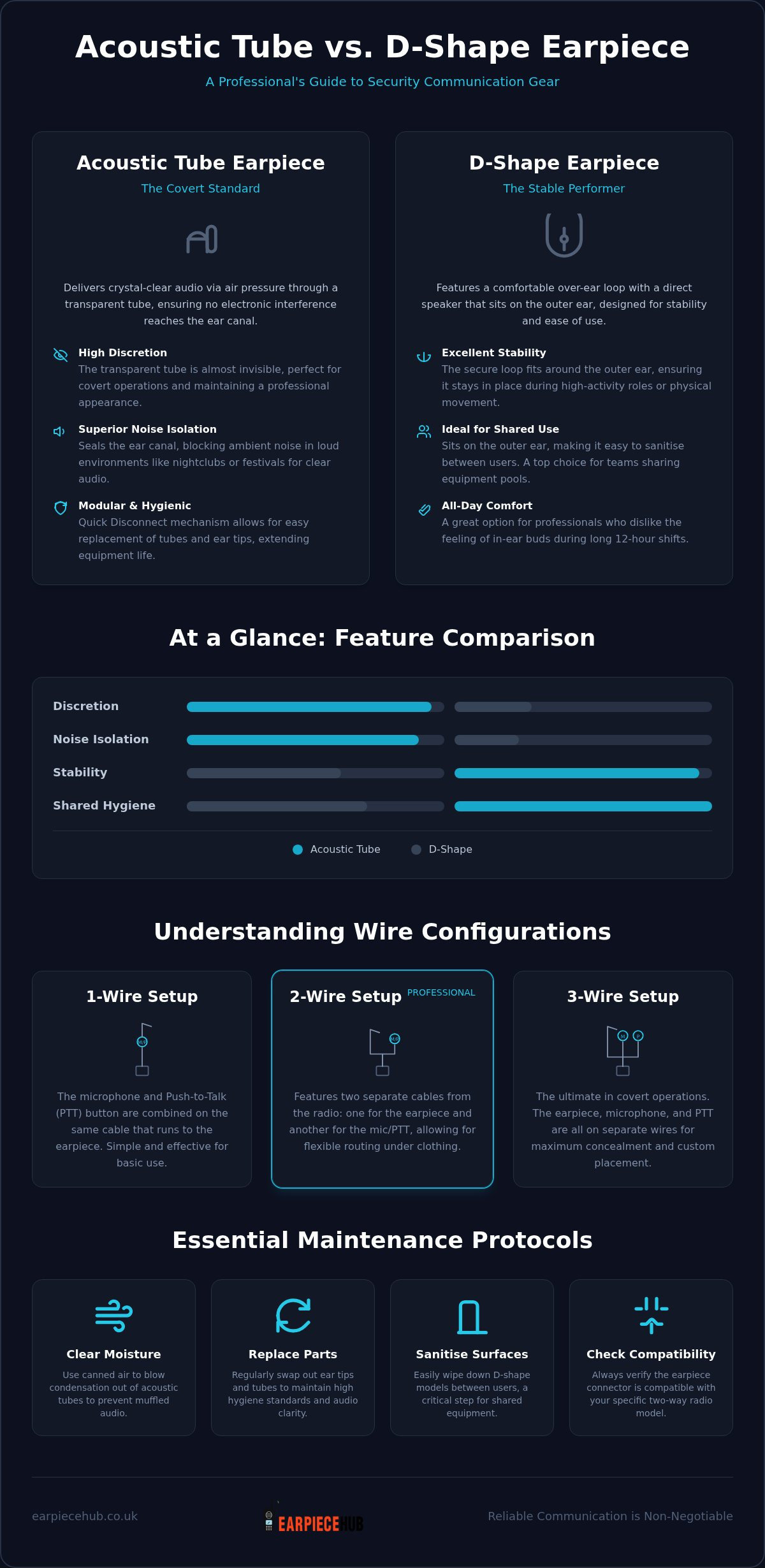
When weighing up an acoustic tube vs d-shape earpiece, the covert aspect is the defining factor. The transparent tubing is designed to be inconspicuous against different skin tones. It allows you to receive critical updates without drawing attention to your equipment. For door supervisors and close protection officers, this professional appearance is paramount. You don’t want to look like a walking radio station whilst managing a crowd or protecting a high-profile client.
The Anatomy of a Professional Acoustic Tube
High-quality units aren’t just clear plastic; they’re engineered from surgical-grade materials. This surgical-grade plastic remains flexible and hypoallergenic. It’s vital for preventing skin irritation during long 12-hour shifts. It won’t turn yellow or become brittle with regular use, maintaining its invisible look for months. The transducer is usually clipped to the collar, keeping the weight off your ear and ensuring the earpiece stays secure during physical movement.
A vital feature is the Quick Disconnect mechanism. This allows the tube to be detached from the transducer with a simple twist. It’s a game-changer for hygiene. You can replace the tube or ear tip in seconds without buying a whole new earpiece. In any comparison of an acoustic tube vs d-shape earpiece, this modularity makes the acoustic tube a highly cost-effective and hygienic choice for professional security teams.
Acoustic Tube vs D-Shape Earpiece: A Professional Comparison
The choice between an acoustic tube vs d-shape earpiece often comes down to the environment and your specific security role. Acoustic tubes provide high-level concealment. The clear tube is almost invisible against the skin. D-shape models use an over-ear loop. This is much more visible but offers a different set of advantages for high-activity teams. You must weigh the need for discretion against the need for rapid, stable deployment.
Audio clarity differs significantly by design. When comparing the acoustic tube vs d-shape earpiece, the acoustic tube uses air-driven sound to deliver a natural tone. D-shape earpieces use a direct speaker. This speaker can be louder in some settings, but it lacks the passive noise isolation of an in-ear bud. In high-noise environments like nightclubs or festivals, an acoustic tube often performs better. It seals the ear canal, blocking out ambient noise so you can hear your team clearly without cranking the volume to dangerous levels.
Pros and Cons of the D-Shape Design
A D-shape earpiece is built for stability. The loop fits securely around the outer ear. It stays in place during physical activity or foot chases. It’s the preferred choice for staff who dislike the feeling of in-ear buds. Hygiene is a major benefit here. Since the speaker sits on the outer ear, it’s easier to sanitise between users. This makes it ideal for shared equipment pools in retail or event security. If your team shares radios, you might prefer to shop D-shape earpieces for their ease of cleaning and robust fit.
When to Choose an Acoustic Tube
Select an acoustic tube for roles requiring absolute discretion. It fits perfectly with formal uniforms or close protection suits. The modular design is a significant financial benefit. You don’t need to bin the whole unit if the audio becomes muffled. You can simply replace the tube or ear tip. This extends the life of your equipment whilst maintaining high hygiene standards. It’s the professional standard for covert operations where appearance and audio isolation are your primary concerns.
Understanding Wire Configurations: 1-Wire, 2-Wire, and 3-Wire Setups
The mechanical design of your kit matters, but the wiring determines your operational freedom. Whether you choose an acoustic tube vs d-shape earpiece, you must select a wire configuration that matches your uniform and movement requirements. Professional setups are categorised by how many leads run from the radio connector.
- 1-Wire Earpieces: This is the most straightforward setup. A single lead runs from the radio to a combined Push-to-Talk (PTT) and microphone unit, which then leads to the ear. It’s ideal for retail or light security where you don’t need to hide wires.
- 2-Wire Earpieces: This configuration splits into two leads. One goes to the earpiece, whilst the other carries the PTT and microphone. This allows you to clip the mic to a lapel or thread it down a sleeve to a cuff, offering a much cleaner look.
- 3-Wire Earpieces: These are the ultimate choice for close protection. You have three separate leads for the earpiece, a dedicated microphone, and a palm-PTT button. This configuration is often the deciding factor when choosing between an acoustic tube vs d-shape earpiece for high-stakes surveillance.
Optimising Your Wire Run for Discretion
To maintain a professional appearance, route your wires under your shirt or through the lining of a blazer. This prevents snagging during physical altercations and keeps the equipment covert. If you’re using a tactical vest, thread the leads through the MOLLE webbing to ensure they don’t dangle or become a hazard.
Palm-PTT buttons offer a distinct tactical advantage. They allow you to transmit messages with your hands in your pockets or folded, hiding the fact that you’re communicating at all. This is essential for undercover work or high-end hospitality where visible radio use is discouraged. To find the right setup for your specific radio model, you can view our professional wire configurations to ensure total compatibility and reliability.
Maintenance and Selection: Preventing Audio Failure and Ensuring Compatibility
Muffled audio is rarely a sign of a faulty radio. It’s usually a maintenance issue. In the acoustic tube vs d-shape earpiece debate, acoustic tubes require more attention due to moisture build-up. Warm air from your ear canal meets the cooler plastic tube, creating condensation. This blocks the sound path. Use a simple “blow test” or a dedicated air blower to clear the tube daily. To maintain high audio standards and ear health, replace your ear tips and tubes every 3 to 6 months. This prevents earwax blockages and keeps the equipment hygienic for long-term use.
Internal cable breaks often occur because of poor storage. Professionals avoid “wire memory” by coiling the earpiece in a loose circle rather than a tight knot. Never wrap the lead tightly around your radio body. This puts unnecessary stress on the internal copper strands, leading to the dreaded intermittent audio cut-out during critical incidents. Storing your kit in a dedicated pouch or locker hook ensures it’s ready for your next shift without the risk of tangles or frayed wires.
Selecting for Your Radio Brand
Connector compatibility is the most common cause of equipment failure. A Motorola 2-pin connector looks similar to a Kenwood 2-pin, but they aren’t interchangeable. The spacing between the pins differs by millimetres, meaning a forced connection can permanently damage your radio’s accessory port. Whether you need a setup for the Motorola DP1400, a Hytera unit, or a Kenwood standard, always verify the pin configuration before purchase. If you’re upgrading your team’s kit, you can view our professional range of covert earpieces with Next Day Delivery to find the exact match for your hardware.
Upgrade Your Team’s Communications Strategy
Choosing between an acoustic tube vs d-shape earpiece defines your team’s operational efficiency. You’ve seen how the covert nature of clear tubing suits close protection, whilst the D-shape loop offers a hygienic, stable fit for high-activity roles. Success relies on matching your specific radio brand with the correct wire configuration to prevent connector damage and audio failure. Selecting the right tool for the job ensures your staff remain connected and comfortable during demanding shifts.
Maintaining your kit is just as vital as the initial selection. Regular tube replacement and correct wire storage extend the life of your equipment and guarantee crystal-clear comms during every incident. As a UK-based specialist, Earpiece Hub provides expert technical support for Motorola, Hytera, and Kenwood models, alongside a complete stock of replacement acoustic tubes and ear tips. Shop our professional range of covert earpieces with Next Day Delivery to secure your setup. Equip your team with the reliability they deserve and stay one step ahead in the field.
Frequently Asked Questions
How do I clean my acoustic tube earpiece without damaging the transducer?
Twist the clear tube to disconnect it from the transducer. Never submerge the electrical transducer in water. Clean the tube with warm soapy water or an air blower. Ensure it’s bone dry before reattaching. This prevents moisture from reaching the sensitive electronics. Regular cleaning avoids the muffled sound that plagues many professional setups whilst ensuring your gear lasts through demanding shifts.
What is the main difference between a 1-wire and a 2-wire covert earpiece?
A 1-wire system uses a single cable for the microphone and PTT button, usually clipped near the chest. A 2-wire system splits into two separate leads. One lead goes to the earpiece, whilst the second lead runs the microphone and PTT button. This allows you to thread the mic down a sleeve or clip it to a cuff for superior discretion and tactical flexibility during patrols.
Why has the audio in my acoustic tube earpiece become muffled or quiet?
Muffled audio is typically caused by moisture condensation or earwax blockages within the tube. When comparing an acoustic tube vs d-shape earpiece, the tube’s narrow path is more prone to these physical obstructions. Disconnect the tube and use an air blower or “blow test” to clear any droplets. If the tube has turned yellow or brittle, it’s time to fit a replacement part immediately.
Can I use a D-shape earpiece with my Motorola DP1400 radio?
Yes, you can use a D-shape earpiece with a Motorola DP1400, provided it has the correct 2-pin connector. Whilst acoustic tubes are popular for covert work, a D-shape loop offers better stability during physical patrols. Always verify the pin spacing before purchase. Motorola connectors are not interchangeable with other brands like Kenwood, even if they look similar to the naked eye.
How often should I replace the ear tips on my professional earpiece?
Professional ear tips and acoustic tubes should be replaced every 3 to 6 months. This schedule maintains hygiene and prevents the build-up of bacteria that causes ear infections. Over time, the plastic can also become rigid, reducing comfort during 12-hour shifts. Keeping a stock of replacement parts ensures your communication remains clear and your equipment stays in peak operational condition throughout the year.
