





Uncategorized
How to Choose Radio Earpiece Tips for Comfort and Clarity in 2026
Sep
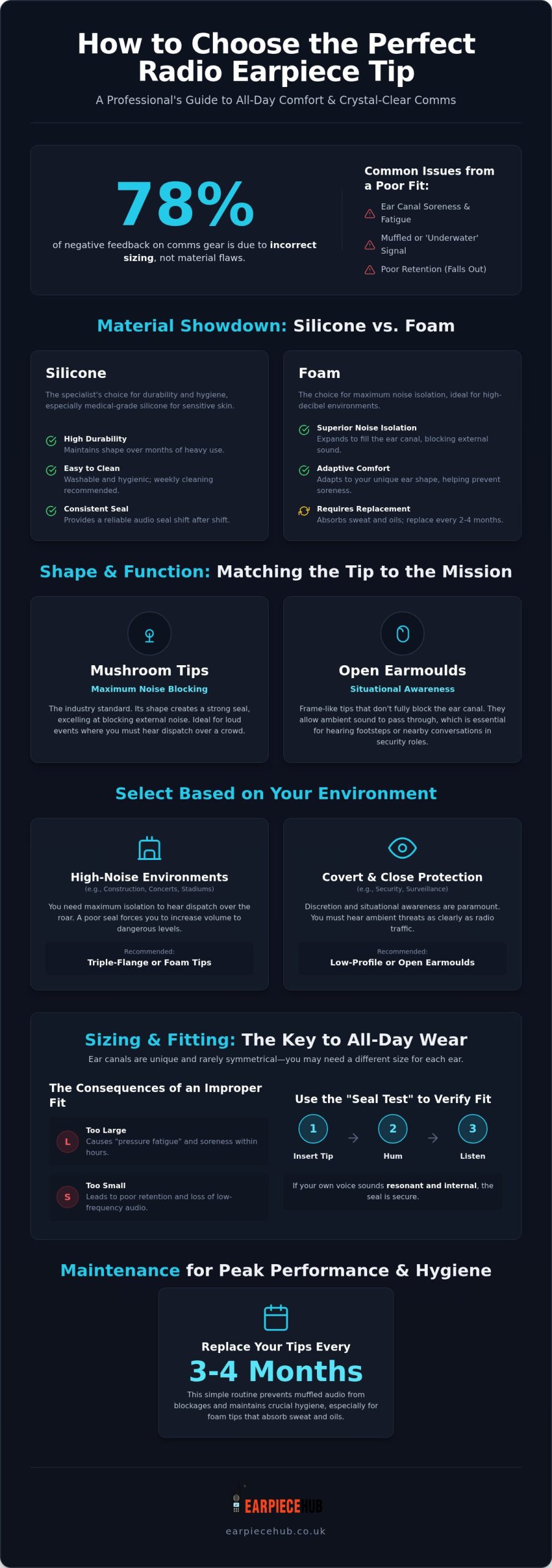
Did you know that 78% of negative feedback regarding comms gear is actually caused by incorrect sizing rather than material flaws? If you’ve ever finished an eight-hour shift with ear canal soreness or a muffled signal, you’re likely using the wrong interface. Learning how to choose radio earpiece tips is the most critical step in building a reliable comms kit that won’t fail when it matters most. Most professionals accept constant adjustments and ear fatigue as a standard part of the job, but it doesn’t have to be that way.
We agree that nothing is more frustrating than an earpiece that falls out during movement or audio that sounds underwater. This guide shows you how to select the perfect ear tip for all-day comfort and professional reliability. We’ll preview the latest 2026 industry standards, including the rise of medical-grade Liquid Silicone Rubber and how material choice impacts situational awareness in high-noise environments. From acoustic tube maintenance to finding a secure fit, you’ll discover how to optimise your equipment for operational endurance.
Key Takeaways
- Understand how different materials and “mushroom” shapes create the essential seal between your acoustic tube and the ear canal.
- Learn to assess your environment’s noise floor to select tips that prevent audio bleed whilst ensuring you remain aware of your surroundings.
- Discover how to choose radio earpiece tips using the “Seal Test” to guarantee a secure, non-symmetrical fit that lasts through entire shifts.
- Establish a specialist maintenance routine to prevent muffled audio and maintain hygiene by replacing your tips every three to four months.
The Fundamentals of Radio Earpiece Tip Materials and Shapes
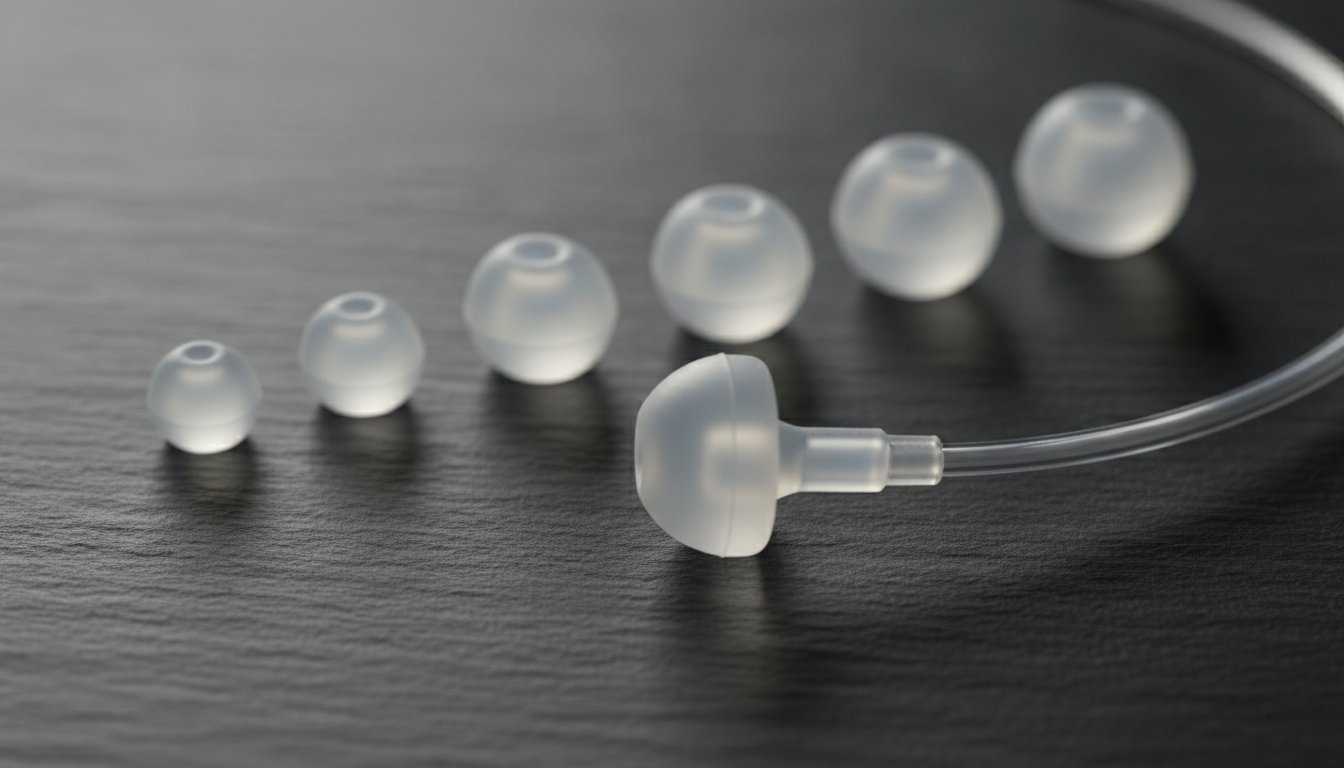
The ear tip acts as the vital seal between the acoustic tube and your ear canal. Without a proper fit, the audio signal escapes, forcing you to increase the radio volume to dangerous levels. Most out-of-the-box kits include the “mushroom” tip as standard. It’s the industry baseline because its universal shape fits most users immediately. However, knowing how to choose radio earpiece tips involves looking beyond the basics. Modern professional gear now prioritises medical-grade, hypoallergenic silicone to reduce skin irritation during long shifts. This shift in headphone and earpiece technology ensures that even those with sensitive skin can maintain clear comms without discomfort.
Silicone vs. Foam: Which Material Wins?
Silicone is the specialist’s choice for durability and hygiene. It’s easy to clean with a quick wipe and maintains its shape over months of heavy use. When selecting silicone, consider the “shore hardness” of the material. A lower shore hardness indicates a softer, more flexible tip that provides better ear comfort over twelve-hour periods. Foam tips offer superior noise isolation by expanding to fill the ear canal. They’re excellent for high-decibel environments but require replacement every 2 to 4 months as they absorb sweat and oils.
- Silicone: High durability, washable (weekly cleaning recommended), and consistent seal.
- Foam: Superior noise isolation, adapts to ear shape, and helps prevent ear canal soreness.
Mushroom Tips vs. Earmoulds
Mushroom tips excel at blocking out external noise. They’re perfect for loud events where you need to hear the dispatcher over a crowd. In contrast, “open” earmoulds are designed for situational awareness. These frame-like tips don’t block the ear canal entirely. They allow ambient sound to pass through whilst delivering radio audio directly. This is essential for security roles where hearing a footstep or a nearby conversation is just as important as the radio traffic. Understanding these differences is key when deciding how to choose radio earpiece tips for your specific role.
Selecting Tips Based on Your Professional Environment
Your working environment dictates the “noise floor” you face every shift. In a quiet corporate office, a standard mushroom tip might lead to “audio bleed”, where nearby colleagues can hear your radio traffic. At a crowded stadium, however, you’ll need maximum isolation to hear dispatch over the roar of the crowd. Learning how to choose radio earpiece tips requires assessing your typical physical activity. A tip that stays perfectly secure whilst standing at a door might slip during a fast-paced response or foot pursuit. Choosing the wrong fit doesn’t just impact audio; it can lead to ear canal soreness by the fourth hour of a twelve-hour shift.
High-Noise Environments: Security and Construction
In high-noise zones like construction sites or concerts, triple-flange tips provide the best decibel reduction. They create multiple seals within the canal to block out external roar. A poor seal is dangerous; it forces you to crank the volume, risking ear fatigue. This necessity for a precise fit is reflected in OSHA’s hearing protection standards, which mandate that ear devices must be fitted individually for maximum safety. If you’re working in these conditions, having a fresh set of replacement ear tips is vital for both clarity and hearing health.
Covert and Close Protection Roles
Covert operators and close protection specialists prioritise discretion. Low-profile, flesh-coloured tips allow for a professional appearance without drawing unwanted attention. Semi-custom earmoulds are the gold standard here, as they sit flush within the ear and won’t dislodge during sudden movement. These moulds provide the situational awareness needed to hear ambient threats whilst maintaining a clear link to your team. Match your tip to your mission to ensure you never miss a critical update or compromise your position.
Sizing and Fitting: Ensuring a Secure Seal for Long Shifts
Ear canals are as unique as fingerprints. They’re rarely symmetrical. This means your left and right ears might actually require different sizes for a perfect fit. Knowing how to choose radio earpiece tips involves more than just picking a packet off the shelf. If a tip is oversized, you’ll experience “pressure fatigue” within the first two hours of a shift. If it’s too small, you’ll suffer from poor retention and a significant loss of low-frequency audio. Use the “Seal Test” to verify your choice. Insert the tip and hum; if your own voice sounds resonant and internal, the seal is secure. If ambient room noise remains sharp, it’s failing to block the canal.
How to Determine Your Correct Size
Finding the right fit requires a methodical approach. For specialised earmoulds, you must measure the height of your ear concha, which is the bowl-like part of the outer ear. Whilst most professionals fit a medium, trialing is essential. When using standard mushroom tips, always start with the smallest size and work your way up. A correct fit should feel snug and secure during head movement but shouldn’t cause a “throbbing” sensation. If you feel pulse-like pressure, the material’s too large for your canal and will cause painful sores.
Identifying Left vs. Right Orientation
Orientation’s a common point of failure. Curved earmoulds are designed for a specific side. You can identify the correct orientation by looking at the “wing” or the protruding curve of the mould. This wing must point towards the back of your head to sit flush within the ear’s natural folds. Forcing a left-side mould into the right ear leads to acoustic tube kinks, which immediately muffle your audio signal. To maintain professional standards and clear comms, shop our range of replacement ear tips and ensure you have the right orientation for your kit.
Maintenance and Replacement: Preserving Audio Quality and Hygiene
A neglected ear tip is the most common cause of muffled audio in professional comms. Earwax buildup doesn’t just block the sound; it can migrate into the acoustic tube, causing permanent damage to the kit. Establishing a daily hygiene routine is essential for maintaining clarity. When considering how to choose radio earpiece tips, you must also consider how easy the material is to maintain over a long operational life. Discoloured or brittle silicone is a sign that the material has reached the end of its functional lifespan and needs immediate disposal.
The Professional Cleaning Protocol
Don’t use harsh chemicals or alcohol wipes on silicone. Whilst alcohol is a common suggestion on public forums, it actually causes medical-grade silicone to perish and become brittle over time. Use a mild, anti-bacterial soap and warm water instead. The “soak and air-dry” method is best for multi-day endurance. Detach the tip from the acoustic tube, soak it for ten minutes, and let it air-dry completely before reattachment. This ensures no moisture enters the electronics of your radio, preserving your equipment’s longevity.
When to Bin It: The Replacement Cycle
Even with perfect cleaning, materials eventually fatigue. We recommend replacing tips every 3 to 4 months for heavy users to maintain hygiene and clear audio. This cycle prevents the material from losing its elasticity, which is crucial for maintaining a secure seal. For large teams or fleets, buying in bulk is the most efficient way to manage these standards amongst staff. Understanding how to choose radio earpiece tips includes knowing when a tip is “dead”. If the material feels sticky, looks yellowed, or no longer springs back when squeezed, bin it. Fresh tips are a low-cost investment in your professional reliability.
Optimise Your Operational Endurance
Selecting the right interface is the difference between reliable comms and painful shifts. By matching your tip material to your specific noise floor and verifying the seal with the hum test, you ensure crystal-clear audio and all-day comfort. Mastering how to choose radio earpiece tips means prioritising hygiene and replacing your gear every three to four months to prevent audio degradation. Your equipment should work as hard as you do.
Earpiece Hub is a specialist UK stockist of Motorola and Hytera accessories, providing the technical expertise required for high-stakes environments. We offer 24/7 technical support for all communication gear and next-day shipping available for urgent replacements. Don’t compromise on clarity when professional-grade earmoulds and tips are just a click away. Browse our range of professional ear tips and earmoulds to secure your communications. Stay comfortable, stay clear, and lead your team with total confidence.
Frequently Asked Questions
How do I know if my radio ear tip is the right size?
You’ll know your ear tip is the correct size when it creates a complete acoustic seal without causing physical pressure or throbbing. Conduct the “Seal Test” by humming whilst the tip is inserted; a resonant, internal sound indicates a proper fit. If ambient room noise remains sharp and clear, the tip is likely too small. Finding the right balance prevents audio from leaking out and avoids ear canal soreness.
Can I use the same ear tip for both my left and right ear?
Standard mushroom tips are universal, but specialised earmoulds are designed specifically for either the left or right ear. You can identify the correct side by looking at the “wing” of the mould, which must point towards the back of your head to sit flush. Forcing an earmould into the wrong ear leads to acoustic tube kinks and skin irritation. This distinction is critical when researching how to choose radio earpiece tips.
How often should I replace my acoustic tube ear tips?
Professional ear tips should be replaced every 3 to 4 months to ensure hygiene and maintain audio quality. Over time, silicone can become brittle or discoloured, whilst foam tips lose their ability to expand and seal the canal. Regular replacement prevents earwax from clogging the acoustic tube, which can muffle your signal. Keeping a stock of fresh tips is essential maintenance for any high-stakes security or event team.
What is the most comfortable ear tip for wearing a radio all day?
Medical-grade Liquid Silicone Rubber (LSR) tips are widely considered the most comfortable choice for all-day professional use. These tips are hypoallergenic and feature a low shore hardness, meaning they remain soft against the skin during twelve-hour shifts. When learning how to choose radio earpiece tips for comfort, consider open earmoulds if you require situational awareness. These sit in the outer ear rather than deep in the canal to reduce pressure.
Why does my ear hurt after wearing my radio earpiece for a few hours?
Persistent ear pain is typically the result of “pressure fatigue” caused by an oversized tip or a material that is too rigid for your ear canal. If the tip is too large, it exerts constant force on the canal walls, leading to inflammation and soreness. Switching to a smaller size or a softer, high-quality silicone usually fixes this. Ensure your earpiece is adjusted correctly to avoid pulling on the acoustic tube during movement.
