





Uncategorized
Listen-Only Radio Earpieces: Professional Selection Guide

Aug
Imagine you’re six hours into a twelve-hour shift at a crowded event when a critical transmission comes through, but all you hear is distorted static. You know that in high-stakes environments, missing a single word isn’t just an inconvenience; it’s a security risk. Most professionals have struggled with ear fatigue from poorly fitting buds or the confusion of 2.5mm versus 3.5mm jack compatibility. Finding the right listen-only earpiece for radio setups shouldn’t be a matter of guesswork. We understand that your equipment must work the first time, every time.
This guide will show you how to select equipment that delivers crystal-clear incoming audio whilst maintaining a professional, covert appearance. We’ll break down the technical differences between connector types and compare G-shape, D-shape, and acoustic tube styles to ensure you stay comfortable until your final report is filed. Whether you’re using Motorola, Hytera, or Kenwood hardware, getting the right fit is essential for operational success and long-term hearing health.
Key Takeaways
- Learn why a high-quality listen-only earpiece for radio is the professional choice for maintaining discretion and audio clarity in noisy environments.
- Identify whether your setup requires a standard 3.5mm jack or a specialised 2.5mm connector to ensure perfect compatibility with your remote speaker microphone.
- Compare the benefits of acoustic tubes for covert surveillance against the comfort and hygiene of G-shape and D-shape designs for long shifts.
- Discover how to extend the life of your equipment by identifying when to clean or replace components like ear tips and acoustic tubes.
Understanding Listen-Only Earpieces: Why Professionals Choose Them
A listen-only earpiece for radio is a receive-only audio peripheral designed to connect directly to a handheld unit or a Remote Speaker Microphone (RSM). Unlike standard headsets, these devices don’t have a dedicated microphone; they focus solely on delivering incoming audio to the user’s ear. This setup is the preferred choice for specialists who require enhanced discretion and crystal-clear audio in high-noise environments whilst maintaining a sharp, professional appearance.
Reliability is paramount when working with two-way radio technology in the field. These earpieces interface seamlessly with existing 1-wire, 2-wire, or 3-wire surveillance kits, providing a modular solution for security teams. By using a receive-only setup, operators can monitor sensitive radio traffic without broadcasting internal communications to the public or unauthorised persons nearby.
Listen-Only vs. Two-Way Headsets
Full-service headsets often include bulky boom microphones and large ear cups that can be cumbersome during long shifts. In contrast, a listen-only earpiece for radio offers a streamlined alternative that reduces weight and heat build-up. You should choose a receive-only setup when using a shoulder-mounted speaker microphone, as it allows you to keep the radio on your belt whilst moving the audio output closer to your ear for better situational awareness.
The Importance of Audio Discretion in Security
In the security sector, information leaks can compromise an entire operation. Covert acoustic tubes are specifically designed to prevent sensitive details from being overheard by those in the immediate vicinity. Covert audio is a critical component of professional security protocols, ensuring that operational instructions remain private at all times. This level of discretion is essential for surveillance teams and close protection officers working in crowded public spaces.
Technical Specifications: Jack Sizes and Connector Types
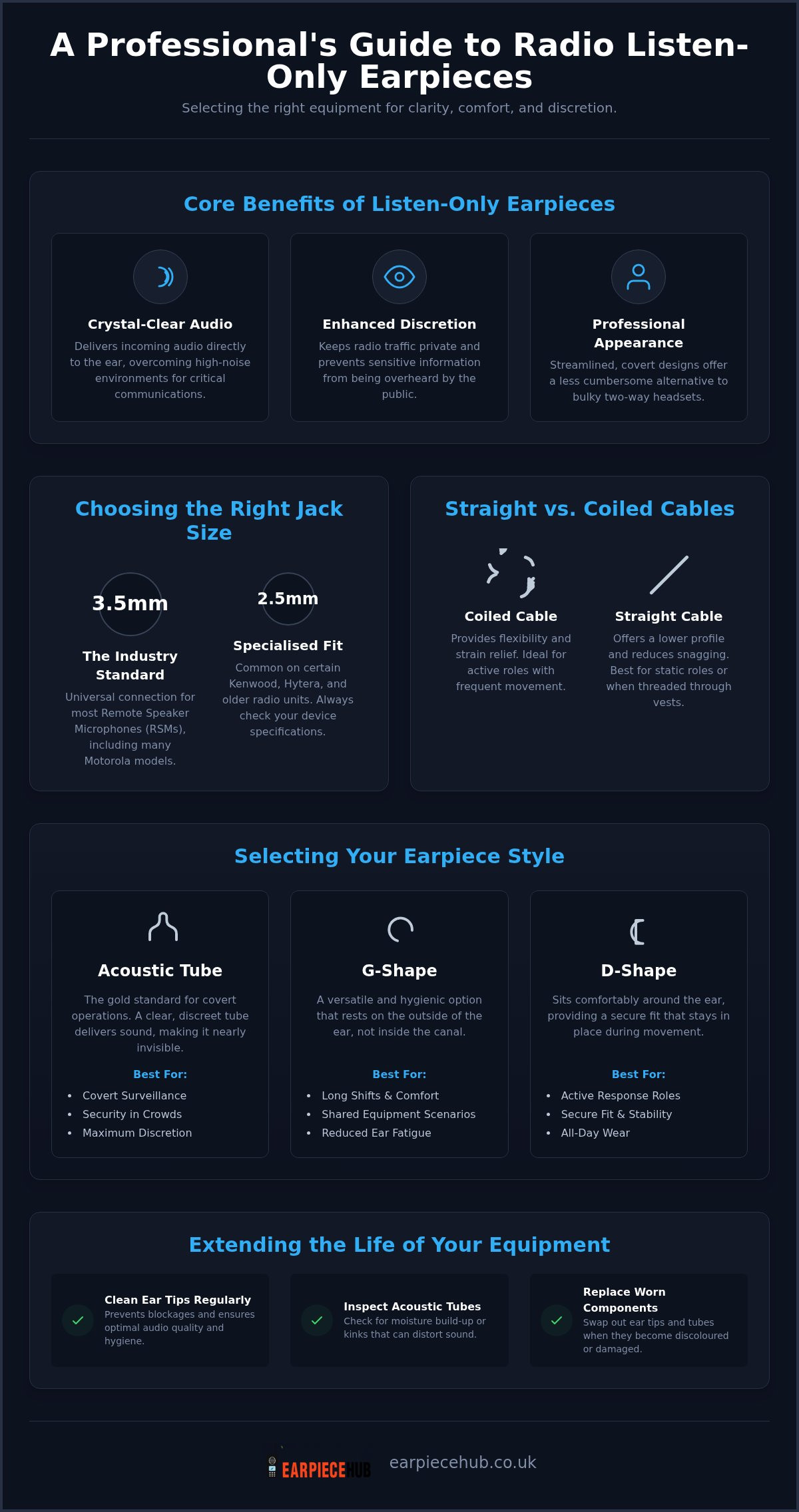
Selecting the right hardware begins with the connector. The 3.5mm jack is the industry standard for most Remote Speaker Microphones (RSMs) and standard audio outputs. It provides the universal connection most security teams rely on for daily operations. However, the 2.5mm jack remains common amongst specialised Motorola models and older radio units. Choosing the correct listen-only earpiece for radio depends on identifying these ports accurately to avoid equipment downtime.
Security professionals often face high-intensity situations where gear failure isn’t an option. Threaded (screw-in) connectors provide a mechanical lock that prevents accidental disconnection during tactical movements. This reliability is vital for maintaining situational awareness. When deploying equipment in hazardous zones, many organisations consult OSHA safety standards to ensure that their audio peripherals don’t compromise the user’s ability to hear ambient warning sounds whilst receiving critical radio traffic.
Choosing the Right Jack Size for Your Radio
Most Motorola RSMs feature 3.5mm ports, whilst specific Kenwood or Hytera configurations might require 2.5mm variants. It’s essential to check the technical manual for your specific radio brand before ordering. If your team operates a mixed fleet, using a professional earpiece adapter can solve compatibility issues instantly. This allows you to standardise your earpiece inventory across different radio models regardless of the handheld unit in use.
Straight vs. Coiled Cables
Coiled cables are the preferred choice for a listen-only earpiece for radio used in roles involving frequent movement. The “telephone style” coil provides natural strain relief and flexibility, preventing the earpiece from being pulled out when you turn your head. Straight cables are more appropriate for static roles or when the cable is threaded through an overt vest or under-armour. They provide a lower profile and reduce the risk of snagging on external equipment during a shift.
Selecting Your Style: Acoustic Tube, G-Shape, or D-Shape?
Choosing the physical design of your listen-only earpiece for radio is as critical as the technical connection. Each style serves a specific operational environment. Acoustic tubes are the gold standard for covert operations. They use a clear tube to deliver sound, making them virtually invisible in nightclubs or festivals whilst providing excellent audio clarity.
G-shape earpieces offer a versatile, hygienic alternative. They sit around the outer ear rather than inside the canal. This makes them the preferred choice for shared equipment or exceptionally long shifts where ear canal irritation is a concern. For those in active response roles, the D-shape earpiece provides a secure, ergonomic fit that is difficult to dislodge during physical activity, such as door supervision or event security.
Role-Based Recommendations
Your specific duties should dictate your gear selection. Standardising equipment across a team ensures everyone has the right tool for the job.
- Close Protection: Acoustic tubes provide maximum covertness and secure audio delivery.
- Retail Security: G-shape earpieces balance all-day comfort with high situational awareness.
- Public Events: D-shape models or heavy-duty overhead headsets offer the stability needed amongst large crowds.
Explore our full range of professional listen-only earpieces to find the perfect match for your radio.
Comfort and Ergonomics
Ear fatigue is a common complaint during 12-hour shifts. It’s often caused by using the wrong ear tip size or poor-quality materials. High-grade silicone tips are softer and more pliable than standard plastic, conforming to the ear’s shape and reducing pressure points. Selecting a listen-only earpiece for radio with interchangeable ear tips ensures you can maintain a comfortable fit throughout your deployment, preventing the discomfort that leads to distraction.
Maintenance and Hygiene: Extending the Life of Your Earpiece
Maintaining a listen-only earpiece for radio is vital for long-term reliability. Acoustic tubes often turn yellow or become stiff due to UV exposure and skin oils. Regular cleaning prevents this degradation. Simply detach the tube and flush it with warm, soapy water to remove wax build-up. Use compressed air to blow out any moisture, ensuring the tube is completely dry before reconnecting it to the transducer.
Hygiene is a priority for equipment worn during 12-hour shifts. Replacing ear tips and tubes every 3 to 6 months prevents bacterial growth whilst restoring original audio quality. When storing your gear, avoid kinking the cables or creating tight loops. Loose, circular coils protect internal wiring from fatigue and prevent damage to connector pins in your kit bag.
Troubleshooting Common Audio Issues
If you experience audio loss, it’s essential to identify the source before discarding the unit. Distinguish between a radio fault, a cable break, or a simple blockage. Detach the acoustic tube and listen directly at the transducer; if the sound returns, the tube is the issue. Using replacement acoustic tubes and ear tips allows you to repair your listen-only earpiece for radio cost-effectively without replacing the entire unit.
Professional Equipment from Earpiece Hub
Choosing a UK specialist ensures your hardware meets professional operational standards. Earpiece Hub provides high-quality peripherals for Motorola, Hytera, and Kenwood, supported by technical expertise and next-day shipping. We provide the reliable tools you need to stay connected and maintain discretion in the field.
Explore our full range of professional listen-only earpieces at Earpiece Hub.
Equip Your Fleet with Professional Audio
Choosing the right hardware is about more than just a simple connection; it’s about operational reliability and long-term comfort. You’ve learned how to match jack sizes to your specific radio and why selecting the correct style, whether it’s a covert acoustic tube or a hygienic G-shape, is essential for your specific role. Regular maintenance and the timely replacement of components will ensure your audio remains crystal clear throughout every shift. Investing in a high-quality listen-only earpiece for radio ensures you never miss a critical transmission in the field. As a UK-based specialist, Earpiece Hub provides expert accessories for Motorola, Kenwood, and Hytera units with next-day shipping and 24/7 support for professional fleets. Our expertise ensures your team stays connected with minimal fuss. Shop the range of professional radio earpieces at Earpiece Hub and experience the difference that specialist equipment makes to your daily operations. Stay safe and stay connected.
Frequently Asked Questions
What is the difference between a 2.5mm and a 3.5mm listen-only earpiece?
The difference lies in the physical diameter of the connector plug. A 3.5mm jack is the standard size for most remote speaker microphones and consumer audio devices. The 2.5mm jack is smaller and typically found on older radio models or specific Motorola hardware. You must match the jack size to the accessory port on your radio or microphone to ensure a secure audio connection.
Can I use a listen-only earpiece with any two-way radio?
You can use a listen-only earpiece with any radio that features a compatible audio output port, usually located on the side of the handheld or on a remote speaker microphone. Whilst many units use standard 3.5mm or 2.5mm jacks, some require a specific earpiece adapter for proprietary connections. Always verify your radio’s port specifications before purchasing a new listen-only earpiece for radio to ensure full compatibility.
How do I clean my radio earpiece acoustic tube safely?
To clean your acoustic tube, first detach it from the transducer and remove the ear tip. Flush the tube with warm, soapy water to clear out any earwax or debris. It’s essential to ensure the tube is completely dry before reassembly; use a can of compressed air to blow out any remaining moisture. Regular cleaning prevents the plastic from becoming stiff and maintains the clarity of your incoming transmissions.
Why is my earpiece audio sounding muffled or quiet?
Muffled audio is usually caused by a physical blockage within the acoustic tube, such as moisture or earwax build-up. If the tube appears clear, check for any kinks or small holes in the plastic that might be leaking sound. Over time, the internal transducer can also fail. We recommend testing the audio with a new acoustic tube first, as this is the most common and cost-effective fix for volume issues.
Which earpiece style is best for wearing with glasses?
The G-shape earpiece is generally considered the best option for professionals who wear glasses. Because the G-shape sits around the ear rather than hooking tightly over the top, it doesn’t compete for space with the arms of your spectacles. This prevents the pinching and discomfort often associated with D-shape models or thick acoustic tube clips. It’s a reliable choice for maintaining all-day comfort during long security shifts.
Do I need a specific earpiece for Motorola or Hytera radios?
Yes, you often need specific connectors depending on whether you are plugging directly into the radio or an RSM. Motorola and Hytera often use different pin configurations for their direct-connect ports. However, if you’re using a listen-only earpiece for radio that plugs into a shoulder microphone, you simply need to match the jack size, usually 3.5mm. Always check if your specific model requires a threaded or non-threaded connector.
