





Uncategorized
Professional Guide to Inline PTT Two-Way Radio Mics
Aug
What if the most sophisticated radio in your fleet is rendered useless by a single frayed cable or a jammed button? In high-stakes security and professional environments, a communication breakdown isn’t just an inconvenience; it’s a critical failure that compromises safety. You’ve likely dealt with the frustration of audio cutting out mid-shift or realising a new batch of equipment uses the wrong connector for your handsets. Finding the perfect inline PTT microphone for two way radio use requires more than just picking a brand. It demands an understanding of wiring systems and durability standards.
We agree that your gear must be as resilient as the team using it. This guide promises to help you master the technical nuances of PTT hardware so you can ensure crystal-clear, reliable transmissions every time. We will break down the essential differences between 1-wire, 2-wire, and 3-wire configurations. You will also learn how to match specialist adapters and connectors to your Motorola, Kenwood, or Hytera radios, ensuring your hardware survives daily professional use whilst maintaining a discreet, covert appearance.
Key Takeaways
- Learn how ergonomic placement on the chest or sleeve can significantly reduce response times during high-pressure situations.
- Master the technical distinctions between 1-wire, 2-wire, and 3-wire systems to select the ideal inline PTT microphone for two way radio fleets.
- Avoid costly budget waste by identifying the correct connector types and specialist adapters for Motorola, Kenwood, and Hytera handsets.
- Extend the lifespan of your hardware with professional cleaning protocols and cable routing techniques that prevent internal damage.
What is an Inline PTT Microphone and Why Does Your Team Need One?
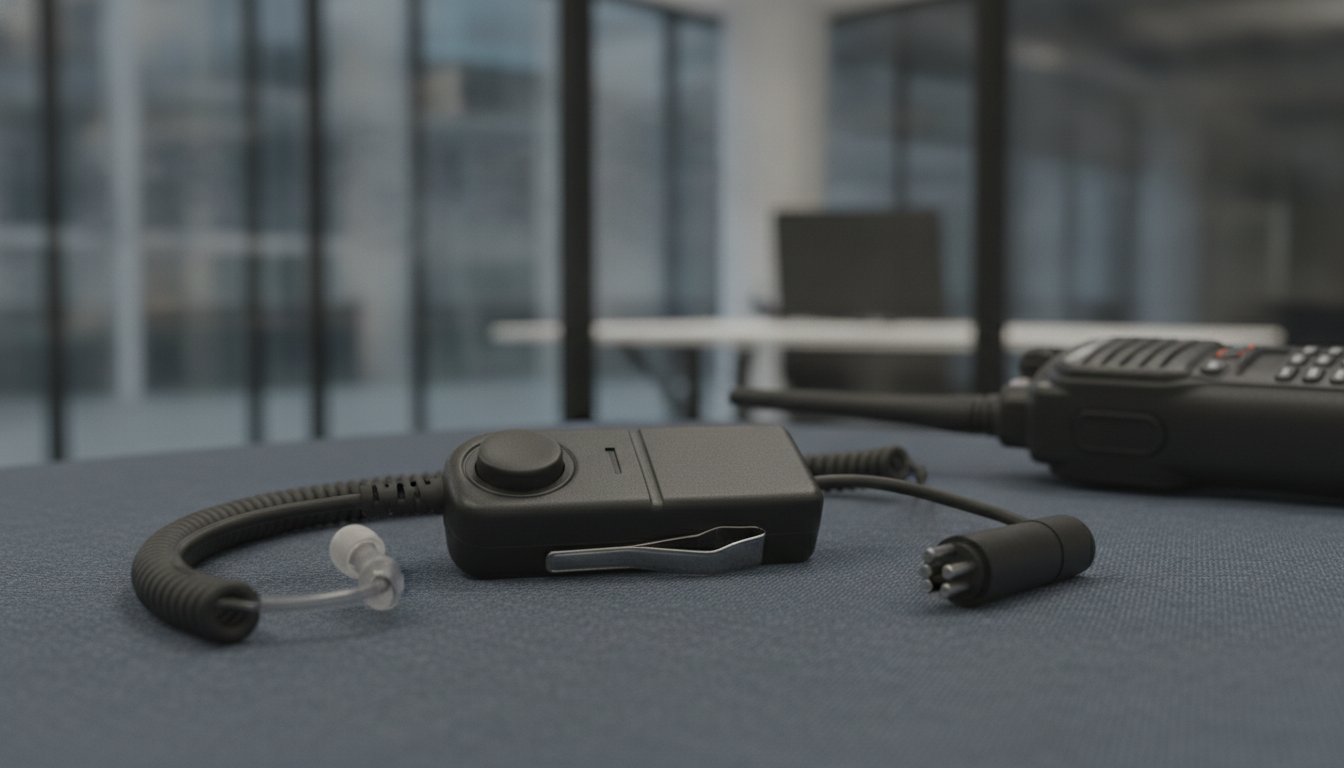
An inline PTT microphone for two way radio use integrates the mic and the transmission button directly into the wiring. This setup streamlines communication by removing the need to reach for the radio handset itself. What is Push-to-Talk (PTT) describes the half-duplex technology that powers these devices, where a single button press toggles the radio from receiving to transmitting. By positioning this button on a lapel or cuff, operators can respond instantly without breaking eye contact or losing focus on their surroundings.
Discretion is a major factor in professional security. In overt operations, a visible lapel mic signals a clear security presence. For covert tasks, cables are often run through sleeves to a palm-mounted button, allowing for silent communication that remains invisible to the public. High-grade cabling is essential here. Professional-grade wires are built to withstand the constant movement and physical strain common in roles like door supervision or close protection, where a snapped cable means a total loss of contact.
Inline PTT vs. Remote Speaker Microphones (RSM)
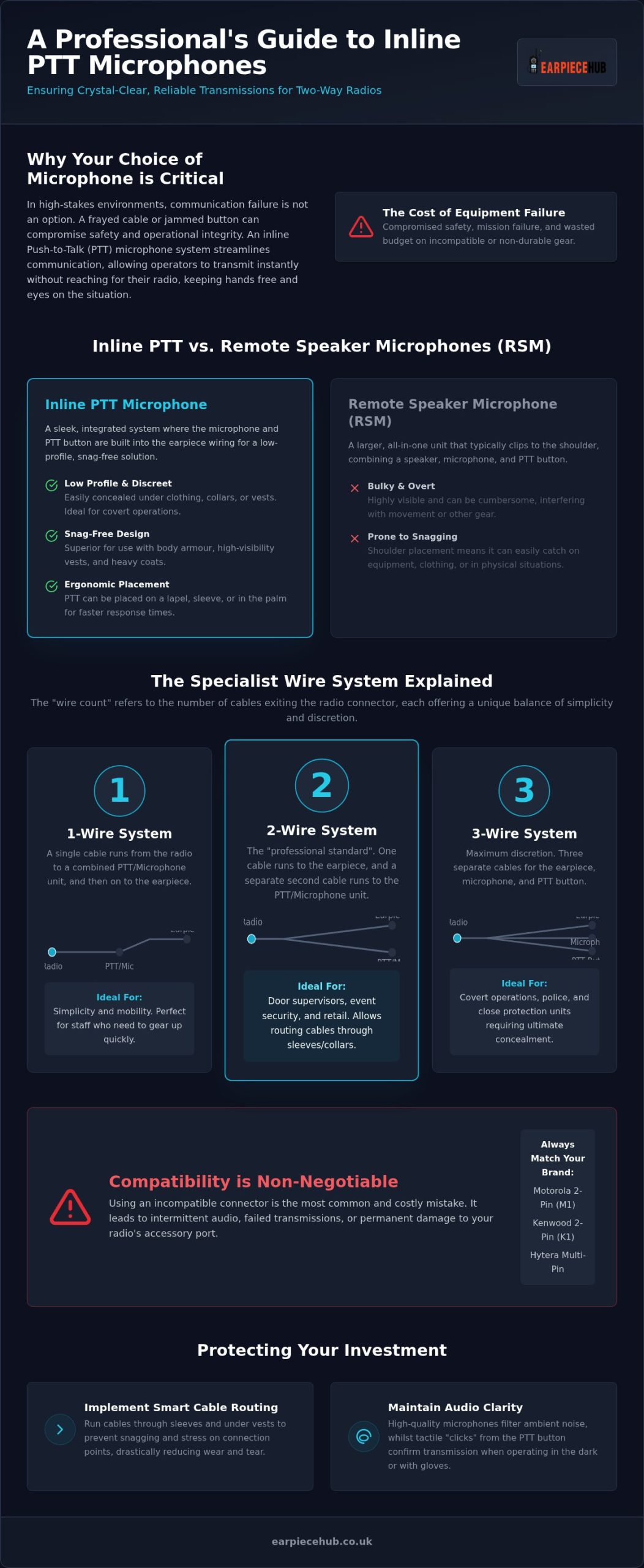
Remote Speaker Microphones are often too bulky for certain roles. They sit on the shoulder and can easily snag on equipment or clothing. An inline microphone offers a much lower profile, which is superior when wearing heavy coats, high-visibility vests, or body armour. It provides a sleek, snag-free solution that doesn’t compromise on audio clarity or reliability during a shift.
The Role of Clear Audio in Professional Environments
In loud event spaces, background noise is the enemy of clear instruction. High-quality inline microphones are designed to filter out ambient roar, ensuring only the operator’s voice is transmitted. Tactile feedback is also vital. A crisp, physical “click” from the PTT button provides immediate confirmation that the radio has engaged, which is essential when wearing gloves or operating in the dark.
The Specialist Wire System: 1-Wire, 2-Wire, and 3-Wire Explained
Choosing an inline PTT microphone for two way radio setups depends entirely on your operational environment. The terminology 1-wire, 2-wire, or 3-wire refers to the number of individual cables that exit the radio connector. Each configuration offers a different balance between ease of use and tactical discretion. Understanding these differences ensures your team remains equipped with the most functional hardware for their specific roles.
- 1-Wire Systems: These are the most common. A single cable runs from the radio to the PTT/microphone unit, which then continues to the earpiece. It’s simple, quick to fit, and ideal for staff who need maximum mobility.
- 2-Wire Systems: This setup splits into two separate cables. One leads to the earpiece whilst the other holds the combined PTT and microphone.
- 3-Wire Systems: The most complex configuration. It features three distinct cables for the earpiece, the microphone, and a separate PTT button.
When to Choose a 2-Wire Configuration
When managing a large event, an inline PTT microphone for two way radio communication ensures your hands remain free for tasking. The 2-wire setup is the gold standard for professional door supervisors and retail security teams. By splitting the components, you can route the PTT/Mic cable down a sleeve or clip it to a lapel, keeping the radio itself out of sight. To achieve a professional appearance, route the earpiece cable up the back of a shirt and the PTT cable through the arm of a blazer. This ensures the equipment stays secure during physical interventions.
The 3-Wire Advantage for Covert Operations
Specialist units amongst police and private security prefer 3-wire systems for total flexibility. You can hide the PTT button in a palm or pocket whilst the microphone remains pinned under a lapel or collar. This allows for silent, non-verbal signalling that’s impossible with bulkier setups. If you’re unsure which setup suits your team, you can explore our range of specialist wire system earpieces to find the right fit.
Compatibility and Connection: Finding the Right Match for Your Radio
Selecting an inline PTT microphone for two way radio handsets isn’t as simple as choosing a style. Connector compatibility is the most frequent hurdle for professional fleets. Major brands use proprietary pin configurations, such as the Motorola 2-pin (M1), the Kenwood 2-pin (K1), and various Hytera multipin variants. Using a plug that “almost” fits is a dangerous gamble. It can cause permanent port damage or lead to intermittent audio transmission that fails exactly when you need it.
Motorola DP1400 and Professional Series Compatibility
The Motorola DP1400 remains one of the UK’s most popular professional radios. It uses a standard 2-pin connector, but many higher-tier Motorola Professional Series models require complex multipin side connectors. You must identify your specific model’s port before purchasing to avoid budget waste and equipment downtime. At Earpiece Hub, we organise our entire range by radio model to make matching your hardware effortless. This specialist approach ensures that every inline PTT microphone for two way radio setup you buy is technically guaranteed to work with your specific handset from the moment it arrives.
Adapters and Cross-Brand Functionality
Many organisations operate mixed radio fleets, which can make standardising equipment difficult for managers. Whilst “universal” earpieces exist, they usually require a specific earpiece adapter to maintain high-fidelity audio quality. These components convert signals correctly between different radio brands without losing the vital tactile PTT response your team relies on. This is a highly cost-effective way to maintain a single earpiece style amongst a team using different handsets. If you need to standardise your equipment across various brands, shop our range of radio adapters to ensure total cross-brand functionality and reliability.
Maintenance and Longevity: Protecting Your Communication Investment
Professional communication equipment is a significant investment. You shouldn’t treat your gear as disposable items that are easily replaced. Proper maintenance of an inline PTT microphone for two way radio use ensures it remains reliable throughout its service life. Neglect often leads to audio failure during critical shifts. This is a risk no security team should take. By following simple care protocols, you can prevent common hardware failures and extend the lifespan of your fleet’s accessories.
Cable Management for Daily Use
Cable strain is the primary cause of microphone failure. Always use clothing clips to reduce tension on the radio’s accessory port. If the cable hangs loose, it puts constant pressure on the internal copper strands. You should also avoid “cable memory”. This happens when wires are tightly wrapped around the radio for storage. Instead, loosely coil the cable to prevent permanent tangles and internal breakages. These small habits stop your equipment from becoming brittle and unreliable over time.
Why Reliable Sourcing Matters
Cleaning your hardware is equally vital. Sanitise earpieces and microphones using alcohol-free wipes. You must avoid getting moisture inside the internal diaphragms, as this will instantly muffle the audio quality. Watch for signs of wear like crackling sound or frayed insulation. If you notice these, it’s time to replace your inline PTT microphone for two way radio use before the unit fails completely. Sourcing from a specialist like Earpiece Hub provides peace of mind. We offer a 24/7 support guarantee and Next Day Shipping across the UK to keep your team connected. Avoid counterfeit accessories; they often lack proper shielding and can cause permanent damage to your radio’s circuitry. Shop our full range of Professional Inline PTT Microphones to ensure your team has the most durable hardware available.
Equip Your Team for Reliable Communication
Mastering the technical nuances of your hardware is the only way to ensure your fleet remains operational during critical shifts. Whether you opt for the simplicity of a 1-wire setup or the tactical discretion of a 3-wire system, selecting the correct inline PTT microphone for two way radio use is a strategic choice. We’ve explored how matching connectors for Motorola, Kenwood, and Hytera prevents port damage whilst proactive maintenance protects your equipment investment for the long term. Don’t let a frayed cable or incompatible plug compromise your safety protocols.
As a UK Specialist Retailer since 2015, Earpiece Hub provides the expertise and high-performance peripherals your security team needs. With Next Day Shipping available nationwide and expert technical support for all major brands, we ensure you’re never without vital gear. Take the next step in professionalising your radio fleet today. Browse Professional Inline PTT Microphones at Earpiece Hub and experience the difference that specialist hardware makes to your team’s efficiency and safety.
Frequently Asked Questions
What is the difference between a 1-wire and 2-wire earpiece?
A 1-wire system uses a single cable running from the radio to the PTT/microphone unit, then continuing to the earpiece. This is the simplest setup for mobility. In contrast, a 2-wire configuration splits into two distinct cables. One leads to the earpiece whilst the other holds the microphone. This allows you to route the mic down a sleeve for more discreet, secret service style communication during professional shifts.
Will a Kenwood 2-pin microphone work with my Baofeng radio?
Yes, most Baofeng radios use the standard Kenwood 2-pin (K1) connector. However, you should always verify the specific model’s pin spacing before purchase. Whilst the physical fit might be correct, internal wiring differences can occasionally cause transmission issues. Using a high-quality inline PTT microphone for two way radio handsets ensures the best compatibility. We recommend testing the audio clarity before deploying the equipment for a full security shift.
Can I use an inline PTT microphone with a noise-cancelling headset?
You can integrate an inline microphone with a noise-cancelling overhead headset by using the correct earpiece adapter. This setup is ideal for high-noise environments like construction sites or concert venues. It allows you to benefit from hearing protection whilst maintaining the tactile ease of an inline button. Ensure your adapter matches the headset’s jack and the radio’s port to prevent audio loss or intermittent signal transmission during use.
How do I clean my inline microphone without damaging it?
Use alcohol-free sanitising wipes to clean the exterior of the microphone housing and the cabling. It’s vital to avoid getting any liquid or moisture inside the internal diaphragm. This sensitive component can be instantly muffled or destroyed by fluids. For the acoustic tube, you can detach it and use warm soapy water, but ensure it’s completely dry before reattaching it to the inline PTT microphone for two way radio communication.
Is an inline PTT microphone better than a remote speaker mic for security?
An inline microphone is generally superior for security roles that require discretion or high mobility. Unlike a bulky remote speaker microphone (RSM), an inline unit has a low profile that won’t snag on clothing or equipment. It’s much easier to hide under a blazer or route through a sleeve for covert tasks. RSMs are better suited for heavy-duty patrol roles where high-volume external audio is preferred over a discreet earpiece.
