





Uncategorized
Comfortable All-Day Radio Earpiece: The Professional’s Guide to Long-Shift Comfort
Aug
You are eight hours into a demanding twelve-hour security shift, and the sharp, throbbing ache in your outer ear has become more distracting than the radio traffic itself. It is a familiar scenario for many professionals who rely on constant communication but find themselves constantly readjusting hardware that won’t stay put. Finding a comfortable all-day radio earpiece isn’t just about personal preference; it’s a critical requirement for maintaining situational awareness and operational efficiency without the burden of physical pain.
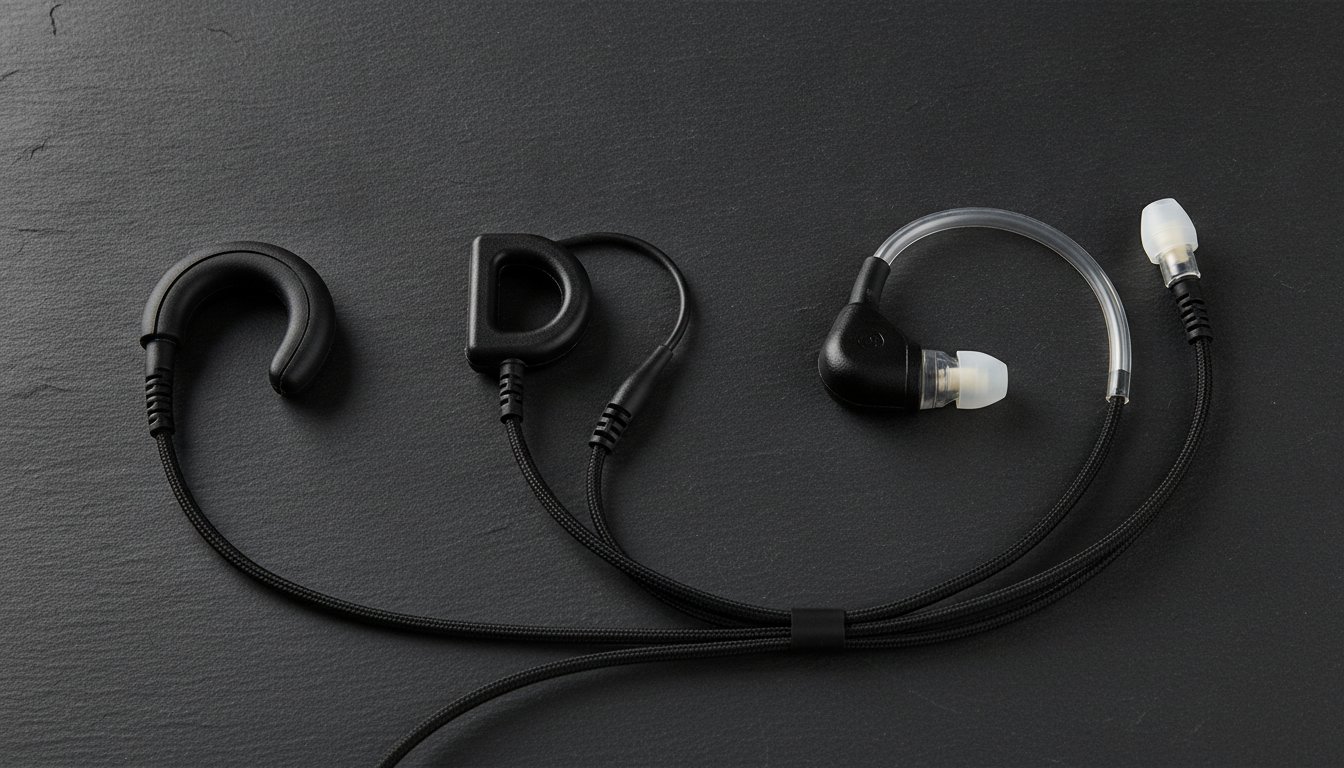
We understand that ear fatigue is often treated as an unavoidable part of the uniform, but it doesn’t have to be. This guide will help you eliminate soreness and find a “fit and forget” solution that remains secure during intense movement. You will learn how to achieve crystal-clear audio without cranking the volume to damaging levels. We will explore the technical differences between G-shape, D-shape, and acoustic tube designs to ensure your equipment survives daily professional use whilst providing the comfort you deserve from a reliable specialist.
Key Takeaways
- Identify the physiological causes of ear fatigue and how “hot spots” from hard plastic components impact your concentration during long shifts.
- Compare the ergonomic benefits of G-shape, D-shape, and acoustic tube designs to select a comfortable all-day radio earpiece that suits your specific environment.
- Understand the importance of hypoallergenic silicone materials and strategic cable management in preventing skin irritation and earpiece displacement.
- Discover why Earpiece Hub is the UK’s favourite specialist for durable, professional-grade peripherals compatible with Motorola, Hytera, and Kenwood radios.
Understanding Ear Fatigue: Why Your Radio Earpiece Hurts After Four Hours
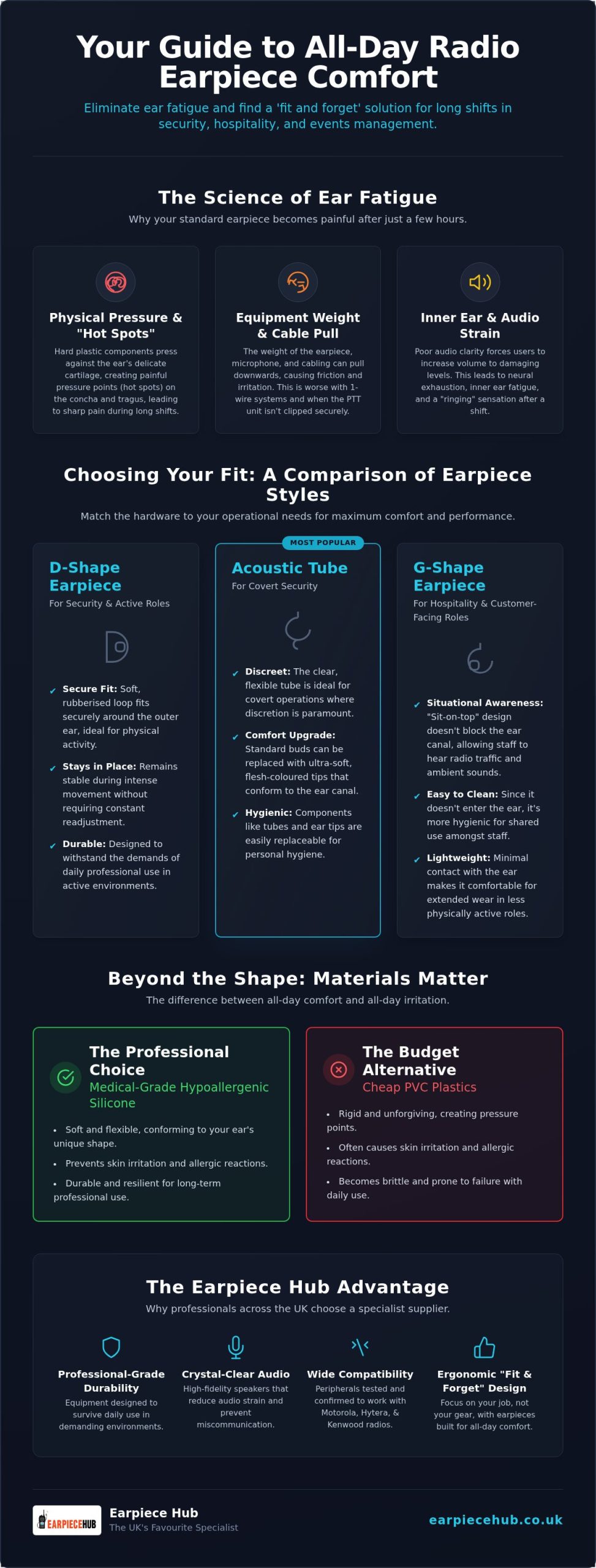
Ear fatigue is more than a minor annoyance; it’s a combination of physical pressure and neural exhaustion. For professionals in security or hospitality, this sensation often begins around the four-hour mark. It occurs when poorly fitted communication devices press against sensitive nerves and blood vessels. This constant contact creates “hot spots” where hard plastic components grind against the ear’s delicate cartilage. Over a twelve-hour shift, this friction leads to sharp pain, making a comfortable all-day radio earpiece an operational necessity rather than a luxury.
The physical weight of your equipment plays a significant role in long-term wearability. A 1-wire setup often pulls directly on the outer ear, whilst a 2-wire system distributes the weight of the microphone and cabling more evenly across the body. In high-pressure environments like event management, the “cable pull” from moving through crowds can exacerbate ear irritation. Professional-grade materials are essential here, as they provide the flexibility needed to move without the earpiece digging into your skin.
The Science of Pressure Points in the Human Ear
Every ear is unique, yet many budget models rely on one-size-fits-all designs. These earpieces frequently irritate the concha and tragus, the primary structural areas that support G-shape and D-shape models. Whilst professionals often look to in-ear monitor technology for inspiration on noise isolation, radio users must balance this with the need for situational awareness. Without ergonomic contouring that respects individual anatomy, even the lightest device will eventually cause significant distress.
Audio Strain and Its Contribution to Discomfort
Physical fit is only half the battle. Poor audio clarity forces users to increase the volume to hear transmissions over ambient noise, leading to inner ear fatigue. High-quality speakers found in a comfortable all-day radio earpiece deliver crisp sound at lower decibels. This prevents the “ringing” sensation often felt after a busy shift and allows you to focus on critical communications without straining your hearing. High-fidelity components ensure that every message is heard the first time, reducing the mental exhaustion of constant repetition.
Comparing Styles: Acoustic Tube, G-Shape, and D-Shape Comfort Levels
Selecting a comfortable all-day radio earpiece involves matching the hardware to your operational environment. Every ear shape is different. The best style depends on whether you prioritise discretion, security, or hygiene. A common failure point isn’t the earpiece itself, but the weight of the Push-to-Talk (PTT) unit. If you don’t clip the PTT securely to your clothing, the constant downward pull creates friction against the ear. This leads to the painful pressure points discussed earlier.
The D-shape earpiece remains a top choice for active roles. Its soft, rubberised loop fits around the outer ear, providing a secure fit during physical activity. Unlike other models, it stays in place without requiring constant adjustment. You can browse our full range of professional radio peripherals to find the right fit for your team.
Acoustic Tube Earpieces for Motorola Radios
Acoustic Tube models are the standard for covert security. They use a flexible, surgical-grade silicone tube to deliver sound. Whilst the standard mushroom bud is functional, replacing it with a flesh-coloured, ultra-soft ear tip can revolutionise long-shift comfort. These tips conform to the ear canal’s shape, reducing the pressure that typically leads to fatigue after several hours. We offer various replacement acoustic tubes and ear tips to maintain both hygiene and comfort.
The G-Shape: Why Hospitality Professionals Prefer It
The G-shape is a favourite amongst hospitality staff because of its “sit-on-top” design. Since the speaker doesn’t enter the ear canal, it’s more hygienic and easier to clean. It also offers a significant “open-ear” benefit. Users can hear ambient noise and speak to customers whilst simultaneously receiving radio traffic. This situational awareness is vital in busy venues where total isolation isn’t practical.
Selecting the Right Fit: A Guide to Materials and Ergonomics
Ergonomics start with material science. A comfortable all-day radio earpiece relies on medical-grade hypoallergenic silicone rather than the cheap PVC plastics found in budget alternatives. PVC is rigid and often causes skin irritation or allergic reactions during long shifts. Silicone is soft and flexible, helping to prevent the “hot spots” and cartilage pain that force users to remove their gear. You also need to consider your wiring setup. 1-wire systems are simple for light movement, whilst 2-wire and 3-wire configurations provide better weight distribution for active security roles where the radio is frequently jostled.
Cable length is a critical but often overlooked factor. If a cable is too short, every head turn creates “cable pull,” which yanks the earpiece out of position and causes friction in the ear canal. Measuring your ear for the correct ear tip size ensures a secure yet gentle seal that won’t require constant adjustment. You can shop our range of professional radio peripherals to find the exact configuration for your specific radio model.
Material Matters: Silicone vs Plastic
Professional-grade silicone is superior because it moulds to your ear’s unique shape over time. This creates a personalised fit that actually improves with regular use. Budget earpieces often use cables that harden and become brittle after exposure to sweat and UV light. When a cable loses its flexibility, it acts like a lever, pulling the earpiece away from your ear with every movement. High-quality silicone remains supple, ensuring the earpiece stays seated without digging into the skin.
The Role of Replacement Ear Tips in Maintaining Comfort
Hygiene is a direct comfort factor. Wax build-up doesn’t just block audio clarity; it makes the ear tip slippery and unstable. We recommend replacing your ear tips every few months to maintain a secure seal. For those with piercings, maintaining them with professional care from brands like Stellar Malaysia ensures that your jewellery doesn’t add to the friction caused by your radio gear. It’s also wise to keep a variety of sizes in your kit bag. Ears can swell in high temperatures, and switching to a smaller tip during a summer event can provide immediate relief from pressure. Maintaining your gear is the simplest way to ensure a comfortable all-day radio earpiece remains effective for the duration of your shift.
Earpiece Hub serves as the central resource for UK professionals who refuse to compromise on communication quality. As a reliable specialist, we provide technical equipment designed for the high-stakes nature of security and radio operations. Our catalogue features high-durability peripherals compatible with major industry brands including Motorola, Hytera, and Kenwood. When you need a comfortable all-day radio earpiece to replace a failing unit, our Next Day Shipping ensures you aren’t left without essential gear. We back every purchase with 24/7 Support, providing a steady beat of reliability that professionals depend on.
Specialist Solutions for Motorola and Hytera Systems
We understand the technical nuances of each radio brand. For instance, our Acoustic Tube Earpiece for Motorola Radios is a flagship comfort product. It uses surgical-grade silicone to ensure a “fit and forget” experience during long shifts. By operating as a specialist Hub, we offer 1-wire, 2-wire, and 3-wire configurations tailored to specific hospitality and security needs. This level of technical categorisation confirms our status as an industry veteran that provides exactly what is needed with minimal fuss.
Next Steps: Upgrading Your Fleet’s Comfort
Optimise Your Communication Comfort Today
Selecting a comfortable all-day radio earpiece is a decision that impacts your concentration and safety. You’ve learned that medical-grade silicone and proper weight distribution are the keys to avoiding “hot spots” and cartilage pain. By matching your earpiece style to your specific movement needs, you ensure your focus remains on the task at hand rather than the ache in your ear.
Earpiece Hub has been a specialist UK retailer since 2015, providing durable hardware compatible with Motorola, Hytera, and Kenwood radios. With Next Day Shipping across the UK, you can upgrade your equipment and start your next shift with the comfort you deserve. Reliable communication is the backbone of professional service; don’t let inferior gear hold you back.
Shop the range of comfortable all-day radio earpieces at Earpiece Hub to find your perfect fit. Secure your communication, protect your hearing, and work with confidence.
Frequently Asked Questions
How do I stop my radio earpiece from hurting my ear?
To stop your earpiece from hurting, you must eliminate physical pressure. Don’t let the weight of the PTT unit pull on your ear; clip it to your lapel instead. Switching from standard plastic buds to hypoallergenic silicone tips can also remove “hot spots” on the cartilage. If the pain persists, try adjusting the ear loop or moving to a different style, such as a D-shape, to redistribute the pressure.
Which is more comfortable: a G-shape or an acoustic tube earpiece?
The choice depends on whether you prefer an in-ear or over-ear fit. A G-shape is ideal for hospitality because it sits on the ear, allowing you to hear ambient noise whilst receiving radio traffic. For covert security, an acoustic tube provides better discretion. However, achieving a comfortable all-day radio earpiece with an acoustic tube requires using soft, flexible silicone tips that mould to your canal shape without causing irritation.
Can I get different sized ear tips for my radio earpiece?
You can certainly obtain various sizes of replacement ear tips to customise your fit. Most budget earpieces include a standard size, but it’s rare for these to fit everyone perfectly. Earpiece Hub offers various replacement acoustic tubes and ear tips to ensure you find a size that provides a gentle seal. Using the correct size prevents the earpiece from falling out and eliminates the stretching pain caused by oversized tips.
How often should I clean or replace my earpiece for hygiene and comfort?
Clean your earpiece after every shift and replace the consumable parts every three to four months. Daily cleaning with a dry cloth or non-alcoholic wipe removes sweat and wax that can degrade the material. Over time, silicone components can harden and become uncomfortable. Regularly replacing your ear tips and acoustic tubes ensures that your comfortable all-day radio earpiece maintains its flexibility, hygiene, and the high-fidelity audio clarity needed for professional communication.
What is the best radio earpiece for people with small ears?
For smaller ears, the G-shape is frequently the most reliable choice. Since it hooks over the ear and rests on the surface, it avoids the discomfort of forcing a large bud into a narrow canal. If you require a covert setup, consider an acoustic tube paired with a small-sized silicone tip. These smaller tips provide a secure fit without the excessive pressure that often leads to ear fatigue during a long twelve-hour shift.
