





Uncategorized
The Core Benefits of a Remote Speaker Microphone for Professional Radio Users
Aug
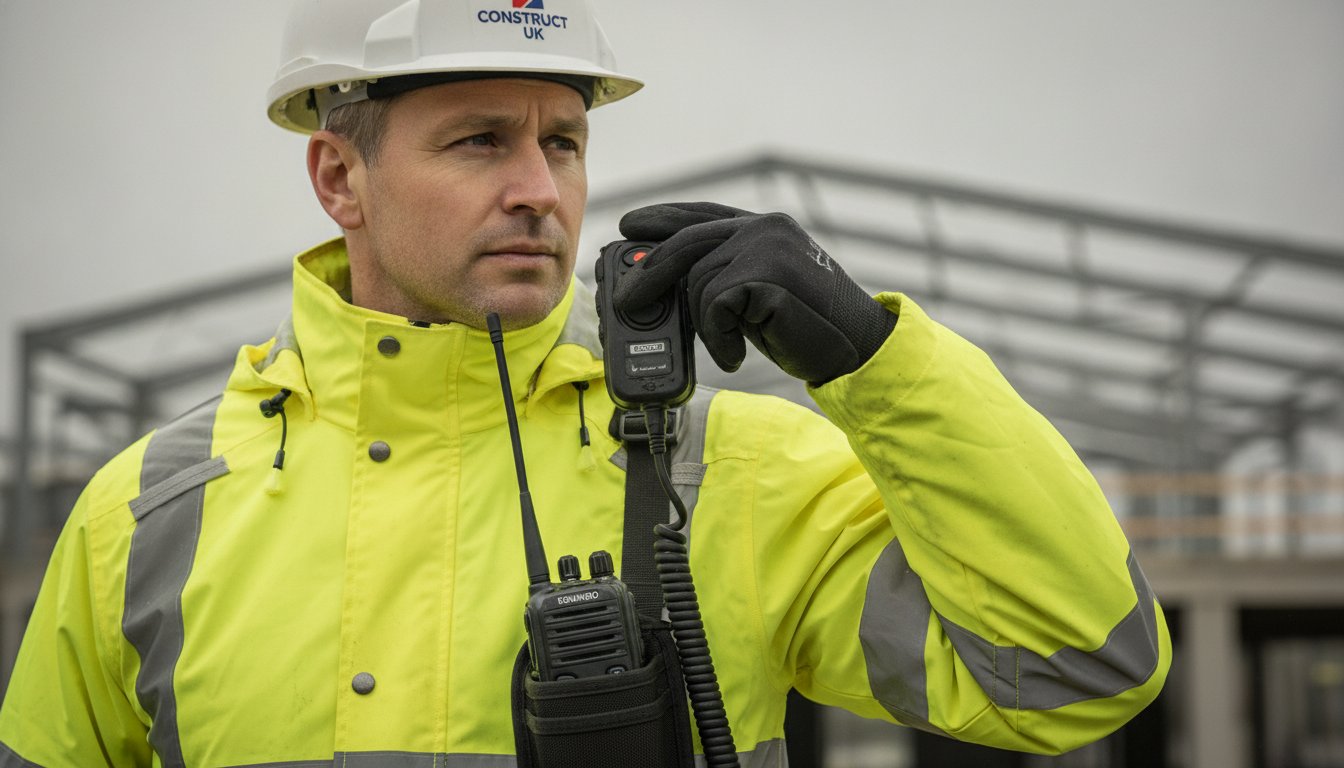
You are on a rain-swept construction site or a crowded event perimeter, and your radio is buried deep beneath a heavy waterproof jacket. By the time you have unclipped the handset to respond to a critical alert, you have already missed the first few seconds of the transmission. It is a common struggle for security and logistics professionals who rely on Motorola or Kenwood kits. Fumbling with expensive hardware in gloves or high-noise environments isn’t just a nuisance; it’s a safety risk that leads to dropped devices and muffled messages.
We understand that in high-stakes environments, your equipment must be as responsive as your team. This guide explores the core benefits of a remote speaker microphone, demonstrating how this tactical upgrade moves the essential controls to your shoulder for instant access. You will discover how a quality RSM enhances audio clarity, improves response times, and protects your primary radio unit from unnecessary wear and tear. We will also look at how these devices ensure your team stays connected whilst working in the most demanding UK conditions.
Key Takeaways
- Secure the ‘brain’ of your radio to your belt whilst moving the audio interface to your shoulder for instant, one-handed access.
- Understand the technical benefits of a remote speaker microphone, specifically how windporting and noise-cancelling technologies filter out background interference.
- Improve operational safety by allowing security and construction personnel to maintain ‘hands-up’ readiness and eye contact during transmissions.
- Maximise device longevity by reducing strain on the main radio’s controls and selecting the correct IP-rated hardware for your specific environment.
What is a Remote Speaker Microphone and How Does it Work?
A Remote Speaker Microphone (RSM) is an external audio interface designed to enhance two-way radio functionality in high-stakes environments. This handheld device clips directly to a user’s lapel or shoulder, connecting to the main handheld, portable, two-way radio transceiver via a heavy-duty coiled cable. It acts as a secondary control hub, allowing the operator to send and receive messages without ever touching the radio unit itself.
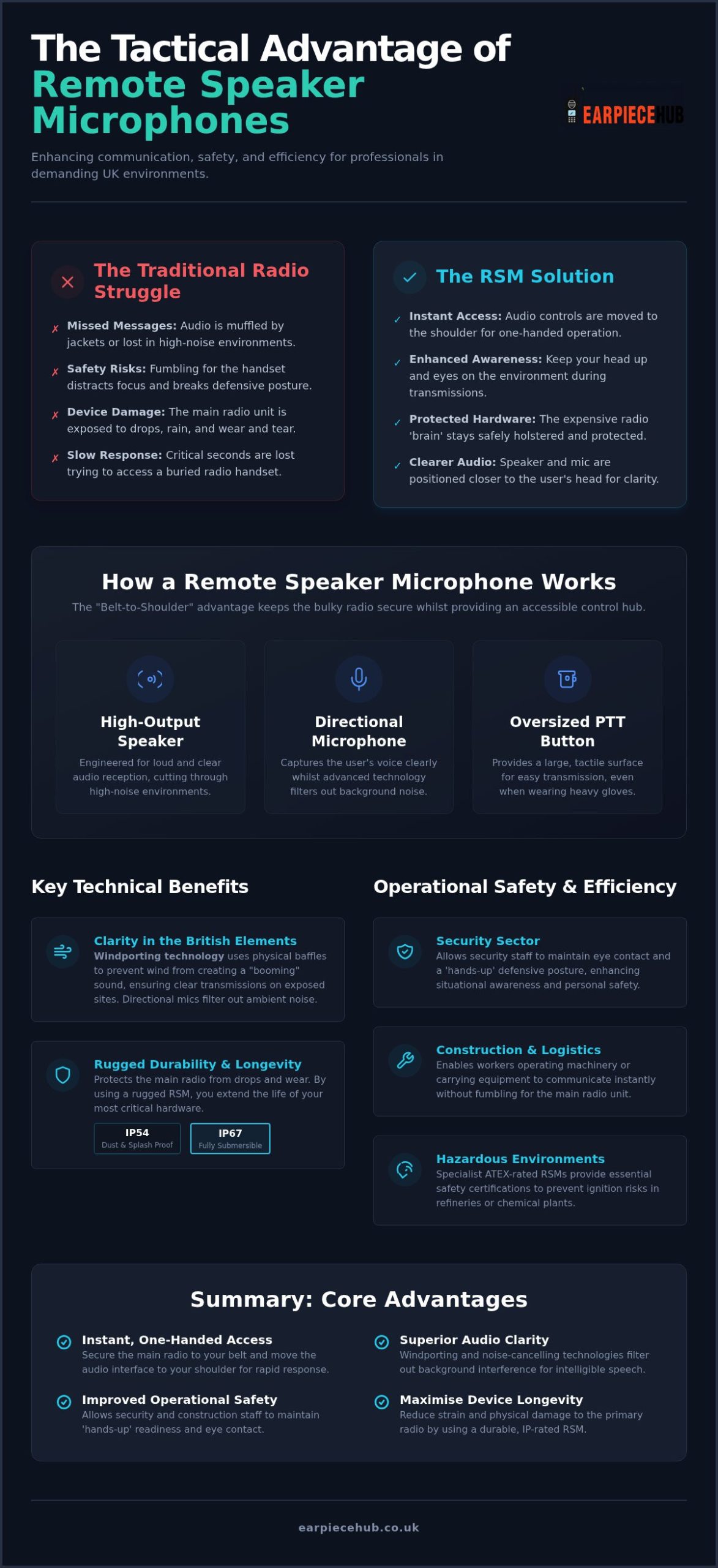
The primary “Belt-to-Shoulder” advantage ensures that the heavy, bulky radio remains securely holstered on the belt or tucked inside a protective jacket. By moving the audio interface closer to the ear, users experience one of the most immediate benefits of a remote speaker microphone: consistent clarity. Instead of straining to hear audio from a waist-mounted speaker, the sound is delivered directly to the shoulder. This significantly reduces the chance of missed instructions in busy or windy environments.
Every professional-grade RSM consists of three essential components:
- A high-output speaker: Engineered for clear audio reception even in noisy settings.
- A directional microphone: Designed to pick up the user’s voice whilst ignoring peripheral noise.
- An oversized Push-To-Talk (PTT) button: Provides a tactile, easy-to-find surface for rapid transmission.
The Tactical Advantage of Lapel-Mounted Audio
Shoulder mounting keeps your head up and your eyes on the environment. Unlike holding a radio, which occupies a hand and draws focus downward, a lapel-mounted RSM maintains situational awareness. The oversized PTT button is a critical feature for those wearing heavy gloves or protective gear. It’s much easier to strike a large button on your shoulder than it is to find the smaller PTT switch on a radio body whilst wearing PPE or working in low-light conditions.
Key Technical Benefits: Clarity in the British Elements
UK weather is notoriously difficult for radio communication. High winds and driving rain often render standard handheld mics useless. One of the technical benefits of a remote speaker microphone is windporting technology. This specific design feature prevents wind from blowing directly into the microphone port, which otherwise creates a deafening “booming” sound for the listener. By filtering out this turbulence, you can fully leverage the benefits of a remote speaker microphone even on exposed rooftops or coastal sites.
Windporting and Audio Intelligence
Windporting works by using a physical baffle to break up wind gusts before they reach the mic element. For those using Motorola hardware, IMPRES audio technology takes this further by automatically adjusting the microphone gain. It ensures that whether you are whispering in a quiet corridor or shouting over a construction site, the receiving end hears balanced, intelligible speech. The directional microphones in these units are tuned to distinguish human speech from ambient machinery or crowd noise. High-output speakers also deliver significantly more volume than the small internal speakers found on most portable handsets, ensuring you hear every command clearly.
Durability and Device Longevity
Operational environments in the UK require rugged kit. Professional RSMs are rated from IP54, which offers dust and splash protection, up to IP67, which allows for full submersion in water. It’s a critical upgrade for teams working in torrential rain or near water. By using an RSM, you also protect the “brain” of your system. Keeping the radio holstered prevents drops and reduces wear on the radio’s volume knobs and internal microphone. If you need to upgrade your radio fleet’s durability, a ruggedised RSM is the most cost-effective solution for extending the life of your primary hardware.
Operational Safety and Efficiency Across Industries
Professional radio users across the UK face unique environmental challenges that demand more than just a basic handset. In the security sector, door supervisors must maintain eye contact and ‘hands-up’ readiness whilst communicating. Reaching for a belt-mounted radio breaks this defensive posture and signals a lapse in situational awareness. One of the key benefits of a remote speaker microphone is allowing personnel to transmit whilst keeping their focus entirely on the crowd or individual in front of them.
In construction and logistics, the advantages are equally clear. Workers operating heavy machinery or carrying equipment can’t afford to fumble with a radio body. An RSM provides a large, accessible PTT button that works even through thick work gloves. For those in hazardous environments, such as refineries or chemical plants, specialist ATEX-rated RSMs provide the necessary safety certifications to prevent ignition risks. Additionally, most professional units feature a 3.5mm jack. This allows users to connect an earpiece for discreet listening, ensuring sensitive information isn’t broadcast to the public.
Hands-Free Convenience and Response Times
Response times are critical in emergencies. When a radio is buried under a high-vis vest or a heavy winter coat, it can take several seconds to retrieve it. An RSM stays on the exterior of the clothing, providing instant access. You don’t have to look down to find the controls, which is a major safety benefit when navigating a busy site or responding to a security breach. If your team needs to improve their operational speed, you can buy professional remote speaker microphones to streamline your communications. These tactical upgrades ensure that your staff stay focused on the task at hand rather than their equipment.
Choosing the Right RSM for Your Radio Fleet
Selecting the correct hardware is essential to ensure your team remains connected. You must first verify the connector type. Whether your fleet uses a Motorola 2-pin, a GP340, or a DP1400 multi-pin, the plug must seat perfectly to maintain a reliable signal. Environmental factors also dictate your choice. A team working indoors might only need a basic unit, but those on exposed sites require a fully submersible IP67 model to withstand the British weather. One of the technical benefits of a remote speaker microphone is its adaptability to these varied conditions.
RSM vs. Earpiece: Which is Right for You?
The choice between an RSM and an acoustic tube earpiece often depends on visibility. RSMs are perfect for high-visibility roles like site management or event security where rapid communication is prioritised. In contrast, covert roles require the discretion of an earpiece. For the ultimate setup, many professionals combine the two. By plugging a listen-only earpiece into the RSM’s 3.5mm jack, you gain the benefits of a remote speaker microphone’s easy PTT whilst keeping incoming audio private.
Ensuring Brand Compatibility
Matching third-party accessories to brands like Motorola, Kenwood, or Hytera requires technical precision. Choosing a specialist retailer like Earpiece Hub ensures that the voltage and audio impedance of the microphone match your radio’s specifications. This prevents audio distortion and protects your radio’s internal circuitry from damage. To maintain your kit, regularly clean the microphone grille with a soft brush to remove dust. You should also inspect the coiled cable for signs of fatigue or stretching. A damaged lead is the most common cause of intermittent signal loss, so catching these issues early protects your investment.
Level Up Your Fleet Communications
Integrating an RSM into your daily operations is more than a convenience; it’s a tactical necessity for professional teams. By moving audio controls to the shoulder, you ensure instant response times whilst protecting your primary radio unit from drops and environmental damage. The benefits of a remote speaker microphone extend from superior noise cancellation in heavy winds to the safety of maintaining eye contact during critical security incidents. Whether you’re managing a busy construction site or a high-pressure event, the right peripheral ensures your message always gets through.
At Earpiece Hub, we provide specialist UK technical support to help you find the perfect match for your Motorola DP1400 or Kenwood fleet. Our hardware is expertly tested to ensure total reliability in the field. With next-day shipping available on most radio accessories, you can upgrade your team’s efficiency without delay. Browse our range of professional Remote Speaker Microphones today and experience the difference that specialist equipment makes to your operational success.
Frequently Asked Questions
Is a remote speaker microphone better than a standard earpiece?
It depends on your specific operational environment and visibility requirements. RSMs offer superior durability and ease of use with gloves, whilst earpieces provide covert communication. For high-visibility roles like site security or logistics, the benefits of a remote speaker microphone include faster access and louder audio reception. However, earpieces remain the better choice for discrete work. Many professionals choose a hybrid setup to get the best of both worlds.
Will a Motorola RSM work with a Kenwood or Hytera radio?
No, RSMs are generally not cross-compatible between different brands due to unique connector pins and wiring configurations. A Motorola 2-pin connector will not fit a Kenwood or Hytera multi-pin socket. Even with an adapter, voltage and audio impedance differences can cause distorted sound or hardware damage. Always match the accessory to your specific radio model to ensure reliable performance and protect your equipment’s internal circuitry from electrical faults.
What does ‘windporting’ actually mean in a microphone?
Windporting is a physical design feature that uses baffles and chambers to cancel out the booming noise caused by wind. It prevents air from blowing directly into the microphone element. This technology is vital for outdoor operations in the UK, ensuring clear speech transmission even in high-velocity gusts. Without it, the listener often hears a roar of static. This feature is one of the technical benefits of a remote speaker microphone for coastal teams.
Can I plug an earpiece into a remote speaker microphone?
Yes, most professional remote speaker microphones feature a 3.5mm listen-only jack on the base or side of the unit. This allows you to route incoming audio directly to your ear whilst still using the RSM’s large PTT button for talking. It is an ideal solution for security personnel who need to hear transmissions clearly in loud crowds without broadcasting sensitive information to the public. It combines tactical convenience with necessary privacy.
Are remote speaker microphones waterproof for outdoor use in the UK?
Many professional RSMs are designed for wet conditions, but you must check the specific Ingress Protection (IP) rating. An IP54 rating protects against light rain and dust, whilst an IP67-rated unit is fully submersible and waterproof. For consistent performance in the heavy rain typical of UK winters, we recommend choosing a higher IP rating. This ensures the internal speaker and microphone remain functional even after prolonged exposure to the elements on site.
