





Uncategorized
Ultimate Guide to Listen-Only Two-Way Radio Earpieces
Jul
What if a single second of audio bleed compromised your entire covert operation? You already know that in high-stakes security or crowd management, professional discretion is non-negotiable. It’s incredibly frustrating when ear fatigue sets in during a long shift, or when a cable is simply the wrong length to reach your shoulder microphone. Finding the right listen-only earpiece for radio is about more than just volume. It’s the final link in a professional audio chain that ensures operational security through silent monitoring.
We promise to help you select equipment that delivers crystal clear incoming audio whilst maintaining a sleek, covert appearance. You’ll gain certainty on connector compatibility for Motorola and Kenwood fleets, ensuring your gear meets the technical standards required for demanding environments. This guide previews the essential jack sizes, cable configurations, and ergonomic designs that keep UK security professionals connected and comfortable for the duration of a twelve-hour shift.
Key Takeaways
- Understand why a receive-only setup is superior for covert operations and how it prevents audio bleed in quiet environments.
- Learn how to select the correct jack size and plug orientation for your listen-only earpiece for radio to ensure maximum cable durability.
- Discover professional techniques for threading cables through uniforms to avoid snags whilst maintaining comfort during long shifts.
- Identify the essential replacement components, such as ear tips and acoustic tubes, needed to keep your fleet’s communication hardware operational.
- Ensure total compatibility across your Motorola and Kenwood fleets by using specialist earpiece adapters and universal designs.
Understanding the Role of a Listen-Only Earpiece in Professional Radio
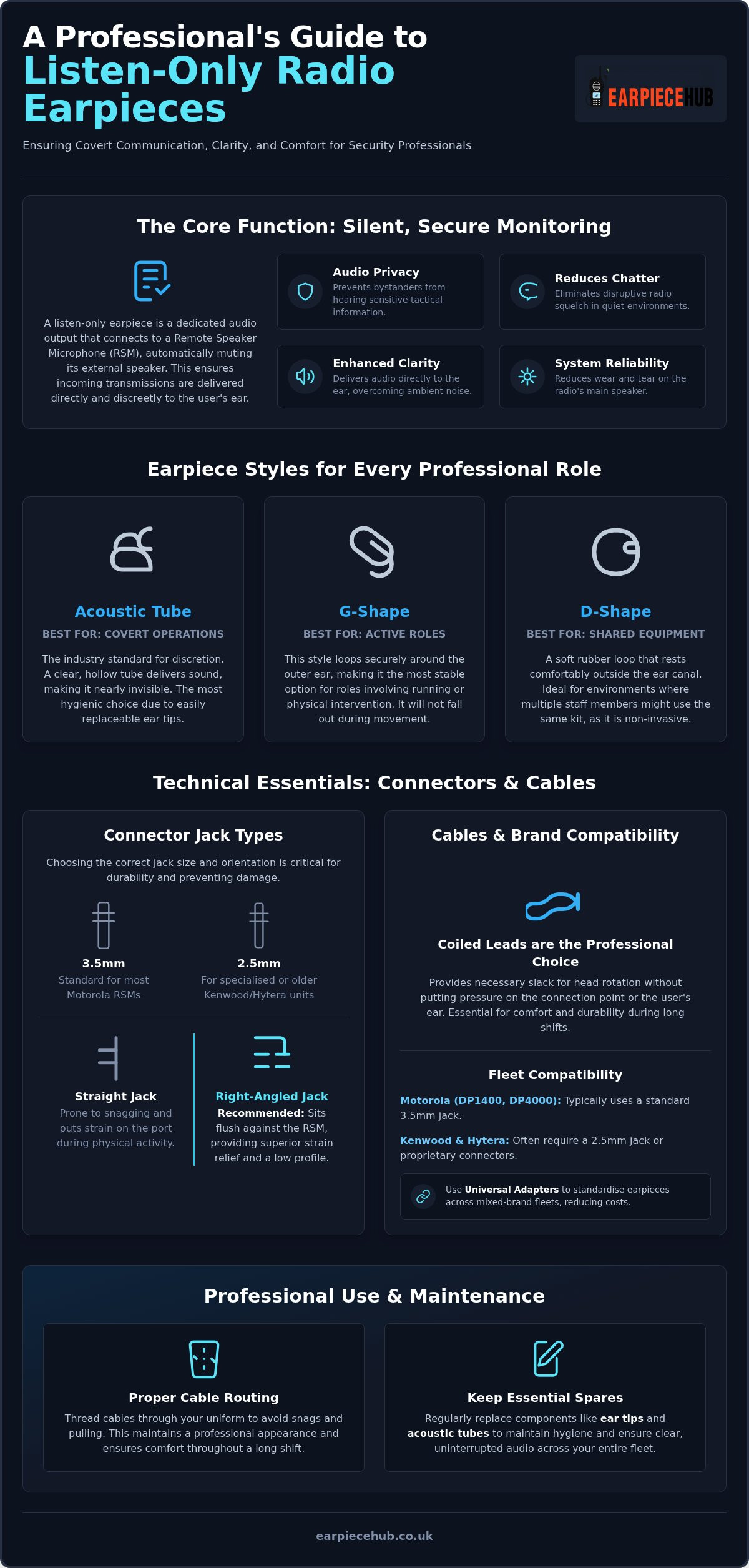
A listen-only earpiece for radio acts as a dedicated secondary audio output. Unlike standard headsets that combine a microphone and speaker, these units focus entirely on delivering incoming transmissions directly to your ear. This modular approach is favoured by professionals who already utilise a Remote Speaker Microphone (RSM) or a radio with a built-in speaker but require absolute discretion. It’s a critical component in modern two-way radio technology, allowing for silent monitoring in environments where public “radio chatter” would be disruptive or a security risk.
Professionals choose these kits for several operational reasons:
- Audio Privacy: Prevents bystanders from hearing sensitive tactical information.
- Noise Reduction: Eliminates the constant background squelch that can disturb guests in quiet venues.
- Clarity: Delivers audio directly into the ear canal, overcoming high ambient noise levels.
- Reliability: Reduces wear on the main radio’s internal speaker.
The Synergy with Remote Speaker Microphones (RSMs)
Most professional-grade shoulder microphones, such as those used in Motorola or Kenwood fleets, feature a dedicated 3.5mm or 2.5mm accessory port. Plugging a listen-only kit into this port automatically mutes the RSM’s external speaker. This setup allows you to keep your radio securely on your belt whilst audio remains at ear level. It’s an efficient way to manage cables and ensures you never miss a call, even in crowded environments. Selecting a high-quality listen-only earpiece for radio ensures that your team remains connected without compromising the professional image of your organisation.
Covert vs. Overt Communication Needs
Technical Specifications: Choosing the Right Jack and Style
Selecting a listen-only earpiece for radio starts with the connector. Most modern Remote Speaker Microphones (RSMs) for Motorola and Kenwood fleets use a 3.5mm jack, but some specialised units require a 2.5mm plug. Using the wrong size leads to intermittent audio or physical damage to the port. Beyond the diameter, the jack’s shape is vital for durability. Straight jacks are prone to snagging during physical activity. Right-angled versions sit flush against the RSM housing, providing superior strain relief and a lower profile that prevents the cable from being pulled out of the socket.
Cable configuration also impacts performance. Coiled leads are the professional choice for shoulder-mounted setups. They provide the necessary slack for head rotation without putting pressure on the connection point or the user’s ear. When assessing audio quality, look for high-impedance speakers that deliver clear sound without distortion at high volumes. Following hearing protection best practices ensures that using in-ear devices doesn’t lead to long-term auditory fatigue whilst maintaining the high decibel output needed to hear over crowds or machinery.
Acoustic Tube vs. D-Shape vs. G-Shape
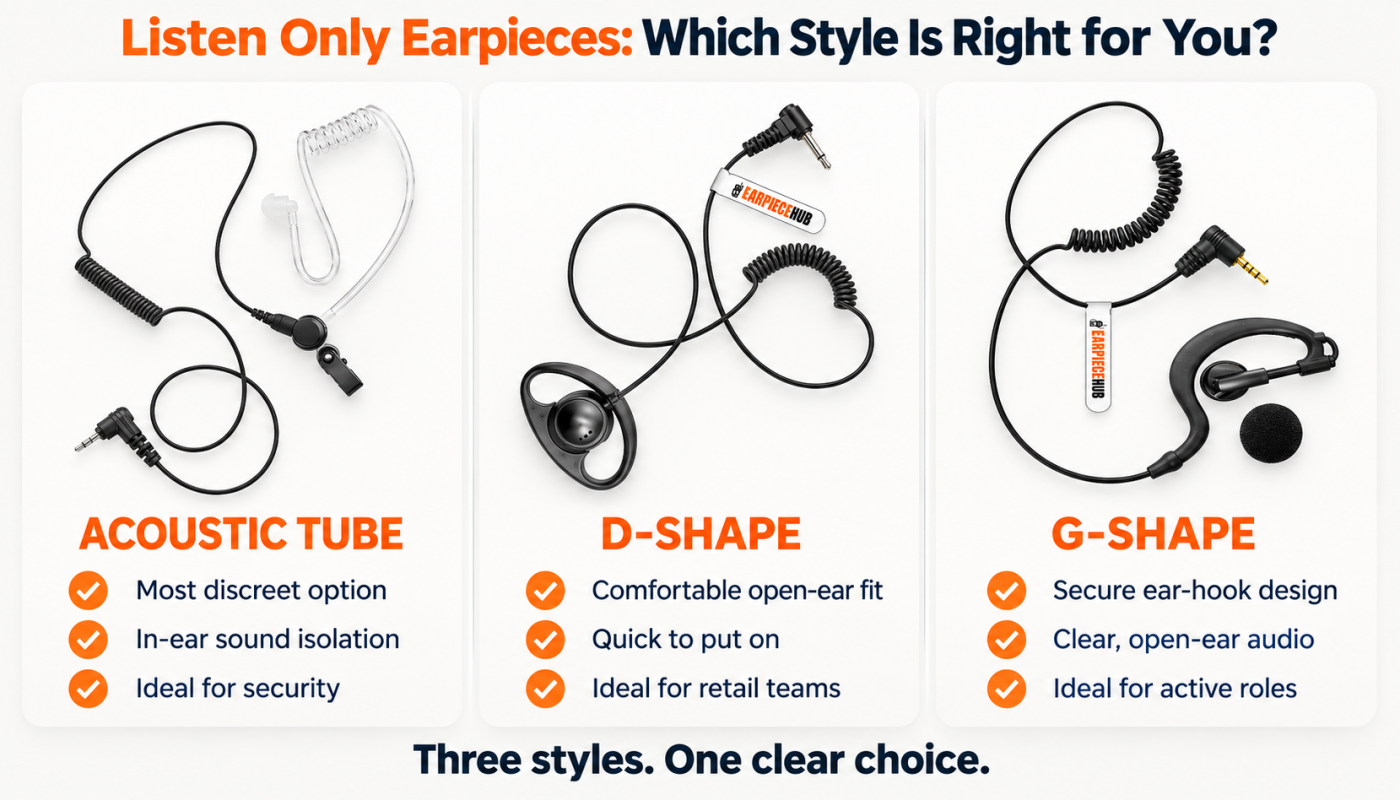
- Acoustic Tube: The gold standard for covert operations. It uses a clear, hollow tube to deliver sound, making it nearly invisible. It’s also the most hygienic option because the ear tips are easily replaceable.
- G-Shape: This style loops securely around the outer ear. It’s the most stable choice for active roles involving running or physical interventions, as it won’t fall out during movement.
- D-Shape: A soft rubber loop that sits outside the ear canal. It’s ideal for shared environments where multiple staff members might use the same kit, as it doesn’t require insertion into the ear.
Connector Compatibility for Major Brands
Motorola DP1400 and DP4000 series RSMs typically utilise a 3.5mm non-threaded jack, though some heavy-duty microphones require a threaded version for a locked connection. Kenwood and Hytera requirements often differ, sometimes using proprietary 2.5mm configurations that aren’t compatible with standard off-the-shelf headphones. A universal earpiece adapter allows teams to use the same listen-only kits across mixed-brand fleets, significantly reducing equipment costs and simplifying logistics. If you’re unsure which connector your fleet requires, you can browse our specialist radio accessories for detailed compatibility charts.
Installation, Comfort, and Long-Term Maintenance
Proper installation ensures reliability. To fit a listen-only earpiece for radio for an eight-hour shift, start by connecting the jack to your shoulder microphone. Thread the cable underneath your uniform and through the epaulette. This keeps the lead close to the body and prevents the cord from snagging on door handles or during a physical intervention. Managing cable runs this way also maintains a professional, covert appearance by hiding the wiring from public view.
Environmental factors significantly impact equipment lifespan. In the UK, UV exposure and sweat are the primary causes of hardware degradation. Over time, clear acoustic tubing will yellow and become brittle. This hardening reduces audio quality and makes the tube prone to snapping. Hygiene is equally vital in multi-user environments. If your team shares radios, each operator should have their own personal ear tips to prevent the spread of infections. Regular inspection of the transducer and cable connection points will help you identify wear before it leads to a total communication failure.
Cleaning Your Acoustic Tube
Condensation build-up is a frequent issue. Moisture from your ear canal or breath can block the tube, resulting in muffled audio. To fix this, remove the tube from the transducer and blow out any droplets. For a deeper clean, use mild soapy water. Avoid specialised cleaning kits containing harsh chemicals, as these often accelerate the hardening of the plastic. If the tube remains discoloured after cleaning, it is time for a replacement.
Maximising Comfort and Reducing Ear Fatigue
Standard silicone buds are functional, but semi-custom earmoulds offer superior comfort for long shifts. These earmoulds allow ambient sound to enter the ear whilst holding the acoustic tube securely in place. For G-shape models, orientation is critical. Ensure you are using the correct ear fitment. Forcing a “left-ear” model onto the right ear creates pressure points that lead to quick fatigue. Order your replacement acoustic tubes and ear tips today to keep your communication gear in peak condition.
Why Earpiece Hub is the UK Specialist for Radio Accessories
Earpiece Hub operates as a central resource for the UK security community. We don’t just sell equipment; we provide the technical expertise required to keep your team connected. When you buy a listen-only earpiece for radio from us, you’re investing in professional-grade hardware designed for the rigours of the field. We maintain an extensive stock of replacement parts. This includes everything from ear tips to reinforced acoustic tubes, ensuring you can repair your gear rather than replacing the entire unit. Our focus on reliability means we only supply hardware that meets the high standards expected by industry veterans.
Beyond the Earpiece: A Complete Communication Solution
Our inventory supports every aspect of your radio fleet. We provide replacement batteries for the Motorola DP1400 to extend the life of your existing handsets. For large professional teams, our six-way multi-unit chargers are essential for managing power across a busy shift. Compatibility issues can often stall operations. That’s why our universal earpieces and earpiece adapters are engineered to work across mixed-brand environments. These tools bridge the gap between different hardware standards without compromising audio clarity or professional discretion.
For organisations that require high-fidelity audio across their entire infrastructure, specialists like SoundXcel offer premium Bose systems that mirror the clarity and reliability demanded by professional radio users.
The “Hub” Advantage for UK Businesses
Reliability is our core character trait. We offer 24/7 support for technical enquiries, helping you identify the exact connector for your specific radio models. We understand that security doesn’t wait for office hours. Our next-day shipping service ensures that essential comms gear reaches you when you need it most. We take a no-nonsense approach to high-stakes communication. We focus on functional, durable equipment that professionals can depend on in demanding environments. Browse our full range of listen-only earpieces to secure your team’s communication today.
Secure Your Professional Communication
Maintaining operational security requires the right hardware and a commitment to equipment care. You’ve seen how a high-quality listen-only earpiece for radio provides the final link in a professional audio chain, ensuring transmissions remain private whilst keeping your hands free for the task at hand. By selecting the correct jack size and a style that suits your specific role, you eliminate the risk of audio bleed and physical discomfort during demanding shifts. Regular cleaning and timely replacement of acoustic tubes are essential for long-term clarity.
Earpiece Hub has served as a specialist UK stockist since 2015, providing the technical expertise and 24/7 support needed to ensure compatibility across your entire fleet. We don’t just sell parts; we offer a dependable partnership for security professionals who require gear that performs under pressure. Take action now to upgrade your equipment with professional-grade accessories that are built for longevity in the field.
Shop our professional listen-only earpieces with next-day UK delivery and experience the reliability that comes with using a dedicated industry partner. We’re here to ensure your communication remains crystal clear, no matter the environment.
Frequently Asked Questions
What is the difference between a 2.5mm and 3.5mm listen-only earpiece?
The difference lies in the physical diameter of the jack plug. A 3.5mm jack is the standard size for most modern remote speaker microphones, whereas the 2.5mm version is a smaller, specialised connector often found on older or specific proprietary hardware. Using the incorrect size will prevent the earpiece from seating properly, resulting in a total loss of audio or an intermittent signal.
Can I use a listen-only earpiece directly with my radio without a speaker mic?
Most listen-only earpiece for radio units require a remote speaker microphone (RSM) to function correctly. While some radios feature a jack on the main body, these are often proprietary or lack the necessary amplification for a clear signal. Plugging into an RSM ensures the audio is delivered at the correct impedance and keeps the cable length manageable for shoulder mounting.
How do I stop my acoustic tube from turning yellow or becoming hard?
You can slow the degradation of your acoustic tube by keeping it away from direct UV light and cleaning it after every shift. Sweat and skin oils are the primary causes of the plastic turning yellow and becoming brittle. Wiping the tube with a damp cloth and storing it in a cool, dark locker will significantly extend its flexibility and operational lifespan.
Will a 3.5mm jack earpiece work with my Motorola DP1400 remote speaker microphone?
Yes, standard remote speaker microphones for the Motorola DP1400 typically utilise a 3.5mm jack for accessories. This allows for a seamless connection with most professional listen-only kits. It’s worth checking if your specific microphone requires a threaded jack for a locking connection, which is common in high-security roles where cable snags are a frequent risk.
Are clear acoustic tubes actually invisible during covert operations?
Clear acoustic tubes are highly discreet but not entirely invisible. They are designed to reflect ambient light and blend against the wearer’s skin, making them the preferred choice for covert operations. For the best results, ensure the tube is fitted snugly behind the ear and consider using specialised ear tips that sit deeper within the ear canal for a lower profile.
