





Uncategorized
The Ultimate Guide to Single-Pin Radio Earpieces for Professional Use
Jul
Imagine you’re halfway through a high-pressure security shift when your radio suddenly goes silent because a flimsy cable snapped or the jack slipped. It’s a critical failure that puts both your team and your reputation at risk. Finding a dependable single-pin radio earpiece shouldn’t be a game of chance, yet many professionals struggle with audio cutting out or connectors that simply don’t match their hardware.
You already know that clear, uninterrupted communication is the backbone of any professional operation. We understand the frustration of earpieces that fall out during physical activity or the confusion caused by subtle differences between 2.5mm and 3.5mm jack sizes. This guide helps you master the technical nuances of single-pin connectivity so you can find the perfect, reliable earpiece for your specific radio model and professional environment. We’ll examine specific wiring configurations, durability standards, and the updated EU cybersecurity requirements that now govern wireless radio equipment. By the end, you’ll have the confidence to select specialist gear that offers crystal-clear reception and a comfortable fit for even the longest shifts.
Key Takeaways
- Understand the technical shift from multi-pin proprietary connectors to universal TRS and TRRS standards in modern professional radios.
- Identify the ideal style for your role, balancing the discreetness of acoustic tubes with the long-term comfort of G-shape or D-shape designs.
- Ensure perfect hardware compatibility by matching your single-pin radio earpiece to specific brand requirements for Motorola, Hytera, and Kenwood models.
- Learn professional maintenance tips to prevent cable fraying and maintain crystal-clear audio quality throughout demanding 12-hour shifts.
What is a Single-Pin Radio Earpiece and Why is Compatibility Complex?
A single-pin radio earpiece is a professional communication peripheral that connects to a handset via a single TRS or TRRS jack connector. Whilst the design appears simple, the internal wiring and pin dimensions vary significantly between manufacturers. A single-pin connector is the primary interface for compact and licence-free professional radios. Choosing a high-quality single-pin radio earpiece requires a specialist approach because high-stakes security roles leave no room for equipment failure. At Earpiece Hub, we act as your reliable partner, providing the technical expertise needed to ensure your gear never lets you down during critical coordination.
The Evolution of Single-Pin Connectivity in UK Radios
Modern radio units have moved away from bulky, proprietary multi-pin blocks to favour streamlined single-pin designs. This shift has enabled the production of smaller, more discreet handsets essential for covert operations and event security. Historically, 2.5mm jacks were the industry standard for smaller devices. However, many modern professional radios from brands like Motorola and Hytera now utilise 3.5mm connectors to improve durability and signal stability. This transition amongst major manufacturers means professionals must be precise about jack diameter and depth to avoid audio dropouts.
Key Components: PTT, Microphone, and the Jack
The anatomy of a professional single-pin radio earpiece consists of three main elements: the Push-to-Talk (PTT) housing, the reinforced cable, and the pin itself. High-quality models feature heavy-duty wiring to prevent snapping under tension during physical activity. You must also choose between 1-wire and 2-wire configurations:
- 1-Wire Systems: A single cable runs from the radio to the PTT/microphone unit, with the earpiece extending from that same housing. It’s ideal for general retail or hospitality use where simplicity is preferred.
- 2-Wire Systems: These feature two separate cables originating from the jack. One leads to the PTT/microphone whilst the other goes to the earpiece. This allows for more discreet cable routing under clothing, which is a standard requirement for door supervisors and close protection officers.
Selecting the Best Earpiece Style for Your Professional Role
Choosing the right physical design is just as critical as ensuring electrical compatibility. Your environment dictates which shape will perform best during a shift. Whilst a single-pin radio earpiece provides the connection, the hardware sitting on your ear determines your comfort and situational awareness. You must evaluate the trade-offs between absolute discreetness and the high-volume audio clarity needed in loud venues. We position Earpiece Hub as the central resource for all three major professional styles, ensuring you get the exact tool for your specific trade. For door supervisors and event staff, we prioritise reinforced cabling to ensure the equipment survives physical scuffles or accidental snags.
Acoustic Tube Earpieces: The Gold Standard for Security
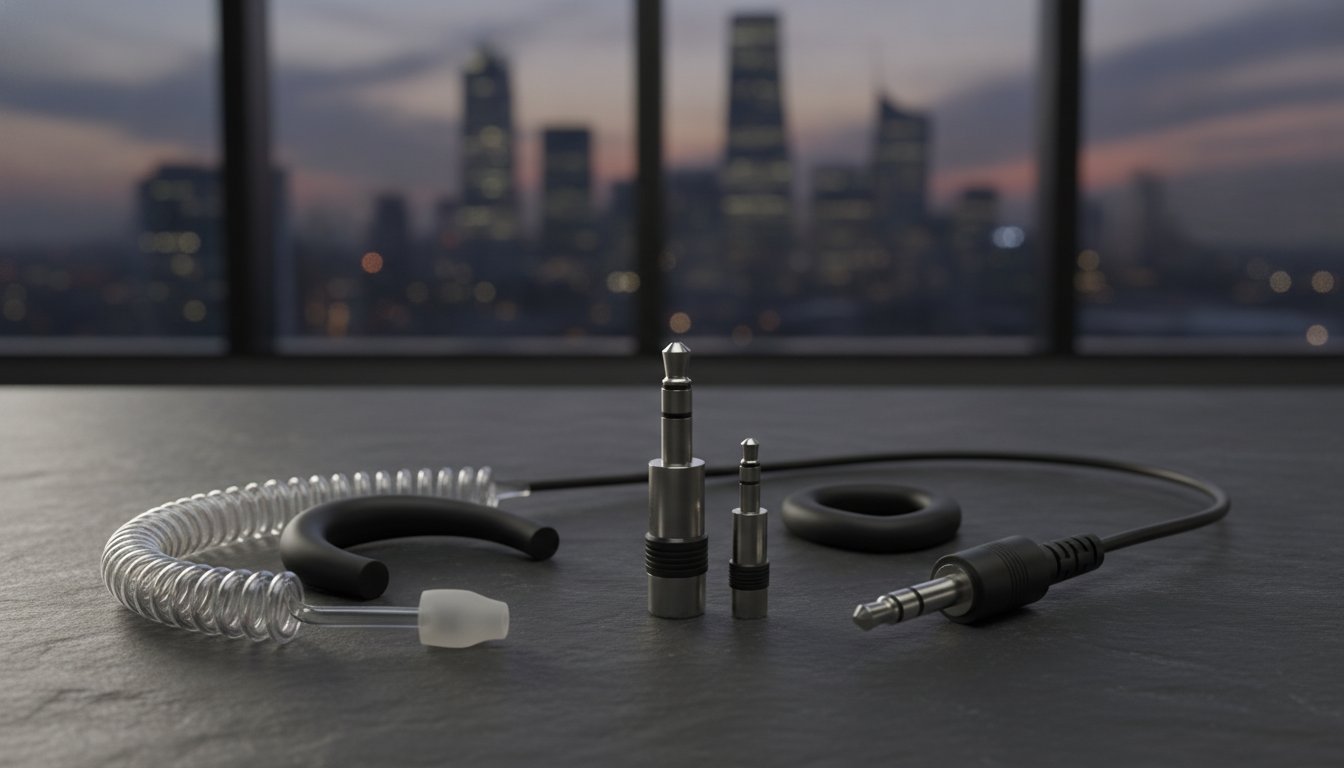
The clear acoustic tube remains the favourite amongst covert security teams and door supervisors. Its transparent design makes it nearly invisible to the public, providing a professional, low-profile appearance. Beyond aesthetics, the primary benefit is the use of replaceable ear tips. Professional organisations can maintain high hygiene standards and extend equipment longevity by simply swapping out the silicone tips and tubes when they become worn or soiled. If you need a reliable solution for high-stakes environments, you can view our professional acoustic tube range to find your match.
G-Shape and D-Shape: Comfort for Retail and Logistics
In retail and logistics, comfort over long hours is the priority. The G-shape earpiece is ideal for multi-user environments. Because the speaker sits on the outer ear rather than inside the canal, it’s easier to clean and more hygienic if equipment must be shared between shifts. These models often feature a rugged PTT housing that withstands constant use. Alternatively, the D-shape earpiece provides a secure, over-ear fit. It’s the perfect choice for active roles where a standard bud might fall out, but the user finds acoustic tubes too intrusive. Both styles maintain a robust connection with your single-pin radio earpiece whilst allowing you to hear ambient noise in your surroundings.
Compatibility Guide: Matching Pins to Radio Models
The most common hurdle in radio procurement is ensuring your accessories actually work with your fleet. Whilst many units from brands like Motorola, Hytera, and Kenwood feature a single port, they aren’t universally interchangeable. The #1 objection we hear is, “Will this fit my radio?” The answer often depends on the nuances of jack depth and internal wiring. A single-pin radio earpiece might look correct but fail to engage the internal PTT circuit if the pin is a millimetre too short. If you’re using a non-standard port, an earpiece adapter for any radio can bridge the gap and allow you to use professional-grade peripherals.
Before purchasing, use this verification checklist for your radio port:
- Diameter: Is it 2.5mm or 3.5mm?
- Engagement: Does the port require a long-reach pin to clear the radio’s casing?
- Wiring: Is it a 2-pole (TS), 3-pole (TRS), or 4-pole (TRRS) connection?
- Security: Does the radio have a thread for a screw-in connector?
2.5mm vs 3.5mm: Avoiding the Most Common Mistake
Confusing these two sizes is the most frequent cause of equipment returns. Motorola typically favours 2.5mm pins for their compact and licence-free ranges, whilst Kenwood and Hytera often opt for 3.5mm. Whilst 3.5mm is the consumer standard, many professional radios require the smaller 2.5mm variant to maintain a compact chassis and specific electrical impedance. Always measure your existing connector or consult your radio’s technical manual before ordering to ensure a flush fit.
Threaded vs Non-Threaded Connectors
In high-movement security environments, a standard push-fit pin can easily be yanked out of the socket. Certain Motorola and Hytera models solve this issue with a threaded single-pin radio earpiece. This screw-in mechanism ensures the connection remains stable even during physical scuffles or when running. If your radio has visible threads around the jack, a non-threaded earpiece will likely result in unreliable audio and frequent disconnections during critical moments.
Maximising the Lifespan of Your Communication Equipment
Investing in professional-grade hardware is only the first step. To ensure your single-pin radio earpiece survives the rigours of daily use, you must adopt strict maintenance habits. Internal wire breakage near the pin is the most common cause of failure, usually caused by wrapping cables too tightly around the radio chassis. We recommend loose coiling and using the provided clothing clips to reduce tension on the jack. Specialist equipment from a dedicated provider like Earpiece Hub is built with reinforced stress points, making it a far better long-term investment than generic, unbranded alternatives.
This focus on quality and reliability extends to other professional tools; if your role involves working with specialised canine teams, you might visit Educator Collars to find advanced remote dog training equipment designed for high-performance environments.
Hygiene and clarity go hand in hand. Regular cleaning of acoustic tubes is vital to maintain audio volume. Over time, moisture and debris can block the narrow channel, leading to muffled reception. Rather than replacing the entire unit, you can utilise our replacement acoustic tubes and ear tips to restore performance instantly. This modular approach extends the product life whilst keeping your team’s gear sanitary and functional throughout the year.
Troubleshooting Common Audio Issues
If you can hear incoming traffic but cannot transmit, the issue often lies with the physical connection. Start by checking for pocket lint or debris inside the radio’s jack port. A single-pin setup requires a perfectly flush connection to engage the PTT circuit. If the pin isn’t fully seated, the radio might stay in transmit mode or fail to recognise the microphone entirely. Always ensure you’ve cleared any obstruction before assuming the hardware is faulty.
Why Earpiece Hub is the UK Choice for Radio Peripherals
Professional UK fleets require more than just a shop. They need a partner that understands the urgency of security operations. We provide 24/7 support and next-day shipping to ensure your team is never without essential communication tools. As a Reliable Specialist, we focus on the technical details that matter, from wire configurations to pin depth. Explore our full range of single-pin radio earpieces and experience the difference that specialist expertise makes to your operational efficiency.
Secure Your Professional Communications Today
Mastering the technical details of your single-pin radio earpiece is the only way to guarantee reliable communication during high-stakes operations. You’ve learned that precision in pin size and jack depth prevents critical audio failures, whilst choosing the right physical style ensures comfort throughout long shifts. Regular maintenance, such as cleaning acoustic tubes and managing cables, will keep your gear in peak condition for years to come.
As a specialist UK retailer founded in 2015, Earpiece Hub provides the expertise and 24/7 technical assistance that professional radio fleets rely on. We understand that in security and events, there’s no room for equipment that lets you down. Shop our professional single-pin earpiece range with next-day UK delivery to equip your team with hardware that’s guaranteed to perform. You can move forward with confidence, knowing your communications are backed by the industry’s reliable specialist.
Frequently Asked Questions
Will a 3.5mm single-pin earpiece work with my Motorola radio?
It depends on your specific model, but many professional Motorola radios require a 2.5mm connector instead. Standard 3.5mm pins are too large for these ports and won’t fit. Always verify your handset’s jack size before purchasing a single-pin radio earpiece to avoid compatibility issues and potential damage to the port.
What is the difference between a 1-wire and 2-wire single-pin earpiece?
A 1-wire earpiece uses a single cable that leads to a combined Push-to-Talk (PTT) and microphone unit, with the earpiece extending from there. A 2-wire version splits into two separate cables directly from the jack. This allows you to run the microphone up your sleeve and the earpiece behind your back, which is essential for discreet security operations.
Can I use a standard mobile phone earpiece with my two-way radio?
No, standard mobile phone headsets are not compatible with professional two-way radios. Whilst the jack might physically fit the port, the internal wiring configuration is different and lacks the necessary PTT circuitry. Using a mobile earpiece can cause your radio to transmit continuously or fail to receive audio signals correctly.
How do I know if my radio requires a threaded single-pin connector?
Examine the audio port on your radio for visible screw threads surrounding the jack. If threads are present, your radio is designed for a screw-in connector that locks the earpiece in place. Using a non-threaded single-pin radio earpiece in these ports often results in an unstable connection and frequent audio dropouts during physical activity.
What should I do if my single-pin earpiece has low audio volume?
Start by inspecting the acoustic tube for earwax blockages or condensation, as these are the most common causes of muffled sound. If you use a G-shape or D-shape model, ensure the pin is pushed firmly into the radio port until it clicks. Even a tiny gap caused by dust or pocket lint inside the jack can significantly degrade audio clarity and volume.
