





Uncategorized
Hygienic Replacement Earpiece Tips: The Professional Maintenance Guide for 2026
Jul
For a security professional or site manager on a 12-hour shift, your earpiece tip isn’t just a generic accessory; it’s a vital piece of personal protective equipment that directly dictates your operational safety and situational awareness. You’ve likely dealt with the distraction of muffled radio traffic or the persistent irritation caused by a wax-clogged tip that refuses to stay secure during an active patrol. It’s a common frustration that compromises both your comfort and your ability to respond to critical commands whilst on duty.
Investing in the correct hygienic replacement earpiece tips is the fastest way to restore crystal-clear audio and protect your ear health against the cross-contamination risks common in shared radio pools. This 2026 maintenance guide provides the specialist knowledge you need to select durable, medical-grade materials for your Motorola, Hytera, or Kenwood gear. We’ll preview the latest industry standards for ear protection and outline a professional cleaning routine that ensures your equipment remains reliable, comfortable, and perfectly fitted for every shift.
Key Takeaways
- Understand why using hygienic replacement earpiece tips is essential for preventing ear fatigue and bacterial growth during long shifts.
- Identify the performance differences between durable, easy-to-clean silicone and the superior noise isolation offered by memory foam.
- Master the professional “pinch and twist” method to safely remove stubborn tips from acoustic tubes without damaging your equipment.
- Optimise fleet maintenance by sourcing universal tips compatible with major brands like Motorola, Hytera, and Kenwood.
- Restore audio clarity and ensure a secure fit for high-activity roles by establishing a regular replacement schedule for your team.
The Importance of Hygienic Replacement Earpiece Tips for Professionals
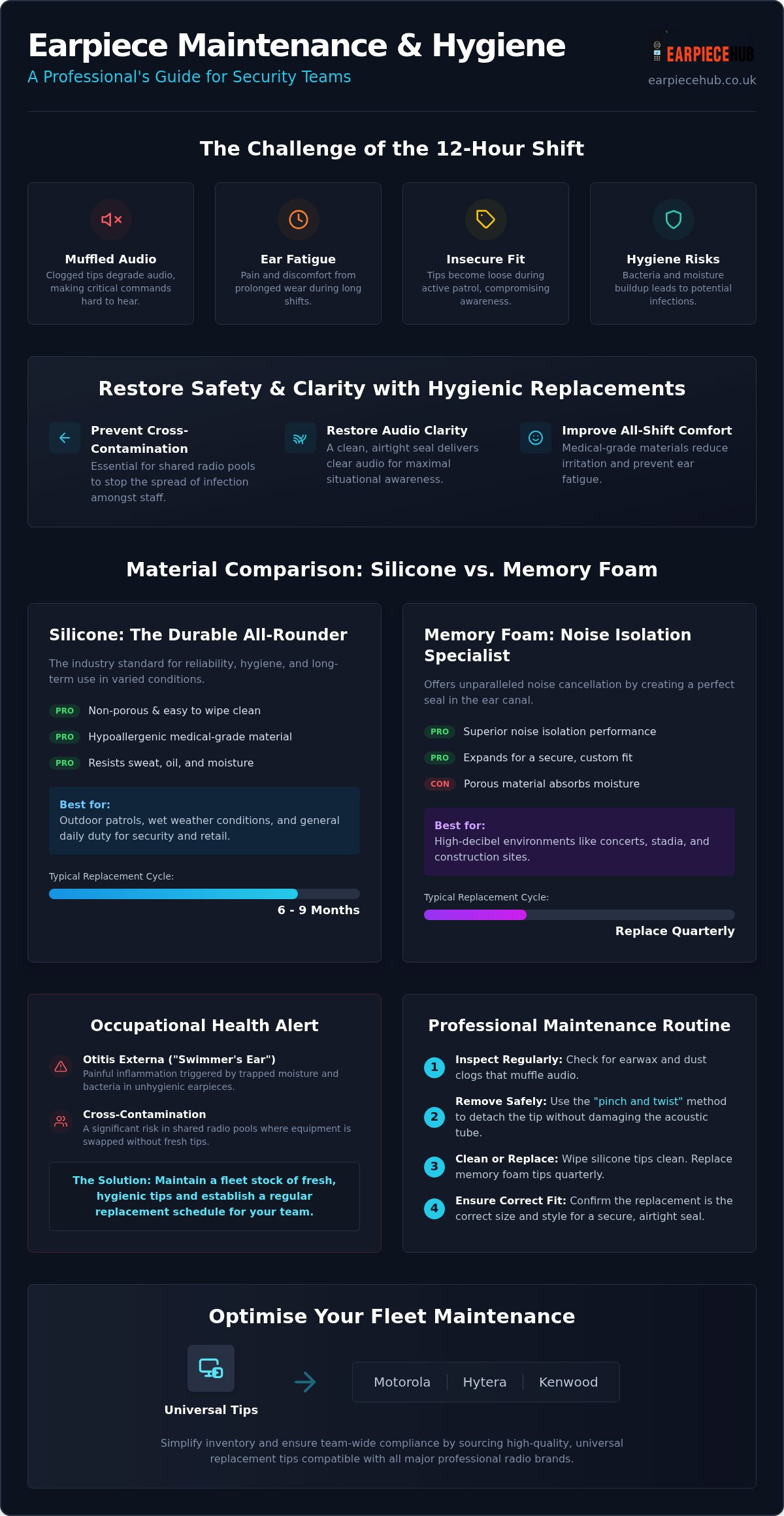
Professional radio communication relies on more than just high-quality handsets; it depends on the interface between the equipment and the human ear. For security teams and site managers, hygienic replacement earpiece tips are essential maintenance components rather than optional extras. When you’re wearing an earpiece for 10 hours or more, the buildup of heat and moisture creates an environment where bacteria thrive. Without regular replacement, you risk “ear fatigue,” a condition where the physical presence of the device becomes painful, potentially forcing you to remove your gear during a critical moment.
Professional-grade silicone and foam tips are engineered to withstand the rigours of active duty. Unlike generic consumer alternatives, these components are designed for medical-grade hygiene and long-term durability. Navigating the various types of earpiece materials is vital for ensuring your kit doesn’t become a liability. High-quality tips resist the absorption of sweat and oils, keeping the acoustic channel clear and your ear canal healthy whilst you work.
Health Risks of Neglected Earpiece Hygiene
A common occupational hazard for radio users is Otitis Externa, frequently referred to as swimmer’s ear. This painful inflammation of the external ear canal is often triggered by unhygienic earpieces that harbour debris and moisture. The risk increases significantly in shared radio pools. If team members swap acoustic tubes or earpieces without using fresh, hygienic tips, cross-contamination is almost guaranteed. Maintaining a stock of fresh tips for your fleet is the simplest way to prevent avoidable ear infections amongst your staff.
Audio Clarity and Operational Safety
A clean, airtight seal ensures maximum decibel delivery without distortion, allowing you to hear every transmission clearly. When earwax and dust clog a tip, audio becomes muffled and noise-cancelling performance degrades. In loud environments like stadia or construction sites, a compromised ear tip makes it nearly impossible to distinguish radio traffic from background noise. This directly impacts your team’s operational safety, as missed instructions can lead to serious security breaches.
Comparing Materials: Silicone vs. Memory Foam for Professional Use
Selecting the right material for your radio gear depends entirely on your specific operational environment. Whilst consumer earbuds often prioritise aesthetics, professional hygienic replacement earpiece tips must balance long-term comfort with extreme durability. Medical-grade silicone remains the industry standard for most security and retail roles. It’s non-porous and hypoallergenic, making it the ideal choice for staff with sensitive skin who need to wear an earpiece for an entire shift without developing rashes or inflammation.
While professional gear is essential for safety, general tech accessory providers like ElectroGadget offer a wider range of lifestyle gadgets and personal care items that are useful for any professional’s daily life.
When to Choose Silicone Ear Tips
Silicone is the wipe-clean champion. It doesn’t absorb sweat, oils, or rainwater, which makes it the superior choice for outdoor patrols or duty in wet weather. You’ll typically find these in “mushroom” designs for a quick, universal fit or “finned” styles that lock into the ear’s anatomy for high-activity roles. Because silicone is non-absorbent, these tips typically last between six to nine months with regular maintenance. If your work involves changing weather or constant physical movement, silicone offers the most reliable, low-maintenance performance.
The Case for Memory Foam in High-Noise Roles
In high-decibel environments like concerts, stadia, or busy construction sites, memory foam is the preferred choice. The material expands to create a bespoke seal within the ear canal, providing superior noise isolation that silicone can’t match. However, foam is porous. It absorbs moisture and debris quickly, which means it has a significantly shorter replacement cycle. For professionals working 8+ hours a day, it’s best to replace foam tips quarterly to maintain audio clarity and prevent bacterial buildup. You can browse our specialist ear tips to ensure your fleet has the right protection for their specific environment.
Step-by-Step Guide to Replacing and Maintaining Your Ear Tips
Maintaining your radio gear requires precision and the right components. Before you begin, ensure you have the correct size and style for your specific acoustic tube. Whilst many tips appear universal, certain designs are optimised for specific hardware, such as the acoustic tubes used with Motorola or Hytera radios. Using the wrong size not only compromises audio clarity but can also lead to the tip detaching inside the ear canal during physical activity.
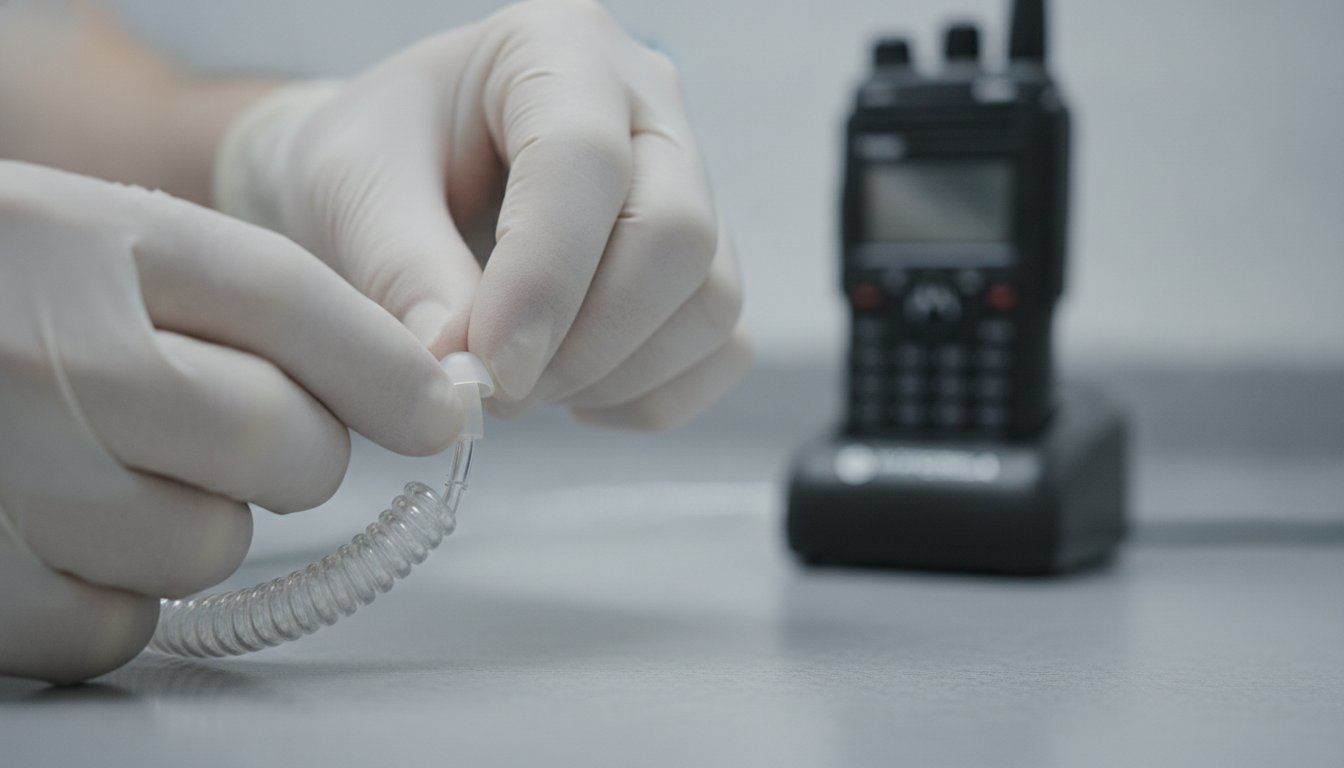
To remove an old silicone tip, use the “pinch and twist” method. Grip the base of the tip firmly where it meets the plastic elbow of the acoustic tube. Gently twist whilst pulling away from the tube. This technique prevents you from stretching the acoustic tube or snapping the delicate plastic connector. Once the tip is removed, take a moment to inspect the tube itself. Look for any blockages or moisture buildup inside the clear piping that could muffle your transmissions.
Before fitting your new hygienic replacement earpiece tips, run a dedicated inspection of the acoustic tube using this checklist:
- Check for discolouration or a yellowing tint, which indicates the plastic is breaking down.
- Feel for hardening or brittleness; a healthy tube should be flexible and soft.
- Look for kinks or flattened sections that might restrict airflow and sound.
If the tube fails any of these checks, it’s safer to replace the entire assembly. You can order replacement acoustic tubes and ear tips to restore your kit to factory standards instantly.
How to Clean Your Tips Between Replacements
Signs It Is Time for a Fresh Replacement
Visual cues are your best guide for timing a replacement. If you notice visible cracks, permanent discolouration, or if the material feels significantly harder than when it was new, it’s time for a change. Most importantly, if the tip feels “loose” or slides off the acoustic tube with minimal effort, replace it immediately. A loose tip is a safety hazard that can easily become lodged in the ear during a high-pressure security situation.
Sourcing Professional Replacement Tips for Your Fleet
Managing communication equipment for a large team requires a proactive procurement strategy. Buying in bulk ensures that hygienic replacement earpiece tips are always available, removing the temptation for staff to use degraded or unhygienic gear. For organisations operating mixed fleets of Motorola, Hytera, and Kenwood radios, sourcing universal maintenance kits is the most efficient way to maintain equipment standards. These kits, which combine fresh tips with replacement acoustic tubes, simplify inventory management and ensure that every earpiece in the pool provides the performance required for high-stakes environments.
Organising a Hygiene Schedule for Security Teams
High-activity roles demand a structured replacement cycle to prevent the health risks associated with long-term earpiece use. For security teams working 24/7 rotations, a monthly replacement schedule for ear tips is the professional benchmark. This ensures that audio clarity remains at peak levels whilst maintaining strict hygiene standards. Site managers should maintain a “grab bag” of spare tips in the central radio room or charging station. This allows for immediate replacement if a tip becomes soiled or lost during a shift, preventing operational downtime.
Why Specialist Retailers Beat General Marketplaces
General marketplaces often lack the technical expertise required for professional radio peripherals. Earpiece Hub functions as a dedicated partner, providing guaranteed fitment and specialist support that generic sellers cannot match. We understand that in the security and event industries, equipment failure isn’t an option. Our commitment to reliability includes next-day shipping for urgent fleet needs, ensuring your team is never left without essential accessories. Ensure your team stays safe and clear with professional replacement ear tips from Earpiece Hub.
Optimise Your Communication Standards for 2026
Professional radio maintenance is a commitment to operational excellence and team safety. By selecting the correct materials and adhering to a disciplined cleaning cycle, you eliminate the risks of muffled audio and avoidable ear infections. High-quality hygienic replacement earpiece tips transform your gear from a potential distraction into a reliable asset that performs under pressure. It’s a simple change that yields significant results for long-term comfort and situational awareness during 12-hour shifts.
Earpiece Hub has served as a UK specialist in professional radio peripherals since 2015. We provide guaranteed compatibility for Motorola, Hytera, and Kenwood models to ensure your fleet remains at peak capacity at all times. Our specialist knowledge helps you navigate technical requirements with minimal fuss. Take advantage of our Next Day Shipping to keep your team equipped with the best accessories available. Shop professional hygienic replacement ear tips at Earpiece Hub and experience the difference that specialist equipment makes to your daily operations. Stay safe, stay clear, and stay connected.
Frequently Asked Questions
How often should I replace my earpiece tips for hygiene reasons?
Professional users on 10-hour shifts should replace silicone tips every six months or immediately if the material hardens or discolours. Memory foam tips require more frequent attention and should be swapped every three months. If you work in high-activity security roles where sweat and dust are constant, a monthly replacement cycle is the best way to ensure long-term ear health and audio clarity.
Will these replacement tips fit my Motorola or Hytera radio earpiece?
Our replacement tips are designed for universal compatibility with the acoustic tubes used on Motorola, Hytera, and Kenwood radios. Most professional 1-wire, 2-wire, and 3-wire kits use a standardised connector elbow, allowing these tips to fit securely. Always check that the tip sits tightly on the tube to prevent it from detaching during physical activity or foot patrols.
Can I clean memory foam ear tips, or must they be replaced?
Memory foam is a porous material that absorbs oils and moisture, so it shouldn’t be submerged in water or cleaned with harsh chemicals. Whilst you can wipe the surface with a dry cloth to remove loose debris, the internal structure eventually degrades and loses its seal. For this reason, foam components are viewed as consumables that require regular replacement rather than deep cleaning.
What is the best way to prevent ear infections when using a radio earpiece daily?
The most effective prevention is the consistent use of hygienic replacement earpiece tips and a strict “no-sharing” policy amongst your team. Clean your silicone tips daily with anti-bacterial wipes to remove wax and bacteria. Ensuring your earpiece is completely dry before inserting it prevents the warm, damp conditions that lead to Otitis Externa during long shifts.
Are there different sizes available for replacement ear tips?
Yes, replacement tips typically come in small, medium, and large sizes to ensure a bespoke fit for every user. Most standard acoustic tubes ship with a medium “mushroom” tip, but a larger or smaller size might be necessary to achieve the airtight seal required for noise isolation. A correct fit prevents the earpiece from falling out and ensures you don’t have to turn your radio volume to dangerous levels.
