





Uncategorized
Discreet Communication Earpieces: The Professional Guide to Covert Audio in 2026
Jul
True discretion is achieved through the correct wiring tier, not just a clear tube. In a professional setting, the wrong covert earpiece for private security does more than just look bulky; it risks exposing your operation through visible cables or audible sound leakage. You need equipment that remains invisible whilst providing the reliability required for high-stakes environments.
We know the frustration of audio failing during a critical intervention or the physical ache caused by a low-quality ear tip during a twelve-hour shift. As a specialist hub for radio peripherals, we are here to ensure that your equipment never lets you down. This guide will help you master the technical nuances of covert communication and discover how to select the perfect earpiece for professional security, retail, and hospitality sectors. We will preview the specific advantages of 1-wire, 2-wire, and 3-wire systems, giving you the knowledge to maintain your gear and achieve crystal-clear audio every time you are on duty.
Key Takeaways
- Understand how acoustic tubes provide high-fidelity audio whilst ensuring your equipment remains entirely hidden from view.
- Compare the functional benefits of 1-wire, 2-wire, and 3-wire systems to find the best configuration for your concealment requirements.
- Learn how to select the ideal covert earpiece for private security, retail, or hospitality to balance professional aesthetics with functional performance.
- Identify the best earpiece styles, such as G-shape or D-shape, for maintaining comfort and clear communication during long shifts.
- Master essential maintenance techniques to prevent audio failure, including how to clear moisture and identify signs of equipment wear.
What Defines a Discreet Communication Earpiece?
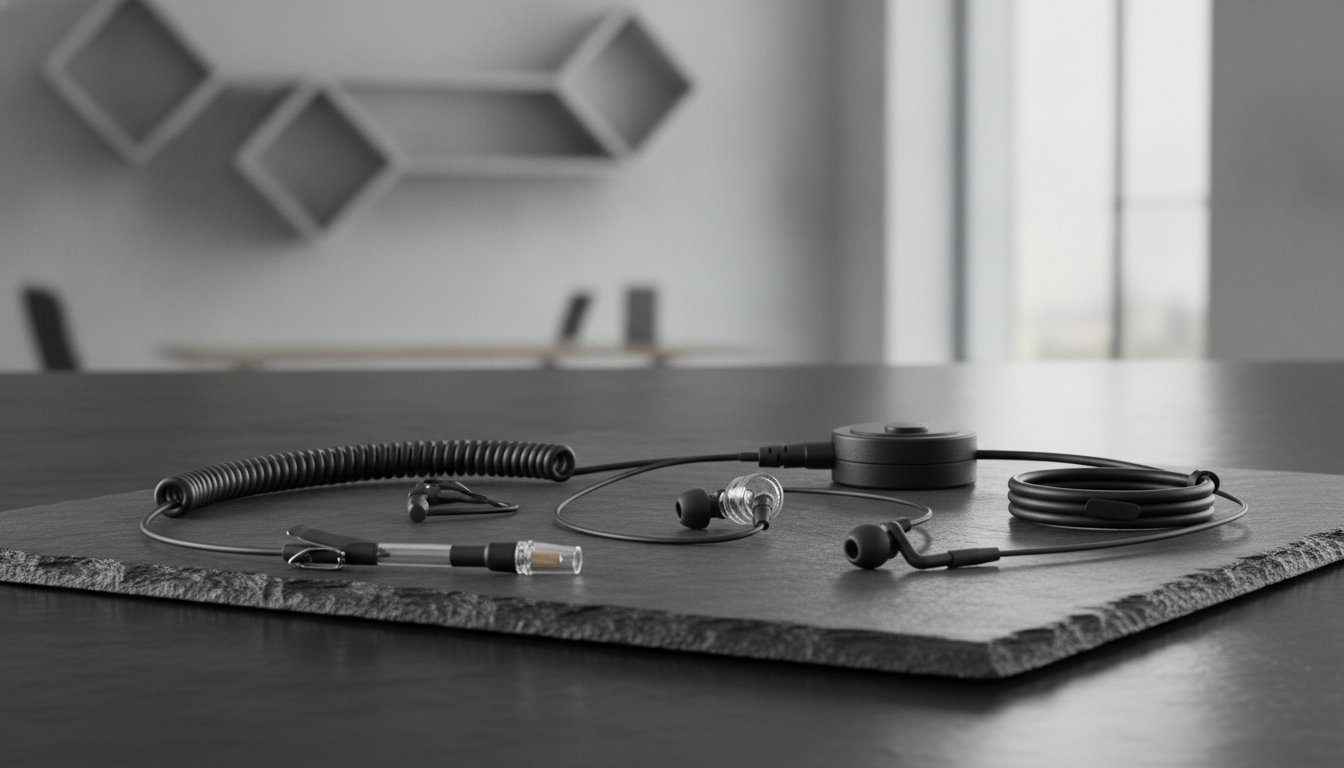
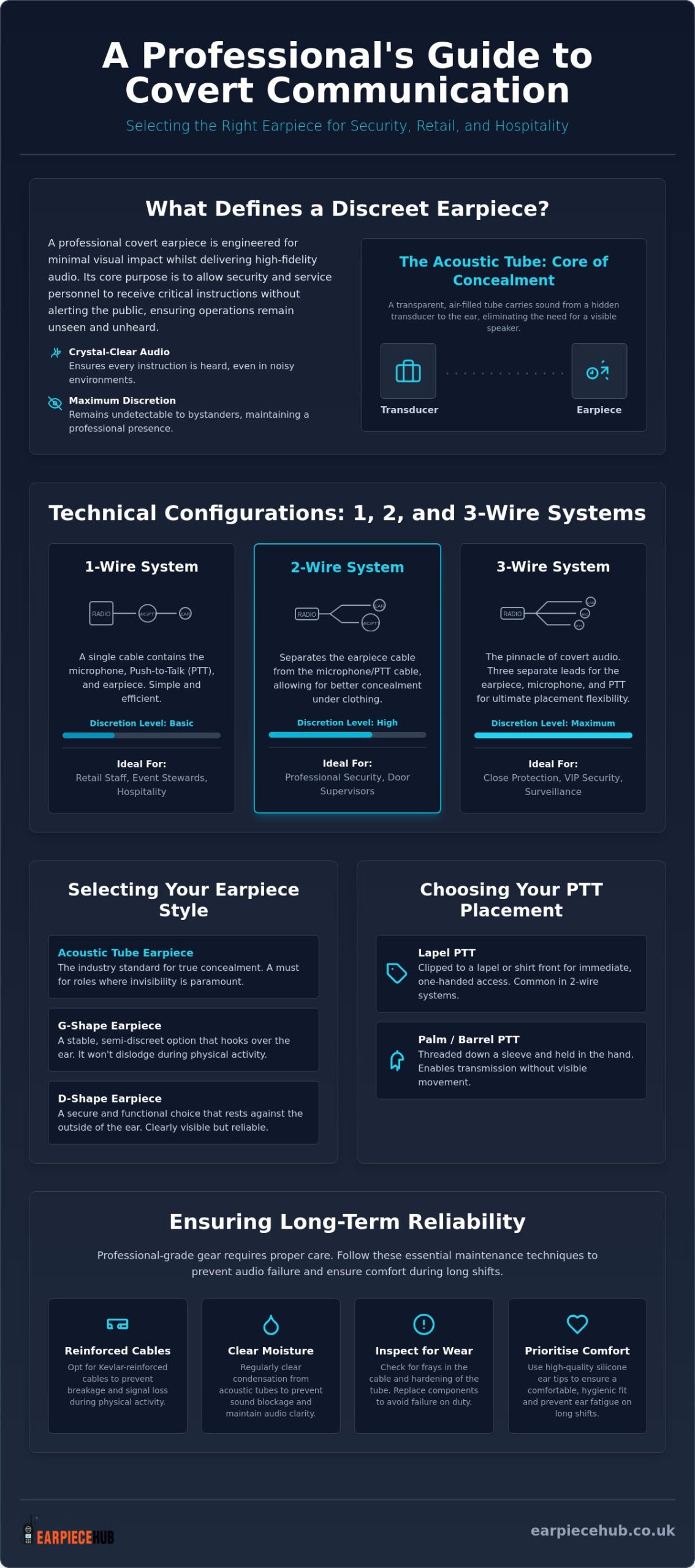
A discreet earpiece is a specialised audio peripheral engineered for minimal visual impact whilst maintaining high-fidelity transmission. Unlike standard consumer headphones, a covert earpiece for private security must remain undetectable to the public. It allows the wearer to receive critical instructions without alerting subjects or bystanders to the presence of a security team. This level of professional discretion is vital in VIP protection, corporate surveillance, and high-end retail environments where visible radio equipment would be intrusive or intimidating.
The core of this technology is the acoustic tube. These air-filled, transparent tubes carry sound waves from a hidden transducer directly into the ear canal. This removes the requirement for a bulky speaker at the ear, allowing the cable to be tucked neatly under a collar. This setup shares its lineage with the covert listening device, adapted specifically for the rigours of two-way radio communication. Beyond aesthetics, covert gear offers a psychological advantage during de-escalation. When a subject doesn’t see a radio, they are less likely to feel targeted, which often leads to more predictable behaviour and easier surveillance.
Covert vs. Overt Audio Gear
Visual footprint determines the choice between gear types. Overt options like a D-Shape Earpiece for Hytera Radios are secure and functional but clearly visible to others. For true concealment, an Acoustic Tube Earpiece for Motorola Radios is the industry standard. If your role involves high-intensity physical movement but requires less secrecy, a G-Shape Earpiece for Kenwood Radios offers a stable, semi-discreet alternative that won’t dislodge during a pursuit.
Key Components of a Professional Kit
A reliable kit consists of a transducer and a high-quality ear tip. The transducer converts electrical radio signals into sound waves for the acoustic tube. Comfort is a priority for 12-hour shifts. Using surgical-grade silicone Replacement Acoustic Tubes and Ear Tips ensures that the earpiece remains comfortable and hygienic, preventing the ear fatigue that often leads to operators removing their gear at critical moments.
Technical Configurations: 1-Wire, 2-Wire, and 3-Wire Systems
The “wire count” of a covert earpiece for private security refers to the number of separate cables branching from the radio connector. Selecting the right tier is a balance between operational speed and total concealment. A 1-Wire system is the most straightforward; it features a single lead containing both the microphone and the Push-to-Talk (PTT) button. This is ideal for retail staff or event stewards who need a reliable, low-cost solution that is easy to fit and remove at the start of a shift.
For professional security environments, 2-Wire and 3-Wire systems offer superior concealment. A 2-Wire system separates the earpiece from the PTT and microphone. This allows you to run the earpiece cable up your back whilst threading the microphone lead through a sleeve or clipping it to a lapel. 3-Wire systems represent the pinnacle of covert audio. With three distinct leads, the earpiece, microphone, and PTT button can all be placed independently. This configuration is the gold standard for close protection officers who must communicate without breaking their professional posture. If you’re unsure which tier fits your current radio fleet, you can explore our full range of professional radio peripherals to compare specifications.
Choosing Your PTT Placement
PTT placement dictates how you interact with your team. 3-wire systems allow for a “Palm PTT,” where the button is threaded down a sleeve and held in the hand. This enables you to transmit whilst keeping your hands at your sides or in your pockets, which is essential for surveillance. 2-wire systems usually favour a lapel PTT; this is better for door supervisors who need immediate, one-handed access to communications during a confrontation.
Audio Clarity and Noise Suppression
Professional-grade wiring does more than just hide cables; it protects signal integrity. High-quality kits use shielded cabling to prevent interference in RF-heavy environments like music venues or crowded city centres. Durability is equally critical. We recommend cables reinforced with Kevlar or similar high-tensile materials. These prevent audio failure during physical activity or when cables are snagged, ensuring your communication link remains unbroken when it matters most.
Selecting the Right Earpiece for Your Environment
Operational environment dictates hardware choice. A covert earpiece for private security used by an SIA-licenced door supervisor has different demands than one used by a floor manager in a department store. For door supervision and high-stakes security, the Acoustic Tube Earpiece for Motorola Radios is the industry standard. It provides the necessary discretion whilst ensuring the operator looks professional and prepared. These tubes offer passive noise isolation, which is vital when working near loud PA systems or in crowded public spaces.
Retail and hospitality sectors often require a different balance. Total concealment is frequently less critical than ease of use and customer perception. A G-Shape Earpiece for Kenwood Radios or a D-Shape Earpiece for Hytera Radios offers a secure fit that sits outside the ear canal. This allows the wearer to hear ambient customer queries whilst receiving internal updates. It’s an efficient way to manage customer service without sacrificing team coordination. For command roles in stadium environments, a Noise Cancelling Overhead Headset remains the best choice to ensure every transmission is heard above the crowd.
In the hospitality sector, where the focus is on both security and guest satisfaction, providing premium refreshments is another way to maintain high standards; for those looking to source specialty supplies, click here to learn more about Worker Bee MCR Tea & Coffee.
Compatibility is your first technical hurdle. You must match the connector, such as a Motorola 2-pin or Kenwood 2-pin, to your specific radio fleet. If you manage a mixed fleet of different brands, an Earpiece adapter for any radios can bridge the gap between hardware generations. Shop our full collection of professional earpieces to find the exact connector for your current equipment.
Motorola DP1400 and Professional Compatibility
The Motorola DP1400 is the backbone of many UK security operations. Its 2-pin accessory port is compatible with a wide range of peripherals, making it a versatile choice for growing teams. We specialise in Motorola DP1400 maintenance and provide specific earpieces designed to lock securely into this model. This prevents the accidental disconnections that often plague generic, low-quality alternatives during physical interventions.
Comfort for Extended Shifts
Ear fatigue is a genuine risk during 12-hour rotations. Lightweight acoustic tubes reduce the physical “drag” on the ear, whilst surgical-grade silicone ear tips prevent irritation. We recommend keeping a stock of Replacement Acoustic Tubes and Ear Tips on hand. Swapping these regularly maintains hygiene and ensures the earpiece remains comfortable enough for all-day wear without the operator needing to adjust the kit constantly.
Maintenance: Ensuring Long-Term Reliability
Maintaining a covert earpiece for private security is essential for ensuring operational readiness. Many professionals treat these peripherals as disposable, yet simple maintenance extends their lifespan significantly. Moisture buildup is the most common cause of audio failure. Condensation from body heat collects inside the acoustic tube, creating a physical barrier that muffles sound. To clear this, disconnect the tube from the transducer and use compressed air or a tube cleaning wire to remove blockages. You should never blow into the tube with your mouth, as this introduces more moisture and bacteria.
Transducer failure is another critical issue. Before starting a shift, check for crackling or intermittent audio. This often indicates internal wire fatigue or debris in the connector. Additionally, signal strength depends on your power source. Using a fresh Replacement Battery for Motorola DP1400 ensures that your radio has enough voltage to drive the earpiece’s transducer at peak performance. When storing gear, avoid wrapping cables tightly around the radio. This causes internal wire breaks. Instead, coil the cables loosely and store them in a dedicated pouch to maintain their shape.
Acoustic Tube Care and Replacement
Hygiene is as important as functionality. Remove the silicone ear tip daily and disinfect it with an alcohol-free wipe. To clean the tube, soak it in warm soapy water and allow it to dry completely before reattachment. You should replace the clear tube every 3 to 6 months. Look for discolouration, such as yellowing, or physical hardening of the plastic. These are signs that the material is degrading, which will eventually lead to poor audio quality and skin irritation.
Managing Your Radio Fleet
For large teams, efficiency is paramount. Utilising a Six-Way Multi-Unit Charger allows you to manage multiple radios and batteries in one central location. This reduces cable clutter and ensures every unit is ready for the next rotation. We recommend keeping a stock of Replacement Acoustic Tubes and Ear Tips on site. Having these parts on hand ensures zero downtime, allowing staff to swap out damaged components immediately rather than waiting for new shipments. This proactive approach keeps your communication link secure and your team fully operational.
In addition to radio maintenance, modern security operations often depend on robust mobile workstations for incident logging and surveillance monitoring. For organisations requiring bulk quantities of high-quality refurbished laptops from brands like Dell, Lenovo, and HP, HGC Technologies UK Ltd. provides the necessary computing infrastructure to support your team’s digital needs.
Secure Your Communication Strategy
Selecting the right covert earpiece for private security is a technical decision that impacts both operational safety and professional image. By mastering the differences between 1-wire, 2-wire, and 3-wire systems, you ensure your team has the exact level of concealment required for their specific environment. Regular maintenance of acoustic tubes and ear tips isn’t just about hygiene; it’s about preventing the audio failure that can compromise a high-stakes shift. Don’t let a blocked tube or a failing transducer be the weak link in your security chain.
As a specialist UK partner, we provide expert advice for SIA-licenced security professionals and offer specialist UK support for all Motorola and Kenwood accessories. Whether you require a full setup for a new team or fast UK delivery on critical maintenance parts, we act as the central resource for all your radio peripherals. Shop our full range of professional discreet earpieces at Earpiece Hub today to upgrade your equipment and maintain your operational edge. Equip your team with the reliability they deserve and stay connected when it matters most.
Frequently Asked Questions
How do I clean my acoustic tube earpiece properly?
Clean your acoustic tube by first disconnecting it from the transducer housing. Wash the silicone ear tip in warm soapy water or use an alcohol-free disinfectant wipe daily to maintain hygiene. For the clear tube itself, use a specialised cleaning wire or a blast of compressed air to remove moisture and debris. Ensure the tube is completely dry before reattaching it to prevent water damage to the electronic components.
What is the difference between 1-wire and 2-wire earpieces?
The primary difference lies in the cable configuration and concealment potential. A 1-wire system features a single lead that combines the earpiece, microphone, and Push-to-Talk (PTT) button, making it easy to fit for retail roles. A 2-wire covert earpiece for private security separates the earpiece from the PTT/microphone lead. This allows you to thread the microphone down a sleeve or clip it to a lapel whilst keeping the earpiece cable hidden behind your neck for better discretion.
Will a Motorola earpiece work with a Kenwood radio?
No, a standard Motorola earpiece won’t fit a Kenwood radio because the pin configurations are physically different. Motorola typically uses a 2-pin connector with specific spacing, whilst Kenwood uses a K1 2-pin setup with different pin widths. To use your existing accessories with a different radio brand, you must use a dedicated earpiece adapter for any radios to ensure a secure and functional connection.
How can I make my radio earpiece more comfortable for long shifts?
Comfort starts with selecting the correct ear tip size and material. Use surgical-grade silicone tips that match your ear canal size to prevent irritation during twelve-hour shifts. Many professionals prefer “open” ear moulds that allow ambient sound to enter the ear whilst holding the tube securely. Regularly replacing your acoustic tube also prevents the plastic from hardening, which is a common cause of physical discomfort and ear fatigue.
Why has my acoustic tube earpiece stopped working or gone quiet?
Moisture buildup or earwax blockages are the most common reasons for a covert earpiece for private security losing volume. Check the clear tube for visible condensation or “kinks” that might be obstructing the sound waves. If the tube is clear, the issue may be a failing transducer or a depleted radio battery. Test the radio with a different accessory to confirm if the fault lies with the earpiece or the radio unit itself.
