





Uncategorized
Choosing a Comfortable All-Day Radio Earpiece: The Professional Guide

Jul
A 12-hour shift shouldn’t feel like a physical endurance test for your ear canal. If you’ve spent the final four hours of a duty rotation wincing at sharp physical pain or straining to hear muffled radio traffic through a low-quality speaker, you’re not alone. Most security and event professionals accept ear fatigue as an unavoidable part of the job, but it doesn’t have to be. Constant adjustments and skin irritation from poor-quality plastics are signs of equipment failure, not a lack of resilience.
We understand that reliable communication is your lifeline. This guide will show you how to eliminate discomfort and find a lightweight radio earpiece for long shifts that stays secure even during physical interventions. You’ll discover how to achieve crystal clear audio that removes the need for high volume, protecting your hearing whilst ensuring you never miss a call. We’ll examine the three-pillar system of physical fit, wire weight management, and acoustic clarity to ensure your equipment works as hard as you do from the first minute to the last.
Key Takeaways
- Identify the causes of physical and acoustic fatigue. Stop mental exhaustion during extended duty.
- Compare covert Acoustic Tubes with G-Shape designs. Select the best fit for shared or personal equipment.
- Minimise strain with a lightweight radio earpiece for long shifts. Use 2-wire configurations for better weight distribution.
- Master cable management to eliminate ear-pulling. Keep equipment secure during physical interventions.
- Follow the 30-day replacement cycle for ear tips. Maintain professional hygiene and audio clarity.
The Science of Ear Fatigue: Why Professional Earpieces Hurt
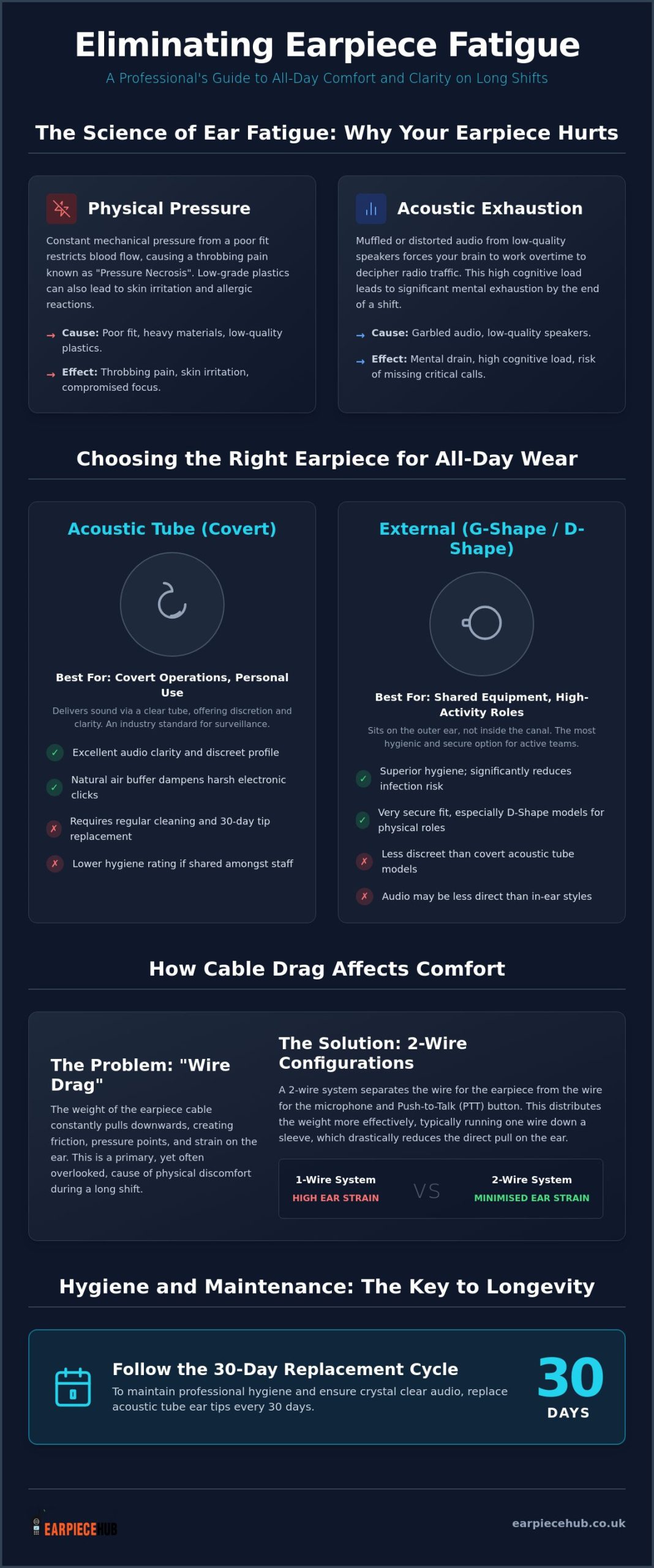
Most professionals view ear ache as a standard hazard of the job. It isn’t. Discomfort usually stems from two distinct sources: physical mechanical pressure and acoustic exhaustion. Selecting a lightweight radio earpiece for long shifts is the first step in mitigating these issues before they compromise your focus. When an earpiece fits poorly, it creates a mild form of localised “Pressure Necrosis.” This occurs when constant contact restricts blood flow to the delicate skin of the ear canal, causing that familiar throbbing sensation after six or seven hours of wear.
Material choice is equally critical for long-term health. Low-grade plastics often contain irritants that lead to allergic contact dermatitis amongst users. Professional-grade equipment prioritises medical-grade silicone or high-quality polymers to prevent skin reactions. Understanding these basics of headphone technology and design is what separates specialist gear from generic, budget alternatives that fail halfway through a rotation.
Furthermore, the choice of materials extends beyond simple skin irritation; Aarding examines how synthetic components in our daily equipment can impact our body’s natural grounding and overall health.
Acoustic Fatigue and Cognitive Load
Acoustic fatigue is often overlooked but is arguably more draining than physical pain. When you use low-quality speakers, the audio is frequently garbled or distorted. Your brain must work overtime to “fill in the gaps” of radio traffic. This creates a high cognitive load, leading to significant mental exhaustion by the end of a shift. Crystal clear audio allows for lower volume settings. This protects your hearing whilst ensuring you remain sharp and responsive during critical interventions.
Pressure Points in the Ear Canal
The physical weight of a standard unit creates “hot spots” in the concha and ear canal. During long summer shifts, “ear sweat” or moisture build-up increases friction and skin irritation. A lightweight radio earpiece for long shifts reduces the gravitational pull on these sensitive areas, preventing the earpiece from dragging against the skin. Effective comfort management involves:
- Distributing weight evenly across the outer ear.
- Using soft-finish materials to reduce friction.
- Managing moisture to prevent bacterial growth and itching.
By addressing both the physical and mental strain of radio use, you can maintain peak performance for the entire duration of your duty.
Comparing Earpiece Styles for All-Day Wear
Selecting the correct form factor involves balancing operational requirements with personal comfort thresholds. While we previously discussed The Science of Ear Fatigue, the physical design of the unit is what dictates how those pressures are distributed. Finding a lightweight radio earpiece for long shifts requires understanding how different styles interact with your ear’s anatomy during movement. Whether you need a covert profile for retail or a secure fit for event security, the style you choose determines your endurance.
Acoustic Tube earpieces remain the industry standard for covert operations. They deliver sound through a clear tube, creating a natural air buffer that dampens harsh electronic “clicks” before they reach the eardrum. This design is excellent for clarity but requires proper maintenance to remain comfortable for more than eight hours.
The Acoustic Tube Advantage
To avoid the “blocked ear” sensation common with standard mushroom tips, many professionals switch to vented ear tips or silicone ear moulds. These upgrades provide a custom-fit feel without the high cost of medical impressions. They stay secure during physical interventions whilst allowing you to hear ambient sounds in your environment. This situational awareness is vital for safety in busy UK venues.
External Earpieces: G-Shape and D-Shape
If you share equipment amongst a team, external earpieces are the superior choice for hygiene. G-Shape models sit around the outer ear rather than inside the canal, which significantly reduces the risk of ear infections. For high-activity roles like door supervisors, D-Shape models offer the most secure fit by looping firmly over the ear. Finding a lightweight radio earpiece for long shifts that also offers high-impact security often leads professionals toward these external designs.
Professional-grade G-shape models utilise soft-touch plastics to minimise friction against the skin behind the ear. If you’re looking to upgrade your current setup, you can browse our specialist range of UK radio earpieces to find a compatible match for your Motorola, Hytera, or Kenwood radio.
Wire Configurations: How Cable Drag Affects Comfort
Physical pain isn’t always caused by the earpiece itself. Often, the culprit is “wire drag.” This occurs when the weight of the cabling pulls the earpiece downwards, creating friction and pressure in the canal. Even the most lightweight radio earpiece for long shifts will cause discomfort if the cable isn’t managed correctly. Understanding the difference between 1, 2, and 3-wire configurations is essential for maintaining comfort during a full rotation.
- 1-Wire Kits: These are minimalist and easy to fit, but the combined weight of the microphone and PTT switch hangs directly from the ear. Without proper clipping, this setup is the most prone to pulling.
- 2-Wire Kits: These separate the PTT/microphone from the earpiece. This allows you to run the microphone down your sleeve or clip it to your lapel, significantly improving weight distribution.
- 3-Wire Kits: The surveillance standard. With separate wires for the earpiece, microphone, and PTT, this offers maximum concealment and perfectly balanced weight for high-stakes environments.
Managing the “Yank” Factor
To prevent your earpiece from being yanked out during movement, you must follow the “Cable Slack” rule. Use clothing clips to create a small “strain relief” loop near your collar. This loop absorbs the tension when you turn your head, ensuring the cable doesn’t pull on your ear. Professional kits often use reinforced Kevlar-lined cabling. This adds vital durability whilst maintaining the flexibility needed for a lightweight radio earpiece for long shifts to remain comfortable.
Choosing Your Configuration
Your uniform often dictates your setup. 1-wire kits work well with high-viz vests where simplicity is key. However, 2-wire configurations are the favourite amongst UK security professionals wearing blazers or tactical gear. They allow for better ergonomics and reduce the physical strain on the outer ear. If you need to upgrade your setup for better weight management, you can shop our specialist range of 1, 2, and 3-wire earpieces to find your perfect fit.
Hygiene and Maintenance: The Secret to Long-Term Wearability
Hygiene is often treated as an afterthought in radio communications, but it’s a critical factor in shift-long comfort. Ear wax build-up does more than just muffle your audio. It creates a warm, damp breeding ground for bacteria that leads to itching and infections. When your lightweight radio earpiece for long shifts begins to feel “scratchy” or irritating, it’s usually a sign that skin oils and sweat have compromised the material’s surface. Maintaining a strict cleaning protocol prevents these issues before they force you to remove your gear mid-duty.
Plastic and silicone components have a finite comfortable lifespan. Over time, constant exposure to body heat and skin acidity causes the materials to “plasticise” or harden. This hardened plastic creates new pressure points that weren’t there when the unit was new. To maintain a soft, flexible fit, you should follow the 30-day rule. Replace your acoustic tube and ear tips every month to ensure the interface between the device and your skin remains pliable.
Replacement Parts as a Comfort Strategy
Stocking up on replacement parts is the most cost-effective way to ensure all-day comfort. Fresh acoustic tubes offer better elasticity, which helps the lightweight radio earpiece for long shifts stay in place during physical activity. Many professionals also find relief by switching to “open-ear” inserts. These moulds allow ambient sound to enter the ear canal naturally, reducing the “underwater” feeling and heat build-up associated with standard mushroom tips.
Professional Maintenance Checklist
Consistent care extends the life of your equipment and protects your ear health. Use alcohol-free wipes for daily cleaning. Wipes containing alcohol will dry out silicone and accelerate the hardening process, leading to premature failure and discomfort. Follow this schedule to keep your gear in top condition:
- Daily: Wipe down ear tips and cables with alcohol-free sanitising wipes.
- Weekly: Disconnect the acoustic tube and wash it in warm, soapy water to remove internal wax build-up.
- Monthly: Replace ear tips and the clear acoustic tube entirely.
If you notice your earpiece has lost its flexibility or the audio has become consistently quiet, it is time for a refresh. Browse our range of replacement ear tips and acoustic tubes to restore your equipment to its original comfort levels.
Upgrade Your Shift Performance
Achieving pain-free communication requires a strategic approach to your equipment. You must address both the physical pressure points and the mental strain caused by poor acoustic clarity. By selecting a lightweight radio earpiece for long shifts and adhering to a strict 30-day replacement cycle for ear tips, you can eliminate the exhaustion that typically sets in during the final hours of a duty rotation. Proper cable management and the use of strain-relief loops ensure that your gear stays secure without pulling on sensitive skin.
Beyond providing ergonomic equipment, many security and event firms choose to boost staff retention by working with corporate reward suppliers UK to provide high-end incentives and luxury recognition gifts for their dedicated personnel.
Earpiece Hub is your dependable partner for professional communication. Our products are expertly designed for Motorola, Hytera, and Kenwood radios, ensuring seamless compatibility and durability. We understand the urgency of your role; that’s why we offer next day UK shipping and specialist 24/7 support to keep your team connected. Take the first step towards a more comfortable and productive workday by browsing our collection.
Shop our range of comfortable all-day radio earpieces and experience the difference that specialist equipment makes to your focus and endurance. Your ears will thank you after the next 12-hour stint.
Frequently Asked Questions
Why does my acoustic tube earpiece keep popping out of my ear?
Your earpiece usually pops out because of “wire drag” or a tube that has been cut too short for your height. When you turn your head, the tension pulls the tip directly out of the canal. To fix this, ensure you have a “strain relief” loop clipped to your collar to absorb movement. A lightweight radio earpiece for long shifts stays secure only when the cable weight is supported by clothing clips rather than hanging from your ear.
How often should I replace the ear tips on my radio earpiece for hygiene?
You should replace your ear tips every 30 days to maintain professional hygiene and skin health. Silicone components absorb skin oils and sweat, which creates a breeding ground for bacteria and leads to ear infections. Regular replacement also ensures the material stays soft. This is vital because silicone eventually hardens and creates painful pressure points, undermining the benefits of a lightweight radio earpiece for long shifts.
What is the most comfortable earpiece for people with small ears?
Soft silicone ear moulds are often the most comfortable choice for professionals with smaller ear canals. These moulds sit in the concha of the ear rather than deep in the canal, providing a stable fit that doesn’t feel intrusive. If internal tips still cause discomfort, a G-shape model is an excellent alternative. It hooks over the outside of the ear, ensuring the speaker sits over the canal without entering it.
Can I use a custom silicone ear mould with a standard Motorola earpiece?
Yes, you can easily use custom silicone ear moulds with standard Motorola acoustic tube earpieces. Most professional acoustic tubes use a universal friction-fit connector. This allows you to pull off the standard mushroom tip and replace it with a left or right-sided silicone mould. This upgrade is highly recommended for security personnel who require a more secure, custom-fit feel during physical interventions.
Does a 2-wire earpiece offer better comfort than a 1-wire setup?
A 2-wire earpiece offers significantly better comfort because it improves weight distribution. In a 1-wire kit, the combined weight of the microphone and PTT switch pulls directly on the ear. A 2-wire system separates these components, allowing you to route the microphone down a sleeve or clip it to your lapel. This removes the downward “yank” on your ear, making it the superior configuration for a lightweight radio earpiece for long shifts.
