





Uncategorized
The Ultimate Guide to Choosing a Single-Pin Radio Earpiece in 2026

Jun
Why does a single millimetre of metal often mean the difference between a clear “code red” and total radio silence? Many professionals have experienced the frustration of unboxing a new single-pin radio earpiece only to find the jack doesn’t seat correctly or the audio cuts out during a critical moment. It’s not just about the pin size; it’s about finding a reliable connection that stays comfortable through a demanding twelve-hour shift without failing when you move.
At Earpiece Hub, we understand that compatibility is about more than just the connector. It involves the housing and internal wiring configuration too. We’ll help you master the technical differences between 2.5mm and 3.5mm connectors and guide you toward the perfect earpiece for your specific radio model. You’ll learn how to choose between discreet acoustic tubes and robust D-shape designs while ensuring your gear arrives quickly with our specialist UK shipping. This guide provides the clarity you need to upgrade your professional radio setup with confidence and ease.
Key Takeaways
- Distinguish between 2.5mm and 3.5mm connectors to ensure your equipment fits perfectly without the risk of audio cutting out.
- Identify the ideal single-pin radio earpiece style for your role, whether you require the covert nature of an acoustic tube or the hygiene benefits of a G-shape design.
- Master brand-specific compatibility for Motorola CLP and Hytera PD3 series to avoid common wiring and housing mismatches.
- Understand why single-pin configurations are the preferred choice for hospitality and lightweight security environments that prioritise simplicity and comfort.
- Benefit from specialist UK expertise to source durable, professional-grade communication gear that lasts through every shift.
Understanding the Single-Pin Radio Earpiece Landscape
High-stakes environments require equipment that works immediately without technical friction. The single-pin radio earpiece represents the intersection of simplicity and professional reliability. Unlike complex multi-pin connectors that require precise alignment and screw-in mechanisms, the single-pin jack allows for rapid deployment. It’s the primary choice for teams that need to stay mobile and reactive whilst maintaining a professional appearance. For many UK businesses, this hardware is the standard for ensuring that a message is heard clearly the first time.
Modern digital radios have refined this technology significantly. Whilst older analogue systems often suffered from loose connections, the current generation of single-pin connectors features reinforced housings. These are designed to withstand the physical demands of a twelve-hour shift in busy environments. You’ll find these setups used extensively across several core UK sectors:
- High-Street Retail: For managing stock levels and floor security discreetly.
- Hospitality: Coordinating front-of-house and kitchen staff in luxury hotels and restaurants.
- Logistics and Warehousing: Ensuring safety and efficiency in fast-moving distribution centres.
- Lightweight Security: Providing a reliable link for door staff and event stewards.
Single-Pin vs Multi-Pin: Which is Better?
The choice between connector types often comes down to the specific demands of your environment. Multi-pin blocks offer extreme durability for heavy-duty policing or industrial work, but they’re often bulky and expensive. In contrast, the single-pin radio earpiece is far more cost-effective for large teams. If a cable gets snagged during a busy shift, a single-pin unit is easier and faster to replace on duty. This makes them ideal for high-turnover environments where equipment needs to be swapped between staff members quickly. They provide the necessary reliability without the unnecessary weight or cost of proprietary multi-pin systems.
The Role of the Earpiece in Professional Communications
Effective communication is as much about perception as it is about audio quality. In public-facing roles, a bulky radio handset is distracting and can appear aggressive. Using a discrete earpiece ensures that staff remain approachable whilst staying connected. Beyond aesthetics, these accessories are vital for reducing background noise interference. In a loud venue or a crowded shop floor, an earpiece delivers audio directly to the ear, cutting through the ambient din. There’s also a psychological benefit to “covert” styles like the acoustic tube; it signals a high level of professional organisation and security presence to the public, which can often de-escalate potential conflicts before they begin.
Choosing the Correct Connector: 2.5mm vs 3.5mm Jacks
Selecting the right connector for your radio isn’t just about the pin; it’s about the precision of the fit. A one-millimetre difference might seem negligible, but in professional communications, it’s the difference between a secure link and a total system failure. Choosing a single-pin radio earpiece requires a clear understanding of these two primary sizes to avoid the common pitfall of buying equipment that simply won’t seat correctly.
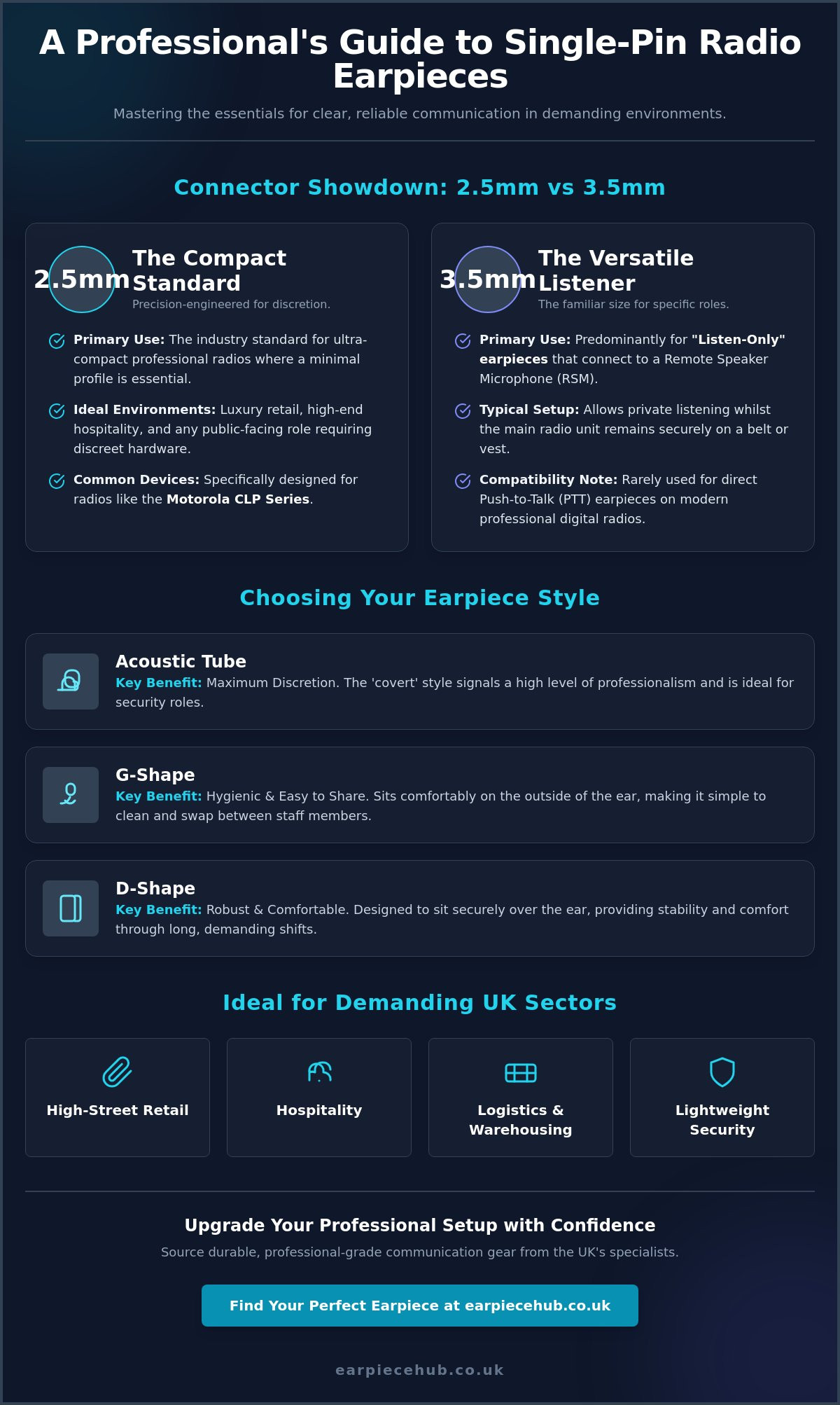
The 2.5mm jack is the smaller, more refined connector. It has become the industry standard for ultra-compact professional radios, most notably the Motorola CLP series. These radios are designed for environments like luxury retail or high-end hospitality where discretion is paramount. Because the radio bodies are so slim, the internal circuitry requires a miniaturised port. If your radio is roughly the size of a credit card, it almost certainly utilises a 2.5mm connection.
The 3.5mm jack is the size most users recognise from legacy consumer audio devices. However, in the professional world, its application is more specific. These are frequently used for “listen-only” earpieces that plug into the side of a Remote Speaker Microphone (RSM). This setup allows a security guard or steward to hear transmissions privately whilst the radio remains securely clipped to their belt. It’s a robust, widely compatible size, but it’s rarely used for direct-to-radio PTT (Push-to-Talk) earpieces on modern professional digital units.
Beyond the size, you must consider the physical security of the connection. For high-movement roles, threaded connectors are essential. These feature a small screw at the base of the pin that locks the earpiece into the radio housing. This prevents the cable from being accidentally tugged out during a physical intervention or a foot pursuit. Similarly, pin orientation plays a role in equipment longevity. Straight pins are ideal for top-mounted ports, whilst L-shaped pins are better for side-mounted ports because they allow the cable to run flush against the radio body, significantly reducing snagging risks.
How to Measure Your Radio Jack Port
If you don’t have a set of callipers, you can identify your port size by comparing it to a standard pair of wired smartphone headphones. Standard headphones use a 3.5mm jack. If your radio port is visibly smaller than that plug, you need a 2.5mm version. Always check if your radio has a recessed port. Some models have the jack set deep within a protective plastic well; this requires an earpiece with a slim, elongated housing to ensure the pin reaches the contacts and clicks firmly into place.
The Problem with Mobile Phone Earpieces
It’s tempting to use a standard mobile phone headset in an emergency, but this often leads to equipment damage. Phone headsets use a TRRS (Tip-Ring-Ring-Sleeve) configuration to handle stereo audio and a microphone on one pin. Professional radios use a TRS (Tip-Ring-Sleeve) layout. Plugging a phone headset into a radio can short the PTT circuit, causing the radio to transmit constantly or fail to receive. To bridge this gap safely, it’s always best to use a dedicated earpiece adapter designed for professional impedance levels.
Comparing Earpiece Styles: Acoustic Tube, G-Shape, and D-Shape
Choosing a single-pin radio earpiece involves more than technical compatibility. The physical design determines how well you can perform your duties without distraction. From the discreet profiles required in high-end security to the hygienic needs of a busy retail team, each style serves a specific operational purpose. Selecting the wrong form factor leads to ear fatigue, which often results in staff removing their gear before the shift ends.
Acoustic Tubes: Covert and Clear
Acoustic tubes are the industry standard for covert operations. They deliver audio through an air-filled surgical tube, which remains nearly invisible against the skin. This design keeps the electronic transducer away from the ear, reducing heat and improving clarity in high-stakes environments. High-quality models feature a “quick disconnect” mechanism. This allows you to swap the tube easily if it becomes discoloured or blocked without replacing the entire wiring loom. In humid environments, moisture can occasionally build up inside the tube, potentially muffling the sound. Regular maintenance and using moisture-wicking tips are essential to keep your communication lines open.
G-Shape and D-Shape: The Hygiene Specialists
For teams in retail or hospitality who share radios across different shifts, over-ear styles like the G-shape and D-shape are superior. These designs don’t sit inside the ear canal. This makes them far more hygienic and easier to clean with a simple sanitising wipe between users. Soft-rubber ear hooks provide better long-term comfort than hard-plastic alternatives, which can cause painful pressure points after four or five hours of continuous wear.
- G-Shape: Features a flexible ear-loop that adjusts to different ear sizes. It’s the favourite for warehouses where staff move frequently and need a secure fit.
- D-Shape: Offers a more stable fit for users wearing glasses. The soft-rubber loop sits flat against the side of the head, preventing the frames from pinching against the ear.
Operational Considerations: Cable Length and PTT
A common oversight when selecting a single-pin radio earpiece is the distinction between “listen-only” and Push-to-Talk (PTT) models. Listen-only versions are shorter, designed specifically to reach from a shoulder-mounted microphone to the ear. PTT versions require a longer cable to reach from a waist-mounted radio. These often feature a reinforced clip to secure the wire to a lapel or uniform seam. Choosing the wrong length leads to snagging or restricted head movement. For those in formal attire, a “2-wire” setup allows you to run the PTT button down a sleeve for maximum discretion. A standard “1-wire” is more efficient for staff in polo shirts or high-visibility vests where speed of access is the priority.
Compatibility Guide for Major Radio Brands
Navigating brand compatibility requires more than just eyeballing the port. Every manufacturer has specific housing depths and wiring configurations. A single-pin radio earpiece that fits a Motorola CLP might not work with a Hytera PD3, even if the pin diameter matches. This is often due to the “shoulder” of the connector, which can prevent the pin from fully engaging with the radio’s internal contacts. To avoid audio cutting out, you must ensure the connector housing is slim enough to bypass any protective casing on the radio body.
Motorola’s CLP and SL series are the primary users of the 2.5mm single pin. These are streamlined for retail and hospitality where a bulky 2-pin connector would be too heavy. For these models, an Acoustic Tube Earpiece for Motorola Radios is the standard choice for discreet, clear communication. Hytera’s PD3 and newer BP range also utilise single-pin connectors, but the housing is often more rectangular. If you’re using a Hytera PD365, you’ll need a specific D-Shape earpiece for Hytera radios to ensure the PTT functions correctly and the audio remains consistent throughout your shift.
Older Kenwood and Icom models often feature a 2.5mm sub-port alongside a 3.5mm main port. Identifying the correct pin for these legacy units is vital; a standard 2.5mm jack might be too short to bypass the protective rubber seals on Icom’s waterproof range. If you’re moving from a heavy-duty multi-pin radio to a lighter setup, you don’t necessarily need to buy all new gear. A high-quality earpiece adapter for any radios can convert a multi-pin block into a standard single-pin jack. This allows you to use your favourite covert kit across different fleets whilst maintaining a secure, screw-in connection.
Motorola DP1400 and Professional Series
The Motorola DP1400 is the backbone of UK security. Natively, it uses a 2-pin M1 connector. However, many professionals prefer a single-pin setup for comfort. You can achieve this by plugging a single-pin earpiece into the side of a Remote Speaker Microphone (RSM). When running this configuration, ensure you have a fresh replacement battery for Motorola DP1400. Low voltage from an ageing battery often causes the audio in the earpiece to crackle or drop out before the radio itself shuts down. For MOTOTRBO digital users, this setup provides a reliable, lightweight alternative to heavy overhead headsets.
The “Listen Only” Configuration
The “Listen Only” configuration is a game-changer for high-noise environments like construction sites or music festivals. By connecting a 3.5mm single-pin earpiece to an RSM, you get the best of both worlds. The RSM handles the loud transmissions and PTT, whilst the earpiece provides private, clear audio directly to your ear. This 3.5mm port is the most common accessory size on professional microphones because it’s robust enough for heavy daily use. It’s an efficient way to maintain situational awareness without exposing your radio traffic to the public. Always check the jack port for dust or pocket lint; a quick clean with compressed air can resolve most “no audio” issues instantly.
Why Source Your Communication Gear from Earpiece Hub?
Selecting the right equipment is only half the battle; finding a supplier that understands the high-stakes nature of security and radio communication is equally vital. Earpiece Hub has operated as a specialist UK-based resource since 2015. We don’t just move boxes; we provide the technical expertise required to keep professional teams connected. When you purchase a single-pin radio earpiece from us, you’re benefiting from a decade of industry-specific knowledge. We understand the nuances of connector housings and wiring configurations that general electronics retailers often overlook.
Our inventory is curated to meet the diverse needs of the UK’s hospitality, retail, and security sectors. We maintain a comprehensive range of styles, including discreet acoustic tubes, hygienic G-shape loops, and comfortable D-shape hooks. This variety ensures that every member of your team has the specific tool they need for their role. We prioritise rapid UK delivery because we know that operational downtime isn’t an option for a busy venue or a security firm. Our logistics are designed to get replacement gear into your hands as quickly as possible, often with next-day shipping options.
Maintenance and Replacement Parts
Reliability extends beyond the initial purchase. To maintain professional hygiene standards and audio clarity, we stock a full selection of replacement acoustic tubes and ear tips. Swapping these components regularly prevents the “moisture in the tube” issues discussed earlier and ensures your kit remains comfortable for long-term wear. For organisations managing large fleets, we recommend centralising your power management. A six-way multi-unit charger allows you to organise your workspace whilst ensuring every radio is ready for the next shift. If your team relies on the Motorola professional series, don’t let a weak power source compromise your audio. Using a high-quality replacement battery for Motorola DP1400 ensures your earpiece receives consistent voltage for clear, uninterrupted transmissions.
The Earpiece Hub Guarantee
We’re committed to professional-grade audio quality. Every single-pin radio earpiece in our catalogue is chosen for its durability and performance in loud, demanding environments. We understand that technical specifications can be confusing, especially when navigating legacy equipment. Our team provides reliable support for any technical compatibility questions you might have. If you find that the compatibility isn’t exactly what you expected, we offer a straightforward returns process. We act as a dependable partner for your business, providing the equipment you need with minimal fuss and maximum reliability.
Browse our full range of single-pin earpieces today and ensure your team stays connected with gear that lasts an entire shift.
Upgrade Your Professional Radio Setup
Finding the right single-pin radio earpiece shouldn’t be a matter of trial and error. By prioritising the correct millimetre size and housing depth for your specific radio model, you eliminate the risk of audio failure during critical moments. Whether you opt for the discreet profile of an acoustic tube or the hygienic benefits of a G-shape loop, the right equipment ensures your team stays comfortable and reactive for the duration of every shift.
At Earpiece Hub, we’ve operated as a UK-based specialist since 2015. We provide expert technical support for all major brands to ensure you find exactly what you need. With next-day delivery available, we help you keep your security or hospitality team fully operational without delay. Find the perfect single-pin earpiece for your radio at Earpiece Hub and experience the difference that professional-grade audio makes to your daily operations. Equip your team with confidence and stay connected when it matters most.
Frequently Asked Questions
What is the difference between a 2.5mm and 3.5mm radio earpiece?
The primary difference is the physical diameter of the jack plug. A 2.5mm connector is the sub-miniature version used for ultra-compact radios like the Motorola CLP series. The 3.5mm version is the standard size found on most Remote Speaker Microphones. You can’t swap them; the 2.5mm pin is too small to make contact in a 3.5mm port, whilst the larger pin simply won’t fit a compact radio.
Can I use my mobile phone earpiece with my two-way radio?
You shouldn’t use mobile phone headsets with professional radios. Consumer earpieces use TRRS wiring to handle stereo sound and a mic on one pin. Radios use a TRS layout for mono audio and PTT signals. Plugging a phone headset into your radio can short the circuit. This often leads to the radio transmitting constantly or failing to receive, which can permanently damage the internal PTT mechanism.
How do I know if my radio requires a threaded single-pin connector?
Check the area surrounding your radio’s jack port for visible screw threads. If the port has a threaded metal collar, your radio is designed for a threaded single-pin radio earpiece. These connectors lock into place to prevent the cable from being pulled out during physical activity. Non-threaded pins rely on friction alone; this is sufficient for retail roles but risky for high-movement security tasks in the field.
What is a “Listen Only” earpiece and how does it connect?
A “Listen Only” earpiece lacks a microphone and a Push-to-Talk button. It’s designed to plug into the 3.5mm accessory port on a Remote Speaker Microphone (RSM). This setup allows you to receive transmissions privately through the earpiece whilst using the shoulder-mounted mic to speak. It’s an efficient configuration for staff in noisy environments who need to maintain situational awareness without broadcasts being heard by the public.
How often should I replace the acoustic tube on my earpiece?
We recommend replacing your acoustic tube every three to six months for hygiene and performance. Over time, the clear plastic can discolour or become brittle due to UV exposure and skin oils. If your audio sounds muffled or quiet, it’s often caused by moisture buildup or earwax blockage within the tube. Regularly swapping the tube and ear tip ensures your communication gear remains clear and professional throughout its life.
Will a single-pin earpiece work with my Motorola DP1400?
A single-pin earpiece won’t plug directly into a Motorola DP1400. This specific radio model uses a standard 2-pin M1 connector. To use a single-pin setup, you must first connect a Remote Speaker Microphone with a 3.5mm jack. Alternatively, you can use a dedicated adapter that converts the side-port into a single-pin jack. This allows you to use your favourite covert kit whilst keeping the radio securely on your belt.
Are single-pin earpieces compatible with both digital and analogue radios?
Yes, a single-pin radio earpiece is compatible with both digital and analogue radio systems. The physical connection is an analogue interface that carries audio signals regardless of how the radio processes data. As long as the pin size and internal wiring match your radio’s port, the gear will function perfectly. It’s a versatile choice for teams transitioning from older analogue fleets to modern digital MOTOTRBO or Hytera systems.
What is the most comfortable earpiece for a 12-hour shift?
Over-ear styles like the D-shape and G-shape are the most comfortable options for long shifts. Unlike acoustic tubes, these designs sit on the outside of the ear, which prevents the pressure and irritation caused by in-ear tips. The D-shape is particularly effective for staff wearing glasses because the soft rubber loop sits flat against the head. This prevents the frames from pinching, ensuring you stay focused on your duties without distraction.
