





Uncategorized
Universal Radio Earpiece Adapters: The Ultimate Buying Guide for 2026
Jun
Your radio fleet shouldn’t be a graveyard for expensive, incompatible accessories. Most security teams struggle with a mixed inventory of Motorola, Kenwood, and Hytera units, leading to a drawer full of proprietary earpieces that don’t fit your new kit. It’s a logistical headache that drains your budget and risks critical audio failure during high-stakes operations. Investing in a high-quality universal radio earpiece adapter is the most effective way to end this cycle of waste and frustration.
We understand that reliability is everything in the field. You need gear that works every time, regardless of the brand on the radio’s casing. This guide will show you how to streamline your communications by connecting any earpiece to any radio brand, reducing long-term equipment costs and simplifying your team’s inventory management. We’ll examine the latest 2026 connector standards, essential UKCA compliance for the British market, and the technical specifications that define a truly professional-grade adapter system.
Key Takeaways
- Understand how the Hirose connector creates a modular communication system that bridges the gap between proprietary radio ports and standard accessories.
- Discover how a universal radio earpiece adapter reduces long-term equipment costs by allowing individual components to be replaced rather than entire kits.
- Learn to accurately identify your specific radio connector type across major brands like Motorola, Kenwood, and Hytera to ensure perfect compatibility.
- Follow our professional audit process to select the ideal earpiece style, from covert acoustic tubes to comfortable G-shape designs, for your specific operational needs.
- Gain insights into why modular adapter systems are the strategic choice for streamlining inventory management in the UK security and hospitality sectors.
What is a Universal Radio Earpiece Adapter?
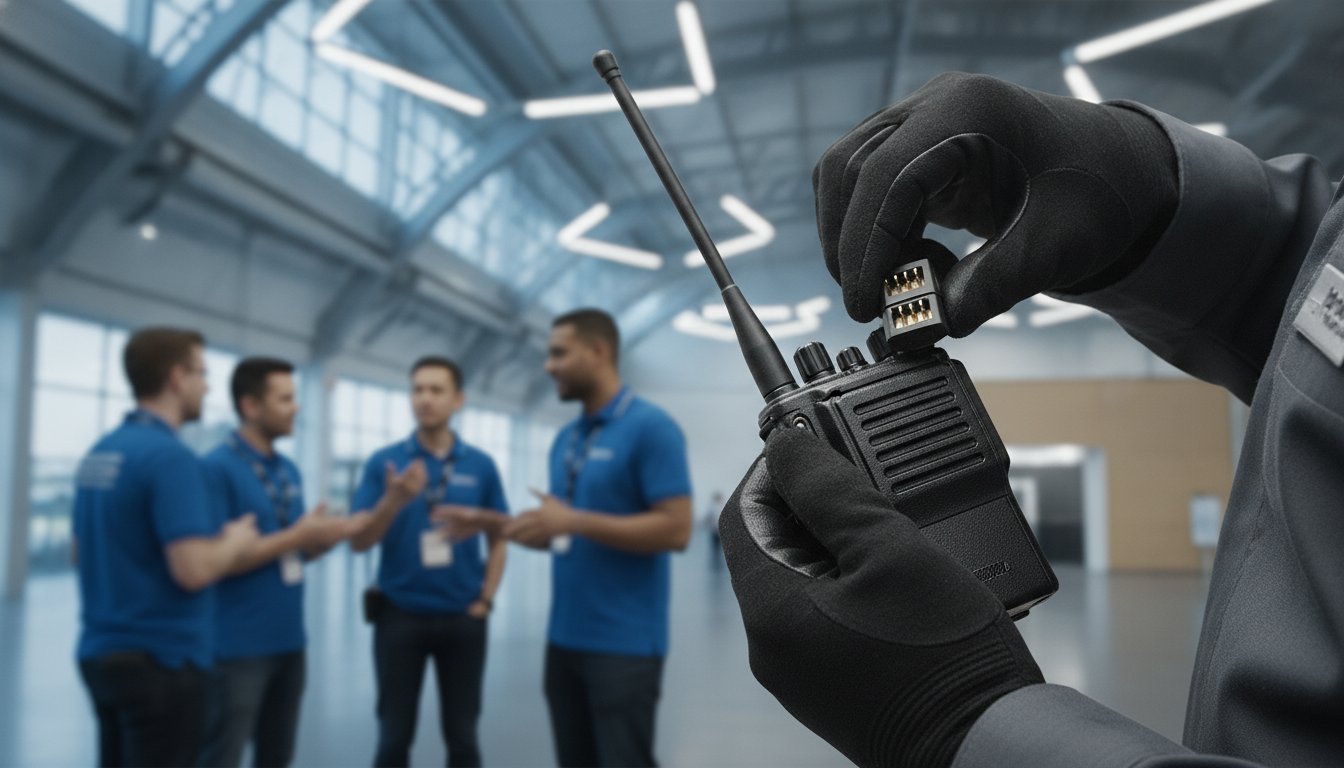
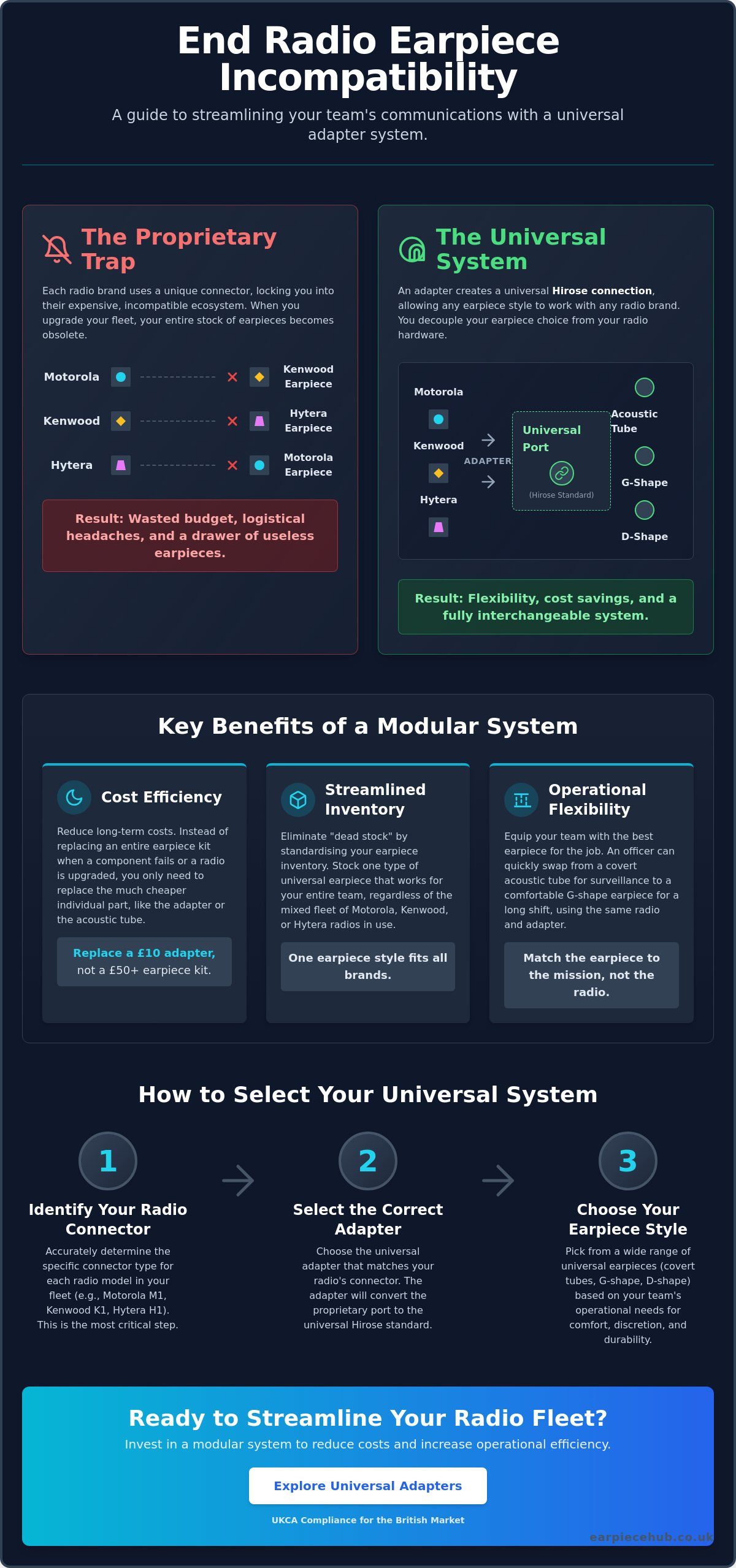
A universal radio earpiece adapter serves as a critical bridge between proprietary radio ports and standardised audio accessories. Most leading radio manufacturers design their hardware with unique, brand-specific connection points. A universal adapter bypasses these restrictions. It converts the manufacturer’s specific port into a modular interface, typically using a Hirose connection. This shift allows professional sectors like security, event management, and construction to move away from restrictive, proprietary-only setups. The primary advantage is clear: you decouple your choice of earpiece style from the specific radio brand you happen to be using this year.
By adopting a modular approach, organisations gain immense flexibility. You are no longer forced to buy a specific headset just because it’s the only one that fits your radio’s side port. Instead, you can select the best earpiece for the job and use a universal radio earpiece adapter to make it work with your existing fleet. This is particularly vital for the following sectors:
- Security: Allows teams to switch between covert acoustic tubes and high-impact headsets without replacing the entire kit.
- Events: Simplifies kit hand-outs when using a mixed fleet of hired and owned radios.
- Construction: Ensures noise-cancelling gear remains compatible even if the site radio brand changes.
The Problem with Proprietary Radio Connectors
Major brands like Motorola, Kenwood, and Hytera each utilise distinct pin configurations and physical connector shapes. Motorola might use a multi-pin side connector whilst Kenwood often favours a 2-pin arrangement. For a growing business, this creates a “locked-in” ecosystem. If you upgrade your fleet from one brand to another, your entire stock of earpieces usually becomes obsolete overnight. The hidden costs of replacing dozens of high-quality earpieces can be staggering. Using a universal radio earpiece adapter eliminates this financial drain. It ensures you don’t have to bin perfectly functional equipment just because you changed your radio handsets.
How the Universal System Works
The system relies on a two-part architecture. First, you attach a radio-specific adapter to your handset. Second, you plug your chosen universal earpiece into that adapter. These components often feature quick-release mechanisms, allowing for rapid equipment swaps during active duty. Unlike traditional audio connector standards found in consumer electronics, these professional systems prioritise durability and signal integrity. The Hirose connector is the industry standard for secure, multi-pin universal audio. It provides a robust, screw-down or snap-fit connection that won’t pull loose during a physical altercation or whilst moving through a busy construction site.
Key Benefits of Switching to a Universal Adapter System
Operational efficiency in the security and hospitality sectors depends on reliable kit. Most managers face a choice between proprietary accessories and modular systems. Proprietary accessories are often priced at a premium, locking you into a cycle of high-cost replacements every time a cable snaps or an ear tip becomes soiled. Adopting a universal radio earpiece adapter system breaks this cycle. It allows you to maintain a high-performance communication network whilst significantly lowering your total cost of ownership.
Standardising on a Hirose-based system aligns with broader goals for public safety communications interoperability, ensuring that different hardware components can function together reliably during an emergency. This modularity means your equipment is no longer tied to a single manufacturer’s whim.
Cost Efficiency for Fleet Managers
Managing a large team with diverse radio models is expensive. When you use proprietary earpieces, you must stock specific spares for Motorola, Hytera, and Kenwood units. This leads to “dead stock” in the equipment room, where hundreds of pounds worth of kit sits unused because it doesn’t fit the current fleet. Modular systems solve this. You can explore our full range of earpiece adapter for any radios to see how this modular approach fits your current fleet. By standardising on one connector type, you only need to stock one style of earpiece. If a radio port changes, you only replace the adapter, not the entire headset. This approach extends the lifespan of expensive noise-cancelling overhead headsets and Kevlar-reinforced cables.
Hygiene and Personal Issue Equipment
Hygiene is a major concern amongst staff who share equipment. Issuing “personal” earpieces to door supervisors or event staff is the best way to prevent the spread of infections. With a universal system, the expensive radio-side adapter stays with the radio, whilst each staff member carries their own inexpensive earpiece. This makes “hot-swapping” radios at shift changes seamless and professional. It also improves staff morale. Employees are more likely to take care of equipment that is personally assigned to them. You reduce the frequency of lost or damaged kit whilst ensuring a higher standard of cleanliness across the team.
Beyond the immediate financial and health benefits, investing in a universal radio earpiece adapter is a strategic move for future-proofing. As your business grows and you migrate to different radio brands, your investment in high-quality earpieces remains protected. You simply swap the adapter to match your new handsets, keeping your team connected without a massive capital outlay.
Choosing the Right Universal Adapter for Your Radio
Selecting the correct universal radio earpiece adapter requires more than a casual glance at your handset. You must identify the specific chassis port on your radio to ensure a seamless electrical and mechanical connection. A mismatched pin configuration won’t just result in poor audio; it can physically damage the radio’s accessory port. Professional users must distinguish between the common 2-pin arrangements used by Kenwood and the complex multi-pin connectors found on high-tier Motorola units. Identifying your specific model’s port is the first step toward building a modular communication kit that lasts.
Once you’ve matched the adapter to your radio, consider the earpiece style. Whether you prefer an Acoustic Tube Earpiece for Motorola Radios or a G-Shape Earpiece for Kenwood Radios, the adapter acts as the universal host. A secure fit is paramount. In high-stress environments, any lateral movement in the connector can lead to intermittent audio or “open mic” situations. Prioritise adapters with reinforced, Kevlar-braided cabling. This extra layer of protection prevents the internal copper from fraying during physical activity or when the cable is snagged on a vest or belt.
Matching Adapters to Major Brands
Motorola users face the most variety. If you’re operating the Motorola DP1400, you’ll require a standard 2-pin adapter. However, those using the DP4400 or DP4800 series must select a multi-pin (M-Plug) adapter that screws securely into the side of the radio. Kenwood and Hytera units often share a similar 2-pin footprint, but the pin spacing can vary by millimetres. Always verify the specific “K-Plug” or “H-Plug” designation before purchase. For specialised emergency service requirements, Tetra MTP series adapters provide the high-fidelity connection needed for mission-critical data and voice transmission.
Mechanical Security and Build Quality
The integrity of your audio depends on the connection between the adapter and the earpiece. This is where the “click-lock” mechanism of a Hirose connector becomes vital. It provides a tactile confirmation that your gear is locked, preventing the earpiece from being ripped out during a physical altercation. Evaluate the strain relief at both ends of the adapter. Thick, flexible rubber sleeves are essential to prevent wire fatigue at the most common break points. Gold-plated pins are essential for maintaining audio clarity over time. These pins resist the corrosion caused by moisture and sweat, ensuring that your universal radio earpiece adapter delivers crisp, reliable communication even after years of heavy use in the British climate.
Buying Guide: What to Look for in a Universal Earpiece System
Selecting a modular communication system requires a methodical approach to ensure every component survives the rigours of professional use. You aren’t just buying a cable; you’re building a reliable link between your team members. A universal radio earpiece adapter is the foundation of this system. To get the best return on your investment, follow this five-step decision matrix before placing your order.
- Step 1: Audit your fleet. Map out every radio model currently in use. Identify whether you need 2-pin connectors for your Kenwood units or multi-pin adapters for your Motorola DP series.
- Step 2: Select your earpiece style. Match the hardware to the role. Choose an Acoustic Tube for covert operations or a G-Shape for comfort during long retail shifts.
- Step 3: Verify PTT functionality. Test button placement. Ensure the Push-to-Talk mechanism is accessible and provides tactile feedback, even when you’re moving at pace.
- Step 4: Assess the environment. If you’re working in nightclubs or at loud music festivals, prioritise noise-cancelling features to maintain clear voice transmission.
- Step 5: Confirm supplier reliability. Only buy from specialists who offer UK-based technical support and Next Day Shipping to ensure your team is never without kit.
PTT and Microphone Performance
The wiring configuration of your system dictates how your team interacts with their radios. A 1-wire setup combines the microphone and PTT button on a single lead, which is ideal for general hospitality. A 2-wire system separates the earpiece from the mic/PTT unit, allowing you to run cables down your sleeve for covert security work. For specialised tactical roles, a 3-wire setup provides a separate PTT button that can be held in the hand or clipped to a belt. Test the tactile feedback of the PTT button whilst wearing gloves; you need a definitive “click” to know your transmission is live. A high-quality microphone is just as important as the earpiece itself. It must filter out ambient wind noise whilst capturing crisp, intelligible speech.
Environmental Considerations
UK weather and high-intensity roles demand ruggedised hardware. Look for IP-rated adapters that can withstand rain and moisture during outdoor events. Cables are the most common point of failure, so ensure your universal radio earpiece adapter features Kevlar-reinforced wiring to prevent stretching or snapping. Comfort is also a logistical necessity. Selecting the right ear tip, such as soft silicone for standard use or memory foam for high-noise areas, ensures staff don’t remove their earpieces during an eight-hour shift. All equipment sold in Great Britain must bear the UKCA mark to comply with the Radio Equipment Regulations 2017.
Investing in the right modular kit today prevents expensive replacements tomorrow. Browse our full range of universal earpieces and headset options to find the perfect match for your operational requirements.
Why Earpiece Hub is the UK’s Specialist for Universal Adapters
Earpiece Hub is more than a retail outlet. We serve as a central resource for the UK security and hospitality sectors, providing the technical expertise required to build resilient communication networks. Our focus is on functional, professional-grade gear that survives the daily grind of active duty. When you invest in a universal radio earpiece adapter from our range, you are choosing a component tested for durability and signal clarity. We understand the high-stakes nature of your work. Reliability isn’t just a feature; it’s a requirement.
Our inventory covers the full spectrum of professional radio brands. Whether your fleet relies on Motorola, Hytera, Kenwood, or Icom, we provide the modular connections to keep your team talking. We maintain a constant stock of high-impact accessories, ensuring that your equipment remains operational even in the most demanding environments. Logistical speed is part of our character. With Next Day Shipping as standard for UK orders, we ensure your team is never without essential comms for longer than necessary.
Authoritative Support and Expertise
Transitioning a large fleet from proprietary to modular accessories can be complex. Our team helps you organise this transition by identifying the exact pin configurations and adapter types needed for your specific handsets. We act as a dependable partner, offering the technical shorthand industry insiders rely on. Beyond the initial purchase, we provide ongoing support through a comprehensive stock of replacement parts. You can easily source replacement acoustic tubes and ear tips to keep your universal kit in top condition, ensuring hygiene and performance standards remain high amongst your staff. This specialist approach reduces the administrative burden on fleet managers and ensures long-term cost-efficiency.
Ready to Streamline Your Comms?
Adopting a modular system is a strategic move for any professional organisation. It provides the flexibility to switch radio brands whilst protecting your investment in high-quality earpieces. You gain improved hygiene for your team, lower long-term equipment costs, and a simplified inventory that is easy to manage. We invite you to explore our extensive collection of universal connectors and headsets to see how a modular setup can transform your operations. Our gear is built for the professionals who keep the UK safe and running. Don’t let proprietary restrictions dictate your communication strategy.
Shop our Universal Radio Earpiece Adapters today and secure the future of your fleet’s communications with a Reliable Specialist.
Secure Your Fleet’s Future Communication
Transitioning to a modular system is a strategic investment that pays dividends in operational reliability and cost-efficiency. By standardising your equipment, you eliminate the waste associated with proprietary accessories and ensure your team has a hygienic, personalised kit. A high-quality universal radio earpiece adapter acts as the essential link that keeps your communications clear, regardless of the radio brand you use. It’s the most effective way to future-proof your inventory against brand migrations and hardware upgrades.
Earpiece Hub is your dedicated UK-based specialist for Motorola, Hytera, and Kenwood accessories. We understand that security and event operations don’t stop, which is why we provide 24/7 support and reliable next-day shipping. Our expertise ensures you get the right technical specifications the first time, every time. Take control of your equipment logistics today and stop wasting budget on incompatible gear.
Browse our Professional Universal Radio Earpiece Adapters and experience the benefits of a truly modular communication system. We’re here to support your team’s success with gear you can trust.
Frequently Asked Questions
Will a universal adapter work with any brand of radio?
Yes, provided you select the specific adapter designed for your radio’s chassis port. A universal radio earpiece adapter acts as a bridge between proprietary ports and modular earpieces. Whilst the earpiece side is standardised, the radio side must match the pin configuration of your Motorola, Kenwood, or Hytera handset to function correctly.
Do universal adapters affect the audio quality of my earpiece?
High-quality universal adapters do not degrade audio performance. Professional-grade units utilise gold-plated pins and shielded internal wiring to maintain signal integrity and prevent static. If you experience muffled sound or crackling, it’s usually a sign of a loose mechanical connection or debris in the port rather than a limitation of the adapter technology itself.
What is a Hirose connector and why is it used in radio adapters?
A Hirose connector is a robust, multi-pin industrial standard used to create secure modular audio links. It’s favoured in the security industry because it features a tactile “click-lock” mechanism that prevents accidental disconnection. This standard allows you to swap different earpiece styles quickly whilst ensuring the electrical connection remains stable during physical activity or high-stress situations.
Can I use my existing Motorola earpiece with a universal adapter?
You can only use an earpiece that features a Hirose-style quick-release connector. Standard proprietary earpieces with fixed Motorola plugs cannot be plugged into a universal radio earpiece adapter. To move to a modular system, you’ll need to invest in universal-style headsets that are designed to pair with the adapter’s standardised output port.
Are universal earpiece systems durable enough for security work?
Professional modular systems are specifically engineered for the rigours of security and door supervision. These systems often feature Kevlar-reinforced cabling and heavy-duty strain relief to prevent wire fatigue. Because you can replace individual broken parts rather than the entire kit, a universal system often outlasts proprietary alternatives in high-intensity environments where gear is frequently snagged or pulled.
How do I know which adapter pin-type I need for my radio?
You must identify your radio’s model number to determine the correct pin-type. Common configurations include the Motorola 2-pin (M1), the Motorola multi-pin (M-Plug), and the Kenwood 2-pin (K-Plug). If you’re unsure, check the accessory port on the side of your handset; the number of pins and the presence of a screw-hole will dictate which adapter you require.
Can I swap between an acoustic tube and a D-shape earpiece using the same adapter?
Yes, swapping earpiece styles is the primary advantage of a modular system. Once the adapter is securely attached to your radio, you can disconnect an acoustic tube and snap in a D-shape or G-shape earpiece in seconds. This flexibility allows staff to choose their preferred comfort style without needing an entirely different adapter for each earpiece type.
Is it cheaper to buy universal adapters or brand-specific earpieces?
Universal systems offer significant long-term savings for fleet managers. Whilst the initial cost of the adapter and earpiece may be comparable to a single proprietary unit, the replacement costs are much lower. If an earpiece fails, you only replace the cable or tip rather than the expensive radio connector, effectively reducing your maintenance budget over the lifespan of your fleet.
