





Uncategorized
Hygienic Replacement Earpiece Tips: A Professional Guide to Ear Health and Audio Clarity
Jun
Professional earpiece hygiene is a safety requirement, not a luxury, because porous materials harbour bacteria that cleaning alone cannot eliminate. If you have ever suffered through a long shift with “itchy ear” or struggled to understand muffled instructions over your radio, you already know the physical and operational cost of neglected equipment. It is easy to overlook a small piece of silicone or foam, but these components are the only thing standing between your ear canal and a potential infection.
This guide explains why investing in hygienic replacement earpiece tips is essential for maintaining both your ear health and professional audio clarity. We agree that nothing is more distracting than ear irritation when you need to focus on the task at hand. By the end of this article, you will know how to identify the best materials for your specific environment, establish a reliable replacement schedule based on your shift patterns, and ensure your accessories are fully compatible with your professional radio hardware.
Key Takeaways
- Understand how moisture and wax buildup degrade medical-grade components and increase infection risks during long shifts.
- Compare the long-term durability of silicone with the superior noise isolation of memory foam to choose the right material for your specific environment.
- Establish a professional “Hygiene Audit” to determine exactly when to install hygienic replacement earpiece tips based on visual and tactile signs of degradation.
- Ensure seamless hardware compatibility by matching replacement acoustic tubes and ear tips with major brands including Motorola, Hytera, and Kenwood.
- Learn how to maintain fleet-wide communication standards and audio clarity through bulk replacement packs designed for security firms and event organisers.
The Hidden Risks of Neglected Earpiece Hygiene
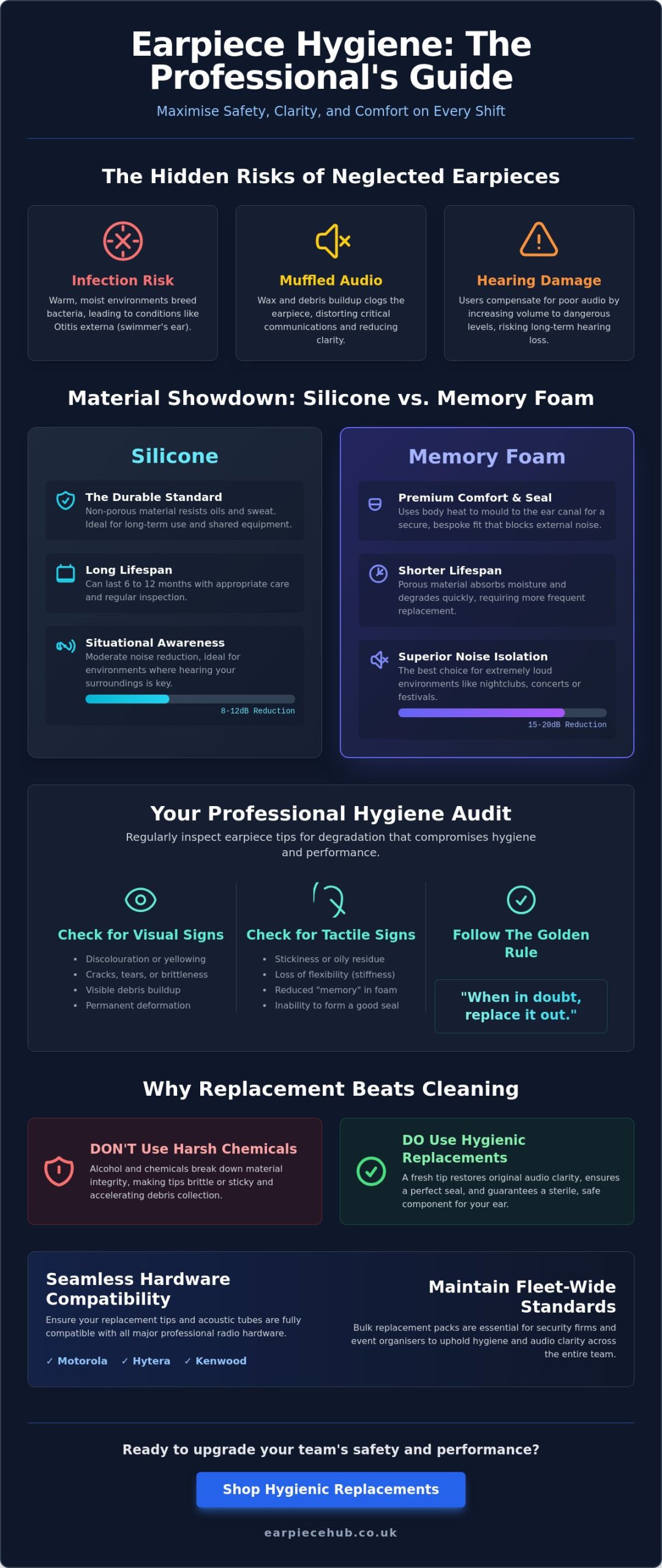
Hygienic replacement earpiece tips are medical-grade components designed for frequent renewal rather than long-term use. In the high-stakes environment of professional security and radio communication, these small accessories are often the most neglected part of the kit. When you wear an earpiece for an eight or twelve-hour shift, you create a sealed, warm, and moist environment within the ear canal. This microclimate is the perfect breeding ground for bacteria, particularly when combined with natural earwax and dead skin cells that accumulate on the surface of the tip.
Neglecting this buildup doesn’t just cause minor irritation; it leads to genuine medical complications. Security personnel and event staff are frequently diagnosed with Otitis externa, commonly known as swimmer’s ear. This condition involves inflammation and infection of the external ear canal, often caused by the constant presence of a contaminated earpiece. Beyond the physical discomfort, poor hygiene directly impacts your safety. As debris clogs the tip, audio becomes muffled. Most users react by turning their radio volume to dangerous levels to compensate, which increases the risk of long-term noise-induced hearing loss.
Bacterial Buildup and Ear Health
The material of your earpiece plays a significant role in how it interacts with your body. Foam tips, for instance, are highly porous. They act like a microscopic sponge, trapping sweat, oils, and skin cells deep within their structure. During high-activity shifts where perspiration is inevitable, these materials degrade rapidly. When considering the various types of earplug fittings used in professional environments, it’s clear that the seal required for clear audio also traps moisture against the skin. If you don’t use hygienic replacement earpiece tips regularly, you’re essentially reintroducing concentrated bacteria into your ear canal every time you start a shift. This can lead to permanent ear canal sensitivity or chronic infections that may eventually require medical intervention.
How Hygiene Affects Operational Audio
Operational efficiency relies on split-second communication. Microscopic debris and wax buildup create a “muffle effect” that strips away the high-frequency clarity needed to distinguish similar-sounding words or codes. Many professionals attempt to solve this by cleaning their tips with alcohol wipes or household chemicals. This is often a mistake; harsh chemicals break down the integrity of silicone and foam, making them brittle or sticky, which actually accelerates debris collection. A fresh tip restores the original decibel response of the radio, ensuring your equipment performs exactly to its technical specifications without distortion.
Understanding Materials: Silicone vs. Memory Foam for Long Shifts
Choosing the right material for hygienic replacement earpiece tips is a tactical decision that impacts both operational focus and physical comfort. In professional security and communications, the “one size fits all” approach rarely works for twelve-hour shifts. Operatives must balance the need for durability against the requirement for acoustic isolation, especially when working in high-decibel environments like festivals or nightclubs. The material you choose determines how effectively your earpiece seals the ear canal, which is the primary factor in preventing “audio bleed” during covert operations.
Silicone Tips: The Durable Standard
Medical-grade silicone is the industry standard for a reason. Most professionals prefer the “mushroom” style silicone tip because its flexible, tiered design provides a reliable universal fit for almost any ear shape. Silicone is non-porous, making it significantly more resistant to the oils and sweat produced during high-activity shifts. This material is the best choice for multi-user environments where equipment might be shared, as it is exceptionally easy to wipe down and sanitise whilst on duty. While silicone tips can last between 6 to 12 months with proper care, they typically offer a more modest noise reduction of 8 to 12dB. This makes them ideal for environments where you still need to maintain some situational awareness of your immediate surroundings.
Memory Foam: The Premium Comfort Choice
Memory foam offers a bespoke fit that silicone cannot match. These tips use body heat to soften and mould to the unique contours of your ear canal, providing a secure seal that stays in place even during physical confrontations or rapid movement. For professionals working in extremely loud environments, foam is the superior choice; it provides 15 to 20dB of noise reduction, allowing you to hear radio traffic clearly without cranking the volume to dangerous levels. However, this comfort comes with a trade-off in longevity. Because foam is absorbent, it traps moisture and degrades much faster than silicone. To maintain safety and audio clarity, foam hygienic replacement earpiece tips should be renewed every 1 to 3 months. If you are managing a large security team, stocking up on replacement acoustic tubes and ear tips ensures every operative has the right fit for their specific role.
For users with sensitive skin, the choice of material is even more critical. Medical-grade silicone is inherently hypoallergenic and less likely to cause the “itchy ear” sensation common with lower-quality plastics. Conversely, while foam is soft, it can become abrasive once it starts to harden and lose its elasticity. Regularly inspecting your ear tips for signs of stiffness or discolouration is the only way to prevent skin irritation before it starts. A perfect seal doesn’t just improve audio; it ensures that your covert communications remain private, as a poor fit allows sound to escape the ear canal where it might be overheard by others.
Acoustic Tube vs. Standard Ear Tips: What Professionals Need
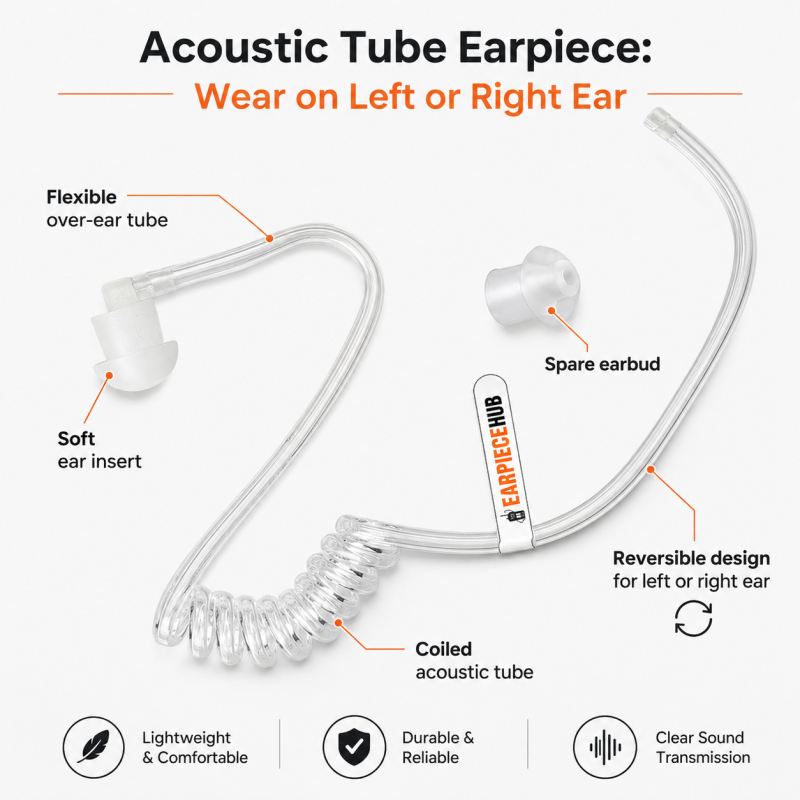
Professional radio systems require more than just a comfortable fit; they demand mechanical precision. Unlike consumer earbuds, professional earpieces rely on a secure connection between the lead and the ear canal. Standard off-the-shelf tips often fail here because they lack the specific internal diameter needed to grip a professional acoustic tube or the “elbow” connector of a G-shape or D-shape unit. If the fit is loose, the tip can detach during physical activity, leaving a small piece of silicone or foam stuck deep in your ear. Using dedicated hygienic replacement earpiece tips ensures that the component stays on the hardware, not in your head.
The “elbow” connector is the most critical part of an acoustic tube setup. This small, right-angled plastic joint is what holds the tip in place while directing sound into the ear. If your replacement tip isn’t engineered for this specific part, you’ll experience significant audio leakage. This forces you to increase the radio volume, which leads to the battery drain and hearing risks mentioned in previous sections. Professionals carrying Kenwood, Motorola, or Hytera gear should always verify that their replacement parts are designed for high-tension environments where cables are frequently tugged or caught on clothing.
Compatibility with Motorola and Hytera Systems
Selecting the right parts for specific hardware is essential for operational safety. For those using the Motorola DP1400, the earpiece tips must be robust enough to withstand constant insertion and removal. Similarly, Hytera D-shape and G-shape accessories have specific fitment requirements that generic consumer tips cannot meet. We’ve seen many instances where security staff use ill-fitting tips that eventually become lodged in the ear canal. This isn’t just a nuisance; it’s a health and safety risk that can take an operative off-duty. Always match your accessories to the specific brand and model of your radio to maintain a secure, airtight seal.
The Role of the Acoustic Tube in Hygiene
Hygiene isn’t limited to the part that touches your skin. The clear acoustic tube itself acts as a conduit for moisture, condensation, and microscopic debris. Over a long shift, breath and sweat create humidity inside the tube, which can eventually reach the transducer and cause permanent damage to the earpiece. This is why we recommend a “complete refresh” strategy. When you install fresh hygienic replacement earpiece tips, you should also inspect the tube for discolouration or brittleness. If the tube has turned yellow or feels stiff, it’s no longer providing the clear audio path you need. Replacing the tube alongside the tip is the only way to ensure your communication remains crystal clear and your ears stay healthy.
When and How to Replace Tips for Maximum Safety
Maintaining operational readiness requires a proactive “Hygiene Audit” of your communication kit. Don’t wait for an ear infection or muffled audio to signal a problem. A reactive approach often leads to equipment failure at the most inconvenient times. By inspecting your gear at the start of every week, you ensure your equipment is always in peak condition. Investing in hygienic replacement earpiece tips before they fail is the mark of a professional who values both health and clarity.
The 3 Signs Your Earpiece Tip is Finished
- Discolouration: Medical-grade silicone and foam are typically clear or neutral. If you notice yellowing or browning, the material is saturated with earwax and skin oils that cannot be washed away.
- Hardening: Fresh tips are supple and flexible to provide a bespoke seal. If the material feels stiff, brittle, or “plastic-y” when squeezed, it has lost its ability to conform to your ear canal.
- Tearing or Pitting: Check for microscopic tears or jagged edges. These damaged areas are impossible to clean and serve as a sanctuary for bacteria to congregate and multiply.
Professional Replacement Schedule
For daily users such as security operatives or police officers, the replacement schedule is demanding. We recommend replacing silicone tips every 4 to 6 weeks. Because foam tips are more absorbent, they require renewal every 2 to 4 weeks to maintain hygiene standards. If you’re an occasional user working event weekends, a quarterly refresh is sufficient to prevent the material from perishing in storage. Perform a daily wipe down using non-alcohol wipes to remove surface oils without degrading the material integrity of your hygienic replacement earpiece tips.
Removing the old tip is straightforward. Grip the base of the tip firmly and pull it away from the acoustic tube elbow or the earpiece barb. To seat the new tip, align the internal bore with the connector and push until it’s fully seated against the flange. Give it a light tug to ensure it’s secure; a loose tip is a safety hazard that can become lodged in the ear canal during physical activity. Keep your audio clear and your ears healthy by ordering replacement acoustic tubes and ear tips today.
Maintaining Your Fleet: Why Earpiece Hub is the UK Specialist
Earpiece Hub serves as the central resource for UK radio professionals who demand reliability without the fluff. Managing a large team requires a streamlined, authoritative approach to equipment maintenance. We understand that security firms and event organisers cannot afford operational downtime caused by ear infections or muffled audio. By positioning ourselves as a specialist partner, we provide the technical expertise and logistics needed to keep your communications crystal clear during every shift.
Bulk Solutions for Security Teams
Purchasing multi-packs of ear tips is the most cost-effective strategy for fleet-level management. Having a ready supply of hygienic replacement earpiece tips on-site is essential for maintaining standards during rapid staff changes or large-scale deployments. It’s a logistical necessity; you don’t want an operative starting a twelve-hour shift with a used or degraded tip. We offer bulk solutions that ensure every member of your team has a fresh, sterile component for their acoustic tube or D-shape earpiece. This proactive approach prevents cross-contamination and demonstrates a commitment to staff welfare.
Versatility is another key factor for modern fleets. Many organisations use a mix of hardware, which is why we stock universal earpieces and adapters alongside brand-specific accessories. Whether your team uses Motorola, Hytera, or Kenwood radios, we ensure your replacement parts fit perfectly every time. Our expertise in covert and high-noise communication accessories means we only supply materials that meet professional standards. If an urgent requirement arises, our next-day shipping ensures your equipment refreshes happen exactly when they are needed.
The Earpiece Hub Quality Guarantee
Our focus remains on professional-grade, durable materials that withstand the intense demands of 24/7 security environments. We don’t just sell products; we provide a specialist support system. If you have technical queries regarding the best material for a specific environment or compatibility with your current radio leads, our 24/7 support is here to help. We understand the high-stakes nature of your work and provide exactly what is needed with minimal fuss and maximum reliability.
Don’t let neglected hygiene compromise your operational safety or team communication. It’s time to establish a clear replacement schedule and partner with a UK specialist that values your time and your health. Shop our range of replacement ear tips today and experience the difference that professional-grade accessories make to your audio clarity.
Optimise Your Radio Communications and Health
Maintaining your equipment is about more than just clear audio; it’s a fundamental part of your daily health and safety protocol. By understanding the specific needs of your acoustic tubes and choosing high-quality materials, you prevent the physical irritation and muffled instructions that compromise your performance. Regular audits of your gear ensure you never start a shift with compromised components that could lead to ear infections or long-term hearing damage. A proactive approach keeps your focus where it belongs: on the task at hand.
Earpiece Hub has served as a specialist UK retailer since 2015, providing the technical expertise needed to support all major radio brands. We understand the urgency of professional operations, which is why we offer next-day shipping nationwide for all our accessories. Investing in hygienic replacement earpiece tips is the simplest way to guarantee long-term reliability for your communication hardware and personal comfort.
Don’t wait for gear failure to impact your shift. Take control of your audio clarity and ear health today. Browse professional hygienic replacement earpiece tips at Earpiece Hub and ensure your team stays connected with confidence.
Frequently Asked Questions
How often should I replace my earpiece tips for hygiene?
Daily users should replace silicone tips every 4 to 6 weeks, whilst foam tips require renewal every 2 to 4 weeks. This schedule prevents the accumulation of bacteria and skin oils that lead to infections. Occasional users should refresh their gear at least quarterly to ensure the material hasn’t become brittle or perished during storage.
Can I clean my earpiece tips instead of replacing them?
You can perform daily maintenance with non-alcohol wipes, but this is not a substitute for replacement. Porous materials like foam trap bacteria deep within their structure where surface cleaning cannot reach. Over time, even silicone degrades and becomes pitted, creating microscopic sanctuaries for bacteria that household cleaners cannot sterilise effectively.
Are all replacement ear tips compatible with Motorola radios?
No, compatibility depends on the specific earpiece style and the diameter of the connector barb. While some mushroom tips are universal, professional Motorola earpieces often require specific internal diameters to grip the acoustic tube elbow securely. Using ill-fitting tips increases the risk of the component detaching and becoming lodged in the ear canal.
Why does my earpiece feel itchy after a long shift?
This irritation is typically caused by a buildup of sweat, earwax, and bacteria on a degraded ear tip. As the material loses its hypoallergenic properties or becomes damaged, it irritates the sensitive skin of the ear canal. Regularly installing hygienic replacement earpiece tips eliminates these physical irritants and prevents painful conditions like Otitis externa.
What is the best material for ear tips in a loud environment?
Memory foam is the superior choice for high-noise environments such as nightclubs or music festivals. It provides 15 to 20dB of noise reduction by moulding to the unique contours of your ear canal for a bespoke seal. This allows you to hear radio traffic clearly at lower volumes, protecting your hearing from long-term noise-induced damage.
Do replacement ear tips improve radio sound quality?
Yes, fresh tips restore the original decibel response and high-frequency clarity of your radio hardware. Clogged or degraded tips create a “muffle effect” by blocking the audio path with microscopic debris and wax. By using hygienic replacement earpiece tips, you ensure that instructions and codes are heard clearly without having to increase the volume to dangerous levels.
Can I share my earpiece with a colleague if I change the tip?
You should only share the electronic radio lead, never the acoustic tube or the tip. Bacteria and moisture travel up the clear tube during use, creating a high risk of cross-contamination even if the tip is new. For maximum hygiene in multi-user environments, each operative must have their own personal set of acoustic accessories.
How do I know what size replacement tip I need?
Most professional silicone tips use a universal “mushroom” design that fits almost all ear shapes and radio connectors. However, if you are using memory foam or custom moulds, you must check the diameter of your earpiece’s “elbow” connector. If the tip slides on too easily or feels loose, it is the wrong size and could stay behind in your ear.
