





Uncategorized
Noise Cancelling Two Way Radio Headsets: The Professional UK Buying Guide for 2026
Jun
What if a single gust of wind or a nearby generator was the only thing standing between a successful operation and a total communication breakdown? In high-pressure environments like industrial plants or security details, background noise isn’t just an annoyance; it’s a genuine safety hazard. You likely already know that standard gear often fails the moment the volume hits that critical 85dB threshold where UK hearing protection regulations kick in. It’s frustrating when instructions are drowned out or when a 12-hour shift leaves your ears aching from poorly fitted equipment.
This guide ensures you select a noise cancelling two way radio headset that delivers laboratory-grade clarity whilst meeting strict UK professional standards for 2026. We’ll help you master the technical nuances of microphone filtration and physical isolation to ensure your team stays connected in the loudest zones. You’ll learn how to navigate connector compatibility for brands like Motorola and Hytera, understand the impact of new USB-C charging mandates, and identify durable equipment built for daily professional use.
Key Takeaways
- Understand how specialised peripherals isolate ambient noise to protect your hearing whilst maintaining crystal-clear transmission.
- Learn to select the correct form factor, such as overhead or neckband styles, to ensure comfort during demanding 12-hour shifts.
- Master the “connector minefield” by identifying the exact plug requirements for your specific Motorola, Hytera, or Kenwood radio models.
- Discover how to choose a noise cancelling two way radio headset with the right Noise Reduction Rating (NRR) for high-decibel industrial environments.
- Streamline your equipment procurement by leveraging specialist resources that provide technical expertise and reliable next-day shipping.
What is a Noise Cancelling Two Way Radio Headset?
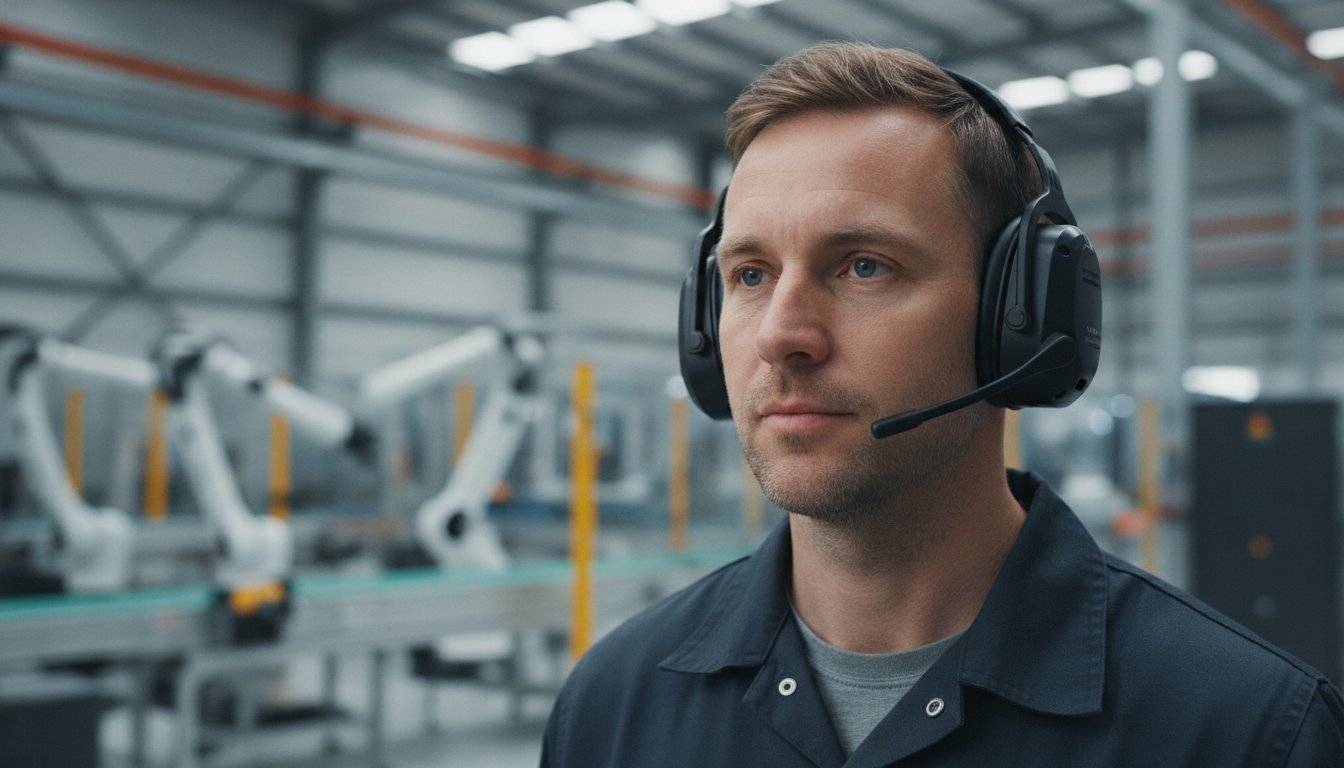
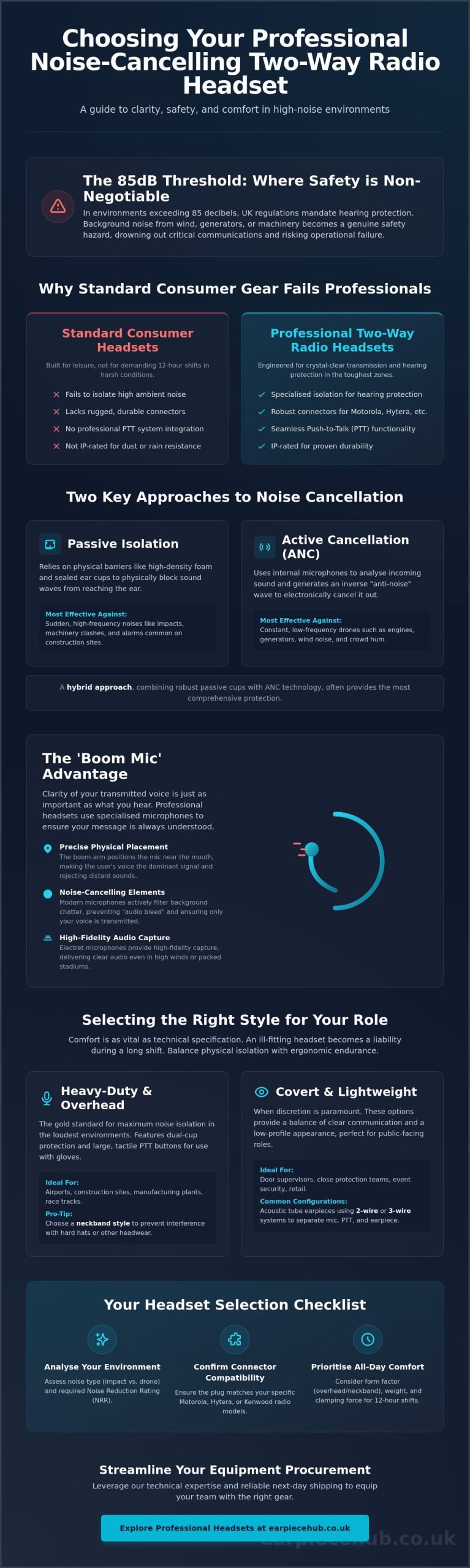
A noise cancelling two way radio headset is a specialised communication peripheral engineered to isolate the user from ambient noise whilst delivering high-fidelity audio. In professional settings, these devices serve a dual purpose. They act as essential hearing protection in environments exceeding 85dB; they also ensure that critical instructions are never missed. Standard consumer headsets often fail in these environments. They are built for leisure, meaning they lack the rugged connectors, the IP-rated durability, and the specific frequency tuning required for radio transmissions. Professional environments demand a Reliable Specialist approach to gear selection. You need equipment that survives a 12-hour shift and integrates seamlessly with a Push-to-Talk (PTT) system.
Passive vs Active Noise Cancellation (ANC)
Passive isolation relies on physical materials like high-density foam and gel seals to block incoming sound waves. This is the first line of defence in industrial zones where sudden, high-frequency noises are common. Conversely, active noise cancellation technology uses internal microphones to create “anti-noise” waves. This effectively filters out low-frequency drones from engines, generators, or constant wind. For security professionals in crowded venues, ANC is often superior for maintaining focus. For heavy construction sites with sudden, sharp impacts, a hybrid approach using heavy passive ear cups is usually the most effective choice.
Microphone Noise Cancellation Technology
Audio clarity depends heavily on the “Boom Mic” advantage. Physical placement near the mouth ensures the speaker’s voice remains the dominant signal. Modern headsets use noise-cancelling elements that ignore background chatter to prioritise the user’s voice. This prevents “audio bleed” from the surrounding environment. An electret microphone is a type of electrostatic capacitor-based microphone that utilises a permanently charged material to provide high-fidelity audio capture in compact radio peripherals. These components ensure that even in a gale or a packed stadium, your message gets through with zero distortion. Investing in a high-quality noise cancelling two way radio headset ensures your team remains safe and responsive throughout the working day.
Selecting the Right Headset Style for Your Environment
Choosing the correct form factor for your noise cancelling two way radio headset is as vital as the electronic specifications. If a headset causes discomfort after two hours, it becomes a liability during a twelve-hour security shift. Professional users must balance physical isolation with ergonomic endurance. Weight distribution plays a significant role here; a poorly balanced headset increases neck strain and user fatigue. You should also consider the “clamping force.” This is the pressure the ear cups exert against your head. While necessary to create a seal for noise attenuation, excessive force leads to headaches and reduced compliance amongst staff.
Durability is another non-negotiable factor for UK professionals. Equipment must withstand unpredictable weather and rigorous daily use. Look for IP-rated headsets that offer certified resistance against rain and dust. Beyond physical survival, your choice must align with legal safety standards. Employers have a duty to protect staff under the Control of Noise at Work Regulations 2005, which mandates hearing protection in high-decibel zones. Selecting the right style ensures you meet these legal obligations whilst maintaining operational efficiency.
Heavy-Duty Overhead Headsets
These are the gold standard for high-decibel environments such as airports, construction sites, or race tracks. Heavy-duty models feature dual-cup isolation and large, tactile PTT buttons that are easy to operate even whilst wearing gloves. If your team wears hard hats or high-visibility caps, a neckband style is often superior to a traditional headband. It allows the support strap to sit behind the neck, preventing interference with headwear. If your role requires maximum isolation, you can explore our professional noise cancelling overhead headset range for robust performance.
Covert and Lightweight Alternatives
Discretion is paramount for door supervisors and close protection teams. In these roles, a bulky overhead unit is impractical. A high-quality acoustic tube earpiece paired with noise-cancelling ear tips provides a middle ground. These setups use “2-wire” or “3-wire” configurations. A 2-wire system combines the microphone and PTT on one line, while a 3-wire setup separates them, allowing you to run the mic up a sleeve for total concealment. This ensures you maintain a professional appearance without sacrificing the ability to hear instructions over loud crowd noise.
Compatibility: Matching Headsets to Your Radio Brand
The “connector minefield” is the primary cause of equipment returns in the communications industry. Compatibility is binary; if the pins don’t align perfectly, your noise cancelling two way radio headset is useless. Beyond the physical fit, the electrical connection is paramount. Professional radio brands like Motorola and Hytera use complex multipin interfaces to carry audio signals, PTT data, and power for active noise-cancelling circuits. If the impedance or voltage levels don’t match the radio’s output, you’ll experience distorted audio or a complete failure of the noise-reduction features. You cannot simply force a connection and expect professional-grade results.
Mixed radio fleets present a significant logistical challenge for UK businesses. You might have Motorola DP series radios in security and Kenwood units in logistics. In these scenarios, using a specialist earpiece adapter for any radios allows you to standardise your headset choice across the entire team. This simplifies inventory management. It also ensures that every user receives the same high-quality audio performance regardless of their specific handset brand. Standardising your peripherals reduces training time and ensures that replacement parts, like ear tips, are universal across your site.
Motorola and Hytera Specific Requirements
High-tier professional radios such as the Motorola DP4000 or Hytera PD series require specific multipin connectors that provide a secure, screw-in or clip-in fit. The Motorola DP1400 remains a staple in the UK market, yet it requires specific internal circuitry within the headset to optimise noise cancellation. Using “genuine-compatible” accessories is essential for maintaining your radio’s warranty. It also ensures the PTT button remains responsive under heavy use, preventing the “dead air” issues common with low-quality alternatives. Always verify that your headset is rated for the specific series of your radio fleet.
Kenwood and Universal 2-Pin Systems
The Kenwood K1 connector is the most ubiquitous 2-pin design. It appears on everything from budget licence-free units to high-end professional portables. Whilst common, these systems are prone to ground loops or “humming” if the noise-cancelling circuit isn’t properly shielded. This interference ruins transmissions in quiet environments. To ensure a perfect match, always cross-reference your radio’s model number against the headset’s compatibility list or physically measure the distance between the pin centres before completing your order. This simple check prevents the frustration of receiving incompatible gear on the eve of a major event.
Industry Selection Guide: What Do You Actually Need?
Every professional environment presents unique acoustic challenges. Selecting a noise cancelling two way radio headset requires matching technical specs to your specific operational reality. In event management, you need to hear instructions over high-decibel crowd noise and music whilst maintaining a professional appearance. For construction and industrial sites, the focus shifts to ruggedness and high Noise Reduction Ratings (NRR) to protect against heavy machinery. Security professionals often require the discretion of a covert earpiece, yet they cannot afford to lose audio clarity amongst the chaos of a busy venue entrance.
Logistics and warehousing staff prioritise lightweight designs that allow for constant movement. In these fast-paced settings, equipment must be durable enough to survive snags and drops. If your fleet is varied or you need immediate replacements for an upcoming contract, you can shop now for professional radio headsets to ensure your team remains fully equipped. Choosing the wrong gear for your sector leads to poor compliance and increased equipment turnover. Investing in a high-quality noise cancelling two way radio headset is the only way to guarantee reliable performance across these diverse applications.
Evaluating Noise Reduction Ratings (NRR)
The NRR indicates how many decibels of sound a headset can physically block. If you are working in a 100dB environment, a headset with an NRR of 30 doesn’t simply reduce the noise to 70dB. UK Health and Safety Executive (HSE) guidelines suggest a more conservative approach to calculating effective protection. It is vital to ensure your gear keeps exposure below the 85dB legal threshold where hearing protection becomes mandatory. High-quality foam and gel seals are essential for achieving these ratings in industrial zones.
Features to Look For: PTT, VOX, and Cables
- Kevlar-Reinforced Cables: Standard cables fail at the strain relief points. Professional headsets use Kevlar braiding to prevent internal wire breakage during daily use.
- Tactile PTT Buttons: In cold or hazardous environments, you need a large, easy-to-find Push-To-Talk button that works whilst you are wearing heavy work gloves.
- VOX Compatibility: Voice Operated Exchange (VOX) allows for hands-free operation. This is ideal for quiet warehouses but often becomes a hindrance in noisy areas where background sounds can accidentally trigger the transmitter.
Ensure your chosen equipment features high-impact plastics and reinforced stress points. Durable equipment survives the rigours of professional use, reducing the long-term cost of ownership for your business. By focusing on these specific technical features, you guarantee that your communication system remains a tool for efficiency rather than a source of frustration.
The Earpiece Hub Approach: Quality and Reliability
Choosing a noise cancelling two way radio headset is only the first step in building a reliable communication network. Earpiece Hub serves as the UK’s central resource for professionals who cannot afford equipment failure. We understand that in security and industrial sectors, downtime is not an option. This is why we prioritise 24/7 support and next-day shipping; your operations shouldn’t pause because of a broken cable or a lost ear tip. Investing in premium gear reduces the total cost of ownership. Cheap alternatives often fail within months, whereas professional-grade peripherals survive the daily rigours of high-stakes environments. Quality headsets save money over time by reducing the frequency of replacements and ensuring your team remains responsive.
Reliability also depends on compliance with modern standards. As of 2026, all professional radio equipment must align with the latest UK regulations. This includes the common charger requirements that mandate USB-C receptacles for headsets capable of wired charging. We ensure our inventory meets these legal benchmarks whilst providing the technical expertise needed to manage complex radio fleets. Whether you are operating under a £75 Ofcom Simple UK Light licence or managing a technically assigned frequency, your hardware must be as professional as your licensing. We provide the steadying beat of logistical support that keeps your team connected.
Total Fleet Maintenance and Support
Maintaining a fleet requires more than just buying headsets. If you use a Motorola DP1400, you must ensure it is powered by a high-quality replacement battery to maintain peak transmission strength. A six-way multi-unit charger is essential for keeping your headsets and radios ready for the next shift; it organises your workspace whilst ensuring every unit is charged simultaneously. Hygiene is equally vital for long-term use. You can easily sanitise and refresh your equipment using replacement acoustic tubes and ear tips. This extends the lifespan of your gear and ensures user comfort across multiple shifts. Regular maintenance prevents the gradual degradation of audio clarity in your noise-cancelling circuits.
Why Specialist Knowledge Trumps General Retail
General retailers lack the industry-specific vocabulary and technical depth required for mission-critical gear. Buying from a specialist hub means you receive advice on 1-wire, 2-wire, and 3-wire technicalities from experts who understand your role. We bridge the gap between high-impact retail urgency and serious technical authority. Our British centre of expertise provides reliable advice for UK businesses, ensuring you never waste budget on incompatible connectors or underpowered peripherals. We value your time and focus on getting you the specific product you need without unnecessary fluff. Browse our range of professional noise-cancelling headsets to secure your team’s communication for 2026 and beyond.
Secure Your Communication Fleet for 2026
Mastering the technical specifics of your radio peripherals ensures your team remains safe and responsive in high-decibel zones. You’ve learned how to navigate the complex connector minefield and why physical isolation is just as critical as electronic filtration. Selecting the right noise cancelling two way radio headset is more than a purchase; it’s an investment in operational clarity and long-term hardware durability. Don’t let background noise or incompatible gear compromise your next mission.
As a leading UK specialist, Earpiece Hub provides the expert technical guidance needed to match gear to Motorola, Hytera, or Kenwood fleets with total precision. We provide 24/7 support and next day shipping to keep your operations running without interruption. Whether you need heavy-duty overhead protection or discreet covert solutions, we have the stock and the knowledge to support your requirements. Shop Professional Noise-Cancelling Headsets at Earpiece Hub today and ensure your critical instructions are heard clearly every time.
Frequently Asked Questions
What is the difference between active and passive noise cancellation in radio headsets?
Passive cancellation uses physical density, such as high-grade foam or gel ear cups, to block high-frequency sound waves. Active cancellation employs internal microphones to generate inverse sound waves that neutralise low-frequency drones like engines or wind. For most industrial UK sites, a hybrid approach provides the best protection against both sudden impacts and constant background noise.
Can I use a noise-cancelling headset with any brand of two-way radio?
No, you must match the specific connector type to your radio brand. Motorola, Hytera, and Kenwood each use proprietary pin configurations that are not interchangeable. Whilst a universal noise cancelling two way radio headset can be used across different fleets, you will require a specific earpiece adapter for any radios that don’t share the same native connection.
Do noise-cancelling headsets require their own batteries to function?
Passive headsets rely entirely on the radio’s power for audio transmission. Active noise-cancelling models often require their own internal batteries or draw power directly from the radio’s accessory port to run the filtration circuitry. If your headset features electronic noise reduction, always check the battery status before a long shift to avoid losing clarity mid-operation.
Is a noise-cancelling headset the same as a hearing defender?
Not necessarily. A standard headset might filter noise for better audio clarity without providing legal ear protection. To qualify as a hearing defender in the UK, the device must meet specific SNR (Single Number Rating) standards. Always verify the decibel reduction rating if you are working in environments exceeding the 85dB safety threshold where PPE is mandatory.
How do I know if a headset will be comfortable for a 12-hour shift?
Prioritise headsets with gel-filled ear cushions and adjustable headbands to manage “clamping force” effectively. Weight distribution is vital for preventing neck strain during extended shifts. Specialist models designed for the UK security sector often feature breathable materials that prevent heat build-up, which is the primary cause of user fatigue and discomfort after several hours.
What happens if my headset connector doesn’t match my radio?
If the connector is incorrect, the audio will likely be distorted or completely non-existent. Forcing a mismatched plug can damage the delicate pins on both the headset and the radio’s accessory port. If you have incompatible gear, using a high-quality adapter is the only safe way to bridge the connection without risking permanent hardware damage or voiding your warranty.
Are these headsets waterproof or suitable for outdoor use in the UK?
Many professional headsets are built for the UK’s unpredictable weather, but you must verify the IP rating before use. An IP54 rating ensures the device is protected against dust and water splashes from any direction. For heavy rain or coastal environments, look for higher IP ratings to ensure the internal electronics and noise-cancelling circuits remain fully functional.
How often should I replace the ear tips on my noise-cancelling headset?
You should replace ear tips and acoustic tubes every three to six months depending on the intensity of use. Sweat and earwax build-up compromise hygiene and degrade the acoustic seal required for effective noise cancellation. Maintaining your equipment with fresh ear tips ensures consistent audio performance and prevents the need for more expensive headset replacements later.
