





Uncategorized
High-noise two-way radio headset: how to choose the right setup
Sep
The headset with the strongest noise-cancelling label isn’t automatically the right choice for a noisy shift. Choosing a high noise two-way radio headset starts with a more useful question: what is making it difficult for your team to hear messages or speak clearly?
Machinery, crowds and radio handling create different communication problems. A setup that suits one workplace may not suit another. Fit, wear style and the radio connection matter too. A mismatch could interrupt communication when your team needs it.
This guide will help you identify where communication breaks down, compare overhead headsets, acoustic tube earpieces and remote speaker microphones against your working routine, and check radio model and connector compatibility before ordering. You’ll have a practical way to choose for your noise conditions, radio and team, rather than relying on a label alone.
Key Takeaways
- Separate difficulty hearing incoming audio from difficulty transmitting clear speech before choosing equipment.
- Match a high noise two-way radio headset or other accessory to the task, preferred fit and handling routine.
- Check the radio model and connector, then test both receive and transmit audio before relying on the setup.
- Try the equipment in representative working conditions and agree concise radio call procedures with your team.
How to plan two-way radio communication in a high-noise environment
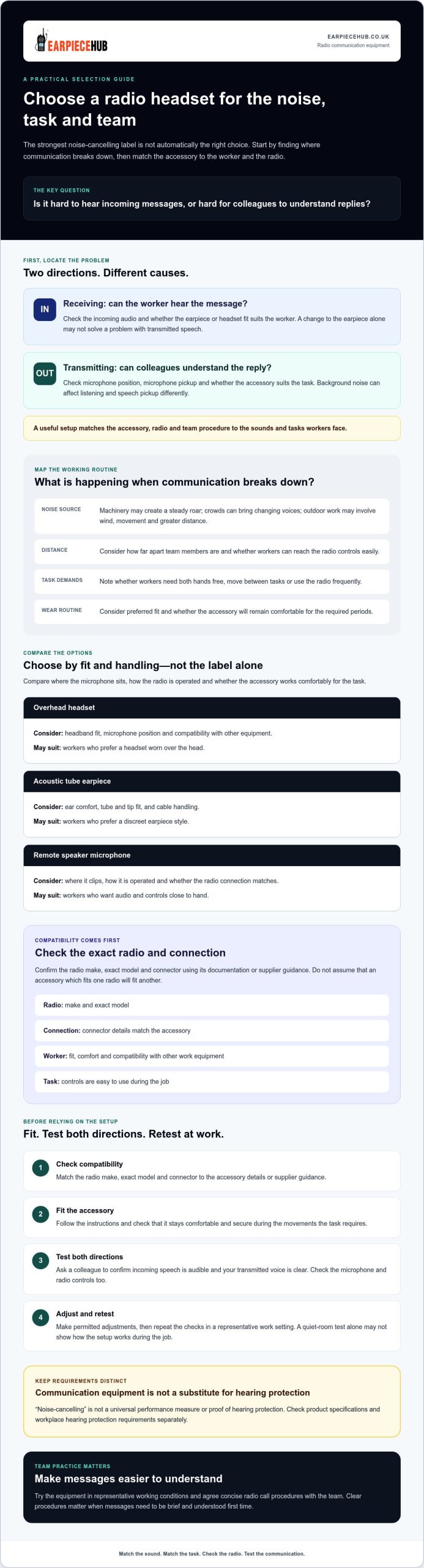
First, separate two problems: can the worker hear incoming radio audio, and can colleagues understand their transmitted speech? Background noise can affect listening and microphone pickup differently. If incoming messages are clear but replies are muffled, changing the earpiece alone may not fix the issue. Check how the microphone is positioned and whether the accessory is suited to the task.
Which noise and communication problem are you trying to solve?
Pinpoint whether the main difficulty is incoming audio, microphone pickup, headset fit or radio handling. Machinery may create a steady roar; a crowd can produce changing voices; outdoor work may involve wind, movement and greater distance between team members. These conditions aren’t acoustically identical, so note where communication breaks down and what workers are doing at the time.
A high-noise radio communication setup matches the accessory, radio and team procedure to the sounds and tasks workers face.
Before choosing a high noise two-way radio headset, map out the working routine:
- Noise source: Where does interference come from, and does it vary during a shift?
- Distance: How far apart are team members, and can they reach the radio controls easily?
- Task demands: Do workers need both hands free, or do they move between tasks?
- Radio use: Are calls occasional or frequent, and will the accessory remain comfortable for the required periods?
A headset can support communication, but it doesn’t replace suitable radio operation or appropriate hearing protection. Treat those as separate requirements: consult the relevant Personal Protective Equipment (PPE) context, and check product specifications rather than assuming a communication headset provides hearing protection. Clear call procedures also matter, particularly when messages need to be brief and understood first time.
How to choose a high noise two-way radio headset
Choose by how the accessory will be worn and used, not by its label alone. An overhead headset may suit a worker who prefers a head-worn setup. An acoustic tube earpiece or remote speaker microphone may better match other fit and handling preferences. Compare where the microphone sits, how the radio is operated and whether the accessory is comfortable for the task. Check the product details against the actual radio.
| Option | Consider | May suit |
|---|---|---|
| Overhead headset | Headband fit, microphone position and compatibility with other equipment | Workers who prefer a headset worn over the head |
| Acoustic tube earpiece | Ear comfort, tube and tip fit, and cable handling | Workers who prefer a discreet earpiece style |
| Remote speaker microphone | Where it clips, how it’s operated and whether the radio connection matches | Workers who want audio and controls close to hand |
“Noise-cancelling” isn’t a universal performance measure or proof of hearing protection. Verify the specific product’s microphone and noise-performance claims, and don’t assume a communication accessory protects hearing. Check your workplace’s hearing protection requirements and confirm product specifications against the intended use.
What should you check before choosing a headset?
Confirm the radio make, exact model and connector using its documentation or supplier guidance. Then consider wearing duration, comfort, compatibility with other work equipment and ease of use, including whether controls can be reached during the task. For staff using in-ear accessories across long shifts, ear hygiene is equally important, as audiology practices such as Amazing Hearing Centre highlight that addressing ear wax build-up prevents both physical discomfort and muffled incoming audio. A high noise two-way radio headset is only suitable if its connection and fit work for the person using it.
Compare radio headsets and earpieces by style, then verify compatibility and product specifications before selecting an accessory. Brand alone isn’t enough to establish that a particular item will fit a radio, so check the exact model and connection details.
Set up and test your radio headset before relying on it at work
A quick check before a shift can catch a poor fit, wrong connection or unclear audio before it disrupts team communication. Follow the accessory instructions and your workplace’s radio procedures.
- Check compatibility: Confirm the radio make, exact model and connector against the accessory details or supplier guidance. Don’t assume a headset that fits one radio will fit another.
- Fit the accessory: Position it as instructed and check that it stays comfortable and secure during the movements your task requires.
- Test both directions: Ask a colleague to confirm you can hear incoming speech and that your transmitted voice is clear. Check the microphone and radio controls, too.
- Adjust and retest: Make permitted adjustments to the fit or settings, then repeat the checks in a representative work setting. A quiet-room test alone may not reveal how well the setup works during the job.
What belongs in a practical high-noise communication plan?
Agree who should call, which team channel or procedure applies, and how the recipient acknowledges a message. Keep calls concise and use an agreed way to repeat or clarify speech that isn’t understood. Make sure workers know what to do if the connection fails or equipment needs checking. Don’t rely on an accessory until the complete setup has been tested.
Before choosing a high noise two-way radio headset, confirm compatibility and verify any relevant product claims. Earpiece Hub’s range includes an overhead headset, acoustic tube earpieces and remote speaker microphones. Check the exact model and connector for your radio before ordering. Find radio communication accessories.
Choose a setup your team can rely on
The right high noise two-way radio headset depends on the communication problem, the demands of the task and how the accessory fits into the working routine. Compare overhead headsets, earpieces and remote speaker microphones by fit and handling, then confirm the radio model and connector before ordering.
Test both incoming and outgoing audio in representative conditions, and agree how your team will make and acknowledge calls. Earpiece Hub is a UK specialist retailer of professional radio communication accessories, with a noise-cancelling overhead headset and earpiece options for Motorola, Hytera and Kenwood radios. Compatibility varies, so check the exact model and connection details.
Shop radio headsets and earpieces to compare accessory categories for your setup. Check the product details and compatibility for your radio before choosing.
Frequently Asked Questions
Can a noise-cancelling headset make two-way radio communication clearer?
It may help, but the result depends on the specific headset, radio, fit and surrounding noise. Microphone noise handling may affect what colleagues hear, whilst the earpiece or speaker affects incoming audio. Noise-cancelling communication features aren’t the same as hearing protection. Check the product specifications, then test the complete radio and headset setup in a representative work environment.
How do I choose a two-way radio headset for a noisy workplace?
Start by identifying the main problem: is incoming audio difficult to hear, is your voice unclear to colleagues, or are fit and radio handling the issue? Compare an overhead headset with earpiece styles against the task, wearing duration and how controls are used. Before ordering, confirm the exact radio model and connector against the accessory compatibility details.
Will any radio headset work with my Motorola, Hytera or Kenwood radio?
No. Compatibility depends on the exact radio model and connector, so matching the brand name alone isn’t enough. Check the radio documentation and the accessory’s compatibility details before ordering. Earpiece Hub lists options associated with Motorola, Hytera and Kenwood radios, but that doesn’t mean every accessory fits every model. Verify the specific combination first.
Is a noise-cancelling radio headset the same as hearing protection?
No. A communication headset is intended to support radio use, whilst hearing protection has a separate purpose. Don’t assume that a noise-cancelling label means a headset reduces noise exposure or is suitable protective equipment. Check product specifications for information relevant to the intended use, and follow your workplace’s requirements for hearing protection in the conditions where the equipment will be worn.
