





Uncategorized
Radio Earpiece for Events Staff: The Professional 2026 Guide
Sep
Imagine your lead coordinator trying to signal a VIP entrance, only for the message to be lost to static or a cable snagged on a blazer. It’s the nightmare scenario for any production manager. You know that even the most advanced radio system is useless if your team is distracted by ear fatigue or struggling to hear over a loud crowd. Selecting a high-quality radio earpiece for events staff is essential for maintaining control when the pressure is on.
At Earpiece Hub, we recognise that professional communication requires more than just a basic connection. This guide shows you how to choose reliable, comfortable, and discreet earpieces for seamless team coordination. We’ll examine the latest 2026 standards, including Kevlar-reinforced cables and the ergonomic benefits of acoustic tubes versus D-shape designs. You’ll learn how to match equipment to specific roles, ensuring staff stay comfortable during long shifts whilst maintaining a professional, covert appearance for high-end events.
Key Takeaways
- Match earpiece ergonomics to specific staff roles by choosing between discreet acoustic tubes for security or comfortable D-shape designs for 12-hour shifts.
- Ensure equipment longevity in high-pressure environments by selecting a radio earpiece for events staff that features industry-standard Kevlar-reinforced cabling.
- Decide between 1-wire and 2-wire configurations based on your team’s mobility needs and the specific demands of your venue’s layout.
- Maximise your fleet’s lifespan by implementing professional hygiene protocols and maintaining a ready stock of essential spares like ear tips and DP1400 batteries.
Understanding the Critical Role of Radio Earpieces for Events Staff
Relying on standard radio speakers in a crowded venue is a recipe for chaos. Open speakers broadcast sensitive operational data to every guest within earshot, destroying the professional atmosphere you’ve worked to create. A dedicated radio earpiece for events staff ensures that communication remains private and focused. By delivering audio directly to the ear, these devices allow teams to monitor two-way radio technology at lower volumes. This prevents ear fatigue and protects long-term hearing whilst ensuring every instruction is heard clearly above the roar of a crowd.
Discreet vs Overt Communication Needs
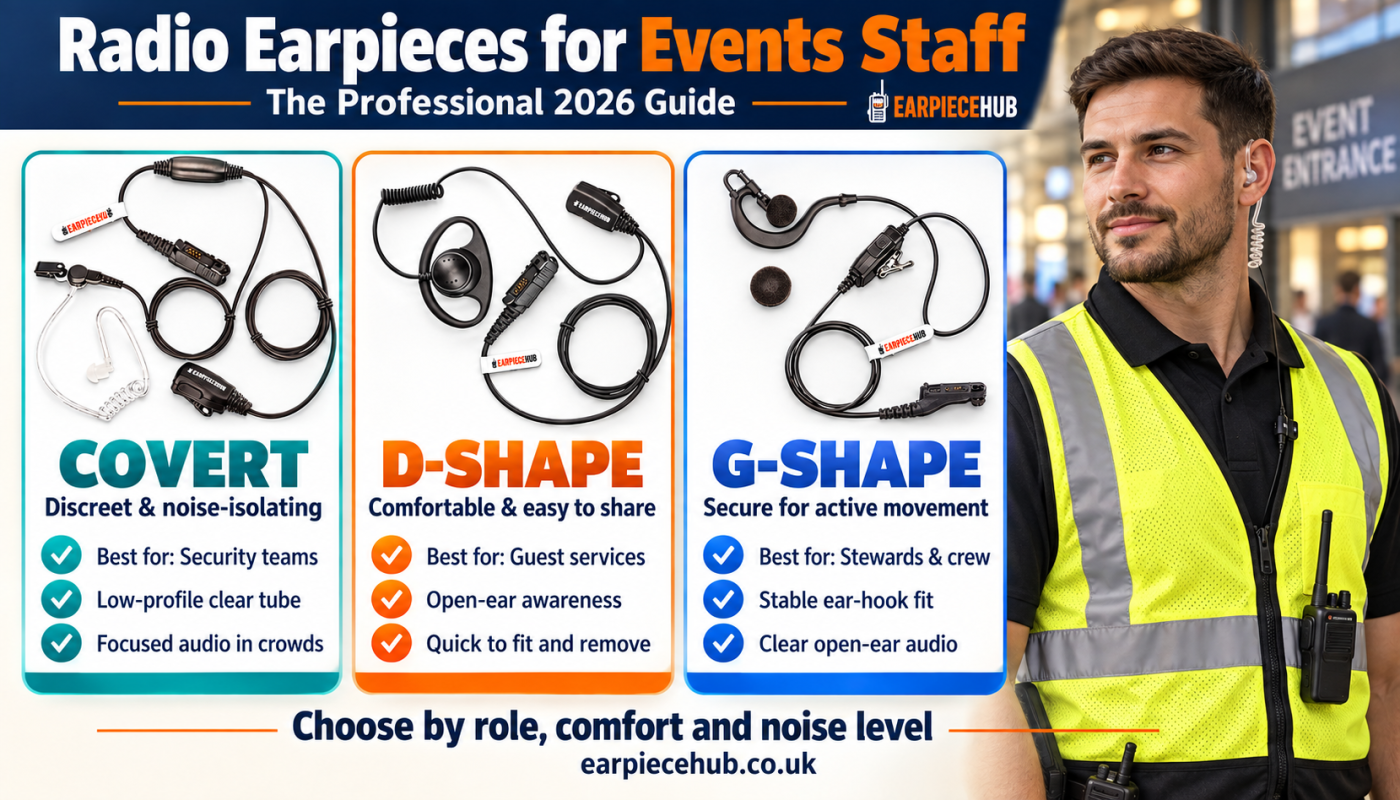
Different roles demand specific hardware configurations. Security teams and VIP handlers typically require covert acoustic tubes. These clear tubes are nearly invisible, allowing staff to blend into the background of high-end corporate galas or private functions. In contrast, front-of-house or hospitality staff often prefer overt G-shape earpieces. These sit securely on the outer ear, signalling to guests that the team is organised and ready to assist without the intrusive look of tactical gear. Choosing the right style is about balancing operational visibility with the desired event aesthetic.
The Consequences of Audio Failure
Communication breakdowns during an event aren’t just frustrating; they’re dangerous. A delay in emergency response times can escalate a minor incident into a full-scale crisis. Professional-grade equipment for 2026 is designed to handle high-pressure environments without distortion. Audio clipping is the jagged distortion that occurs when an audio signal exceeds the system’s maximum capacity, and professional earpieces prevent this by managing signal peaks to ensure every message remains intelligible. Investing in a high-quality radio earpiece for events staff ensures crystal clear delivery when every second counts for site safety.
Selecting the Right Style: Acoustic Tube, D-Shape, or G-Shape?
Choosing the correct hardware depends on your event’s specific environment. Security teams at high-profile galas require different ergonomics than hospitality crews at a music festival. This guide to radio earpiece selection highlights that user comfort and operational role are the primary drivers for any purchase. Selecting a high-quality radio earpiece for events staff means matching the earpiece shape to the user’s daily physical demands.
Acoustic Tubes: Pros and Cons
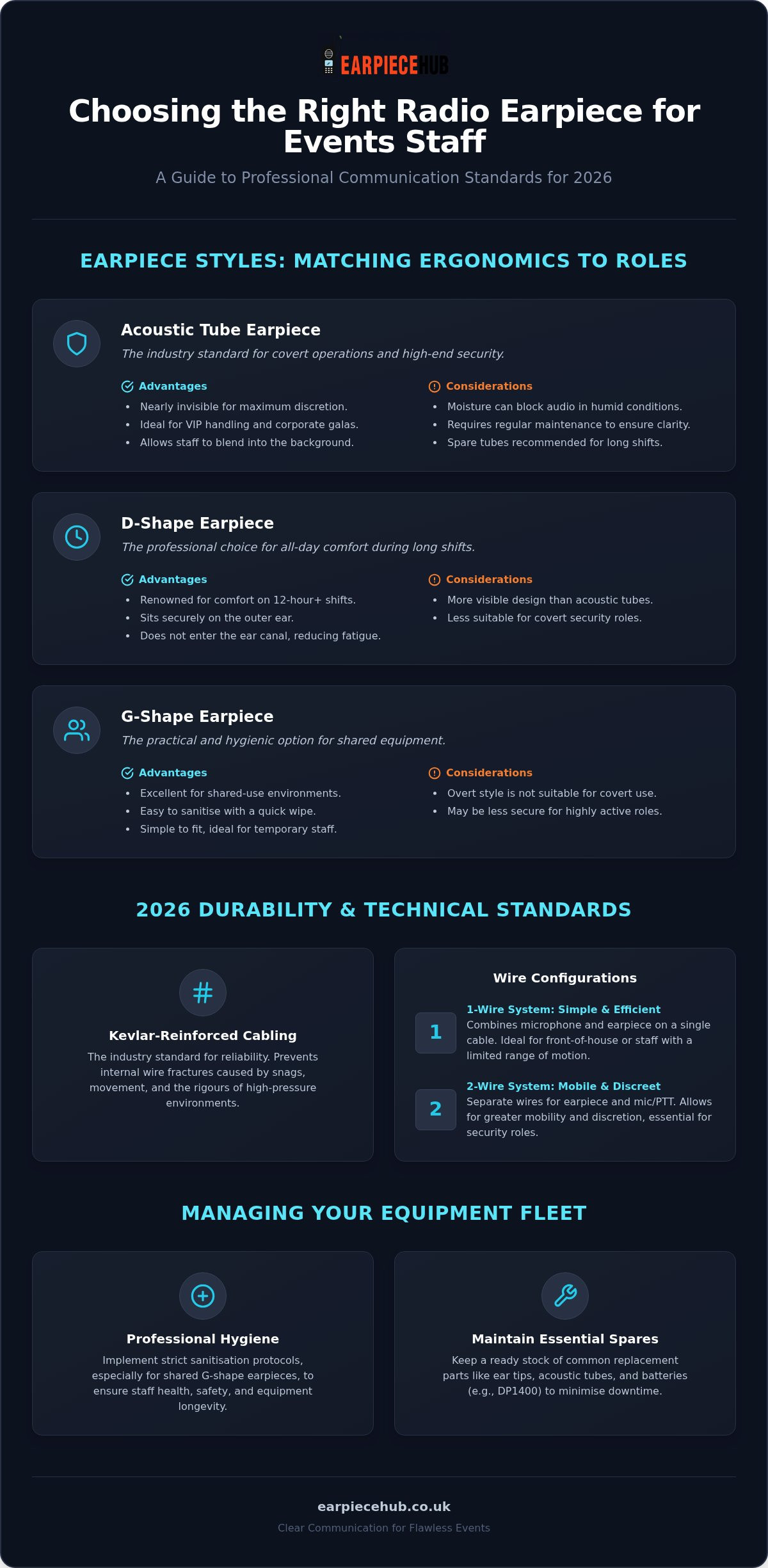
Acoustic tube earpieces are the industry standard for covert operations. The clear tube is nearly invisible, making it the top choice for security personnel who need to blend in. However, moisture build-up from condensation can occasionally block audio in humid or high-activity environments. Regular maintenance is required to prevent this. Professionals often keep replacement acoustic tubes and ear tips on hand to swap out during long shifts, ensuring audio remains crystal clear.
G-Shape and D-Shape: The Hospitality Favourites
For front-of-house teams, G-shape and D-shape designs offer superior practicality. The D-shape is renowned for comfort during 12-hour shifts because it sits securely around the outer ear without entering the ear canal. G-shape models are excellent for shared-use environments. They are incredibly easy to sanitise with a quick wipe between shifts, making them the most hygienic option for temporary staff. These overt styles are simple to fit, which is ideal for crews who don’t use radio kit daily. Whether you need a D-shape earpiece for Hytera radios or a G-shape earpiece for Kenwood radios, matching the style to the radio brand is essential for connector compatibility. If your fleet is mixed, universal adapters provide a cost-effective solution. Finding the right radio earpiece for events staff ensures your team stays connected without compromise. You can find these specialist options and more at Earpiece Hub.
Technical Specifications and Durability Standards for 2026
High-stakes event environments demand hardware that survives more than one season. In 2026, Kevlar-reinforced cabling is the industry standard for any radio earpiece for events staff. It prevents the internal wire fractures caused by constant movement, equipment snags, and the rigours of outdoor festivals. Standardising your comms across mixed radio fleets is now simpler using universal earpiece adapters, allowing you to maintain a consistent user experience even when using a blend of Motorola and Hytera units.
Understanding Wire Configurations
Choosing between 1-wire and 2-wire systems depends on the staff member’s range of motion and specific role requirements.
- 1-Wire systems: These feature a single cable connecting the radio to the ear with an inline microphone and PTT button. They’re ideal for hospitality staff or static personnel where cable management is straightforward and simplicity is preferred.
- 2-Wire systems: These provide two separate cables. One leads to the earpiece whilst the second runs down the sleeve to a palm-sized PTT button. This is the professional choice for security teams who need to communicate discreetly without reaching for their collar.
Microphone Sensitivity and PTT Reliability
The Push-To-Talk (PTT) button remains the most critical failure point in high-volume event environments. Professional-grade switches are rated for over 100,000 cycles to ensure they don’t stick or fail during a critical safety incident. In loud event spaces like concerts or trade shows, microphones require a sensitivity threshold that can isolate clear speech against ambient noise levels reaching 100 decibels. High-quality noise-cancelling components ensure your team communicates effectively without being drowned out by the sound system. Shop our professional radio earpiece range to equip your team with the latest durability standards.
Managing Your Fleet: Maintenance, Hygiene, and Spares
Maintaining a large radio fleet requires a structured approach to logistics. For any radio earpiece for events staff, the cumulative wear and tear of a four-day festival or a busy wedding season is significant. You need a system that ensures equipment remains functional whilst protecting staff health. Neglecting routine maintenance leads to audio degradation, cable failure, and team frustration. Proactive fleet management is the difference between a seamless event and a communication breakdown.
Hygiene and Ear Tip Replacement
Hygiene is a major factor in staff morale and operational safety. Implementing a “personal issue” policy for ear tips is the most cost-effective health measure available. Instead of discarding entire earpieces, provide each team member with their own replacement ear tips and acoustic tubes. Sanitise the main wiring and PTT units with medical-grade wipes after every shift. This prevents the spread of infections and ensures the radio earpiece for events staff stays in top condition for multiple years.
Power Management for Long Events
Multi-day events often demand double shifts that can push the standard 14 to 18-hour battery life of professional radios to the limit. You must recognise the signs of failing hardware. If a Motorola DP1400 starts losing charge rapidly or the audio becomes faint, the battery has likely reached its charge-cycle limit. A six-way multi-unit charger is essential for central organisation, allowing you to cycle radios through charging stations during staff rotations. Keeping a stock of replacement acoustic tubes and ear tips ensures that physical blockages don’t disrupt your comms. Browse our range of Motorola DP1400 batteries and multi-unit chargers to ensure your fleet is always ready for action.
Future-Proof Your Event Communications
Success in event production depends on the split-second decisions made by your team. Choosing the correct radio earpiece for events staff ensures those decisions are communicated with total clarity. By matching earpiece ergonomics to specific roles and insisting on Kevlar-reinforced professional cabling, you eliminate the risk of audio failure during critical moments. A well-maintained fleet, supported by genuine spares and a robust hygiene protocol, will serve your organisation through multiple busy seasons.
At Earpiece Hub, we provide specialist UK support to help you select the most reliable hardware for your venue. Whether you need covert tubes or high-capacity batteries, our next day delivery service ensures you’re never left without essential kit before a major opening. Shop the full range of professional event earpieces at Earpiece Hub and take control of your site comms today. We’re here to ensure your next event is your most organised yet.
Frequently Asked Questions
What is the best radio earpiece for loud music events?
A noise-cancelling overhead headset is the most effective choice for high-decibel environments like concerts or festivals. These units provide physical sound isolation whilst ensuring the microphone filters out ambient roar. For staff who require more mobility without full ear coverage, a G-shape earpiece for Kenwood or Motorola radios offers a secure fit that stays in place even amongst moving crowds and high-volume sound systems.
How do I know if an earpiece is compatible with my Motorola radio?
Compatibility depends entirely on the connector type at the side of your radio. Motorola units use various configurations, such as the 2-pin M1 connector or the multi-pin connectors found on professional digital models. If you are using a Motorola DP1400, you must ensure the earpiece plug matches that specific interface. Checking your radio’s manual or consulting a specialist ensures you don’t damage the internal circuitry with an incorrect fit.
What is the difference between a 1-wire and 2-wire earpiece?
The primary difference lies in the cable configuration and microphone placement. A 1-wire earpiece uses a single cable with an integrated microphone and PTT button, making it ideal for hospitality roles. A 2-wire system features two separate cables: one for the ear and another that runs down a sleeve to a palm-mic. This is the preferred radio earpiece for events staff working in security who require covert communication.
How often should I replace the acoustic tubes on my staff earpieces?
You should replace acoustic tubes every three to six months or immediately if they become discoloured, brittle, or blocked by moisture. In the high-pressure event industry, hygiene is paramount. Providing individual replacement acoustic tubes and ear tips to staff members prevents the spread of bacteria. Regular replacement also ensures audio clarity remains sharp, as old tubes can accumulate condensation that eventually muffles the signal during critical moments.
Can I use a universal earpiece with different brands of two-way radios?
You can use universal earpieces across different brands like Hytera, Kenwood, and Motorola by using a dedicated earpiece adapter. These adapters bridge the gap between various proprietary connector types and a standard audio jack. This is a highly cost-effective way to standardise your radio earpiece for events staff if your organisation manages a mixed fleet of equipment from multiple manufacturers across different national event sites.
