





Uncategorized
Preventing Ear Fatigue from Earpieces: Expert Guide
Aug
Why should a twelve-hour shift in security feel like a physical endurance test for your ears? If you’ve ever finished a long day only to deal with a throbbing ear canal or that frustrating sensation of muffled hearing, you aren’t alone. Most frontline staff accept physical soreness and constant adjustments as an occupational hazard, yet these issues often signal that your equipment isn’t working for your anatomy. You can prevent ear fatigue from earpieces by moving beyond standard-issue gear and adopting a specialist approach to fit and audio levels.
In this expert guide, we’ll share practical strategies to eliminate discomfort and protect your hearing during demanding shifts. We’ll examine why certain styles like the D-shape or G-shape might suit you better than a traditional acoustic tube. You’ll also learn why high-quality silicone ear tips and regular maintenance are essential for clearer audio at lower volumes. By the end, you’ll have the technical knowledge to ensure pain-free communication from the start of your shift until the very last radio call.
Key Takeaways
- Identify the difference between physical pressure on the pinna and auditory exhaustion to better manage your comfort during long shifts.
- Learn how to prevent ear fatigue from earpieces by selecting the specific D-shape, G-shape, or acoustic tube style that fits your unique ear anatomy.
- Ensure long-term comfort and hygiene by replacing silicone ear tips every three to six months to maintain material softness.
- Master volume management techniques and understand when to upgrade to noise-cancelling headsets for high-noise environments.
Understanding Ear Fatigue: Why Your Radio Earpiece Becomes Uncomfortable
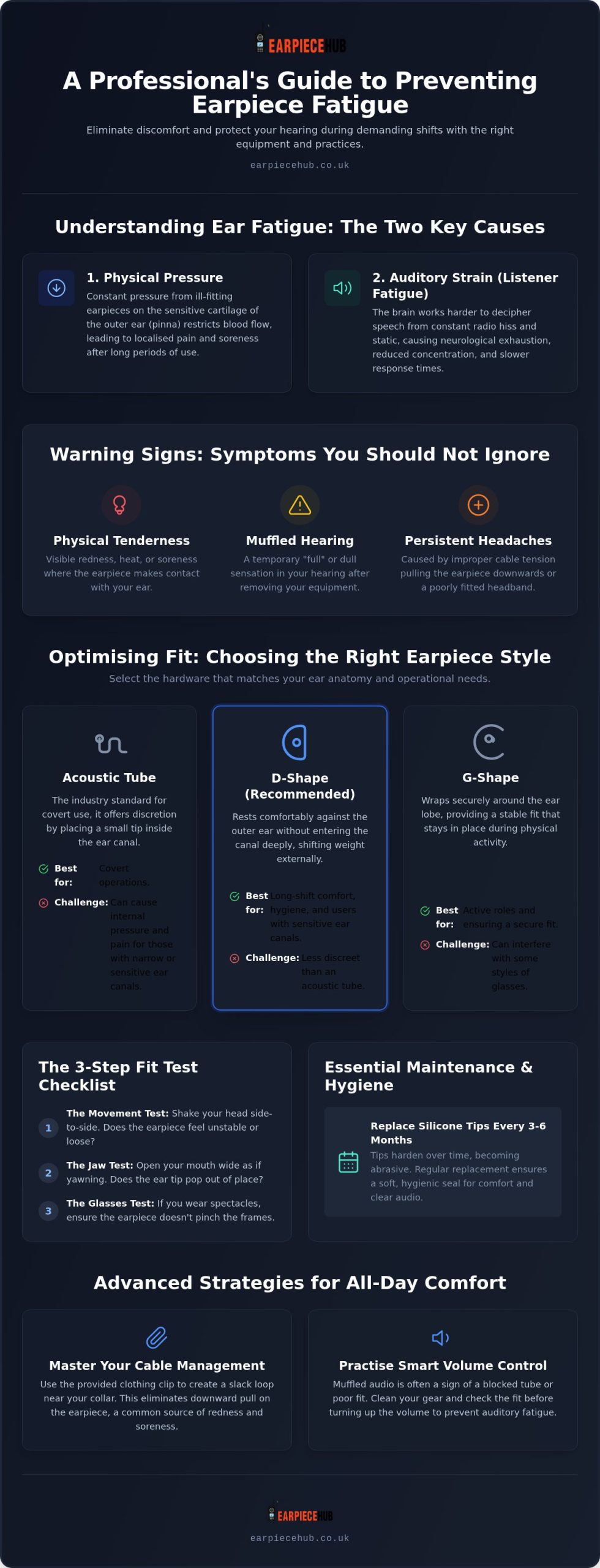
Ear fatigue isn’t just a simple ache; it’s a dual-layered challenge involving physical pressure and neurological strain. On one side, you have the mechanical “clamping” effect where standard-issue plastic earpieces press against the sensitive cartilage of the pinna. This constant compression restricts blood flow and causes localised pain. On the other, your brain struggles with Listener fatigue, a condition caused by prolonged exposure to audio. For radio users, this is often triggered by constant high-frequency “radio hiss” and static, which forces the inner ear and brain to work much harder to distinguish clear speech from background noise.
This combined strain leads to a sharp decline in concentration and response times. If you don’t take steps to prevent ear fatigue from earpieces, your ability to monitor comms accurately will drop as the shift progresses. We define ear fatigue for radio users as the specific point where physical discomfort or muffled audio begins to hinder professional performance and situational awareness. It’s an operational risk, not just a nuisance.
The Symptoms You Should Not Ignore
To effectively prevent ear fatigue from earpieces, you must recognise the warning signs before they become chronic. Ignoring the early signs of fatigue often leads to long-term irritation or even hearing damage. Professionals should watch for these specific indicators:
- Physical tenderness, heat, or visible redness where the earpiece housing or acoustic tube sits against your ear whilst on duty.
- A “muffled” sensation or a temporary threshold shift, where external sounds seem duller immediately after you remove your gear.
- Persistent headaches caused by improper cable tension pulling the ear downwards or poorly fitted headbands that apply uneven pressure.
Optimising Fit: Choosing the Right Earpiece Style for Your Ear Shape
Hardware selection is the most direct way to prevent ear fatigue from earpieces. Every ear has a unique map of nooks and ridges. Acoustic tubes are the industry standard for covert work because they have a small physical footprint. However, they rely on a seal inside the ear canal. For those with narrow canals, this constant pressure is the primary source of pain during a twelve-hour shift.
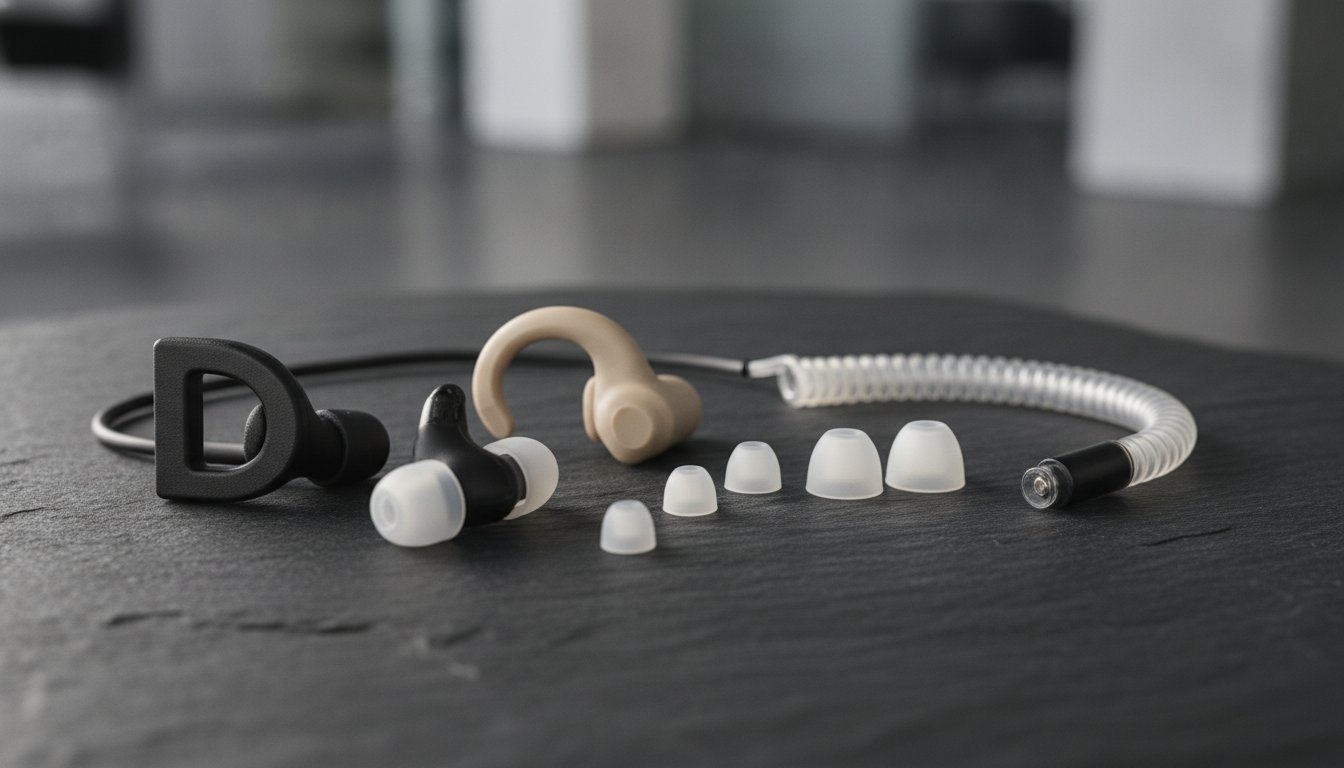
Over-ear styles like the D-shape and G-shape shift the weight to the outer ear. A D-shape earpiece rests against the pinna without entering the canal deeply. This makes it a top choice for hygiene and comfort. G-shape models wrap around the ear lobe, providing a secure fit that doesn’t budge during physical activity or foot patrols.
Cable management is equally vital. If your lead isn’t properly routed, the weight of the radio pulls the earpiece downwards. Always use the clothing clips provided to create a slack loop at the neck. This simple adjustment removes the tension that often causes redness and soreness. Professionals often find that switching to lightweight professional-grade accessories makes an immediate difference to their daily comfort.
Acoustic Tubes vs. Over-Ear Styles
Whilst acoustic tubes reduce the weight on your outer ear, the internal pressure can lead to irritation. Research into daily earpiece and earbud use highlights that constant canal occlusion can lead to moisture build-up and soreness. If you have sensitive ears, a D-shape is likely your best option. Before committing to a style, perform these three tests:
- The Movement Test: Shake your head side-to-side. Does the earpiece feel loose or unstable?
- The Jaw Test: Open your mouth wide as if yawning. Does the ear tip pop out of place?
- The Glasses Test: If you wear spectacles, ensure the earpiece doesn’t pinch the frames against your temple.
Maintenance and Hygiene Habits to Prevent Irritation
Maintaining your equipment is just as critical as the initial fit. Over time, exposure to sweat, skin oils, and earwax causes silicone ear tips to lose their elasticity. As the material hardens, it becomes abrasive against the delicate skin of the ear canal. This degradation is a leading cause of localised soreness and skin irritation. To effectively prevent ear fatigue from earpieces, you must replace your ear tips every three to six months to ensure they remain soft and pliable.
Hygiene also directly impacts audio clarity. A blocked or moisture-filled acoustic tube creates muffled sound, which often forces you to increase the radio volume to compensate. This habit accelerates auditory exhaustion. Following CDC guidelines on hearing protection, maintaining clean and functional equipment is a vital step in preventing long-term damage. Regular replacement of earpiece components is the most cost-effective way to ensure long-term comfort. If your current gear feels stiff, yellowed, or brittle, it’s time to shop for replacement acoustic tubes and ear tips to restore your comfort and audio quality.
The 3-Step Weekly Cleaning Routine
A consistent cleaning schedule prevents the build-up of debris that causes both physical discomfort and audio muffledness. Professional users should follow this simple process at least once a week to prevent ear fatigue from earpieces caused by material degradation:
- Step 1: Carefully detach the ear tip and the clear acoustic tube from the electronic transducer component to avoid water damage to the electronics.
- Step 2: Use warm soapy water or specialised anti-bacterial wipes to remove all oils, wax, and debris from the silicone and plastic parts.
- Step 3: Ensure the tube is completely dry before reattaching. Use a multi-unit air blower or a canister of compressed air to clear any internal moisture that could block sound.
Advanced Strategies: Volume Management and Equipment Upgrades
Managing auditory load is just as important as physical fit. In loud environments like festivals or busy shopping centres, users often fall victim to the “Lombard Effect.” This is the psychological urge to increase your radio volume to compete with ambient noise. Doing so significantly increases the risk of hearing damage and mental exhaustion. To prevent ear fatigue from earpieces, resist the urge to turn the dial up. Instead, consider upgrading to a Noise Cancelling Overhead Headset if you work in consistently high-decibel areas.
Another effective solution involves “open-ear” silicone inserts. Unlike standard tips that plug the canal, these allow ambient sound to pass through naturally. This reduces the “occlusion effect,” that frustrating “plugged” feeling, and keeps you aware of your surroundings whilst maintaining clear radio comms. Earpiece Hub serves as the central resource for these specialist accessories. We provide the specific earpiece adapters and technical equipment required to match your radio model perfectly, ensuring your setup is both functional and comfortable.
Why Audio Quality Matters for Fatigue
Poor audio quality is a hidden cause of mental exhaustion. When audio is distorted or thin, your brain must work harder to “decode” speech. This increased cognitive load leads to faster tiredness and reduced situational awareness. Professional earpieces designed for Motorola or Kenwood radios are engineered to provide clearer mid-tones. This focus on speech frequencies allows you to keep volumes at safer levels without missing critical information during high-stakes operations. Browse our range of professional earpieces to find your perfect fit today.
Secure Your Comfort for Every Shift
Long shifts shouldn’t be defined by the pain in your ears. By understanding the dual nature of fatigue and choosing earpieces that match your specific ear anatomy, you can maintain focus when it matters most. Remember that regular maintenance is non-negotiable; replacing your silicone ear tips every few months is a simple way to prevent ear fatigue from earpieces. Whether you prefer the covert profile of an acoustic tube or the stability of a G-shape design, the right equipment makes a professional difference.
As a UK Specialist Retailer since 2015, Earpiece Hub provides authoritative support for Motorola, Hytera, and Kenwood users. We understand the urgency of frontline work, which is why we offer next day shipping for urgent replacements. Don’t let poor equipment compromise your performance or your health. Upgrade your comfort with our specialist radio earpieces and experience the difference that professional-grade accessories bring to your next shift. You’ve got a job to do, and we’re here to ensure you can do it without distraction.
Frequently Asked Questions
How often should I change my earpiece ear tips?
You should replace your ear tips every three to six months to maintain material softness and hygiene. Over time, exposure to skin oils and sweat causes the silicone to harden and become abrasive. This degradation is a common cause of irritation. Regularly swapping for fresh tips is a simple, cost-effective way to prevent ear fatigue from earpieces and ensure a secure, comfortable seal during long shifts.
Can wearing a radio earpiece cause permanent hearing damage?
Yes, prolonged exposure to high volumes can lead to permanent hearing loss. Most users increase the volume to overcome background noise, which stresses the inner ear and causes neurological strain. To protect your hearing, keep the radio at the lowest level required for clear communication. If you find yourself consistently turning the volume up, consider a noise-cancelling headset or an earpiece with better mid-tone clarity.
Why does my ear itch when I wear my acoustic tube earpiece?
Itching is usually caused by moisture build-up or bacteria trapped inside the ear canal. Because acoustic tubes create a seal, sweat can’t escape, leading to skin irritation and discomfort. It can also happen if the silicone has started to perish and harden over time. To fix this, ensure you clean the tube weekly and replace the ear tip regularly to keep the material pliable and the surface sterile.
Is a D-shape earpiece more comfortable than an acoustic tube?
Comfort is subjective, but many professionals with sensitive ear canals find the D-shape style superior. Unlike acoustic tubes that sit inside the canal, the D-shape rests against the outer ear. This design eliminates internal pressure and improves hygiene. Choosing an over-ear style is a proven strategy to prevent ear fatigue from earpieces if you find traditional inserts too intrusive or painful after several hours on duty.
What is the best way to clean my radio earpiece without damaging it?
The safest method is to detach the acoustic tube and ear tip from the electronic transducer first. Wash these plastic and silicone components in warm, soapy water or use specialist anti-bacterial wipes. Ensure the tube is completely dry inside before reattaching it, as moisture can block sound or damage the electronics. Never submerge the wired parts or the transducer, as this will cause immediate hardware failure.
