





Uncategorized
How to Replace Your Coiled Acoustic Tube: The Professional Maintenance Guide
Jul
You’re mid-shift during a critical operation when the radio transmission suddenly sounds muffled and distant. You can’t afford to miss a single word, yet your gear is failing to deliver clear audio. Often, the culprit isn’t the radio unit itself but a brittle, yellowed, or blocked replacement coiled acoustic tube that has reached the end of its functional life. These components are essential consumables that require regular attention to ensure your signals remain sharp and professional.
Reliability is non-negotiable in professional security and communication sectors. It’s frustrating when high-grade hardware loses its edge because of simple wear or hygiene concerns from shared earpieces. This guide provides the technical steps to restore crystal-clear radio audio by correctly fitting a new tube to your existing kit. We will walk you through the precise replacement process, explain how to prevent moisture blockages, and ensure your communication gear maintains a clean appearance. Follow these specialist maintenance tips to keep your earpiece performing at its peak whilst extending the lifespan of your professional equipment.
Key Takeaways
- Understand how material fatigue in PVC tubing affects audio resonance and when to prioritise hygiene for shared equipment.
- Learn the safe removal and fitting process for a replacement coiled acoustic tube to prevent permanent damage to the transducer housing.
- Identify the difference between radio setting errors and physical blockages caused by moisture build-up within the coil.
- Ensure complete hardware compatibility across major brands like Motorola, Hytera, and Kenwood when sourcing replacement components.
- Discover the specific operational benefits of clear versus black acoustic tubes for different professional surveillance environments.
Why Your Radio Audio Depends on a Clean Coiled Acoustic Tube
The coiled acoustic tube is the final, critical link in your communication chain. It acts as the physical conduit, carrying sound waves from the transducer housing directly to your ear canal. This system relies on the same principles found in historical acoustic tube technology; the integrity of the air column inside the tube determines how clearly you hear your team. If the tube is compromised, even the most expensive Motorola or Kenwood radio will sound like it’s underwater.
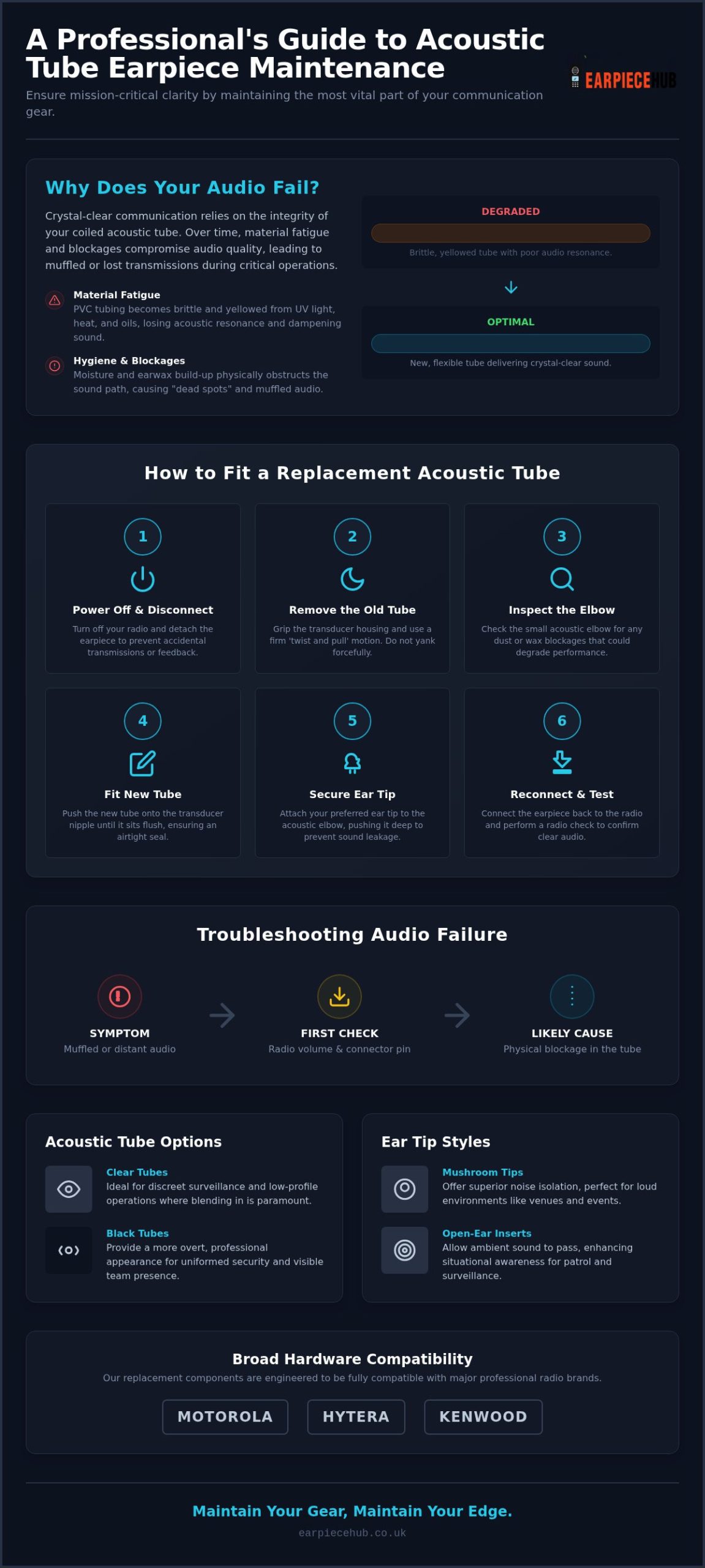
Most professional earpieces use surgical-grade PVC or similar polymers. These materials are chosen for their resonance and flexibility. However, material fatigue is inevitable. Continuous exposure to UV light, body heat, and skin oils causes the plastic to lose its acoustic properties over time. A replacement coiled acoustic tube is often necessary when the material becomes rigid. Brittle tubes don’t just feel uncomfortable; they fail to vibrate correctly, which dampens high-frequency sounds and makes speech harder to decipher.
Professionalism in the security industry is often judged by your gear. A yellowed, discoloured tube suggests neglected maintenance. Beyond aesthetics, the “coil” itself serves a functional purpose. It provides a tension-free buffer that allows for a full range of head movement whilst keeping the ear tip securely seated. Once a tube loses its “spring,” it begins to sag, creating a snag hazard and pulling on the transducer housing. This can lead to permanent damage to your more expensive electronic components.
The Impact of Hygiene on Communication Performance
Hygiene is a primary driver for maintenance amongst UK security firms. Earwax and moisture build-up are physical barriers that block sound waves. For door supervisors and close protection officers working long shifts, moisture build-up inside the coil can create “dead spots” in the audio. Regularly swapping in a replacement coiled acoustic tube ensures that your earpiece remains sanitary and your audio remains unobstructed. Many professional teams now treat these tubes as monthly consumables to meet health and safety standards and ensure mission-critical clarity.
Step-by-Step Guide to Fitting a Replacement Coiled Acoustic Tube
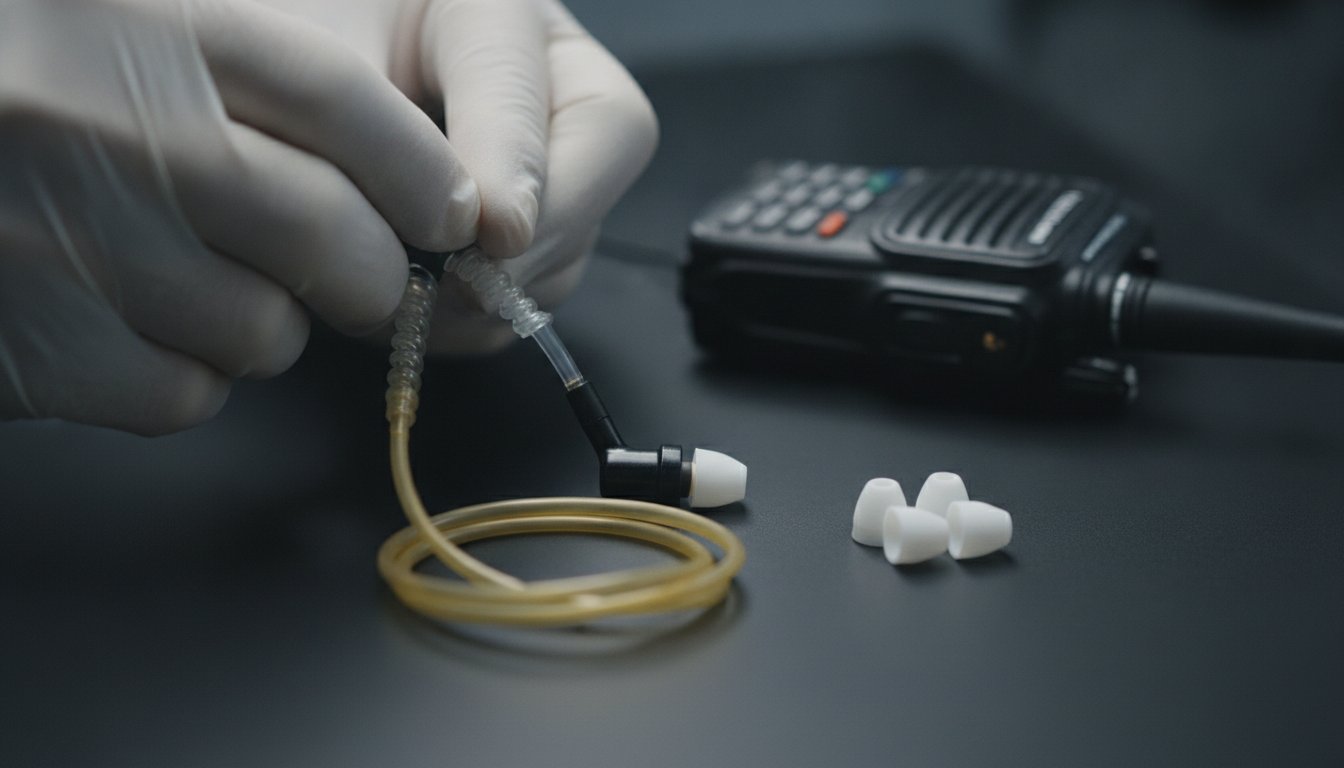
Efficiency in the field begins with proper preparation. Before starting any maintenance, ensure your radio is switched off and the earpiece is completely disconnected from the handset. This simple step prevents accidental high-decibel feedback or transmissions whilst you handle the components. To remove the existing tube, hold the transducer housing firmly between your thumb and forefinger. Use a controlled “twist and pull” motion to slide the tube off the plastic nipple. Never yank the tube with force; the housing is a precision electronic component, and the connector nipple can snap under lateral pressure.
Once the old part is removed, take a moment to inspect the acoustic elbow. If you aren’t using a fresh set, check the internal channel of the elbow for earwax or dust. These small blockages significantly degrade audio performance. Fitting your new replacement coiled acoustic tube is a matter of reversing the removal process. Push the open end of the tube onto the transducer nipple until it sits flush against the housing. For models featuring a “quick disconnect” bayonet fitting, ensure you hear or feel a positive click to confirm the seal is airtight.
Securing the Ear Tip and Acoustic Elbow
The final stage of the assembly involves the ear tip. Your choice here depends on your operational environment. Standard mushroom-style tips offer superior noise isolation for loud venues. In contrast, open-ear inserts or “ghost” moulds allow for better situational awareness by letting ambient sound pass into the ear canal. Ensure the acoustic elbow is pushed deep into the replacement coiled acoustic tube to prevent sound leakage. A loose connection here often results in “thin” or “tinny” audio. After assembly, reconnect your gear and perform a short radio check to calibrate your volume levels. If you are managing a large team, stocking up on replacement acoustic tubes and ear tips ensures you can resolve equipment failure instantly without withdrawing staff from their posts.
Troubleshooting Audio Failure and Blockages
Distinguishing between a radio fault and an earpiece failure is the first step in effective troubleshooting. If your audio sounds muffled or distant, start by checking your handset volume and ensuring the connector pin is fully seated. If the settings are correct, the problem is almost certainly a physical blockage within the air column. A replacement coiled acoustic tube is often the most cost-effective solution when basic diagnostics fail to restore clarity.
Material fatigue often manifests as microscopic cracks in the PVC. These tiny fractures allow sound pressure to escape before it reaches your ear, resulting in a significant loss of volume. Whilst antibacterial wipes are excellent for surface sanitisation, they cannot repair structural damage or reach deep-seated blockages. If you notice the tubing has become stiff or has lost its transparent colour, it is time to stop cleaning and start replacing. Professional standards amongst security teams dictate that tubes should be swapped at the first sign of material degradation to avoid communication breakdown during high-stakes incidents.
Condensation vs. Wax: Solving Common Issues
Moisture is the most frequent cause of audio “dead spots”. Body heat trapped within the coil often condenses into small water droplets, which act as physical barriers to sound waves. Using a clear replacement coiled acoustic tube allows for immediate visual inspection of these blockages. You can often clear minor moisture using air blowers or “puffer” tools, which force dry air through the coil without introducing further contaminants. To prevent future issues, follow these preventative steps:
- Store earpieces in a dry, room-temperature environment between shifts.
- Avoid leaving gear in cold vehicles where temperature fluctuations encourage condensation.
- Regularly disconnect the tube to allow the transducer nipple to air out.
If your audio remains distorted after clearing moisture, the internal acoustic elbow may be blocked with earwax. For guaranteed performance and hygiene, browse our range of replacement coiled acoustic tubes to restore your equipment to factory standards.
Sourcing Quality Replacement Acoustic Tubes and Ear Tips
Selecting the right replacement coiled acoustic tube involves more than just finding a part that fits. Professionals must choose between clear and black tubing based on their specific operational environment. Clear tubes remain the industry standard for covert surveillance due to their discreet profile. However, black tubes are often preferred for night operations or when integrated with dark tactical uniforms to minimise visibility. High-quality replacements use surgical-grade PVC, which remains supple and hypoallergenic during extended shifts. This material choice prevents the premature brittleness discussed earlier and ensures the tube does not become a source of skin irritation.
While surgical-grade PVC is standard for earpieces, other high-performance polymers are essential in broader industrial applications. For those interested in the technical properties of specialist extrusions, you can explore Nylon 11 & 12 Flexible Tubing to learn about materials engineered for superior durability and chemical resistance.
Compatibility is the next technical priority. Specialist retailers ensure that tubes feature universal bayonet or nipple connectors designed to work seamlessly with major brands like Motorola, Hytera, and Kenwood. For fleet managers and event organisers, sourcing these components in bulk is a strategic necessity. Maintaining a ready supply of replacement acoustic tubes and ear tips allows for the immediate resolution of hygiene concerns or hardware failure across large teams. This proactive approach ensures that no member of staff is ever deployed with compromised communication gear.
Why Professionals Choose Earpiece Hub
Earpiece Hub has operated as a specialist in professional radio peripherals since 2015. We understand that in the security and communication sectors, equipment downtime is a risk you cannot afford. Our status as a central “Hub” means we provide more than just a retail service; we offer technical expertise and specialist support for complex fleet requirements. With next-day shipping available for urgent replacements across the UK, we ensure your team remains connected and professional. Whether you are managing a small close protection unit or organising a large-scale event, our focus on high-grade, functional hardware makes us the dependable partner for your mission-critical equipment.
Maintain Peak Communication Performance
Reliable radio communication is the backbone of any professional security operation. By following these maintenance protocols, you ensure every transmission is heard with absolute clarity. Swapping your replacement coiled acoustic tube is more than a simple repair; it is a vital hygiene standard that protects your health and your equipment’s longevity. Whether you are clearing moisture from the coil or upgrading to surgical-grade PVC for better comfort, these small adjustments provide a massive tactical advantage in the field.
As a dedicated UK Specialist in Radio Accessories, Earpiece Hub provides the high-grade components trusted by UK security professionals. Don’t let degraded audio or brittle tubing compromise your team’s safety. Our fast national shipping means you’ll never be without essential spares during critical shifts. Shop our range of Replacement Acoustic Tubes and Ear Tips now to restore your gear to professional standards. Keep your communications sharp, your appearance professional, and your team secure.
Frequently Asked Questions
How often should I replace my coiled acoustic tube?
You should aim to replace the tube every three to six months under normal operating conditions. Professionals working high-intensity shifts, such as door supervisors or close protection officers, often swap theirs monthly to maintain strict hygiene standards. If you notice any stiffness in the plastic or a drop in audio volume, fit a replacement coiled acoustic tube immediately to ensure your communications remain reliable.
Will these replacement tubes fit any radio earpiece?
Most professional earpieces use a universal bayonet or nipple connector designed to be compatible with major brands like Motorola, Kenwood, and Hytera. Whilst the fitting is often standardised, you should always check that your transducer housing features the correct plastic nipple for the tube to slide onto. Ensuring a tight, airtight fit is essential for maintaining the sound pressure required for clear resonance.
Can I clean my acoustic tube instead of replacing it?
Surface cleaning with antibacterial wipes is useful for daily maintenance, but it cannot fix internal blockages or material fatigue. Earwax and moisture often migrate deep into the coil where they are impossible to reach. Once the PVC material begins to harden or discolour, it loses its ability to vibrate correctly. In these cases, a replacement coiled acoustic tube is the only way to restore factory-standard audio clarity.
Why has my clear acoustic tube turned yellow?
Yellowing is a natural result of the PVC reacting to UV light, body heat, and skin oils over extended periods. This discolouration is a clear signal that the polymers in the tubing are breaking down, which eventually leads to brittleness and cracking. Beyond the unprofessional appearance, a yellowed tube indicates that the material is nearing the end of its functional life and is likely to fail during a shift.
What is the difference between a clear and a black acoustic tube?
The difference is entirely operational rather than technical. Clear tubes are the standard choice for covert surveillance as they are less visible against the skin. Black tubes are frequently utilised by tactical units or night-shift security teams to match dark uniforms and minimise gear visibility in low-light environments. Both types offer identical audio performance, so your selection should be based on your specific uniform policy and tactical needs.
