





Uncategorized
Professional Waterproof Speaker Microphones: The Ultimate Buying Guide for 2026
Jul
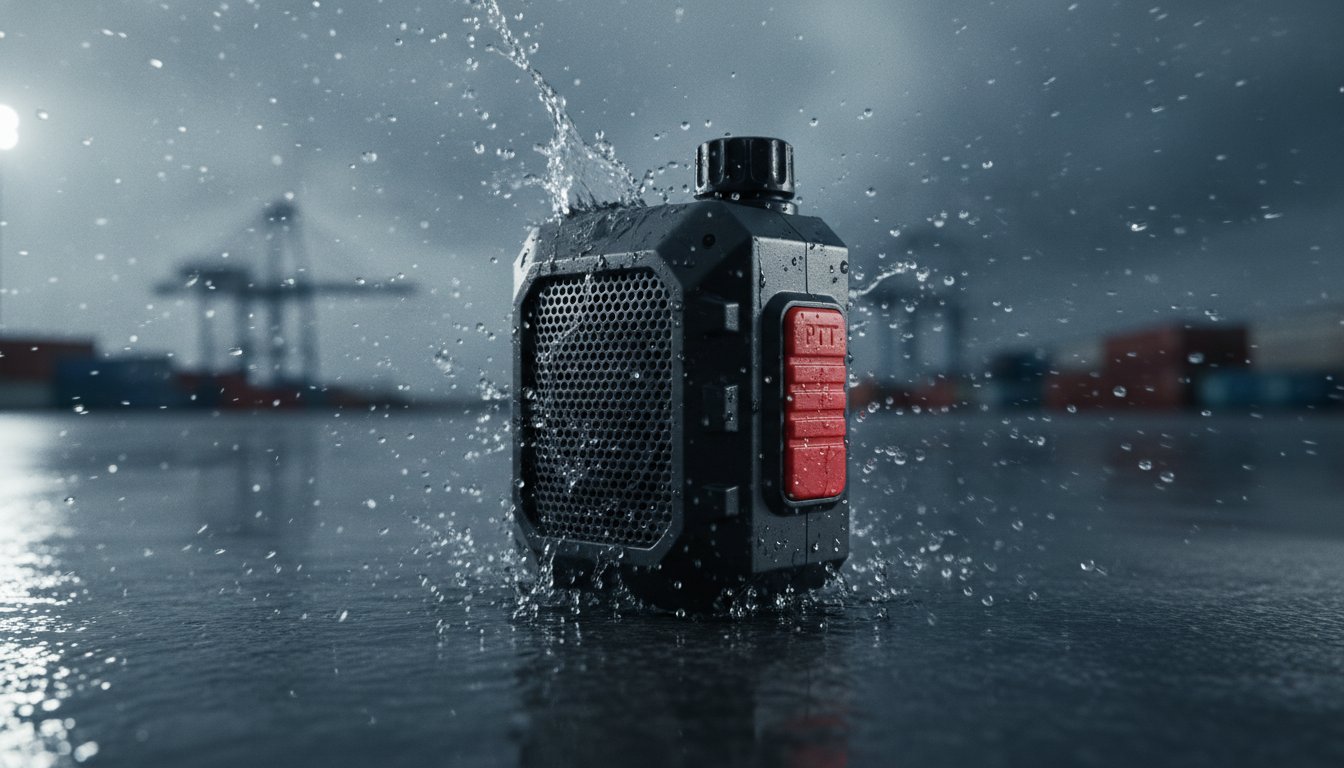
Imagine standing in the middle of a torrential downpour during a critical security operation, only for your communication to fail because a single drop of moisture reached the internal circuitry. For professionals in the field, a standard radio accessory simply isn’t enough; you need a high-performance waterproof speaker microphone that can withstand the harshest British weather whilst delivering absolute clarity. We know that there is nothing more frustrating than a jammed PTT button or the sudden silence of a dead unit when you are trying to coordinate a team in a high-stakes environment.
You shouldn’t have to guess whether your gear will survive a heavy knock or a winter storm. This guide will show you exactly how to choose professional-grade equipment that survives extreme environments and maintains 100% compatibility with your existing Motorola or Kenwood radio fleet. We will break down the crucial differences between IP67 and IP68 ratings, explain why the latest MIL-STD-810H durability standards are essential for 2026, and help you identify the ruggedised hardware required for true industrial-strength resilience.
Key Takeaways
- Understand the technical differences between IP67 and IP68 ratings to ensure your equipment survives total submersion and heavy British downpours.
- Learn why ergonomic PTT buttons and high-decibel audio output are critical for maintaining clear communication whilst wearing gloves in noisy environments.
- Discover how military-grade testing protects your gear from high-impact drops onto concrete, moving beyond basic moisture resistance.
- Identify the correct connector types to guarantee a 100% compatible waterproof speaker microphone for your specific Motorola or Kenwood radio fleet.
- Gain specialist insights into matching microphone sensitivity with transceiver settings to eliminate audio distortion during critical operations.
The Science of Ingress Protection (IP) Ratings for Microphones
Professional communication gear isn’t just about volume; it’s about survival. When we specify a waterproof speaker microphone, we aren’t referring to consumer gadgets that survive a light splash. We mean industrial-grade hardware defined by Ingress Protection (IP) ratings. These international standards measure how effectively an enclosure blocks out solid particles and moisture. Whilst “water-resistant” devices might survive a quick drizzle, true professional “waterproof” hardware is designed to remain operational after significant exposure or even total submersion.
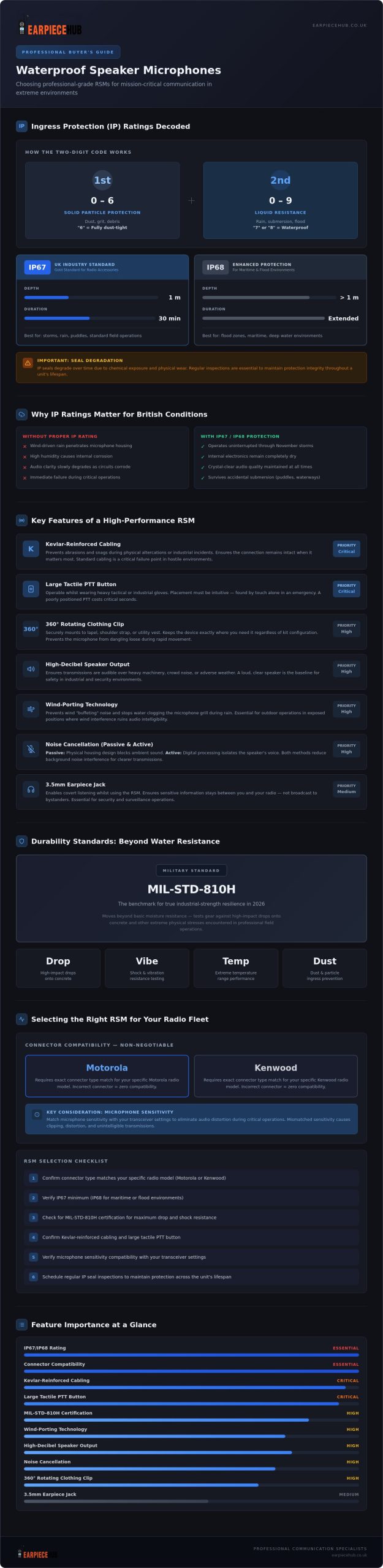
In the UK, IP67 is widely considered the industry gold standard for radio accessories. Specifically, IP67 provides total protection against dust ingress and allows for immersion in up to 1 metre of water for up to 30 minutes. This level of protection ensures that your Remote Speaker Microphone (RSM) continues to function even if you’re caught in a storm or accidentally drop your radio into a puddle during a shift.
Decoding IP67 vs IP68 for Professional Use
The rating consists of two digits. The first digit, ranging from 0 to 6, measures resistance to solids like dust or grit. A “6” means the unit is completely dust-tight. The second digit, ranging from 0 to 9, measures liquid resistance. While IP67 handles temporary immersion, IP68 is required for teams operating in flood zones or maritime environments where equipment might be submerged deeper or for longer periods. It’s vital to remember that these seals can degrade over time due to chemical exposure or physical wear. Regular inspections are essential for maintaining the unit’s integrity across its lifespan.
Why IP Ratings Matter for UK Weather Conditions
British weather presents unique challenges for communication hardware. High humidity and horizontal, wind-driven rain can easily penetrate poorly sealed microphones. Moisture ingress doesn’t just cause immediate failure; it leads to internal corrosion that slowly destroys circuit health and muffles audio clarity. Investing in a high-quality waterproof speaker microphone ensures that even in the middle of a November storm, your voice remains clear and your internal electronics stay bone dry. This level of resilience is what separates mission-critical gear from disposable accessories.
For organisations managing critical water infrastructure, where communication accountability is just as vital as equipment resilience, MicDots® Global provides specialised messaging solutions; to find out more, visit their website.
Key Features of a High-Performance Remote Speaker Microphone (RSM)
A professional waterproof speaker microphone is more than just a loud radio accessory. It’s a precision-engineered tool built for high-stakes environments where failure isn’t an option. High-performance units feature Kevlar-reinforced cabling to prevent abrasions and snags, ensuring the connection remains intact during physical altercations or industrial accidents. When Selecting the Right RSM, you must prioritise hardware that balances ruggedness with operational efficiency.
Ergonomics and User Interface in the Field
Security and emergency teams often work in cold or hazardous conditions. Large, tactile PTT buttons are essential because they allow for immediate communication even whilst wearing heavy tactical or industrial gloves. The placement must be intuitive, allowing you to find the button by touch alone during an emergency. Versatility is equally important; 360-degree rotating clothing clips allow you to mount the microphone securely on a lapel, shoulder strap, or utility vest, keeping the device exactly where you need it.
Advanced Audio Features: Wind-Porting and Noise Cancellation
Clear audio is the baseline for safety. High-decibel speakers ensure you can hear transmissions over the roar of heavy machinery or crowd noise. Wind-porting technology is a critical feature for outdoor use; it prevents wind from creating “buffeting” noise and stops water from clogging the microphone grill during rain. Passive noise cancellation uses physical housing design to block ambient sound, whereas active systems use digital processing to isolate your voice. Integrating a 3.5mm earpiece jack into the unit allows for covert listening whilst using an RSM, ensuring sensitive information stays between you and your radio. If you need to upgrade your current setup, you can view our range of professional Remote Speaker Microphones designed for maximum durability.
Durability Standards: Beyond Basic Water Resistance
A truly professional waterproof speaker microphone must survive more than just a puddle. Whilst IP ratings focus on ingress, military-grade testing like MIL-STD-810G ensures the unit survives physical trauma. This standard involves rigorous laboratory tests for shock, vibration, and temperature shock. For a security professional, this means the device won’t shatter when dropped onto concrete or fail when transitioned from a heated vehicle to a sub-zero outdoor patrol. High-quality units are tested to maintain full functionality across extreme temperature ranges, typically from -20°C to +60°C.
Industrial environments demand even higher resilience. Professional microphones are often engineered to resist oils and chemicals, preventing the housing from degrading in petrochemical or manufacturing sites. This chemical resistance is vital for maintaining the structural integrity of the device over years of heavy use in harsh conditions.
Housing Materials: Polycarbonate vs. ABS Plastic
Construction quality starts with the casing. Polycarbonate is the preferred material for high-impact environments due to its superior strength and heat resistance compared to standard ABS plastic. Manufacturers use UV-stabilised plastics to ensure the housing doesn’t become brittle or discoloured after prolonged exposure to the sun. This choice of material directly impacts the long-term reliability of your radio accessories, especially in outdoor roles.
Maintenance and Longevity of Waterproof Hardware
Even the most rugged gear requires care to maintain its International Electrotechnical Commission (IEC) standard for IP ratings. Salt water and mud can eventually perish rubber gaskets if left uncleaned. Follow this simple maintenance routine to extend the life of your gear:
- Inspect the primary seal and PTT gasket for cracks or debris weekly.
- Rinse the unit with fresh, lukewarm water after exposure to salt or chemicals.
- Avoid using compressed air or harsh detergents, as these can rupture the waterproof membrane.
- Ensure the accessory connector is dry before reconnecting it to the radio.
Investing in durable hardware reduces your long-term replacement costs and ensures mission-critical reliability. Shop our selection of MIL-STD rated microphones to ensure your team stays connected in any environment.
Selecting the Right RSM for Your Radio Fleet
Choosing a waterproof speaker microphone requires more than just checking an IP rating. The final hurdle is ensuring absolute hardware compatibility across your entire fleet. A mismatch in connector types doesn’t just delay operations; it can physically damage the radio’s accessory port. Fleet managers must account for the specific electrical requirements of their transceivers, as microphone sensitivity needs to align with the radio’s gain settings to prevent audio clipping or faint transmissions during high-stakes communication.
Assessing the total cost of ownership is vital for long-term budgeting. Whilst cheap, unbranded alternatives might seem cost-effective initially, they often fail the “professional test” within weeks. Common failure points include weakened PTT springs and cable fatigue at the strain relief point. Standardising on high-quality peripherals ensures that every team member has reliable gear that functions identically, reducing training time and maintenance overheads.
Brand-Specific Considerations: Motorola, Kenwood, and Hytera
Connector styles vary significantly between manufacturers. For example, the Motorola DP1400 uses a specific multi-pin side connector that requires a secure screw-in fit to maintain its waterproof seal. In contrast, many Kenwood models utilise a traditional 2-pin configuration. Hytera units often feature their own proprietary locking mechanisms. We recommend verifying the exact model number of your radio before purchasing to ensure the connector housing matches the radio’s ingress protection requirements.
Why Source from Earpiece Hub?
We position ourselves as a central resource for the UK radio community, providing deep industry knowledge that goes beyond simple retail. As a specialist “Hub,” we understand the urgency of security and industrial operations. We offer expert support to help you navigate connector nuances and provide national next-day shipping to get your team back online immediately. Our gear is tested for professional resilience, ensuring you receive hardware that survives the rigours of the field. View our full range of waterproof Remote Speaker Microphones today and secure your team’s communication link.
Future-Proof Your Team Communications
Selecting the right equipment is a strategic investment in your team’s safety and operational success. You now understand that a professional waterproof speaker microphone must balance rigorous IP67 or IP68 ingress protection with the physical resilience of military-grade standards. Prioritising ergonomic PTT buttons and Kevlar-reinforced cabling ensures your hardware survives the daily grind of security and industrial work whilst maintaining crystal-clear audio in every transmission.
Compatibility remains the final piece of the puzzle. Whether you are standardising a fleet of Motorola DP1400 units or managing a mix of Kenwood and Hytera radios, matching the correct connector is essential to prevent operational downtime. As a specialist UK radio accessory retailer, we provide the expert technical support you need to make the right choice for all major brands. Don’t let moisture or impact compromise your mission when you can rely on gear built for the field.
Get the professional hardware your team deserves with the speed of next-day UK shipping. Shop Professional Waterproof Speaker Microphones at Earpiece Hub today. Stay connected and stay protected in any environment.
Frequently Asked Questions
What is the difference between an IP67 and IP68 waterproof speaker microphone?
An IP67 rating guarantees protection against immersion in water up to 1 metre deep for 30 minutes. This is the industry standard for most UK security and industrial roles. IP68 provides a higher level of protection, typically allowing for continuous submersion at greater depths as specified by the manufacturer. Choose IP68 if your team operates in flood zones or maritime environments where prolonged water exposure is guaranteed.
Can I use a waterproof RSM with any two-way radio brand?
No, you cannot swap microphones between different brands without a specific adapter. Each manufacturer, such as Motorola, Kenwood, or Hytera, uses proprietary connector pins and housing shapes. For example, a waterproof speaker microphone designed for a Motorola DP1400 won’t fit a Kenwood 2-pin radio. Always verify the connector compatibility to ensure the waterproof seal remains intact and the audio signals match your radio’s settings.
How do I know if my microphone is truly waterproof or just water-resistant?
Check the technical specifications for a formal Ingress Protection (IP) rating. If the device is marketed as “water-resistant” without an IP67 or IP68 certification, it’s likely only designed to survive light drizzle or sweat. Professional-grade hardware undergoes standardised laboratory testing to prove it can survive total submersion. Genuine waterproof gear will always list its specific IP rating and often its MIL-STD-810 durability credentials to reassure professional users.
Does using a waterproof speaker microphone affect the audio quality?
Professional waterproof microphones use acoustically transparent membranes that protect the internal electronics without distorting the sound. High-end models often feature wind-porting technology, which prevents wind noise from buffeting the microphone during outdoor operations. This means a professional unit often delivers better clarity than a standard non-waterproof accessory. Cheap, unbranded gear may sound muffled because the seals aren’t engineered for high-fidelity audio transmission.
What should I do if my waterproof microphone is submerged in salt water?
Rinse the entire unit with fresh, lukewarm water immediately after exposure. Salt is highly corrosive and can cause rubber gaskets to perish or connector pins to oxidise if left to dry. After rinsing, pat the casing dry with a soft cloth and leave it to air dry completely. Don’t use compressed air or hairdryers on the microphone grill, as the pressure or heat can rupture the internal waterproof membrane.
