





Uncategorized
The Ultimate Guide to D-Shape Earpieces for Over-Ear Comfort

Jun
Why should your shift end with aching ear canals just because you need to stay connected? Many security and hospitality professionals find that standard in-ear tips cause constant irritation or simply fall out during physical activity. Investing in a D-shape earpiece for over ear comfort is the most effective way to eliminate these daily frustrations, especially if you wear glasses and find that traditional headsets pinch or slip.
We agree that “ear fatigue” is a genuine distraction when you’re managing a busy site or a high-stakes event. It’s vital to have equipment that stays secure without compromising on hygiene. This guide will show you why the D-shape earpiece is the preferred choice for professional comfort and how to choose the perfect model for your radio system. You’ll learn about the benefits of a non-invasive design that doesn’t enter the ear canal. We also provide the technical details needed to ensure perfect compatibility with your existing Motorola or Hytera radios, so you can shop with total confidence.
Key Takeaways
- Learn how the external loop design of a D-shape earpiece for over ear comfort redistributes pressure to prevent the soreness caused by standard in-ear tips.
- Compare the unique advantages of D-shape, G-shape, and acoustic tube models to select the best peripheral for your specific work environment.
- Identify the correct connector types for your radio fleet, covering everything from 2.5mm jacks to multi-pin Motorola and Hytera fittings.
- Discover the professional way to fit your earpiece and manage lead tension to ensure stability during high-activity shifts.
- Find out why partnering with a UK specialist ensures your team has access to reliable, high-performance communication equipment with expert support.
Why D-Shape Earpieces Are the Professional Standard for Over-Ear Comfort
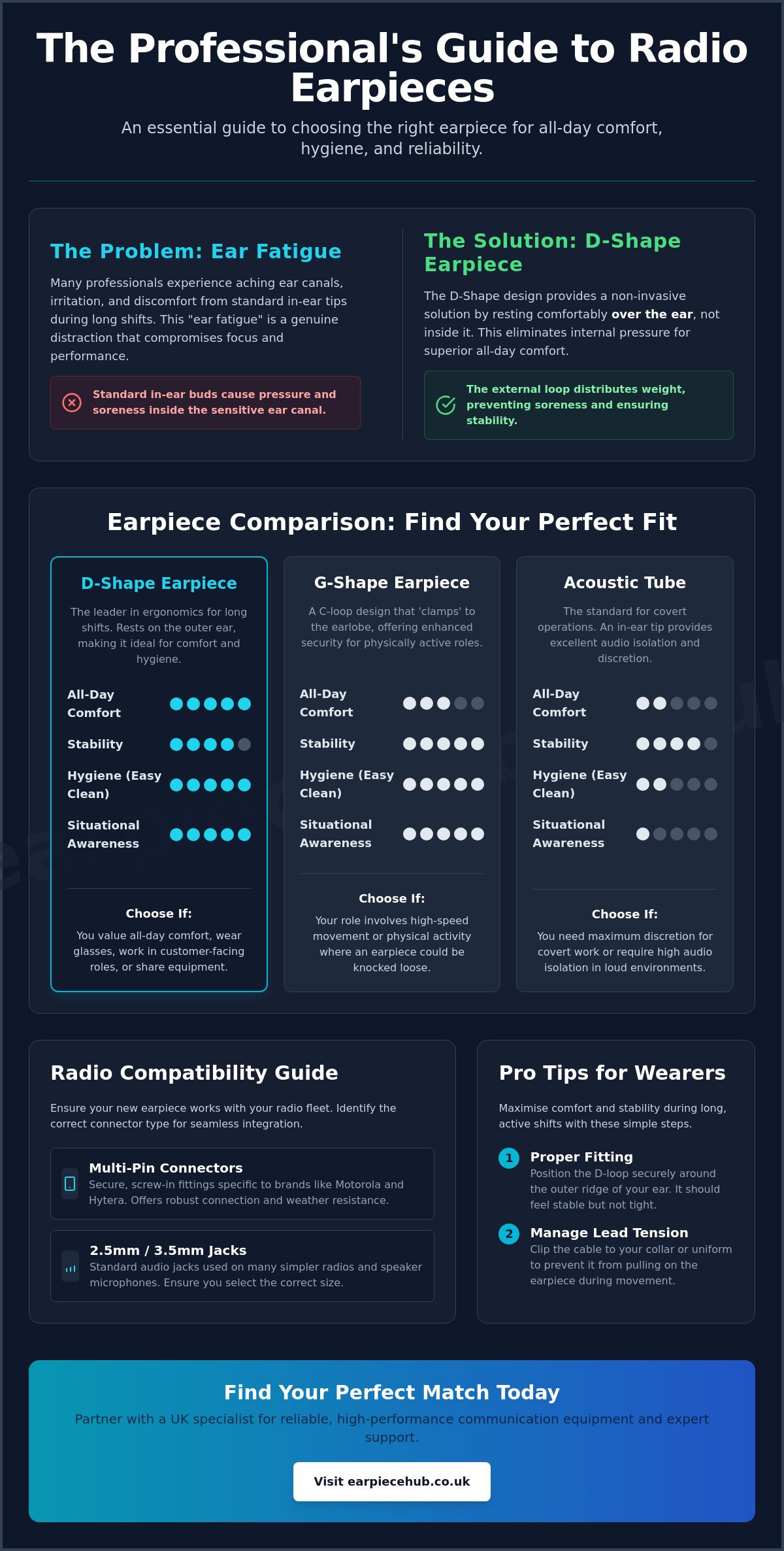
Professional radio users often struggle with the physical limitations of standard equipment. A D-shape earpiece for over ear comfort provides a technical solution by shifting the point of contact from the sensitive ear canal to the outer ear. This design features an external loop made of flexible rubber that encircles the pinna, holding a high-quality speaker just outside the ear opening. Unlike in-ear buds that rely on friction and pressure within the canal, the D-shape distributes its weight across a much larger surface area. This mechanical advantage makes it the preferred choice for personnel who must remain alert and connected for long shifts without distraction.
The Ergonomics of the D-Ring Design
The primary benefit of the D-ring lies in its structural balance. The soft rubber loop acts as a counterweight to the speaker component, ensuring the device remains stable even during sudden movement. Professionals in active roles, such as security or event management, often find that heavy leads can create a pulling sensation on standard earpieces. The D-shape loop anchors the device securely, neutralising this tension. Ear fatigue is the physical discomfort or dull ache caused by prolonged pressure on the ear canal or cartilage; external loops mitigate this by removing internal pressure entirely. Because the material is pliable, it accommodates various ear shapes and sizes, offering a one-size-fits-most solution that reduces the need for custom-fitted tips.
Hygiene and Shared Equipment
Hygiene is a critical factor in busy environments where equipment is often shared amongst team members. Acoustic tubes are notorious for collecting earwax and moisture within the plastic piping, which can lead to blockages and potential ear infections if not meticulously maintained. In contrast, D-shape earpieces are non-invasive. They feature a flat, smooth speaker surface that never enters the ear canal, making them significantly easier to clean between shifts. A simple wipe with an alcohol-free sanitiser is usually sufficient to maintain a sterile surface. For teams using shared radio pools, choosing a D-shape earpiece for over ear comfort is the most practical way to maintain high standards of cleanliness. It’s a favourite choice for retail and hospitality staff who value a clean, low-maintenance audio solution that can be passed between colleagues without health concerns.
This emphasis on cleanliness is a priority in any professional setting, much like the clinical standards maintained by Hour Dental to ensure the well-being of their patients through expert care and hygiene.
Comparing D-Shape, G-Shape, and Acoustic Tube Earpieces
Choosing the right radio accessory depends on your specific work environment and the level of physical activity involved in your role. Whilst the D-shape earpiece for over ear comfort is a leader in ergonomics, understanding how it stacks up against G-shape and acoustic tube models is essential for making an informed purchase. Each style serves a distinct purpose, balancing the trade-offs between stability, audio isolation, and discretion.
D-Shape vs G-Shape: The Stability Debate
The G-shape, often referred to as a “C-loop,” is a common alternative to the D-ring. It features a tighter, spring-loaded design that wraps closely around the earlobe. This creates a “clamped” sensation that some users find more secure during high-intensity movement, such as running or physical interventions. However, for those with smaller ears, the G-shape can sometimes feel oversized or slip. In contrast, the D-shape earpiece for over ear comfort offers a more “open” and relaxed fit. It sits around the outer ear without the aggressive grip of the G-style, making it the superior choice for long, eight-hour shifts in retail or hospitality where constant pressure becomes painful. Use this checklist to decide:
- Choose D-Shape if: You value all-day comfort, wear glasses, or work in customer-facing roles.
- Choose G-Shape if: Your role involves high-speed movement or physical activity where the earpiece might be knocked loose.
Acoustic Tubes vs Over-Ear Loops
Acoustic tubes are the industry standard for covert operations. The transparent tube is nearly invisible from a distance, making it ideal for high-end security. However, these earpieces require a silicone tip to be inserted directly into the ear canal. This creates a “blocked ear” feeling that can be disorienting. Whilst the acoustic tube provides excellent audio isolation in loud environments, it significantly reduces your situational awareness. D-shape loops allow you to hear ambient sounds and radio transmissions simultaneously. This is a vital safety feature for staff who must remain aware of their surroundings whilst monitoring communications. If you are prioritising a balance of awareness and reliability, you can explore our range of D-shape earpieces to find a professional solution for your team.
Maintenance requirements also differ greatly between these styles. Acoustic tubes are prone to moisture buildup and earwax blockages, often requiring regular replacement of the tube and tips. D-shape earpieces are almost maintenance-free. Because the speaker sits outside the ear, there is no risk of wax entering the components. This makes the D-shape a far more cost-effective and hygienic solution for teams operating with shared radio pools or those working in humid conditions.
Choosing the Right Connection: Jack Sizes and Radio Compatibility
Even the highest quality D-shape earpiece for over ear comfort is ineffective if the connector doesn’t match your handset. Technical compatibility is the first hurdle when upgrading your fleet’s peripherals. Standard 2.5mm and 3.5mm jacks are common for listen-only accessories, but professional systems often require proprietary multi-pin connectors. For instance, the Motorola DP1400 uses a specific two-pin configuration, whilst Hytera models frequently utilise a unique multi-pin interface that ensures a secure, weatherproof seal. Before purchasing, check the side panel of your radio. If you see two holes of different diameters, you likely need a standard two-pin lead. If you see a series of gold contact points, a multi-pin connector is required.
Understanding the difference between listen-only and PTT-integrated wiring is equally vital. Listen-only earpieces are designed to plug into a Remote Speaker Microphone (RSM) already attached to your radio. They don’t have their own microphone. PTT-integrated models, however, feature a dedicated Push-To-Talk button and microphone built into the lead. This allows for full two-way communication without touching the radio itself, which is essential for maintaining a professional presence in customer-facing roles.
1-Wire vs 2-Wire Systems
Wiring configurations are typically categorised as 1-wire or 2-wire systems. A 1-wire system features a single lead that runs from the radio to a combined PTT and microphone unit, with a shorter lead then continuing to the earpiece. This setup is tidy and simple, making it the favourite choice for retail staff and warehouse operatives. A 2-wire system splits the leads at the radio jack. One wire goes to the earpiece, whilst the other leads to a separate PTT and microphone. This allows door supervisors and security personnel to run the PTT lead down a sleeve, enabling discreet communication by speaking into their cuff. This separation provides greater flexibility for covert use and high-stakes environments.
Universal Adapters and Cross-Brand Use
If your team operates a mixed fleet of radios, you don’t necessarily need different earpieces for every brand. An earpiece adapter for any radios can bridge the gap between different connector types, allowing a Motorola-style earpiece to work with a Kenwood or Hytera handset. Whilst this provides excellent fleet flexibility, be cautious of low-quality alternatives. Poorly manufactured adapters often result in significant audio quality loss or intermittent signals. At Earpiece Hub, we ensure connector durability by sourcing adapters with reinforced strain relief and gold-plated contacts. This specialist approach prevents the common issue of wires fraying at the connection point, ensuring your communication remains crystal clear during every shift.
Maximising Comfort During Long Shifts: Practical Tips for Wearers
Selecting the right hardware is only half the battle. To truly benefit from a D-shape earpiece for over ear comfort, you must understand how to fit and maintain the device correctly. Start by positioning the speaker housing directly over your ear opening. Gently slide the rubber D-ring around the back of the ear until it sits flush against the skin. A common mistake amongst new users is over-tightening the clothing clip. If the clip is too high or the lead is too taut, it creates a constant downward pull that leads to soreness. Always leave a small amount of “slack” in the cable to allow for full head rotation without tugging on the ear loop.
Lead routing is equally critical for long-term comfort and safety. We recommend running the cable underneath your shirt or through the epaulettes of a uniform to prevent snagging on door handles or equipment. Professional-grade leads often feature Kevlar reinforcement within the wiring. This material is not only incredibly durable but also helps the cable remain flexible. Cheaper plastic leads can become stiff and “memory-set” in awkward positions, whereas Kevlar-reinforced cables drape naturally, reducing the physical presence of the wire against your body.
D-Shape Earpieces and Glasses
Staff who wear spectacles often find in-ear models or heavy over-ear headsets nearly impossible to use without pain. When using a D-shape earpiece for over ear comfort with glasses, always fit the earpiece loop first. Once the loop is secure, slide your spectacle arms over the top of the rubber ring. This technique prevents the glasses from pinning the earpiece against the sensitive bone behind the ear. Look for D-shapes made from soft-touch rubber, as these provide a cushioned layer between your head and the spectacle arms. If your role requires safety goggles, ensure the earpiece lead is routed towards the back of the neck to avoid tangling with the goggle straps.
Cable Management for Active Roles
If your shift involves constant movement, coiled “curly” leads are the superior choice. These cables expand and contract as you bend or reach, preventing the earpiece from being yanked out of position. Use a clothing clip on your collar or shoulder to anchor the lead; this transfers the weight of the cable to your clothing rather than your ear. Lead length should be appropriate for your height; a lead that is too short will restrict movement, whilst one that is too long becomes a snagging hazard. Most specialist leads are designed to accommodate a wide range of heights, ensuring a comfortable fit for every member of the team. Ready to upgrade your team’s gear? Shop our professional earpiece collection for durable, high-performance solutions.
Finding Your Perfect Match at Earpiece Hub
Earpiece Hub serves as the central resource for UK professionals requiring reliable communication gear. As a specialist retailer, we prioritise technical excellence and functional design in every product we stock. Finding the right D-shape earpiece for over ear comfort shouldn’t be a guessing game. Our range covers the industry’s leading brands, including dedicated models for Motorola, Hytera, and Kenwood radios. We don’t just sell equipment; we provide the support needed to keep your team connected in high-pressure environments.
Maintenance is a core part of our service. Rather than replacing entire units, we offer replacement parts such as ear tips to extend the life of your peripherals. This sustainable approach, combined with our 24/7 support and next-day shipping, ensures your operations never face unnecessary downtime. Whether you’re a solo security professional or managing a large event team, we provide the hardware and the expertise to keep your communications crystal clear.
Why Professionals Choose Earpiece Hub
Our “Hub” philosophy means we act as more than just a shop. We are a dependable partner for the security and hospitality industries. Every connector and cable undergoes rigorous testing to ensure it meets our standards for durability and signal clarity. We understand the value of a good deal. This is why we frequently run promotions, such as our 30% off sales, to help businesses manage the cost of fleet upgrades. This balance of technical authority and retail value makes us the first choice for seasoned industry veterans who value reliability above all else.
Getting Started with Your Upgrade
Before you click “Shop now”, take a moment to verify your specific radio model. Compatibility is key to performance. Once you’ve identified your handset, navigate directly to our D-shape category to find your perfect match. If you’re refreshing your entire kit, you might also need a Replacement Battery for Motorola DP1400 or a multi-unit charger to keep your team powered throughout the night. Our logically organised shop makes it easy to find exactly what you need with minimal fuss. Upgrade your equipment today and experience the difference that professional-grade peripherals make to your daily operations.
Secure Your Professional Comfort for Every Shift
Transitioning to a D-shape earpiece for over ear comfort is the most effective way to eliminate ear fatigue and maintain situational awareness. You now understand how the external loop design prevents irritation whilst ensuring a secure fit for glasses wearers. By choosing the correct connector for your Motorola or Hytera radio and using proper cable management techniques, you can ensure your team remains connected without the distraction of physical discomfort. Reliability is non-negotiable in security and hospitality, which is why we prioritise Kevlar-reinforced cables for maximum durability.
Earpiece Hub is your dedicated partner for high-performance radio peripherals. We offer specialist UK-based support to help you identify the perfect match for your fleet. With next-day shipping available, you don’t have to wait to upgrade your equipment. Take the first step towards a more comfortable and efficient workday by browsing our technical collection. Shop our full range of D-shape earpieces for over-ear comfort and experience the quality that industry veterans trust. We’re here to support your communication needs every step of the way.
Frequently Asked Questions
Is a D-shape earpiece better for the left or right ear?
Most D-shape earpieces are universal and can be worn on either the left or right ear. The speaker housing usually swivels or features a symmetrical design to accommodate either side comfortably. This flexibility is ideal for professionals who prefer to switch ears during long shifts to prevent localised pressure points or to accommodate specific lead routing preferences.
Can I use a 3.5mm D-shape earpiece with a standard mobile phone?
You can use a 3.5mm D-shape earpiece with a mobile phone, provided the handset has a compatible jack or you utilise a suitable adapter. However, most professional radio earpieces are “listen-only” and won’t support microphone functions on a smartphone. For two-way communication, it is always best to use the dedicated connector designed for your specific radio system to ensure full functionality.
How do I clean my D-shape earpiece to ensure it stays hygienic?
To clean your earpiece, use an alcohol-free sanitising wipe to gently clean the flat speaker surface and the rubber loop. Because the D-shape earpiece for over ear comfort doesn’t enter the ear canal, it doesn’t collect earwax or moisture like acoustic tubes do. Regular cleaning after each shift ensures the equipment remains hygienic for shared use amongst team members and extends the product’s life.
Will a D-shape earpiece fall off if I have to run or move quickly?
A D-shape earpiece is highly unlikely to fall off during physical activity because the rubber loop anchors it securely around the outer ear. For maximum stability during a run or intervention, always use the integrated clothing clips to secure the lead to your uniform. This prevents the weight of the cable from tugging the loop away from your ear, keeping the device firmly in place.
Do D-shape earpieces work with noise-cancelling radios?
Yes, D-shape earpieces are fully compatible with noise-cancelling radios. The noise-cancelling technology is typically managed by the radio’s internal processor or the microphone component rather than the speaker itself. Using a high-quality over-ear model ensures you receive the processed, clear audio directly without the interference of ambient background noise, which is vital in busy retail or event environments.
What is the difference between a D-shape and a G-shape earpiece?
The main difference lies in the fit; a D-shape earpiece features a large, open loop that sits around the outer ear, whilst a G-shape has a tighter “C” design that clips onto the ear cartilage. The D-shape earpiece for over ear comfort is generally preferred by those who wear glasses, as it provides a more relaxed, non-clamped fit that accommodates spectacle arms without pinching.
Can I wear a D-shape earpiece with hearing aids?
D-shape earpieces are often compatible with hearing aids, particularly in-the-ear (ITE) models, because the speaker sits outside the ear canal. For behind-the-ear (BTE) aids, the soft rubber loop can usually be positioned alongside the device, though users should check for any feedback issues. This non-invasive design makes them a far more accessible option than standard in-ear buds for many professionals.
How long does a professional-grade D-shape earpiece typically last?
A professional-grade earpiece with Kevlar-reinforced cabling typically lasts between 12 to 24 months, even with daily heavy use in demanding environments. Cheaper alternatives often fail within weeks due to wire fraying at the connector or speaker points. Investing in specialist equipment ensures your gear can withstand the rigours of constant movement and environmental exposure without intermittent signal loss.
