





Uncategorized
Heavy Duty Two-Way Radio Headset: How to Choose the Right Fit
Oct
The most substantial-looking headset isn’t automatically the right choice for a demanding shift. A heavy duty two way radio headset needs to suit the job, feel comfortable for the expected wear and connect to the radio model in use. A mismatch between the connector and radio can make an otherwise suitable headset unusable.
Wearing style and working conditions matter too. An overhead headset, an earpiece and a noise-cancelling option each suit different preferences and tasks. This guide compares the practical differences and gives you a checklist for matching a headset to your shift. Earpiece Hub specialises in radio communication accessories, including overhead headsets and earpieces for Motorola, Hytera and Kenwood radios.
Key Takeaways
- Match headset style to the task: compare an over-ear design with the smaller profile of an earpiece.
- Before choosing a heavy duty two way radio headset, match its connector to your specific radio model.
- Consider how fit, controls and working conditions affect communication throughout your shift.
- Compare noise-cancelling overhead and universal headset options against your radio setup and wearing preferences.
What makes a two-way radio headset suitable for heavy-duty work?
“Heavy-duty” describes how well an accessory suits the demands of the job, not a universal durability rating. Before choosing, consider how often you’ll wear it, how you use the radio during a shift and whether its style works with the rest of your equipment. A headset that feels suitable for occasional use may not be the preferred fit for a full working day.
A two-way radio lets users transmit and receive voice communication, so its headset needs a compatible connection and controls that work for the task. A robust-looking design won’t help if the connector doesn’t match the radio. Treat compatibility and everyday usability as equally important parts of the decision.
Which headset style suits a demanding shift?
An overhead headset is an option for someone who prefers an over-ear design. An earpiece has a smaller listening profile and may suit someone who wants less around the head. Acoustic tube, D-shape and G-shape earpieces have different forms, so consider how each sits and whether its style fits the task. Neither a headset nor an earpiece is automatically right for every role.
For example, security staff may prefer a setup with a discreet earpiece, while event teams or site workers may put more weight on how the headset fits around their other equipment and daily tasks. These are starting points, not fixed rules. The right choice depends on the wearer’s preference, the shift and the radio model.
Earpiece Hub’s range includes a noise-cancelling overhead headset and earpieces for Motorola, Hytera and Kenwood radios. Compare the style that suits the wearer, then check the accessory’s compatibility with the exact radio model.
How to compare heavy-duty two-way radio headsets before choosing
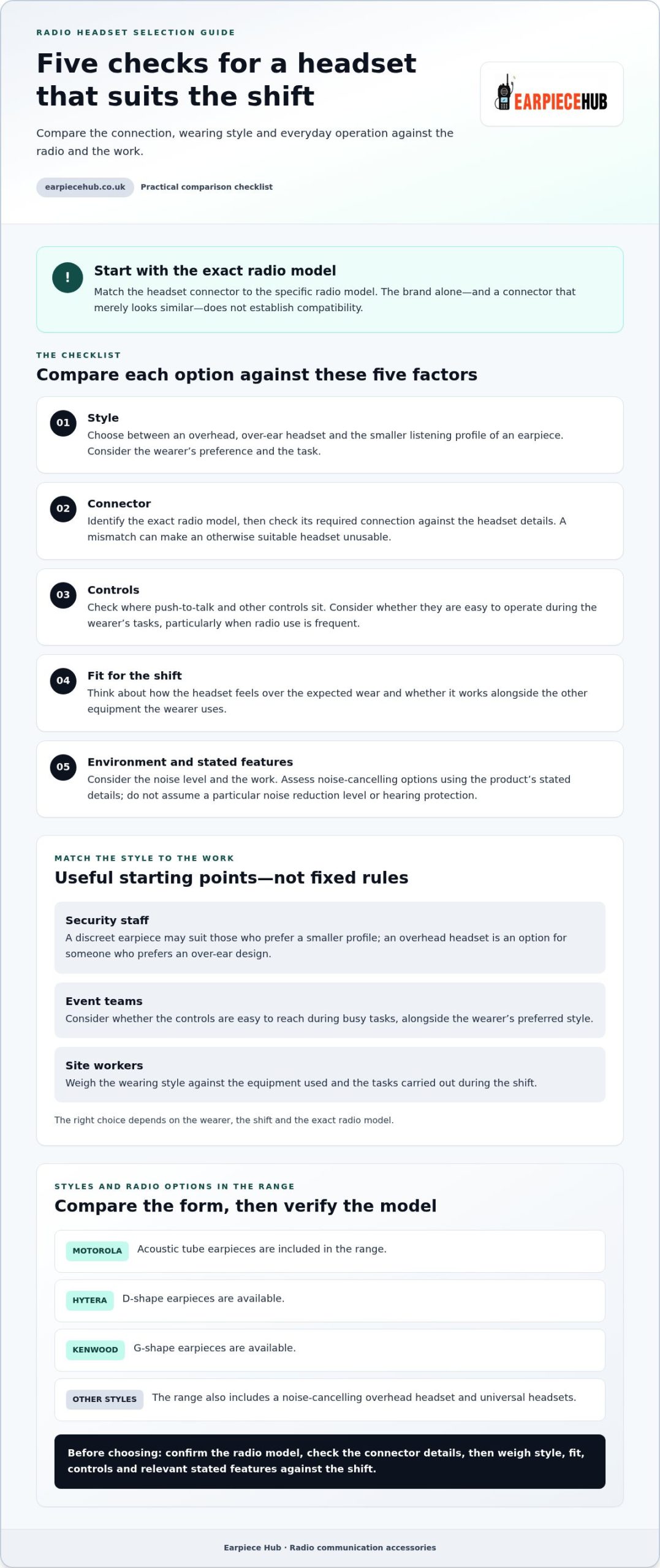
Use the same checklist for every option. A heavy duty two way radio headset is a practical choice only when its connection, wearing style and operation suit your radio and work routine. Start with compatibility: identify the exact radio model and match it to the headset’s connector details. The brand alone is not enough to establish a fit.
| Compare | What to check |
|---|---|
| Style | Overhead headset or earpiece, according to your wearing preference and task. |
| Connector | Match the connection to the specific radio model, rather than relying on the brand alone. |
| Controls | Check where push-to-talk and other controls sit, and whether you can operate them easily during your tasks. |
| Fit | Consider how the headset feels over the expected shift and whether it works with other equipment you wear. |
| Environment | Consider the noise level and tasks. Assess noise-cancelling options using the product’s stated details, not assumptions. |
Which compatibility and comfort details matter most?
Compatibility is specific: match the headset connector to the radio model before purchase. Similar-looking connectors don’t prove an accessory will work with a particular radio. Check the model and connection details together. Then think about the wearer’s expected shift, the headset’s fit and how often they’ll use the controls. If radio use is frequent, control position and ease of operation deserve particular attention.
Noise-cancelling features may be relevant in a noisy setting, but don’t assume they provide hearing protection or a particular level of noise reduction. Base your choice on the product’s stated specifications and the needs of the work. The accessory should suit both the radio and the way communication is used during the shift.
Compare Earpiece Hub’s headset and earpiece range to find styles and radio accessories for your setup.
Choose a heavy-duty radio headset for your role and daily use
Your role helps define the right balance of fit, controls and communication. Security staff who prefer an over-ear design can consider an overhead headset. Event teams may prioritise controls that are easy to reach during busy tasks, while site workers can weigh the wearing style against the equipment they use. These are practical starting points, not fixed rules: the wearer’s preference and the exact radio model still matter.
Earpiece Hub offers a noise-cancelling overhead headset, universal headsets and earpieces for Motorola, Hytera and Kenwood radios. For a Motorola radio, the range also includes acoustic tube earpieces; D-shape and G-shape options are available for Hytera and Kenwood radios respectively. Check the product details against the radio model before choosing. Treat noise-cancelling as a stated product feature, not proof of a particular noise reduction level or hearing protection.
What to check before ordering a radio headset
First, identify the exact radio model and the connection it requires. Next, consider who will wear the headset, how long they’ll wear it and which style suits the task. If the wearer uses the radio frequently, consider where the controls sit. If they prefer an over-ear design, compare overhead options. Don’t assume a headset will fit every radio just because the brand is familiar.
Use this final checklist:
- Role: security, events or site work.
- Radio model: the exact model in use.
- Connector: the connection required for that radio.
- Wearing style: overhead headset or earpiece, based on the task and wearer’s preference.
- Required features: controls and any stated noise-cancelling details relevant to the work.
With those points clear, compare Earpiece Hub’s overhead headset and universal headset options with the radio and wearing style you’ve identified.
Choose a headset that’s ready for your working day
Choose a heavy duty two way radio headset for the demands of the role, the wearer’s preferred style and the radio it must connect to. Match the connector to the exact radio model, then consider fit, controls and any noise-cancelling features against the tasks and conditions of the shift. This comparison helps you assess suitability without relying on the “heavy-duty” label alone.
Earpiece Hub is a specialist retailer of radio communication accessories, including a noise-cancelling overhead headset, universal headsets and earpieces for leading radio brands.
Explore Earpiece Hub’s radio headset and earpiece range to compare options for your setup.
Frequently Asked Questions
What makes a two-way radio headset heavy-duty?
“Heavy-duty” describes how well a headset suits the demands of its intended work, rather than guaranteeing a particular rating. Consider how often it will be used, the tasks involved and how the radio fits into the shift. Choose based on the product’s stated features and its suitability for the role, not the label alone.
Are heavy-duty two-way radio headsets compatible with every radio?
No. A heavy duty two way radio headset needs a connection compatible with the specific radio model. Similar brands or connector shapes don’t guarantee a match. Check the radio model and accessory connection together before choosing. Universal headsets and adapters offer options for different radio setups, but don’t assume that one accessory fits every radio.
Is an overhead headset better than an earpiece for radio communication?
Neither style is automatically better; the right choice depends on the task and the wearer’s preference. An overhead headset suits someone who favours an over-ear design, while an earpiece has a smaller listening profile. Consider how each style fits the work routine and other equipment. Earpiece Hub offers overhead headset and earpiece options.
Do noise-cancelling radio headsets block all background noise?
No. The term “noise-cancelling” doesn’t mean a headset blocks all surrounding sound or provides a specific level of hearing protection. Performance depends on the product’s stated specifications. Consider whether its described features suit the working environment and communication needs. Don’t treat noise-cancelling as a substitute for hearing protection unless the product is specifically rated for that purpose.
