





Uncategorized
Best Earpieces for Noisy Environments: 2026 UK Guide
Aug
The most expensive radio on your belt is effectively a brick if you cannot hear the person on the other end over a crowd’s roar. Most security and event professionals simply accept audio cut-outs and distorted messages as an unavoidable part of the shift, but failing to hear a critical instruction isn’t an option. If you’re wondering how to improve two-way radio audio clarity during a chaotic 12-hour stint, you’ll know that physical ear fatigue and muffled sound are more than just an annoyance; they’re a genuine safety risk.
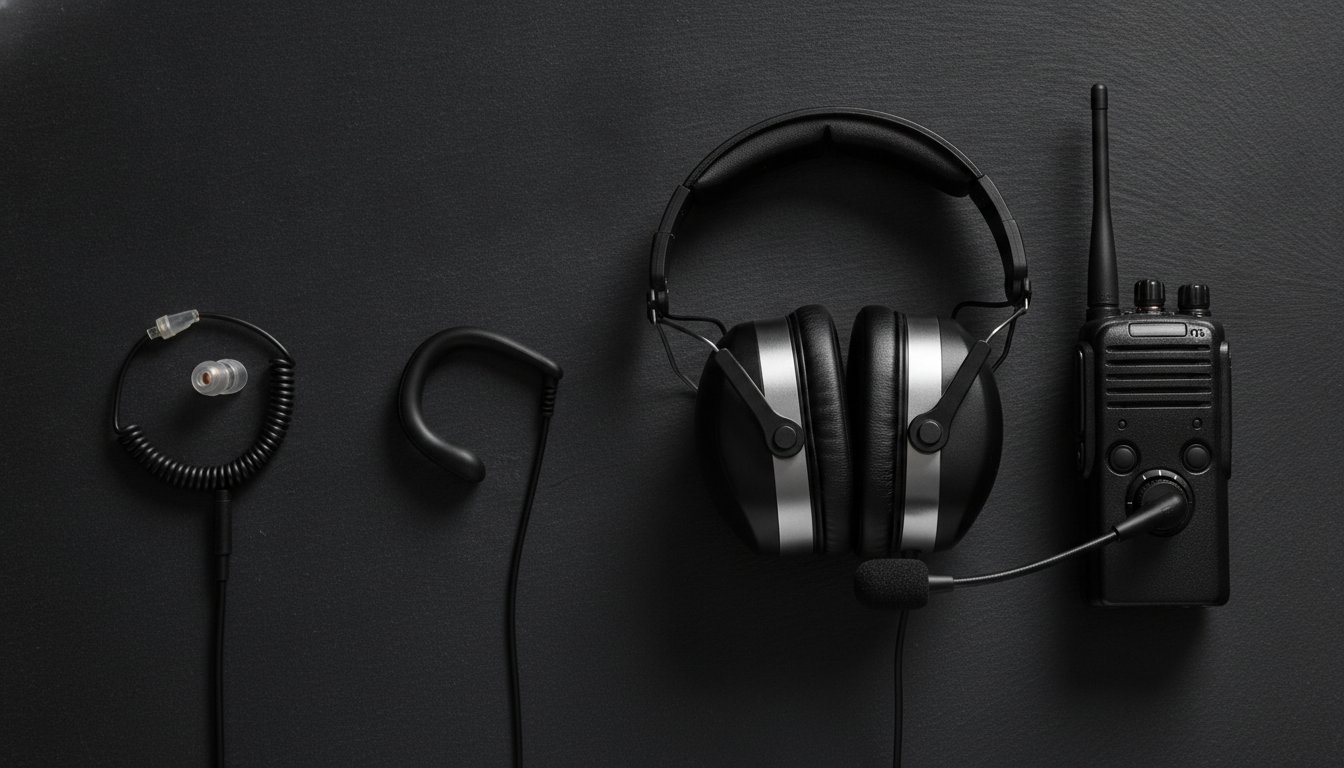
We understand that your equipment must perform reliably regardless of the decibel level. This 2026 guide promises to show you how to achieve crystal-clear communication in industrial and high-pressure settings using professional-grade hardware. We’ll explore the best acoustic tubes, G-shape earpieces, and noise-cancelling overhead headsets designed for Motorola and Kenwood systems. From secure fits that stay put whilst you’re moving to durable wiring that survives the rigours of a full season, here is the essential kit for UK professionals.
Key Takeaways
- Distinguish between professional noise isolation and consumer noise-cancelling technology to ensure your messages remain audible in high-decibel crowds.
- Compare the functional benefits of discreet acoustic tubes against the robust hearing protection offered by heavy-duty noise-cancelling overhead headsets.
- Master how to improve two-way radio audio clarity by selecting the correct pin configurations and brand-specific connectors for Motorola, Hytera, and Kenwood radios.
- Implement a professional maintenance and cleaning schedule to prevent moisture build-up and maintain peak hardware performance throughout a demanding season.
Why Professional Environments Demand Specialist Audio Hardware
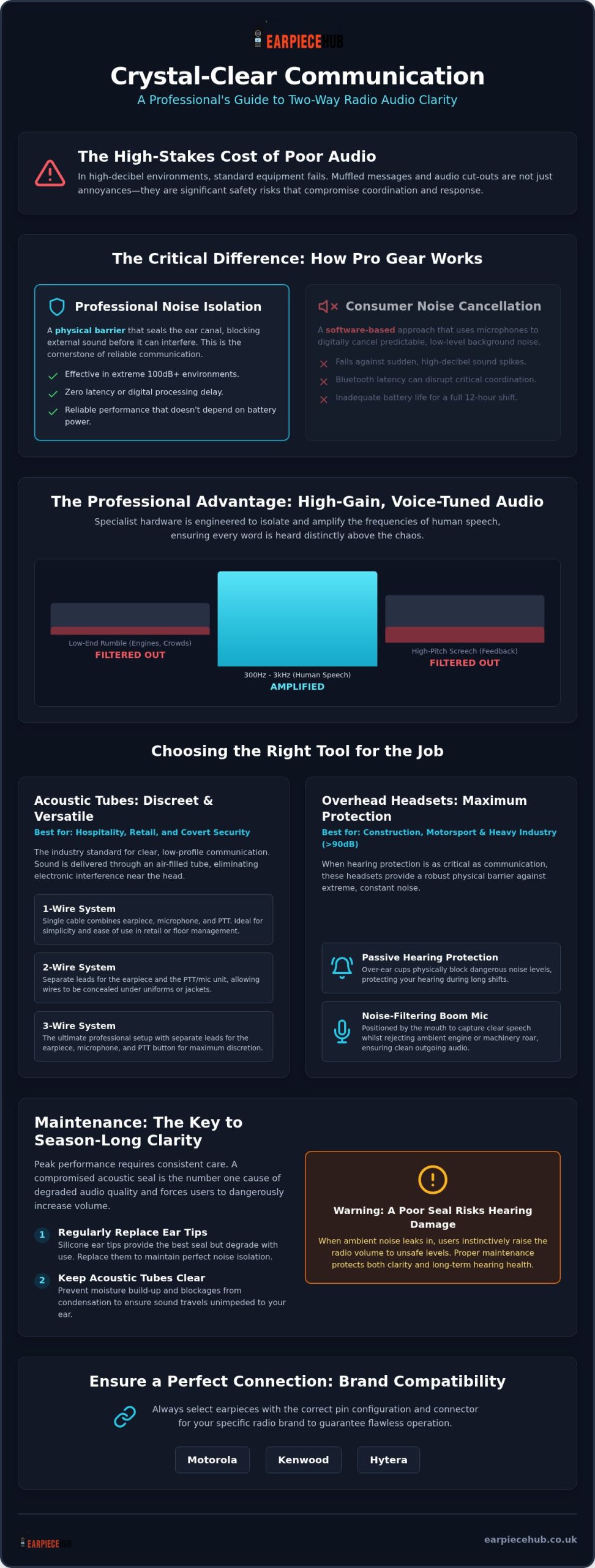
Professional environments like construction sites or music festivals present a unique audio challenge that consumer gadgets simply cannot handle. While many users look for active noise cancellation technology to block out office chatter, this software-based approach often fails against the 100dB+ spikes found in heavy industry or event security. Professional communication relies on noise isolation; a physical barrier that prevents external sound from entering the ear canal in the first place. Understanding this distinction is the first step in learning how to improve two-way radio audio clarity when every syllable matters.
The Limitations of Consumer Headsets at Work
Standard Bluetooth earbuds are built for music, not mission-critical security. In high-stakes environments, Bluetooth latency can cause a split-second delay that ruins coordination. Battery life is another failure point; a consumer headset won’t survive a 12-hour festival shift. Passive noise reduction, found in specialist earpieces, provides a reliable seal that doesn’t rely on digital processing. This ensures your radio traffic remains uninterrupted by the unpredictable roar of a crowd or heavy machinery. Reliable hardware won’t drop the connection when you need it most.
The Role of High-Gain Audio in Communication
Specialist hardware uses high-gain audio specifically tuned to the frequency range of the human voice. Unlike consumer gear that balances bass and treble, professional earpieces strip away irrelevant frequencies to make speech stand out. This is a vital technique for anyone researching how to improve two-way radio audio clarity. Insights from behavioural research, such as those provided by Ergoneers, further highlight how human performance in high-stress environments depends on this level of focused audio. Physical ear tips, such as those found on acoustic tube models, block ambient noise whilst delivering focused sound directly into the ear. This combination of physical blocking and frequency targeting is essential for:
- Front-line security teams managing loud venues
- Industrial staff working near heavy plant machinery
- Event crews coordinating in high-decibel concert areas
Professional earpieces prioritise the 300Hz to 3kHz range where human speech is most legible. By filtering out the low-end rumble of engines or the high-pitch screech of feedback, the hardware does the heavy lifting for your ears. This ensures that even at lower volumes, the message remains sharp and distinct.
Comparing Acoustic Tubes vs. Noise-Cancelling Overhead Headsets
Choosing between discreet isolation and heavy-duty protection depends on your specific operational environment. Both styles are fundamental tools for professionals seeking how to improve two-way radio audio clarity in loud UK venues. Whilst both offer superior performance over consumer gear, their mechanical approaches to noise management differ significantly.
Acoustic Tubes: The Gold Standard for Discreet Security
Clear acoustic tubes are the industry standard for hospitality and covert security. These devices use a transparent air-filled tube to deliver sound from a transducer to the ear canal, which avoids electronic interference and keeps the kit hidden. Operational roles dictate the wiring configuration:
- 1-Wire: A single cable combining the microphone and PTT, ideal for light retail or floor management.
- 2-Wire: Separate leads for the earpiece and PTT/mic, allowing for easier concealment under a suit or uniform.
- 3-Wire: The ultimate professional setup with separate leads for the earpiece, microphone, and PTT for maximum discretion.
Overhead Headsets: Best for Extreme Decibels
In construction, manufacturing, or motorsport, constant noise often exceeds 90dB. A Noise Cancelling Overhead Headset provides essential passive hearing protection alongside high-gain audio. The integrated boom microphone is a critical feature in these environments. It sits directly in front of the mouth to capture speech whilst filtering out the roar of heavy machinery, ensuring your outgoing transmissions are just as sharp as the incoming audio.
Comfort is paramount during a 12-hour shift. Silicone ear tips provide a much tighter seal than standard plastic, but they degrade with daily use. Maintaining your equipment with fresh Replacement Acoustic Tubes and Ear Tips is the most effective way to sustain a perfect acoustic seal. A poor seal allows ambient noise to leak in, which forces you to increase the volume and risks long-term hearing damage. Consistent hardware maintenance remains the simplest method for anyone wondering how to improve two-way radio audio clarity over a full season.
Selecting the Best Earpiece for Your Radio Brand
Brand-specific connectors are the foundation of audio reliability. A loose or incorrect connection is the primary cause of static and intermittent signals during a shift. If you want to know how to improve two-way radio audio clarity, start with the physical interface. Motorola radios, particularly the DP1400, require precise multi-pin or 2-pin connectors to maintain an airtight electronic seal. Using an incompatible connector can lead to bent pins or even a short circuit in the radio accessory port, causing permanent hardware damage.
Motorola Compatibility and Power Needs
The Motorola DP1400 is a staple for UK security and event teams. To ensure the transducer in your earpiece receives enough power to drive high-gain audio, your radio battery must be in peak condition. A failing battery often manifests as quiet or crackling incoming audio. Investing in a Replacement Battery for Motorola DP1400 ensures your hardware has the consistent voltage required for crystal-clear transmissions. High-quality power is just as vital as the earpiece itself when working in high-decibel environments.
Universal and Multi-Brand Solutions
Large teams often operate mixed fleets of Hytera and Kenwood units. Whilst Kenwood typically utilises a K1 2-pin configuration, Hytera requirements vary across their digital and analogue ranges. You can manage this complexity by using a high-quality Earpiece adapter for any radios. This allows you to standardise your earpiece stock across the team whilst maintaining brand-specific connectivity for safety and performance.
Fleet management is equally important for maintaining audio standards. A Six-Way Multi-Unit Charger keeps your entire radio stock organised and ready for the next shift. When your radios are fully charged and paired with the correct brand-specific earpieces, the struggle of how to improve two-way radio audio clarity becomes a thing of the past. Ensure your team is equipped with the right hardware by browsing our specialist range. Shop our brand-specific earpieces now.
Maintaining Your Audio Clarity in the Field
Hardware is only as good as its upkeep. If you’re looking for how to improve two-way radio audio clarity, a daily maintenance checklist is vital. Start by inspecting the connector pins for oxidation or dust. Clean them with a dry cloth to ensure a solid electronic connection. Sanitising the ear tip after every shift prevents wax build-up from obstructing the speaker port. Acoustic tubes are prone to moisture build-up, especially in humid UK conditions. This condensation can create a physical blockage that muffles incoming speech. Regularly detach the tube and use an air blower to clear any droplets, or simply swap in a fresh tube if the plastic has discoloured or hardened over months of use.
Preventing Audio Failure with Spare Parts
Long shifts at festivals or industrial sites put immense strain on wiring and silicone. Carry spare ear tips and acoustic tubes in your kit bag as a standard precaution. Ear tips lose their elasticity over time, which compromises the acoustic seal and lets in ambient noise. If you notice the audio sounding thin or distant, it is likely time for a replacement. Check for fraying near the stress relief points of the cables, where the wire meets the connector. Catching these signs of wear early prevents a total failure in the middle of a critical operation.
Fleet Management and Charging Logistics
Organising equipment for a large team requires a centralised system. A six-way multi-unit charger ensures that every radio is ready for rapid deployment. This level of organisation is a key part of how to improve two-way radio audio clarity across an entire fleet. By standardising your maintenance and charging routines, you ensure that every team member has the best earpiece for their task. Reliability is built through consistency and professional-grade support.
View our full range of professional earpieces at Earpiece Hub.
Secure Your Audio Reliability for the 2026 Season
Achieving crystal-clear communication in high-decibel environments requires moving beyond consumer gadgets. By prioritising physical noise isolation and high-gain audio, you ensure every message is delivered without distortion. Selecting the correct brand-specific connector for your Motorola, Kenwood, or Hytera radio is the most effective way to prevent hardware failure and maintain operational safety. Professional hardware is designed to withstand the pressures of a 12-hour shift whilst providing the comfort your team needs to stay focused.
Mastering how to improve two-way radio audio clarity involves a combination of the right specialist hardware and a strict maintenance routine. Carrying spare acoustic tubes and utilising multi-unit chargers will keep your team operational through the most demanding events. Earpiece Hub has been a dedicated UK specialist for professional radio peripherals since 2015. We provide expert support and Next Day Shipping nationwide on all gear. Shop Professional Radio Earpieces at Earpiece Hub and equip your team with the tools they need for reliable, high-stakes communication. Experience the difference that specialist engineering makes in the field today.
Frequently Asked Questions
What is the best earpiece style for a loud nightclub or music festival?
Acoustic tube earpieces are the primary choice for security in nightclubs because they offer discreet communication with passive noise isolation. In these high-decibel settings, a high-gain transducer paired with a mushroom-style silicone ear tip provides the necessary barrier against loud music. This physical seal is a critical part of how to improve two-way radio audio clarity, ensuring that critical messages aren’t drowned out by the venue’s sound system.
Can I use a standard mobile phone earpiece with my Motorola radio?
No, consumer-grade mobile phone earpieces are not compatible with professional Motorola radios. They use different pinouts and lack the push-to-talk (PTT) circuitry required for two-way communication. Attempting to force a connection can damage the radio’s accessory port. For reliable results, you must use hardware specifically engineered for the Motorola DP1400. If you have a mixed fleet, a brand-specific earpiece adapter is the only safe way to achieve cross-compatibility.
How does an acoustic tube earpiece work in noisy environments?
Acoustic tubes function by channelling sound through a clear air-filled tube directly into your ear canal. This mechanical design creates a natural seal that blocks out ambient noise, providing passive isolation without the need for batteries or digital processing. It’s an effective method for those looking at how to improve two-way radio audio clarity, as it delivers focused sound while preventing external noise from interfering with the incoming message.
Do I need a noise-cancelling overhead headset for construction work?
Construction environments often involve constant noise levels above 85dB, making a noise-cancelling overhead headset the safest option. These units provide vital hearing protection by shielding the entire ear from industrial noise. Unlike discreet earpieces, they feature boom microphones that sit close to the mouth, filtering out background machinery roar. This ensures your outgoing transmissions are legible to colleagues, making them indispensable for safety on any busy UK building site.
How often should I replace the ear tips on my professional earpiece?
We recommend replacing your silicone ear tips every 12 to 16 weeks to ensure a consistent acoustic seal. Daily use causes the material to harden and lose its shape, which allows external noise to leak in and degrade your audio quality. If you notice the tip becoming discoloured or stiff, swap it immediately. Maintaining fresh tips is the most cost-effective way to ensure your hardware continues to provide professional-grade isolation.
