




Uncategorized
Motorola Radio Earpieces for UK Work Environments

Nov
A covert acoustic-tube earpiece can make radio audio easier to follow, but it won’t improve a weak signal. When choosing a Motorola radio earpiece in the UK, check compatibility first: the earpiece must match your radio model and connector. Then choose a style that suits a busy, noisy or discreet work environment.
If radio transmissions are hard to hear at work, an earpiece that fits your radio and working conditions can make listening more practical. This guide explains how to match earpieces to Motorola radios, compare acoustic-tube styles and understand what an earpiece can and can’t do for audio quality. It also covers comfort, discretion and everyday use to help you choose.
Key Takeaways
- Match an earpiece to your exact Motorola radio model and connector type; similar-looking accessories aren’t necessarily compatible.
- Choose an in-ear or over-the-ear style based on comfort, discretion and the demands of your work environment.
- An earpiece can make transmissions easier to hear, but it won’t fix a weak radio signal.
- Explore acoustic-tube designs for a discreet setup, and consider how the earpiece’s fit and controls suit your day-to-day use.
Which earpieces are suitable for radios?
Choose a Motorola radio earpiece in the UK by matching its connector and radio model first. Then consider how it’s worn, whether you need microphone controls and the conditions where you’ll use it. An accessory that fits one Motorola radio may not fit another.
Genuine and compatible accessories
Genuine accessories are designed for specified radios; compatible alternatives can also suit a model when their connector and product details align. Compare the full radio name with the accessory description, including any series letters. Noise-reducing headsets may help in loud workplaces, whilst helmet-compatible designs need to fit without disrupting the helmet or straps.
Matching earpieces to radio models
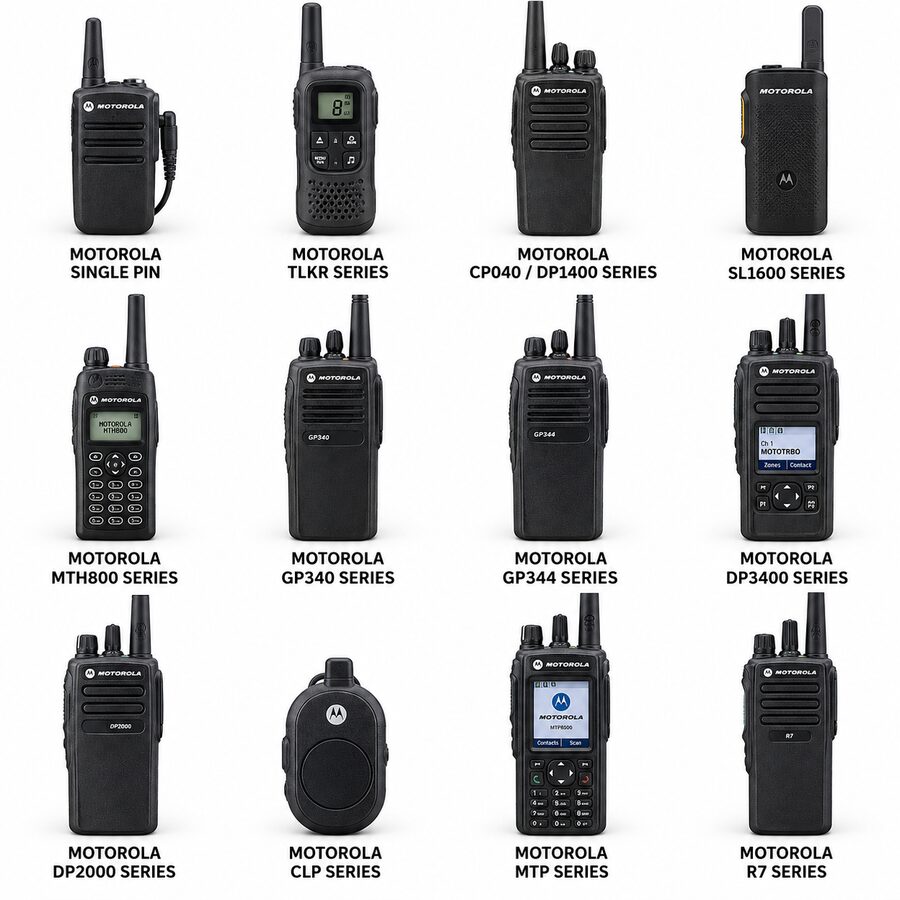
Model pairings can be specific. The DP2400 D-Ring Covert Earpiece suits DP2400, DP2600, DP2400e, DP2600e, DP3441 and MTP3550 radios. The GP344 D-Ring Block Connector Earpiece is designed for GP344, GP388 and GP688 models. Choices include acoustic-tube, D-ring and receive-only styles, depending on the radio and work needs.
Radio and earpiece connector compatibility
Check whether the radio uses a 2-pin or multipin connection, then match the plug shown in the accessory details. A connector that looks similar may not fit correctly. Some Motorola accessories instead use a 3.5 mm connection, so don’t assume that one plug type works across the range.
Suitability for licence-free PMR446 radios
Yes, an earpiece can suit a Motorola PMR446 radio when it matches that model and connector. Match the radio’s full model name rather than relying on the Motorola or PMR446 label alone.
There is no single price for a Motorola radio earpiece in the UK: design, controls and connector affect the cost. To clean an earpiece, disconnect it and wipe the exterior with a soft cloth, keeping moisture away from the plug and microphone.
Earpiece styles for different work environments
Choose a wearing style that suits your tasks, clothing and need for discretion. A floor supervisor moving between staff may prioritise quick access to radio controls, while a security operative in a public-facing role may prefer a less visible setup. Either way, the earpiece must match the Motorola radio.
An acoustic-tube earpiece carries audio through a clear tube to the ear. Surveillance-style designs use this format for a discreet appearance. Over-ear earpieces sit on top of the ear, while in-ear designs fit partly into the ear canal. The main differences are how each style is worn and how visible it is.
For example, the Motorola PMLN7844 is a receive-only earpiece with a translucent tube and a 3.5 mm connection. The PMLN6900 is a one-wire, receive-only design with a translucent tube. These examples show why the product description matters: tube appearance, connection and microphone functions can differ between models.
Consider comfort over a full shift, not just the initial fit. An in-ear design may suit someone who wants a compact profile, while an over-ear style may feel easier to position. With helmets, hard hats or other headwear, check how the earpiece sits alongside straps and protective equipment. Avoid arrangements that interfere with a secure fit.
To compare styles, start with the work setting, then decide whether discreet wear or an over-ear fit better suits the task. Explore acoustic-tube earpieces as one option for a less visible radio setup.

Covert acoustic-tube earpieces
A covert acoustic-tube earpiece routes received audio through a clear tube to the ear. Its discreet appearance can suit security work, front-of-house duties and other public-facing roles. The tube changes how sound reaches the wearer; it doesn’t improve radio reception or fix distorted transmissions. Clear audio still depends on the radio and incoming signal.
Look beyond the word “covert” when comparing designs. The Motorola DP1400 Series PMLN6530A is a 2-wire earpiece with a clear acoustic tube. Its two-wire layout separates the earpiece connection from the microphone and push-to-talk controls. This can help keep communication controls accessible whilst the tube remains discreet at the ear.
Listen-only models let you hear transmissions but don’t provide a microphone for replying through the earpiece. A receive-and-transmit design includes a microphone, so consider whether your task requires hands-free replies or a separate radio microphone. Check the product description to confirm its function.
Fit affects comfort and audibility during a shift. Position the earpiece securely, route the tube without pulling it, and keep the microphone and controls accessible. A kinked or displaced tube can make received audio harder to follow. Replace tubes and ear tips when they become worn or no longer sit comfortably.
For a discreet setup, choose an acoustic-tube earpiece that matches your Motorola radio and the way you communicate at work.
Earpiece Hub: Acoustic Tube Earpiece for Motorola Radios
Earpiece Hub sells acoustic-tube earpieces for Motorola radios, including an option for discreet radio listening. Choose this style when it suits your work, and match the earpiece to your Motorola radio by checking the model and connector against the product details.
An acoustic tube routes received audio to the ear, while the earpiece’s controls and microphone functions depend on its design. Think about whether your role requires listening only or replying through an attached microphone. For other equipment, Earpiece Hub also offers replacement batteries for the Motorola DP1400, alongside earpieces shaped for Hytera and Kenwood radios.
Visit Earpiece Hub to explore the Motorola acoustic-tube option for your radio setup.
Prepare your next radio setup
Before ordering, note each radio model, connector, preferred wearing style and whether staff need listen-only audio or a microphone and push-to-talk communication. This provides a clear basis for choosing a Motorola radio earpiece in the UK and helps keep replacement choices consistent across a team. An accessory is most useful when it suits both the radio and the job.
Earpiece Hub offers an Acoustic Tube Earpiece for Motorola Radios, plus D-Shape Earpieces for Hytera radios and G-Shape Earpieces for Kenwood radios. If your requirements span different radio brands, matching each accessory to its intended equipment keeps the selection organised. For help taking the next step, contact Earpiece Hub to discuss earpiece options for your setup.
Choose an earpiece setup that suits your team’s communication needs and working day.
Frequently Asked Questions
Do earpieces improve audio quality?
An earpiece can make radio audio easier to hear, but it cannot strengthen the signal or correct poor reception. In noisy settings, a noise-cancelling headset can help reduce background noise. If incoming transmissions sound distorted, check the radio and reception too. The earpiece affects how audio reaches you, not the quality of the transmitted signal.
How do I choose the right product?
Start by recording the full radio model from its label, then compare it with the earpiece’s compatibility details. Decide whether you need listen-only audio or a microphone and push-to-talk control. Finally, consider where the radio will sit and whether clothing, a uniform or protective equipment affects access to the controls. These details help narrow your choice.
Why use a walkie-talkie with an earpiece?
An earpiece lets you monitor transmissions without holding the radio beside your ear, which can be useful at a reception desk or during event work. It can also make listening more discreet around customers. To reply, choose a design with a microphone and push-to-talk control. A listen-only earpiece lets you hear messages but cannot send a response.
Which Motorola two-way radio models are compatible with each earpiece?
Compatibility depends on the specific earpiece, not just the Motorola name. For example, a Motorola R7 D-Ring Earpiece works with R7, R7a, R7 NKP, R7 FKP and MXP600 radios. The DP2400 D-Ring Covert Earpiece suits DP2400, DP2600, DP2400e, DP2600e, DP3441 and MTP3550 models. Treat each pairing as specific to that accessory.
What connector types do Motorola radio earpieces use?
Motorola earpieces use different connections, including single-pin, 2-pin, multipin and 3.5 mm audio connections. A 3.5 mm plug is not a universal fit for every Motorola radio. Match the connector specified for your radio and accessory.
